

 Frederick Victor
Every morning, before most of New York was awake, West 28th Street between Sixth and Seventh Avenues was already alive. Trucks double-parked the length of the block. Men in rubber aprons carried armloads of cut roses, lilies, and gladioli out of narrow storefronts and loaded them onto flatbeds headed for hotels, restaurants, and shops across the five boroughs. By six in the morning, the sidewalk was a river of color. By noon, the street was quiet again.
This was the Flower District, and from the 1930s through the 1970s, it was the engine of New York’s floral trade. Almost every flower sold in the city at the retail level passed through these few blocks first. It was a wholesale market hidden in plain sight, operating on a schedule that most New Yorkers never saw because it was finished before they left for work.
The district took root in the late 19th century, but it reached its full power in the mid-20th. After World War II, New York’s economy expanded fast. Hotels multiplied. Department stores competed on display. Restaurants that had been modest operations during the Depression now set proper tables with centerpieces. All of that demand for flowers fed directly into West 28th Street.
Read more
How the trade actually worked
The buyers came before dawn. Florists from the Bronx, Brooklyn, and Queens drove in while the city slept. They walked the storefronts with cash and a mental list — what their customers had ordered, what was running low in the cooler, what the upcoming weekend would demand. The shop owners knew them by name. Prices were negotiated fast, in person, by people who had been doing this for decades.
There were no computers. No online catalogs. A buyer made decisions by looking at actual flowers under fluorescent lights, checking stem length, checking how tightly the buds were closed. A rose that was too open wouldn’t survive two more days in a shop vase. A carnation that was bruised at the edges was worth arguing down in price. This was knowledge you built over years, not something you looked up.
The whole transaction — negotiation, cash, loading the truck — happened in about four minutes per stop. These were professionals working at professional speed.
The storefronts themselves were not large. Most were long and narrow, with refrigerated cases along the walls and buckets of cut stems covering every inch of floor. The owners stacked inventory to the ceiling. In summer, the open doors let cold air pour onto the sidewalk. In winter, the warmth from inside hit you when you walked past — a strange tropical blast on a freezing February morning.
Where the flowers came from
In the mid-20th century, most of the flowers sold in the Flower District were grown domestically. California was already the dominant source — the San Fernando Valley and the coastal counties south of San Francisco produced roses, carnations, and chrysanthemums at industrial scale. New Jersey and Long Island contributed local seasonal flowers. Gladioli came up from Florida.
The flowers arrived by rail and truck. The New York Central and Pennsylvania rail lines ran freight into the city overnight, and the timing worked perfectly for a market that opened at four in the morning. Refrigerated rail cars kept stems alive on the journey. The wholesalers on 28th Street received the shipments, broke them into smaller lots, and sold those lots to the retail florists who came to buy.
Dutch imports existed, but they were a fraction of the volume compared to what they would become after air freight made overseas shipping economically practical in the 1980s. During the peak Flower District years, the supply chain was largely domestic and the whole system was built around the overnight freight schedule.
The people who ran it
The Flower District was predominantly Italian-American in its peak decades. Families from the same towns in southern Italy had come to New York in the early 1900s and moved into the flower trade, which required physical labor, early hours, and a certain tolerance for working in the cold. By the 1940s and 1950s, the same surnames appeared on storefronts up and down the block. Fathers ran shops. Sons worked the floor. Daughters handled the books.
There were also Greek, Jewish, and later Korean-owned businesses in the district. The Korean presence grew significantly through the 1970s and 1980s, as Korean immigrants moved into retail floristry across the city and needed to buy wholesale. Some eventually opened their own wholesale operations on 28th Street, which shifted the makeup of the block.
The labor on the loading docks and delivery trucks was African American and Puerto Rican by the mid-century period. The physical work of moving bulk flowers — heavy buckets, large crates, early morning hours — was done by men who lived in Harlem, East Harlem, and the South Bronx and commuted down to Chelsea before the sun came up.
The street as a social place
West 28th Street had a rhythm that was entirely its own. The serious business happened between 4 and 8 AM. After that, the pace slowed and the socializing started. Shop owners stepped outside to talk. Buyers who had finished their purchasing stood around with coffee. Deliveries still went out, but the urgent part of the day was over.
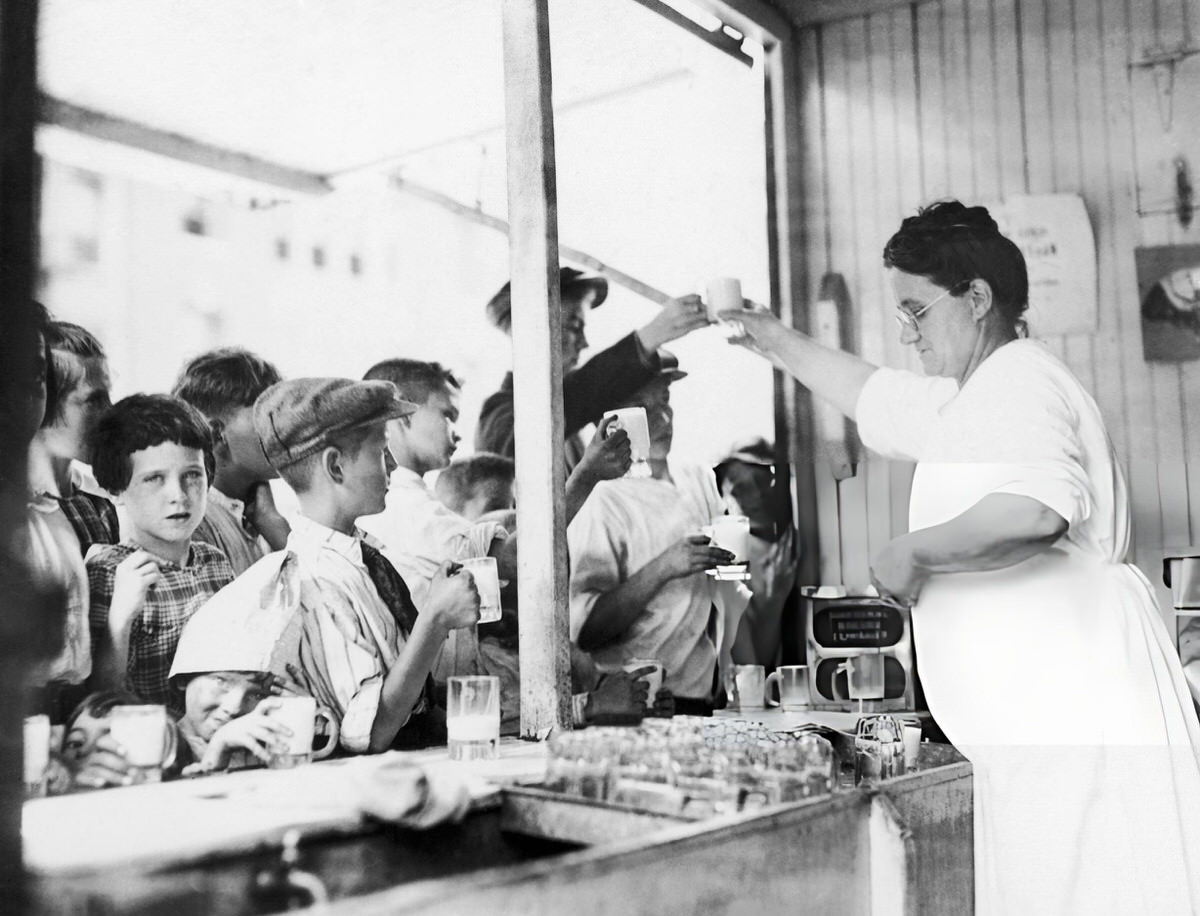
The coffee cart that parked at the corner every morning was a gathering point. It was a short-order operation — coffee in paper cups, egg sandwiches, the kind of fast food that people eat standing up in a cold street. Regulars had the same order every day. The cart owner knew every face on the block.
What the flowers were actually for
The retail florists who bought on 28th Street served specific, identifiable markets. The big hotel florists — the ones who supplied the Plaza, the Waldorf, the St. Regis — bought in enormous volume every week. Lobby arrangements at those hotels were changed multiple times a week, and each arrangement used dozens of stems. That volume alone justified a dedicated wholesale supply chain.
Funeral homes were another major customer. Mid-century American funeral culture required heavy floral arrangements, and a large funeral parlor in Brooklyn or Queens could go through hundreds of dollars of wholesale flowers for a single service. Florists who specialized in funeral work bought on a schedule tied directly to how many services their clients had booked that week.
Retail flower shops — the corner florist, the shop in the lobby of an office building, the stand near a subway entrance — bought smaller quantities but bought more frequently. For them, West 28th Street was a Monday through Saturday operation. They came in, bought what they needed for the next two or three days, and came back again.

GIPHY App Key not set. Please check settings