
in

The Street That Built America: Financial District, Manhattan in the 20th Century

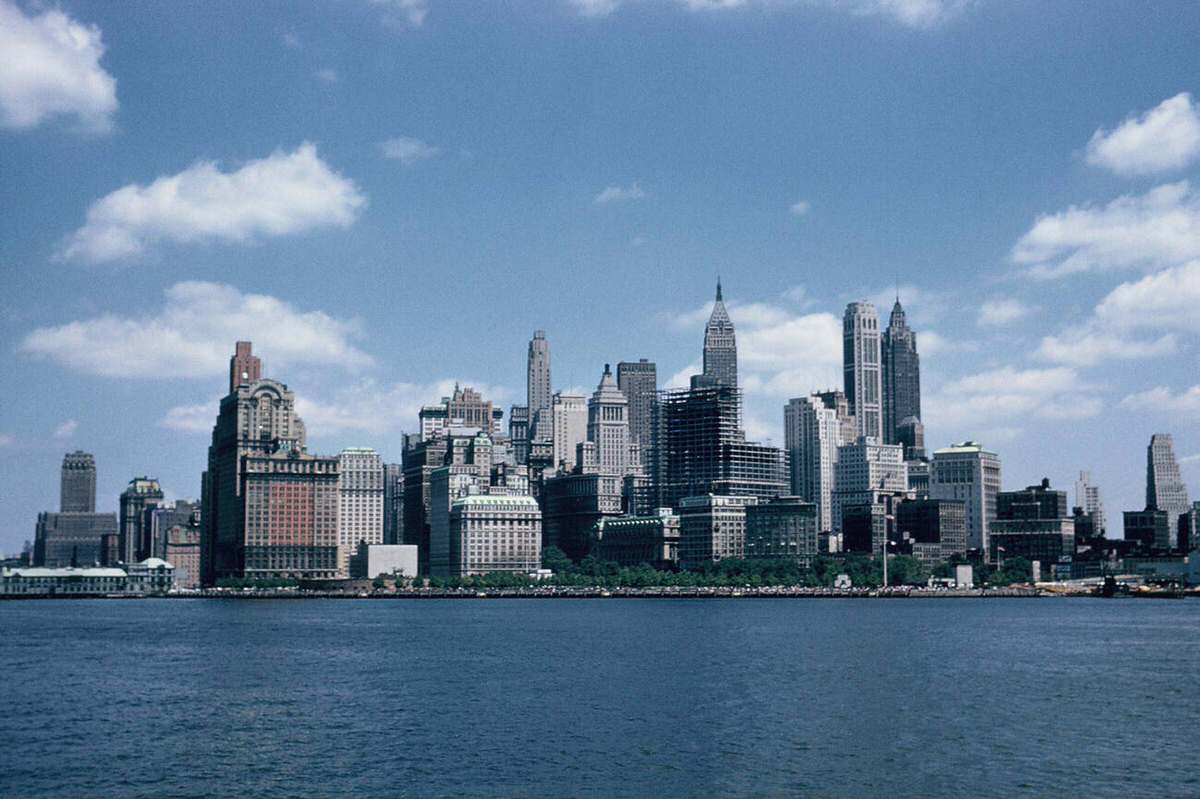
When the 20th century began, the Financial District was already the money capital of the world. But over the next hundred years, it changed in ways nobody predicted. Banks rose and fell. Buildings scraped the sky. Wars reshaped who worked there and why. And through it all, a few blocks of lower Manhattan kept pulling the strings of the global economy.

The Early 1900s: Steel, Stone, and Ambition

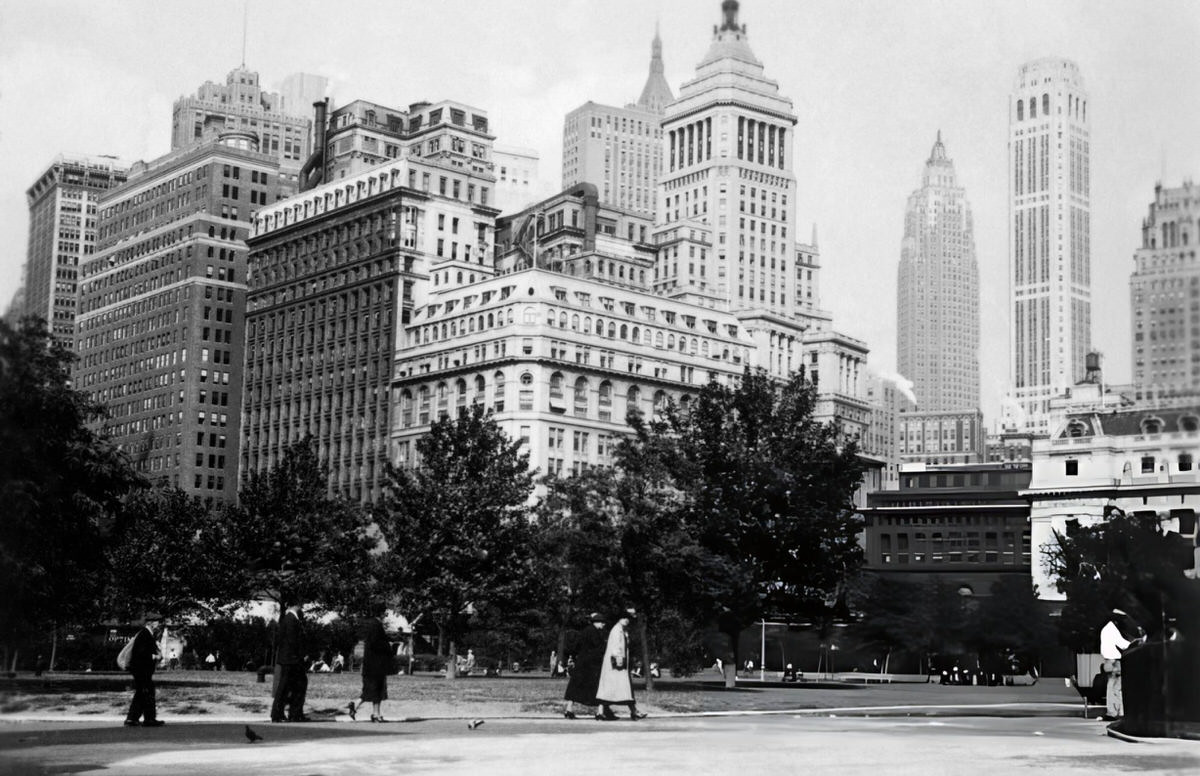
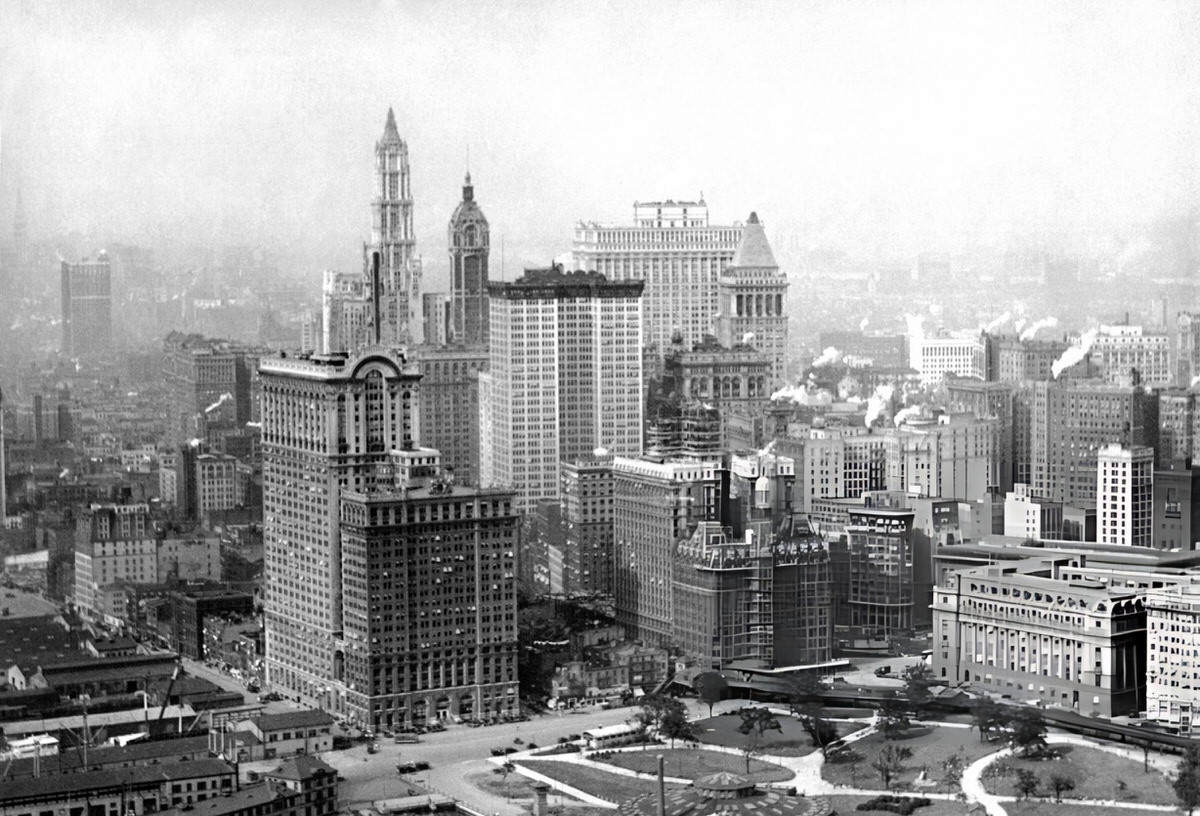
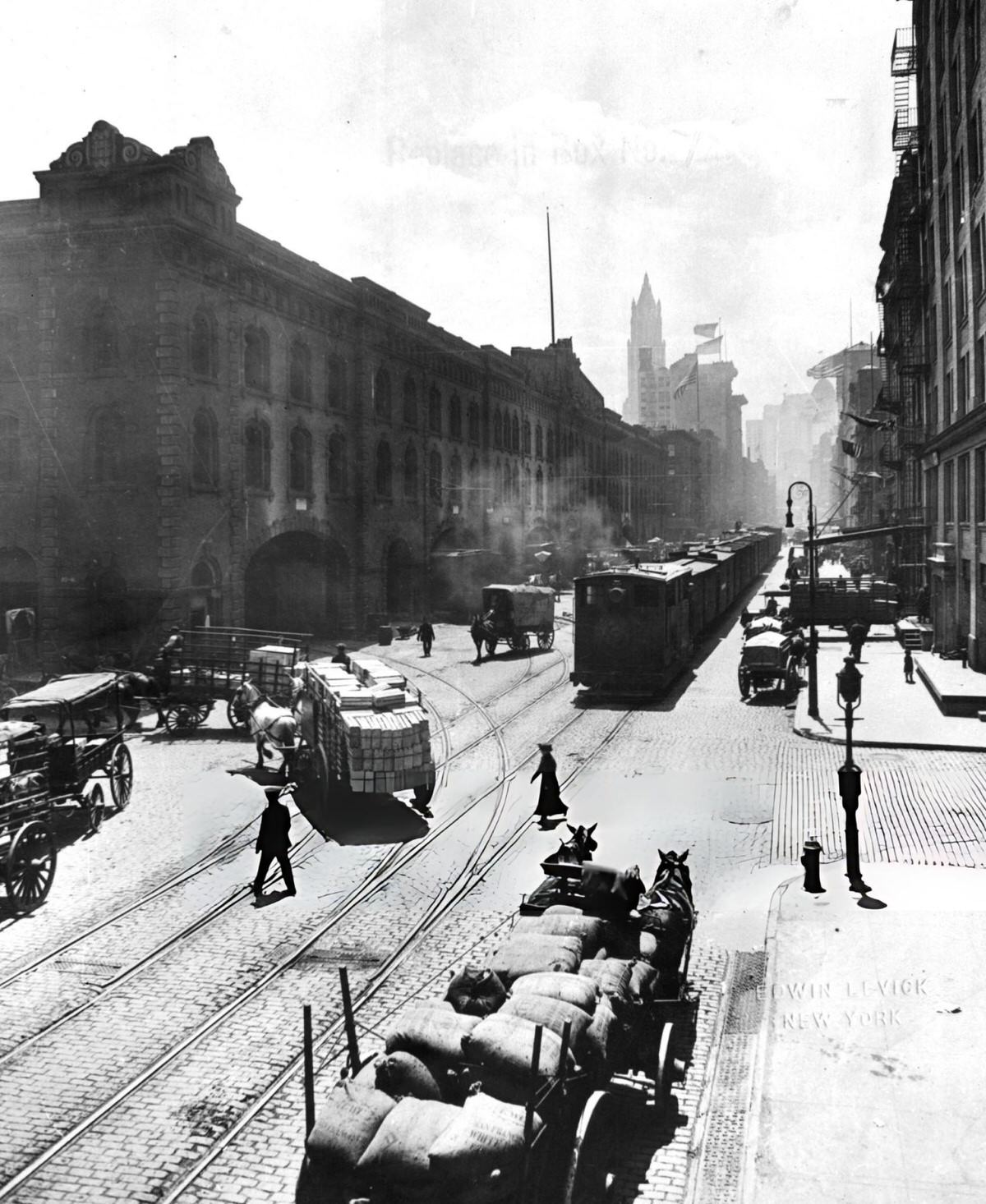
At the turn of the century, Wall Street was a canyon of stone and noise. Horse-drawn carts still rattled down Broadway while construction crews drilled into bedrock, laying foundations for skyscrapers that would define the American skyline.

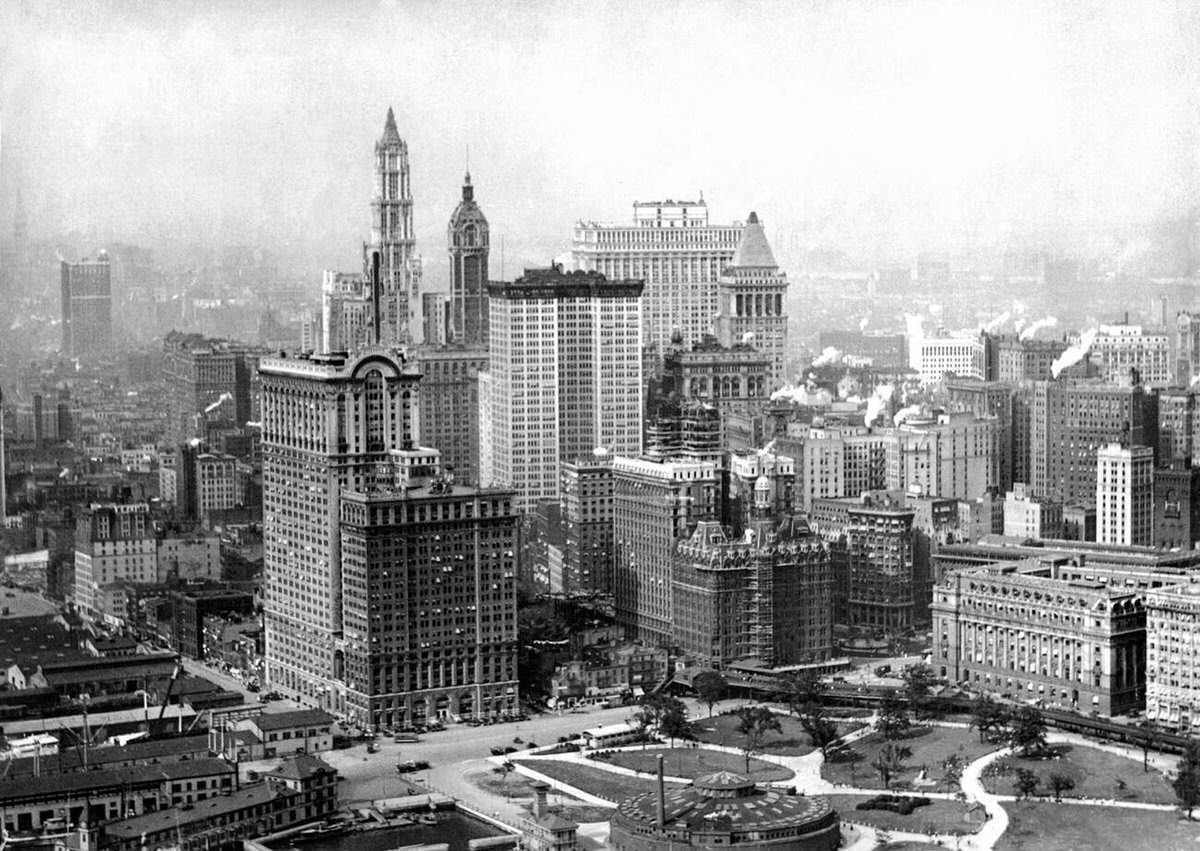
The Singer Building went up in 1908. The Woolworth Building followed in 1913, rising 792 feet and earning the nickname “Cathedral of Commerce.” These weren’t just offices — they were statements. They told the world that New York was the center of everything. The men who commissioned them wanted permanence, and they got it.

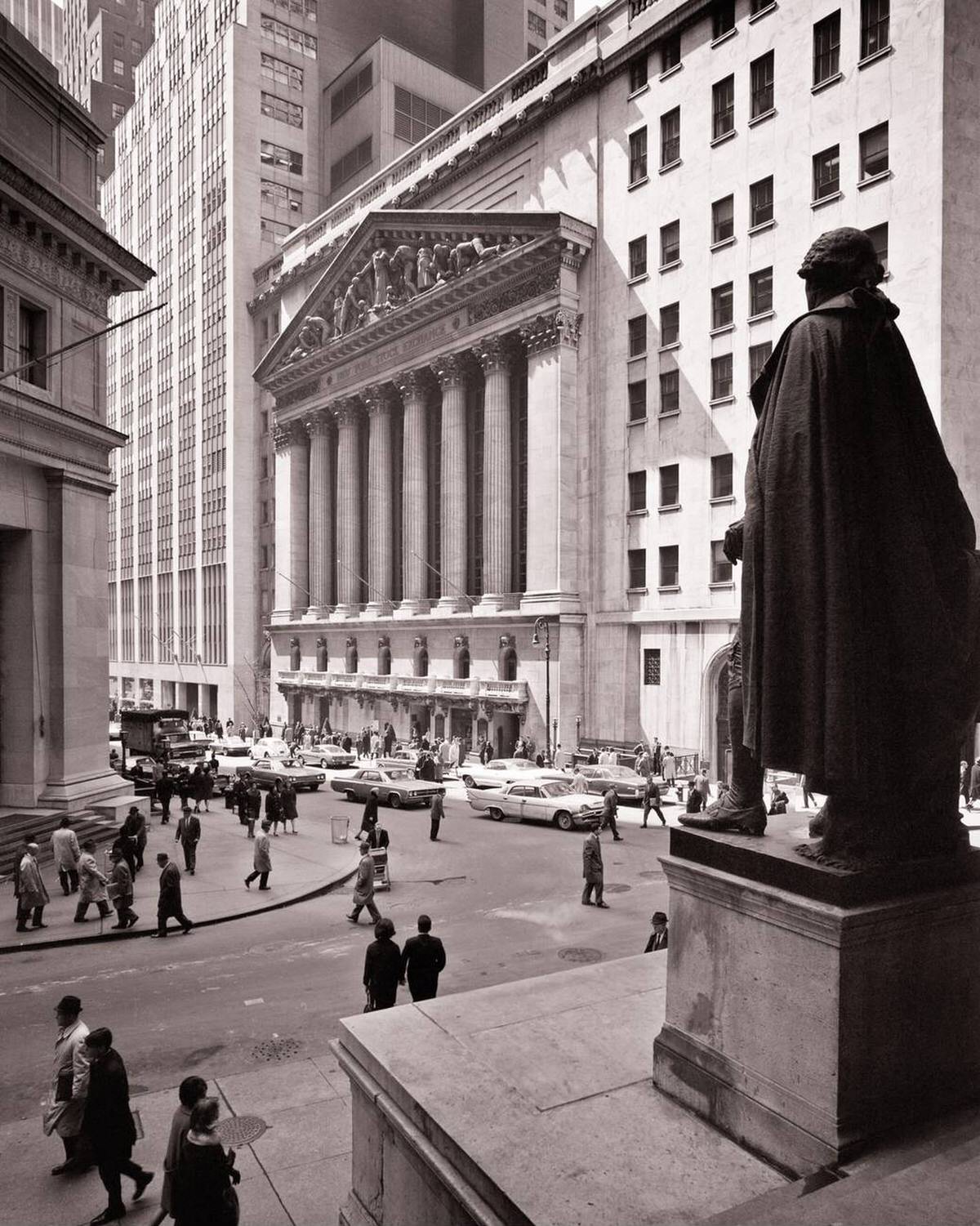
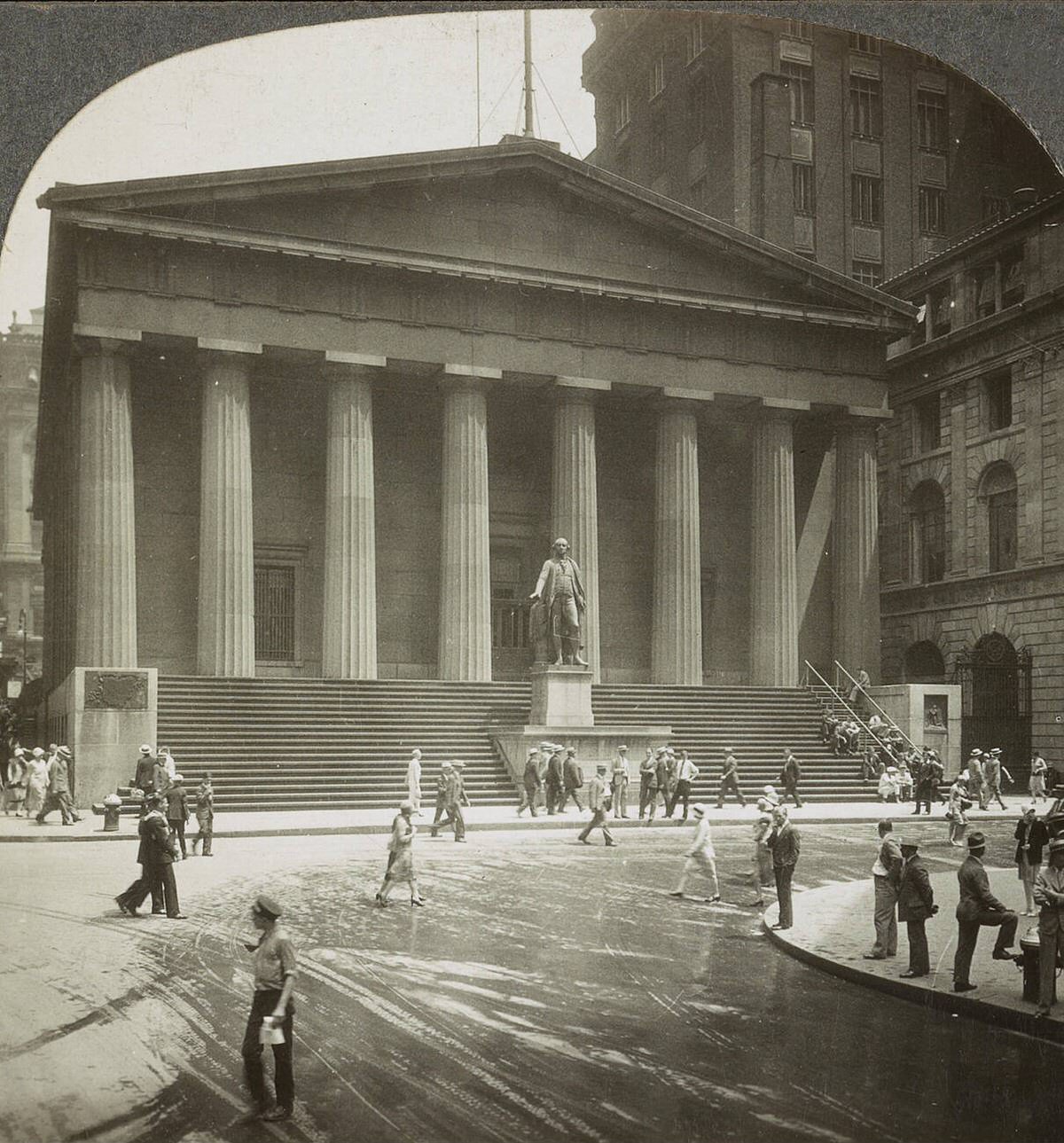
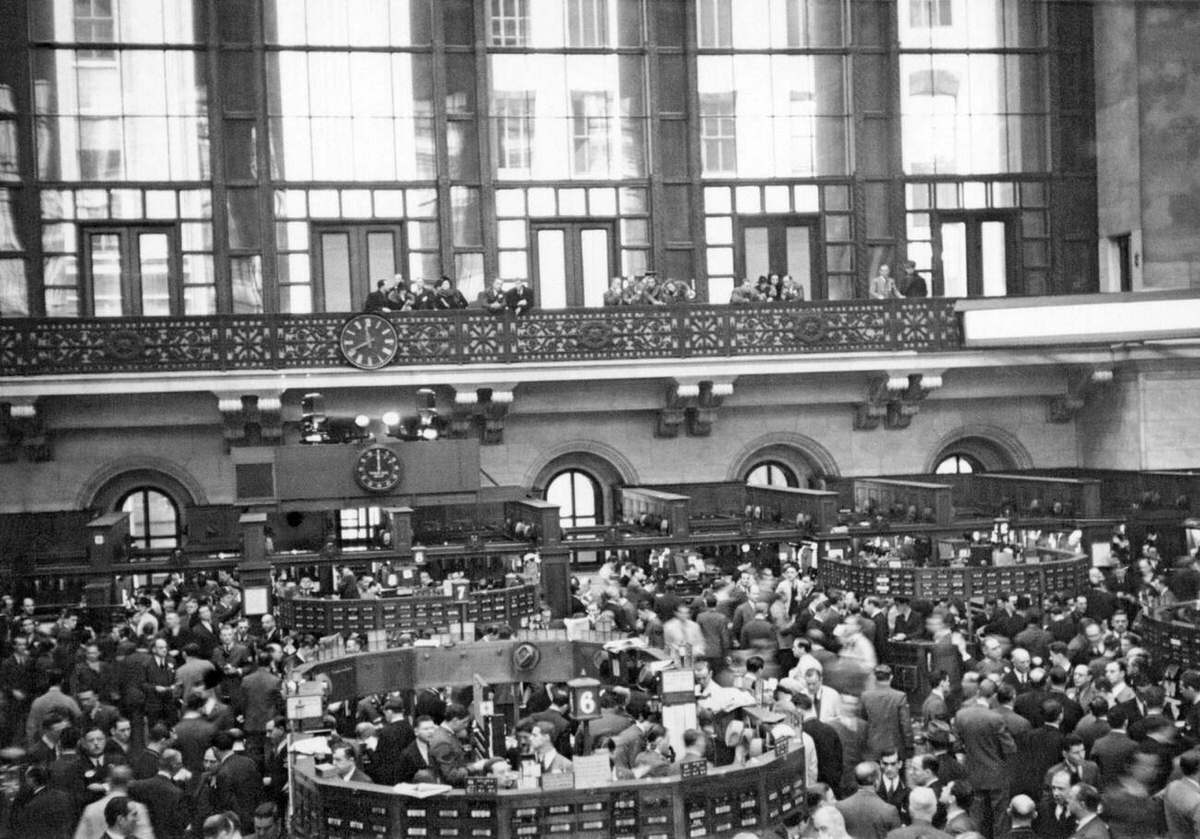
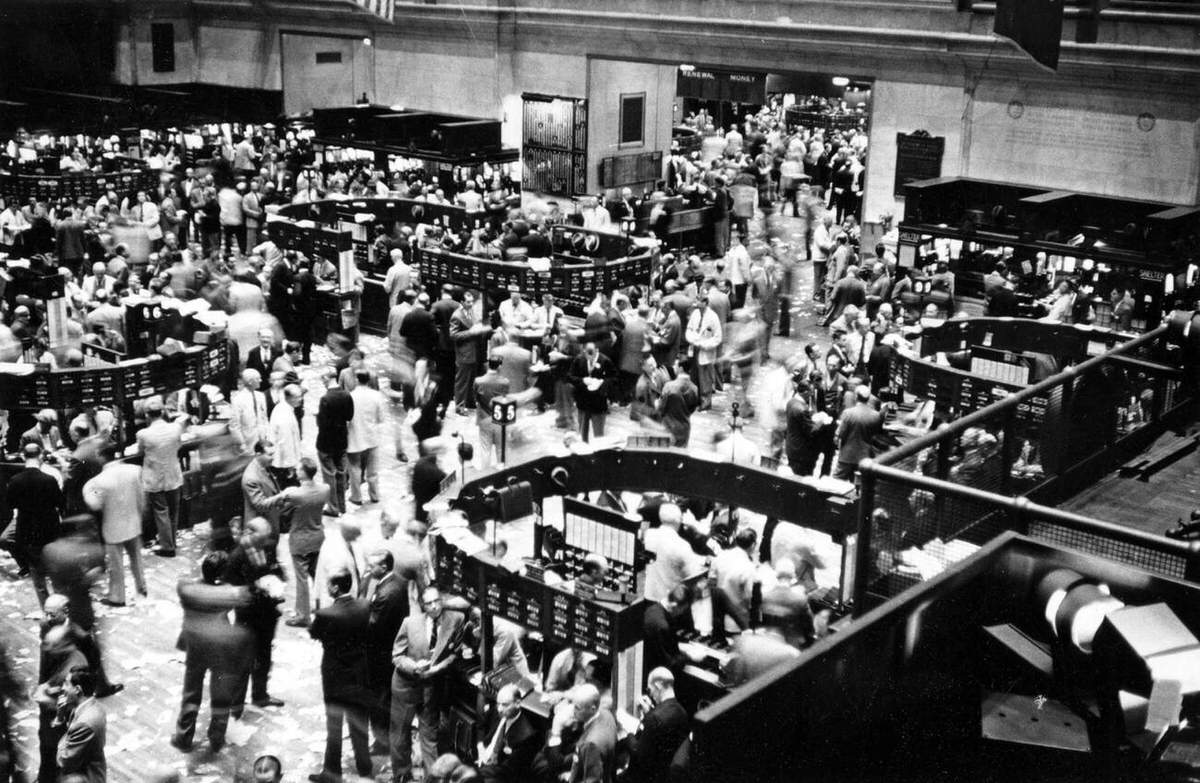
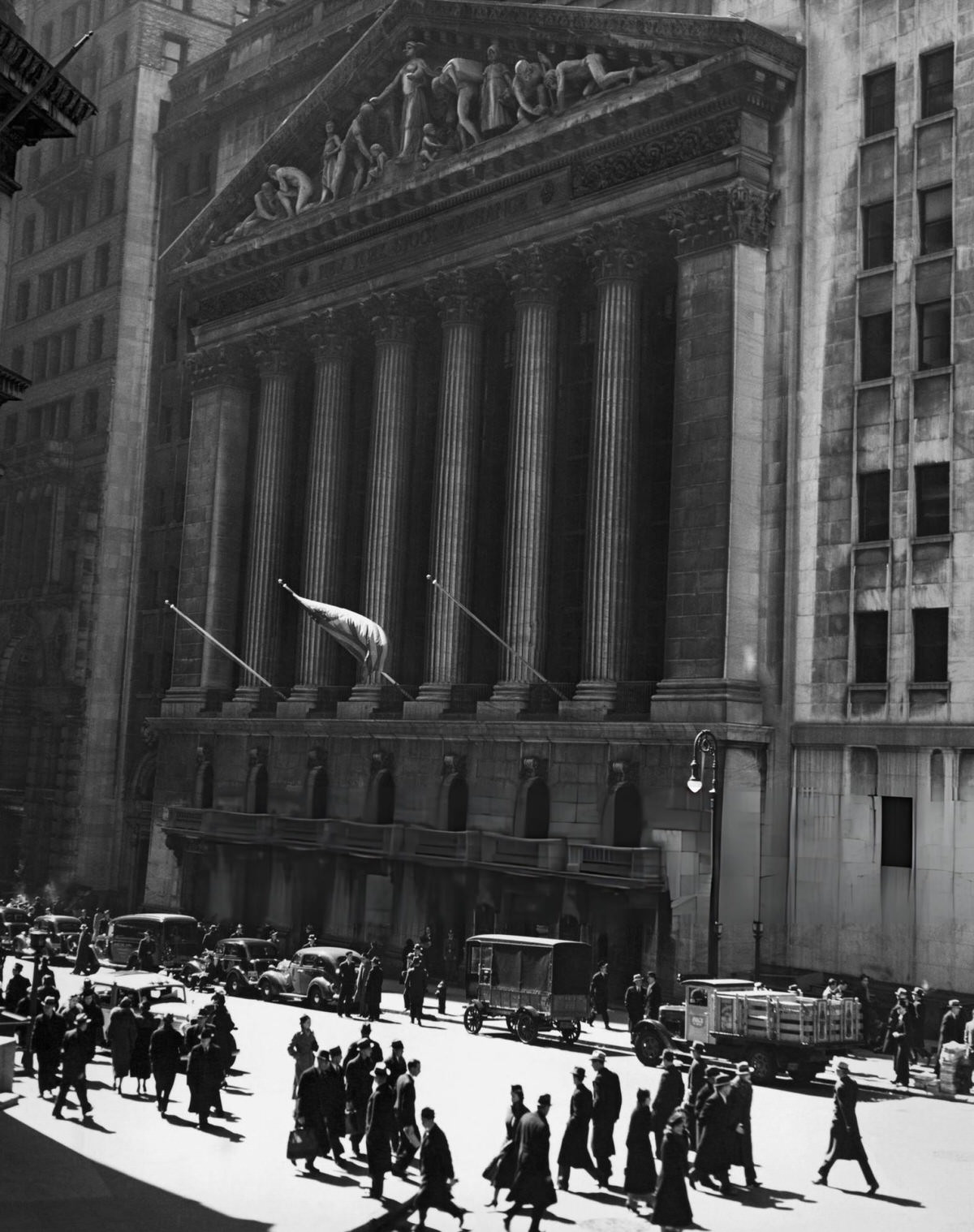
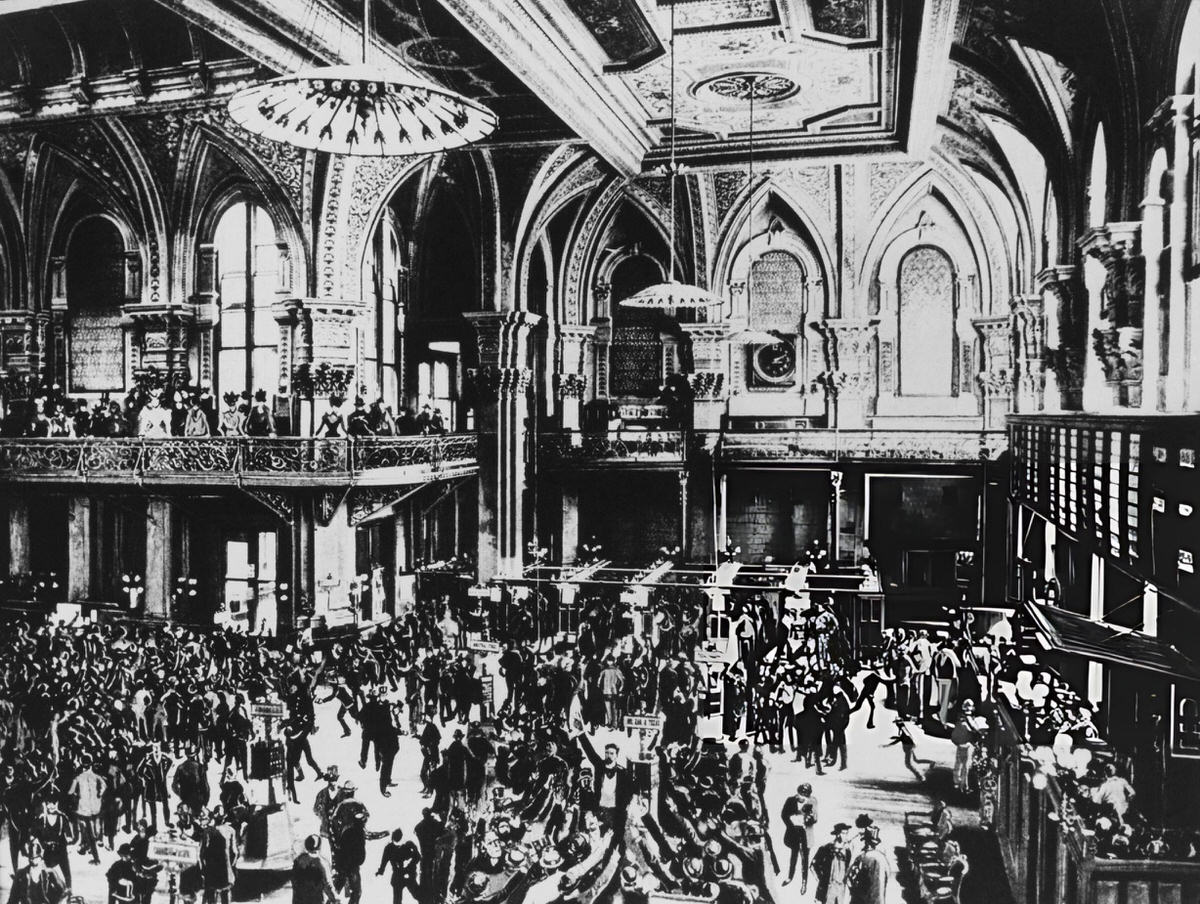
The New York Stock Exchange, sitting at the corner of Broad and Wall, was the engine behind all of it. By 1910, it was handling millions of shares daily. Brokers in the trading pit shouted orders at each other in a system that looked chaotic but ran on strict rules. Messenger boys sprinted between offices. Telegraph wires hummed. The whole district operated at a pace that felt impossible to outsiders.

Read more

1929: The Day the Floor Fell Out

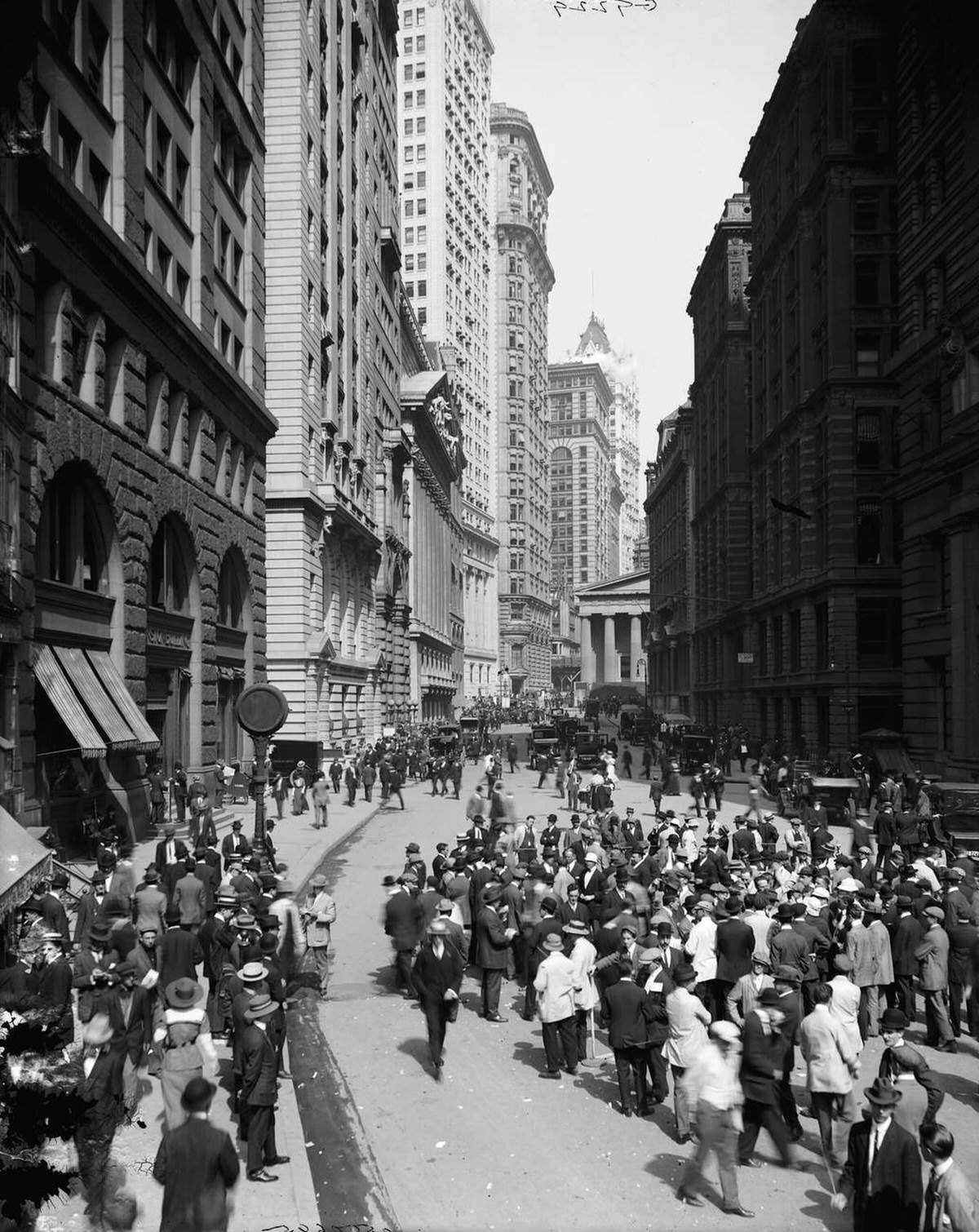
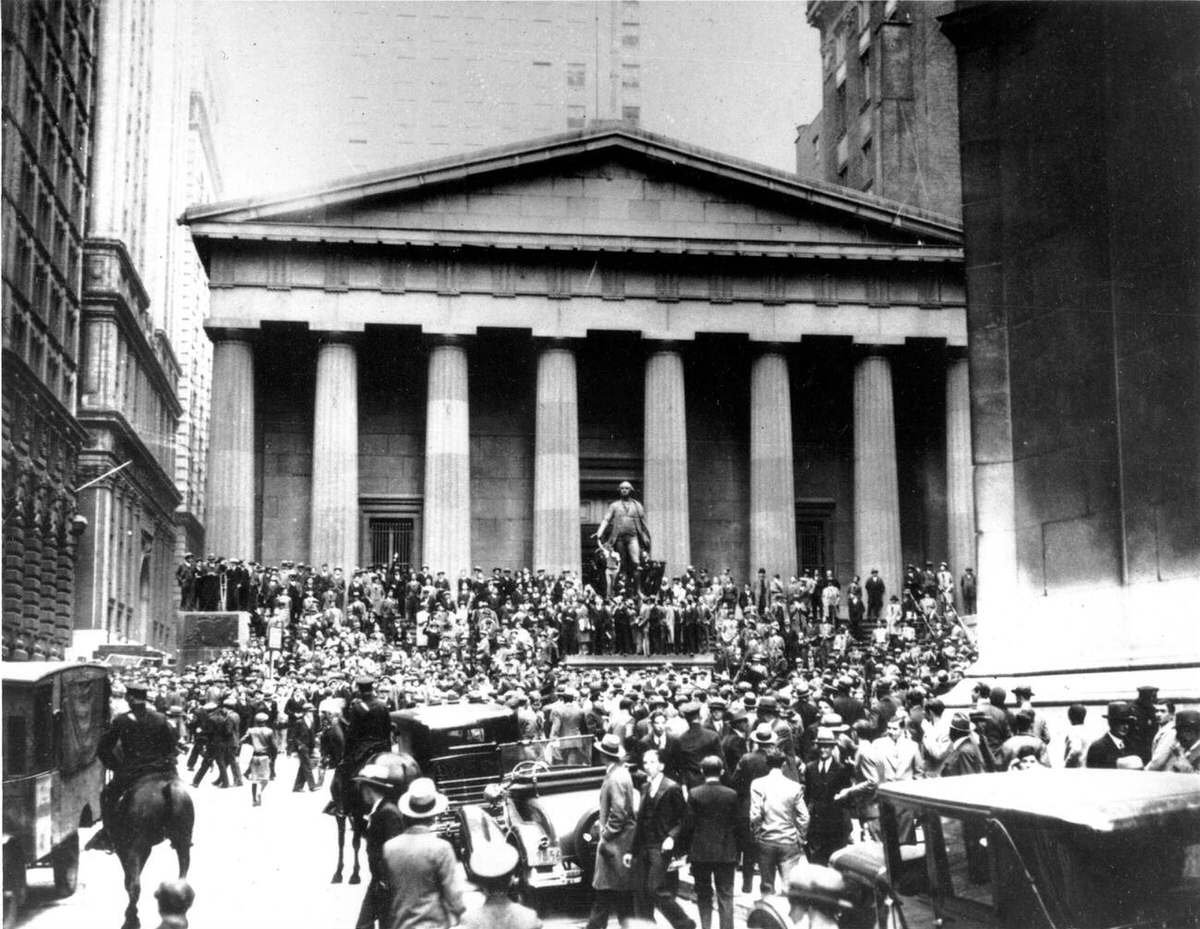
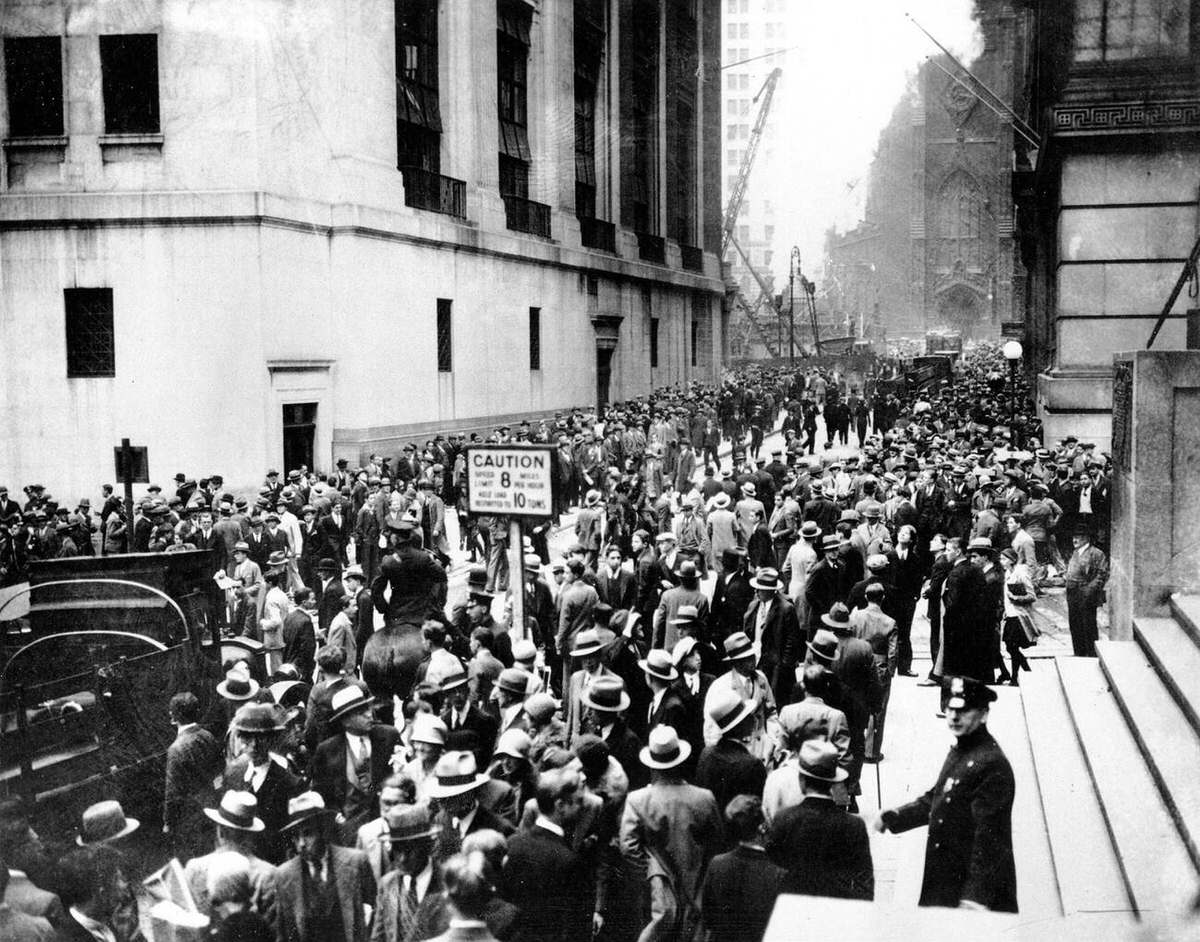
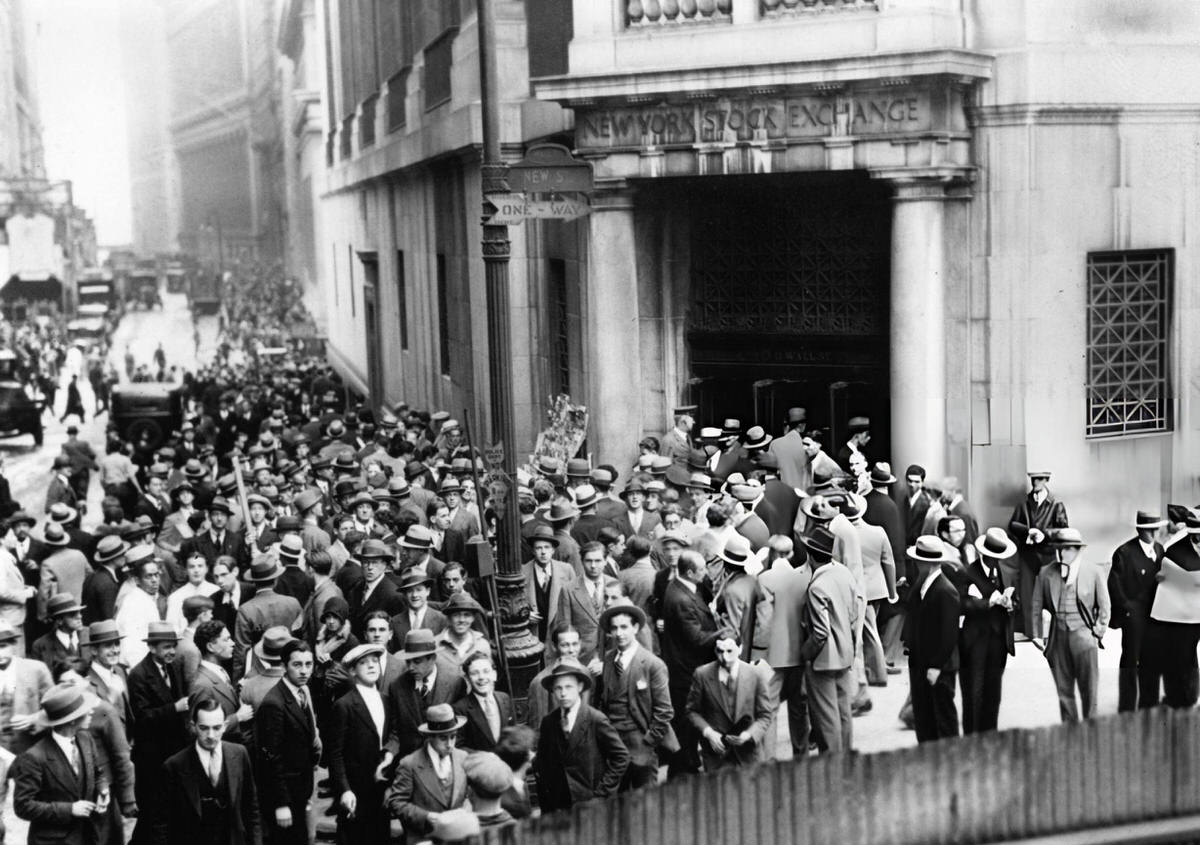
October 24, 1929 changed everything. Black Thursday — the day the stock market collapsed — started on the floor of the NYSE and spread panic across the country within hours. Stock prices fell so fast that ticker machines couldn’t keep up. Crowds gathered outside the exchange on Broad Street, watching men in suits rush in and out, faces white.

Banks failed. Businesses closed. Fortunes built over decades vanished in days. The Depression that followed emptied out office buildings across the district. Firms that had dominated Wall Street for generations simply stopped existing. The restaurants, shoeshine stands, and lunch counters that served the financial workers — all gone quiet.

The district didn’t bounce back fast. Recovery was slow, grinding, and deeply uneven.

World War II: A District at War

The war years transformed the Financial District in unexpected ways. With millions of men shipped overseas, women entered the workforce in numbers the district had never seen. They worked as clerks, bookkeepers, and telephone operators inside the banks and brokerage houses that had been almost entirely male since their founding.

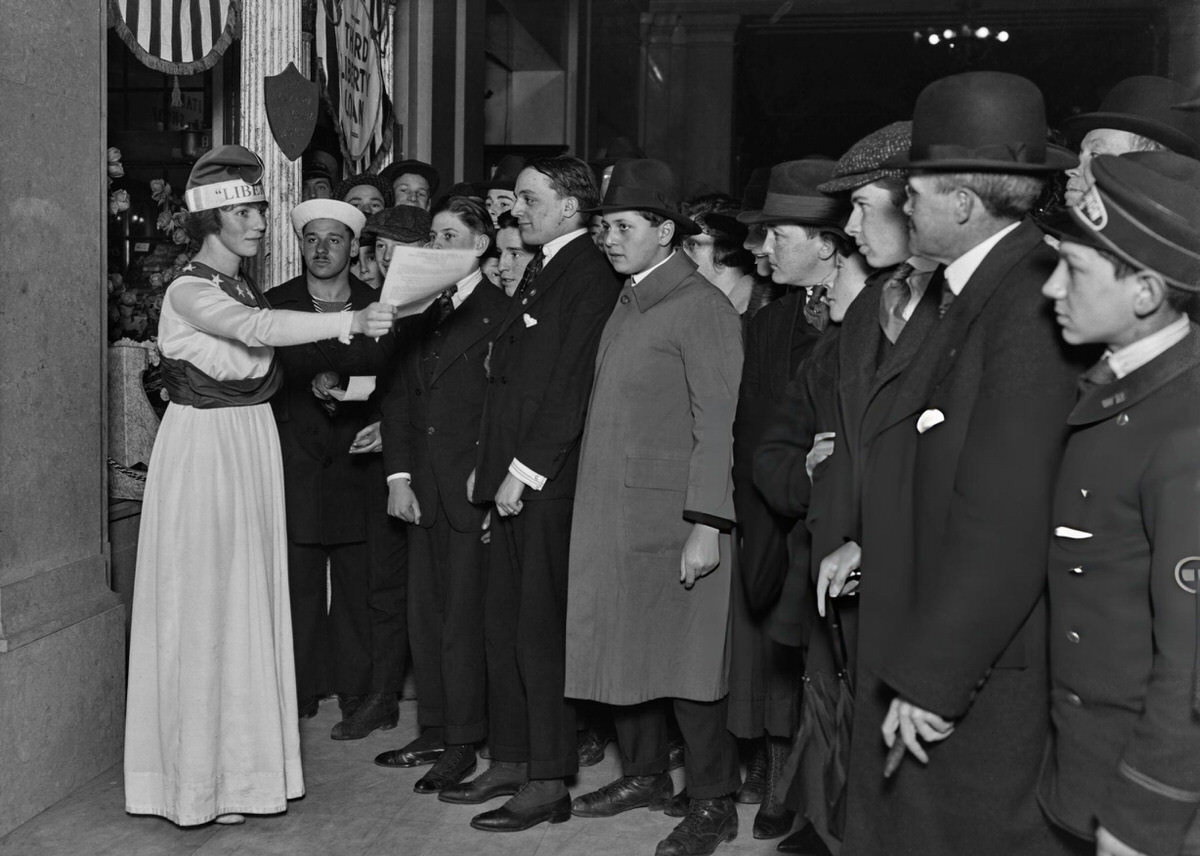
Wall Street also helped finance the war directly. The U.S. government sold war bonds, and the financial institutions of lower Manhattan were central to that effort. Billions of dollars moved through the district to fund tanks, ships, and planes. The Federal Reserve Bank on Liberty Street — a fortress built to hold gold — played a critical role in managing wartime monetary policy.

The Postwar Boom and the Rise of the Corporate World

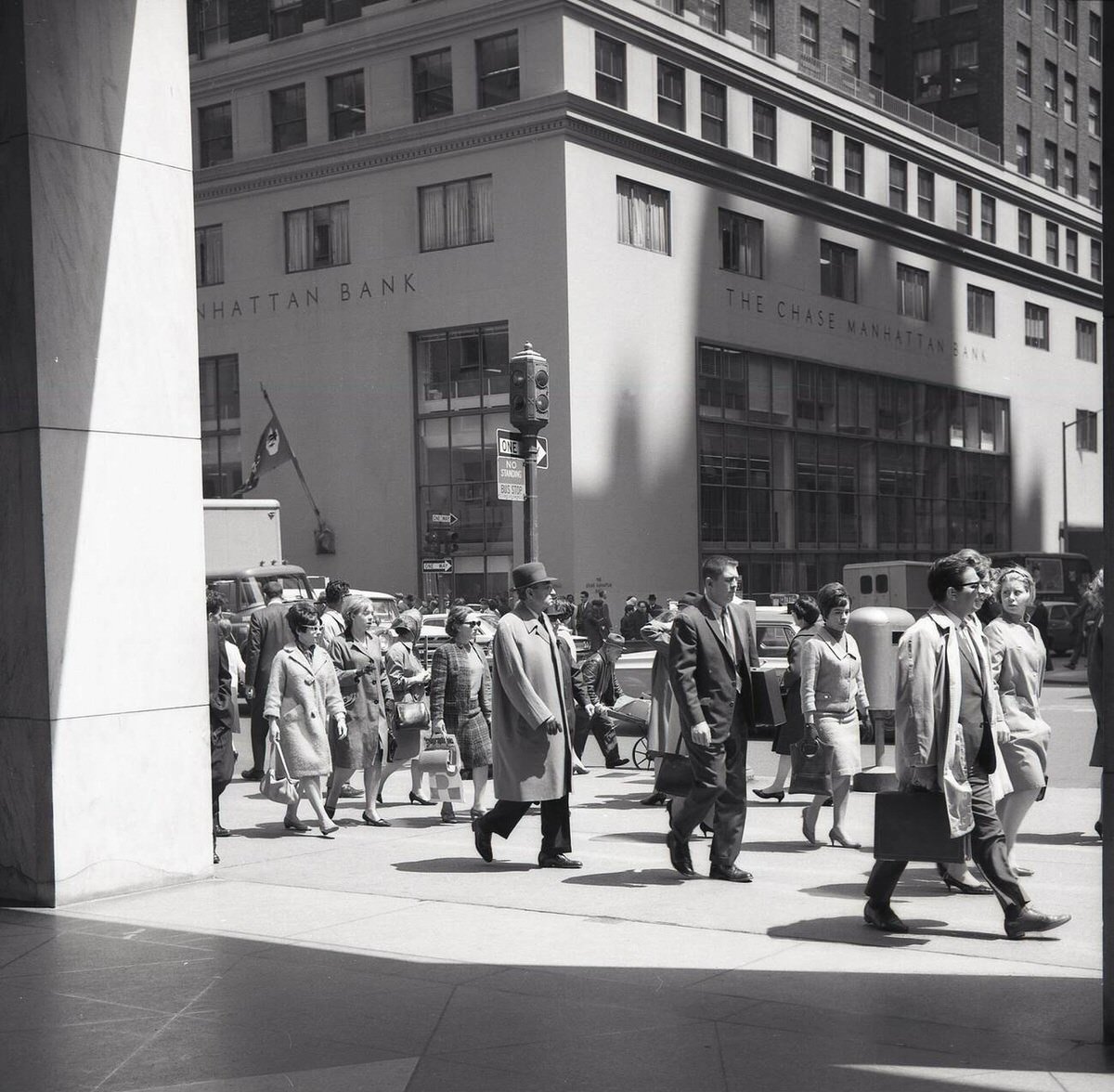
After 1945, the district rebuilt itself. The American economy exploded, and so did the demand for financial services. New investment banks opened. Old ones expanded. Chase Manhattan Bank, under David Rockefeller, commissioned a sleek new headquarters at One Chase Manhattan Plaza in 1961 — a glass-and-aluminum tower that signaled a clean break from the ornate pre-war architecture around it.

But the district was also beginning to lose some of its residential population. People who had lived in lower Manhattan for generations were moving to the suburbs. By the 1960s, the Financial District was increasingly a place people commuted to, not a neighborhood anyone called home.

The 1970s Collapse and What Followed

New York City nearly went bankrupt in 1975. The financial crisis that gripped the whole city hit the district hard. Buildings sat partially empty. Crime in lower Manhattan rose sharply. The streets after 5 p.m. were practically deserted.

The World Trade Center, which opened its towers between 1972 and 1973, was supposed to revitalize the area. For years, the city actually had to move its own agencies there to fill the space. The twin towers were controversial from the start — critics called them soulless boxes, too big, too cold.

The 1980s Bull Market

The 1980s brought a dramatic reversal. Stock markets surged. Investment banking became enormously profitable. Young traders and bankers flooded into the district, and with them came a culture of excess that became its own kind of legend. Salaries at top firms reached levels that seemed fictional. The district’s restaurants filled back up, now with expense accounts instead of lunch pails.

The decade ended with another crash — October 1987, Black Monday — but by then, the Financial District had proven something the 20th century kept testing: it bent, but it didn’t break.
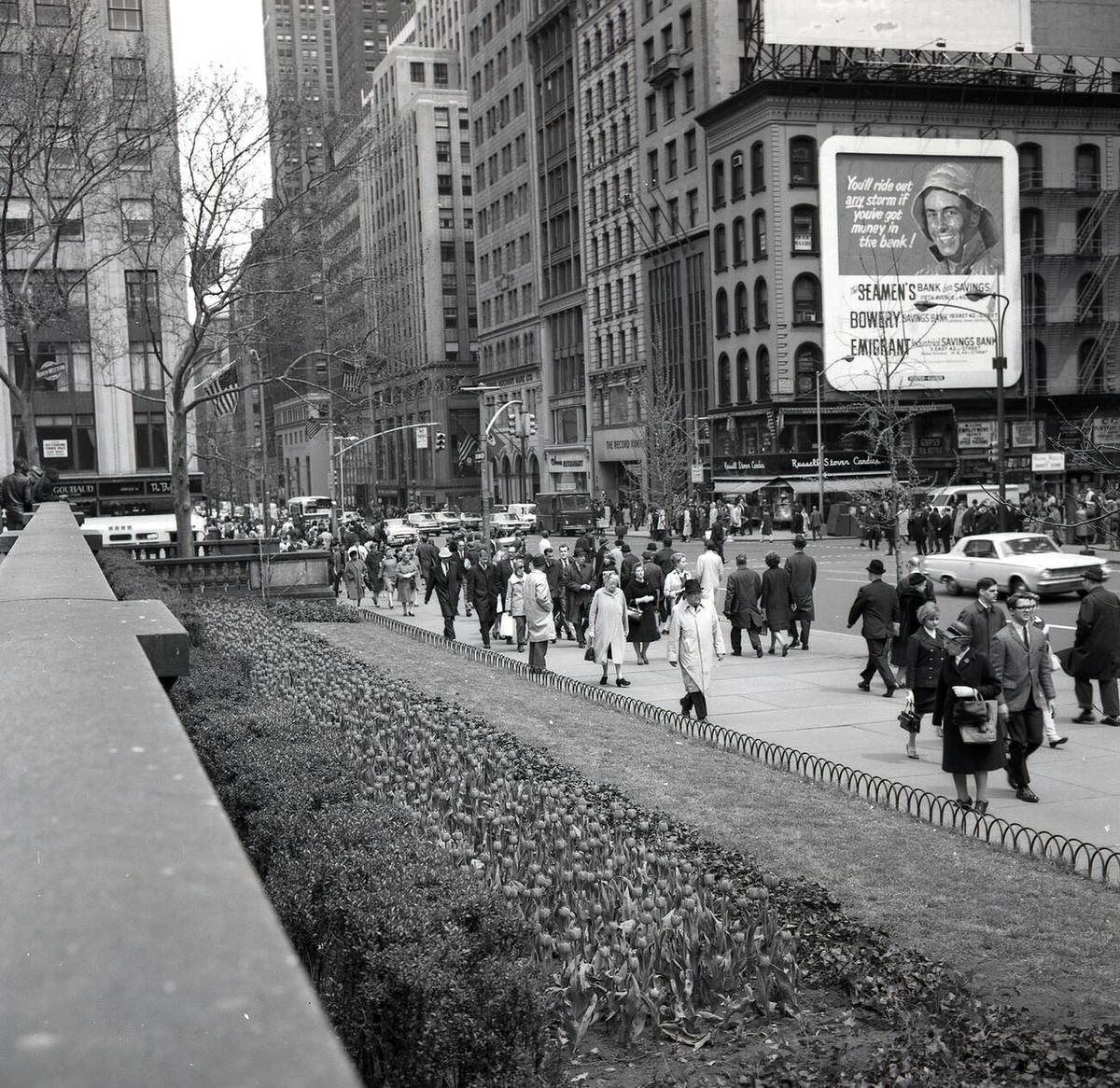
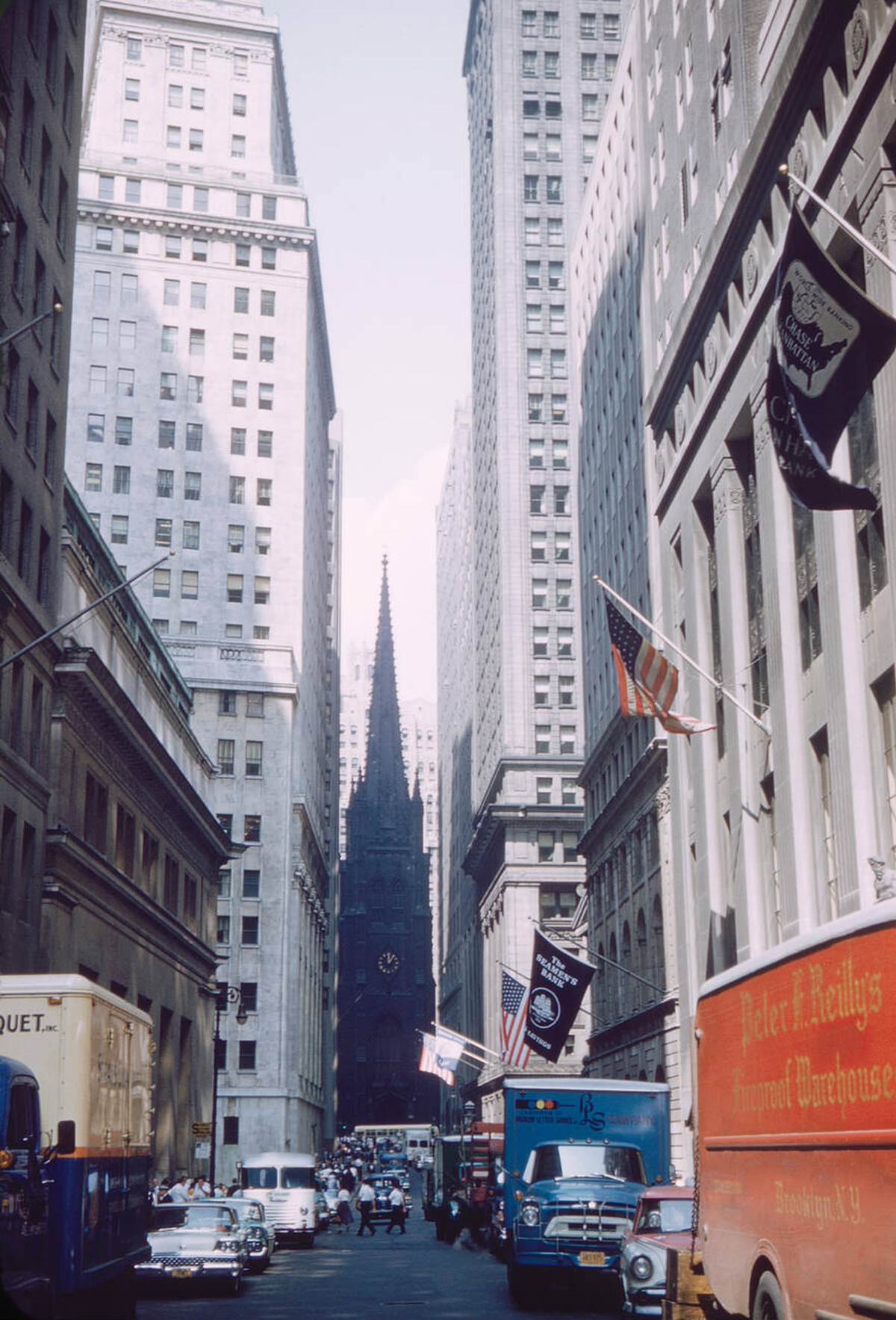
#3 Billboard for the Seaman’s Bank for Savings, Bowery Savings Bank, and Emigrant Industrial Savings Bank on Wall Street, 1960s.
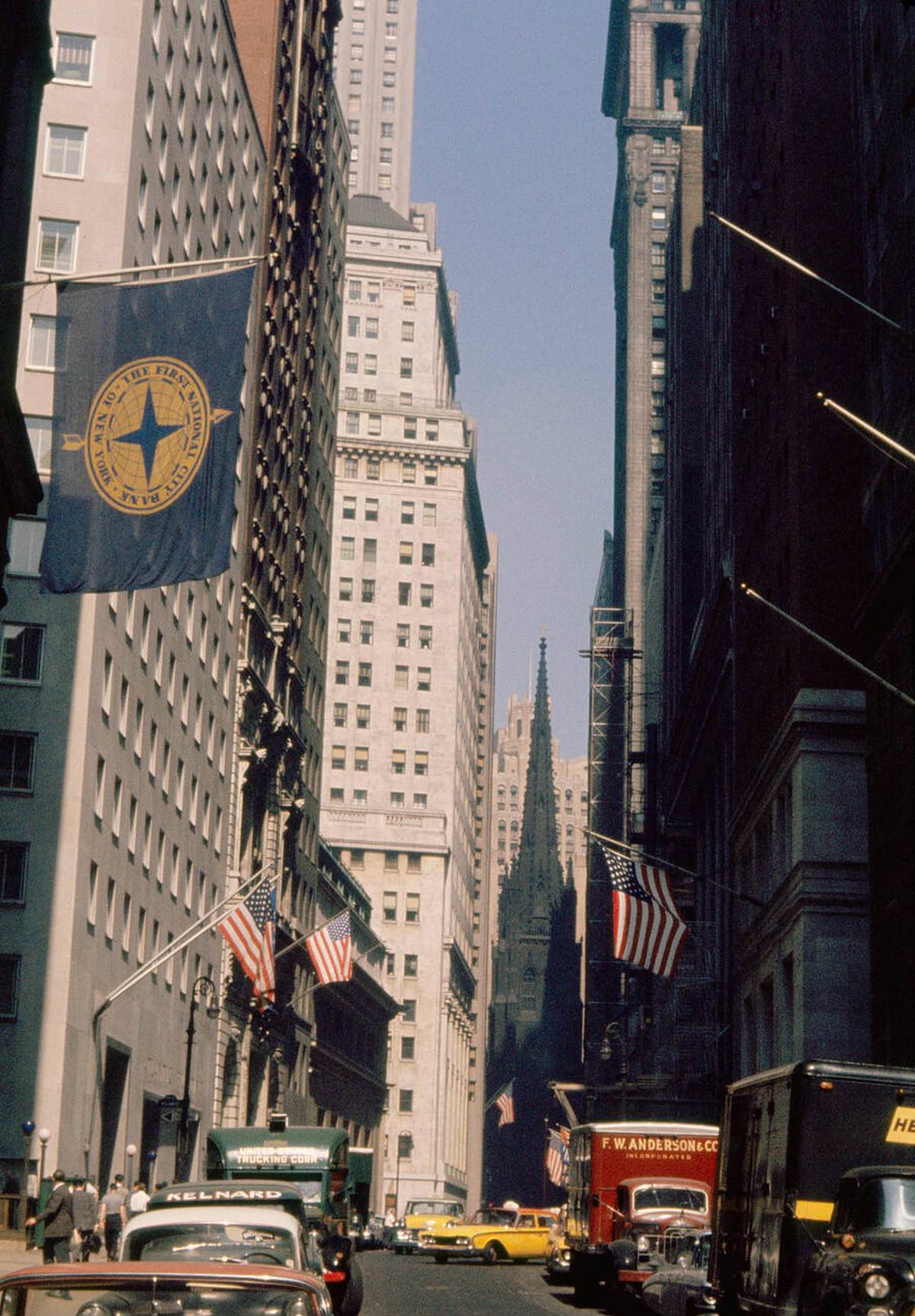
#4 Office workers walking near the Chase Manhattan Bank offices, Manhattan, 1960s.

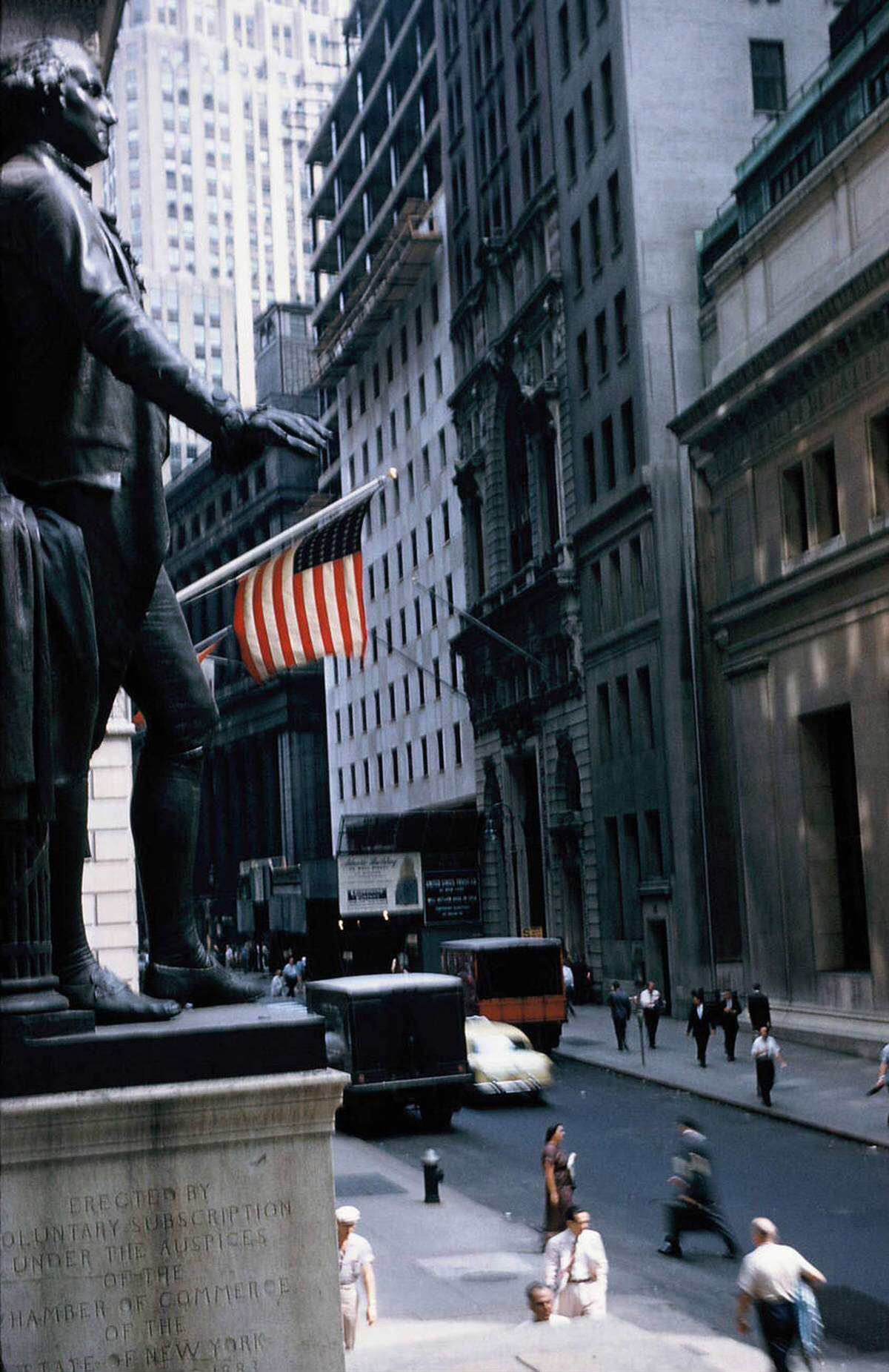
#5 New York Stock Exchange at the corner of Broad and Wall Streets with the statue of George Washington, 1960.

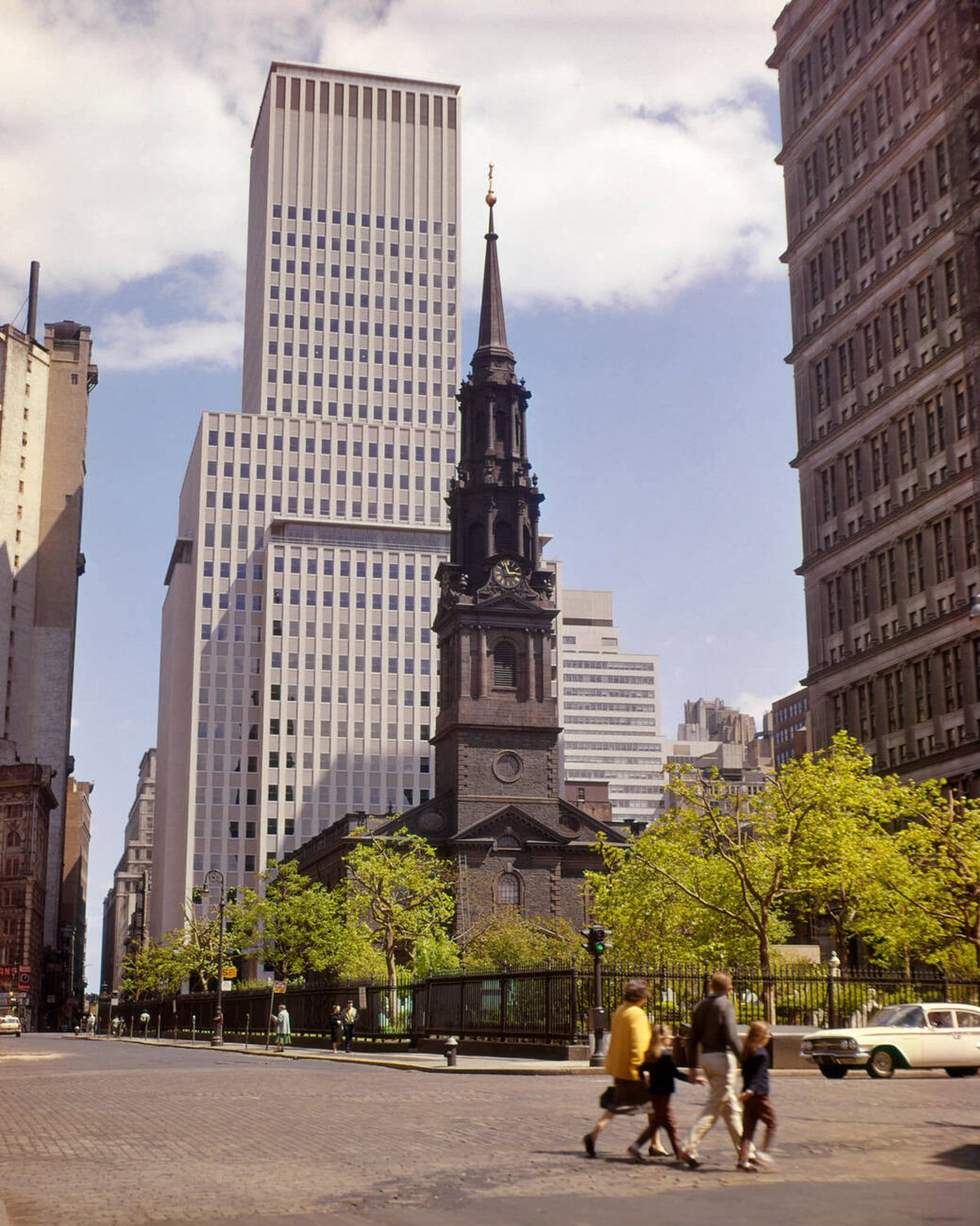
#6 St. Paul’s Chapel and the Western Electric Building, New York, 1960.

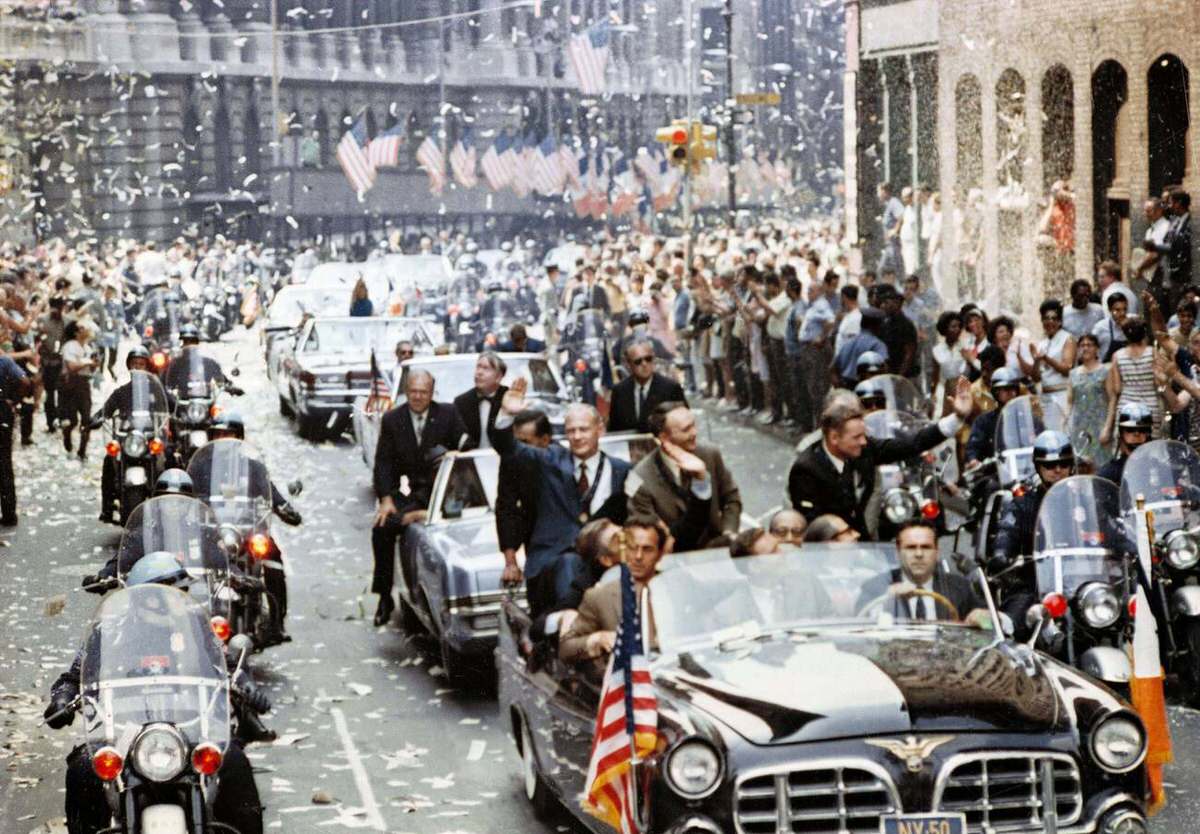
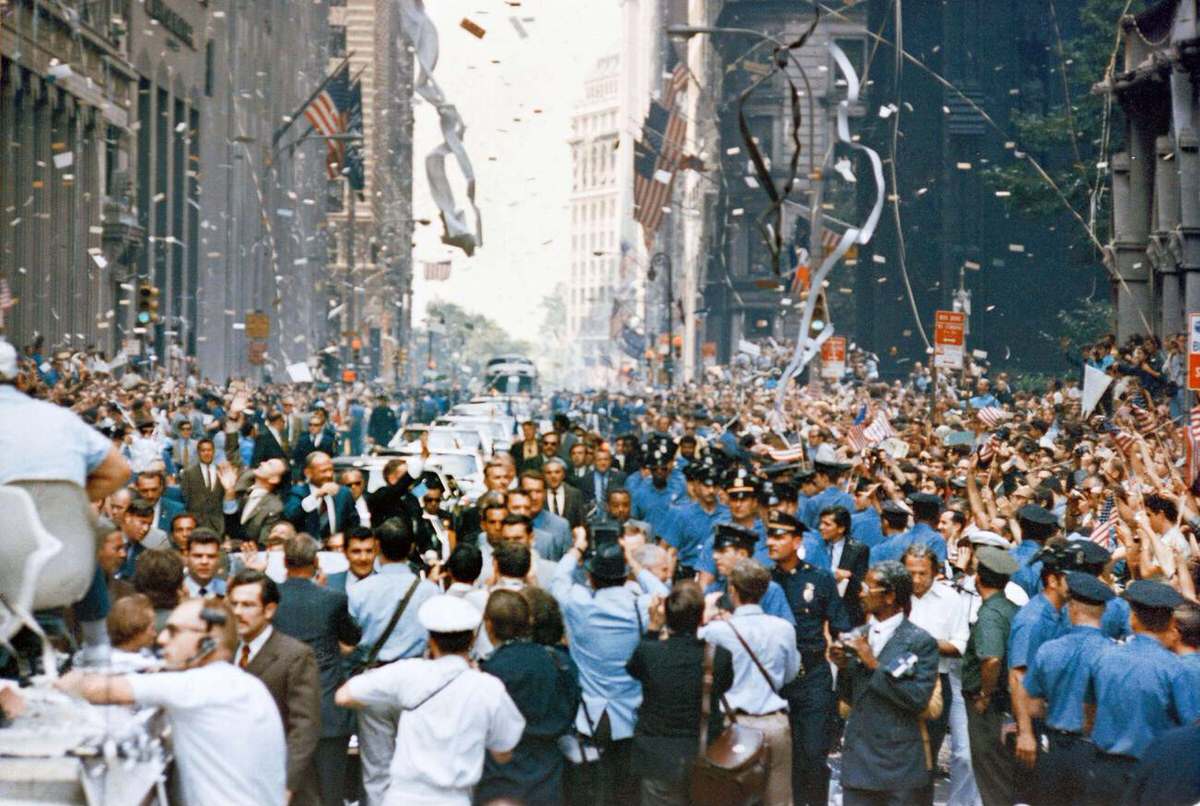
#9 Ticker tape parade for Apollo 11 astronauts Neil Armstrong, Michael Collins, and Buzz Aldrin on Broadway, 1969.

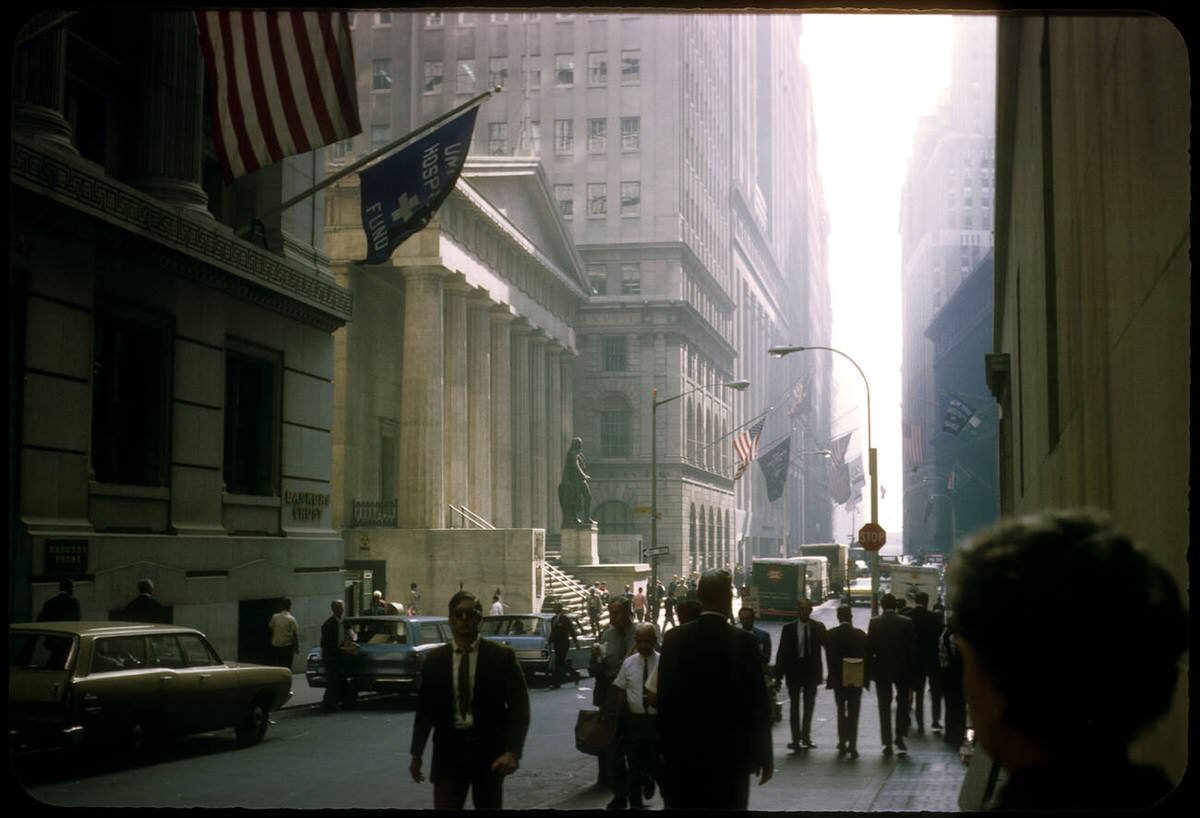
#10 U.S. Treasury on Broadway in the afternoon light, New York, 1968.

#11 Ticker tape parade for Apollo 11 astronauts Neil Armstrong, Michael Collins, and Buzz Aldrin on Broadway, 1969.

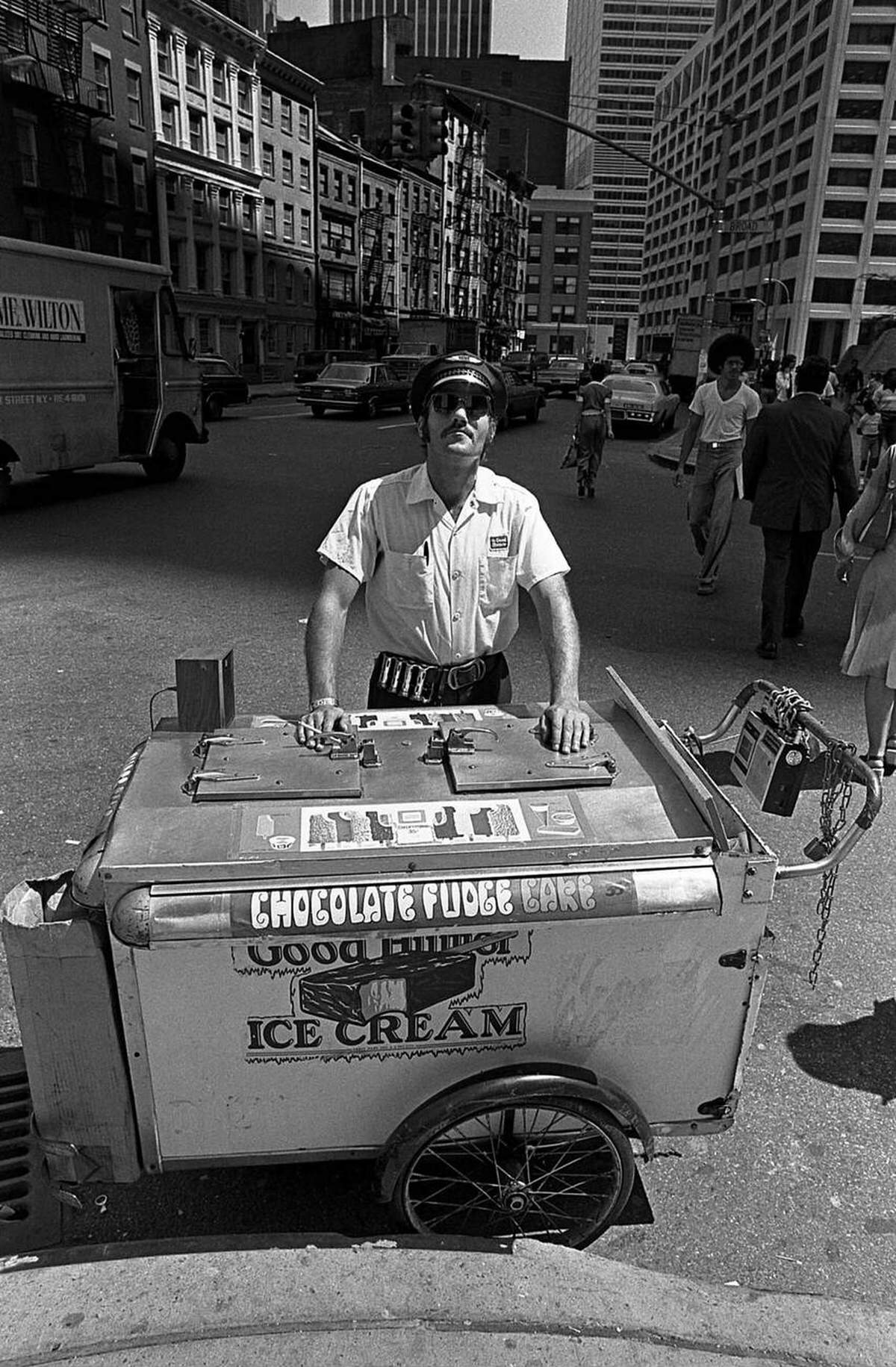
#12 Ice cream vendor at the corner of Broad and Water Streets, Lower Manhattan, 1975.

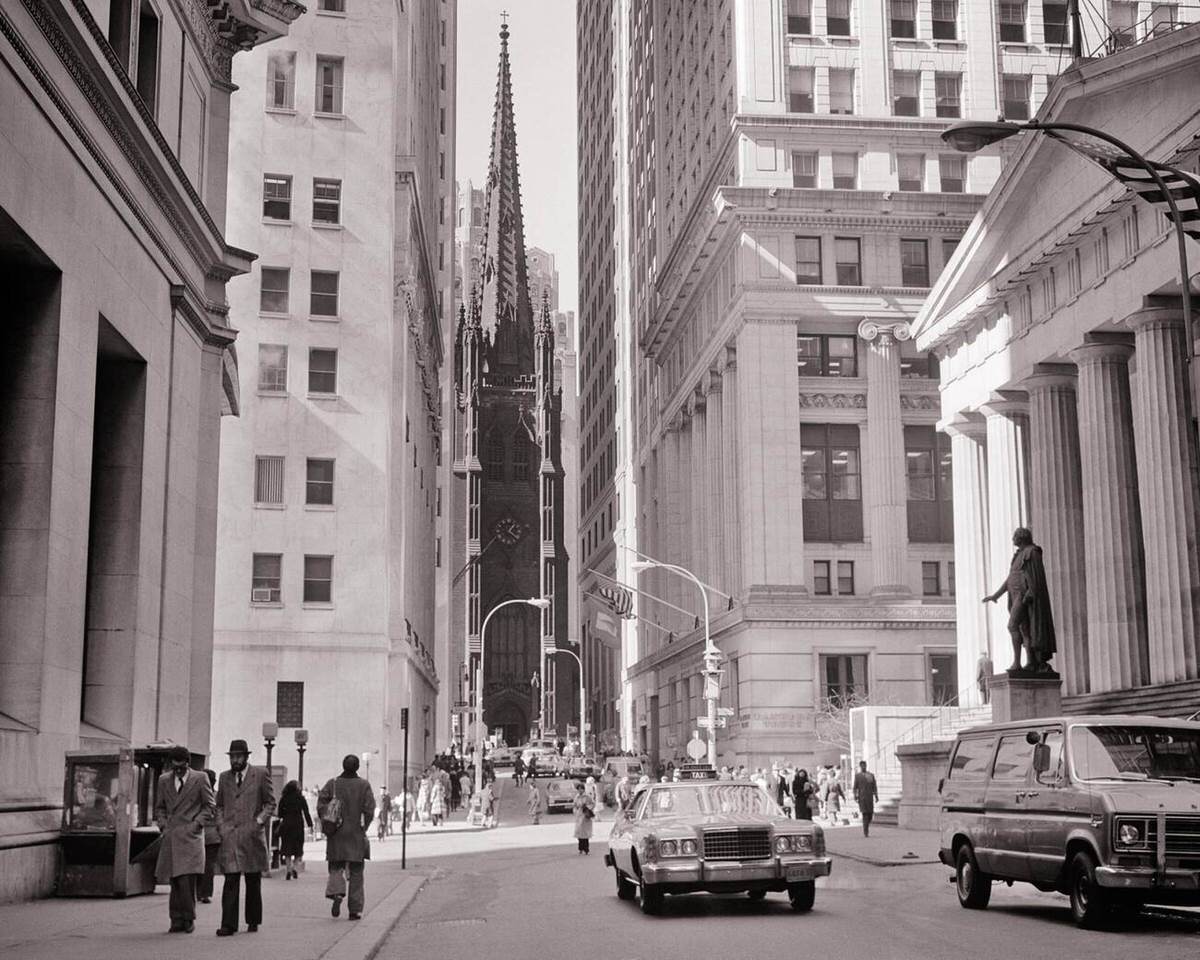
#13 View down Wall Street toward Trinity Church and Federal Hall, Manhattan, 1978.

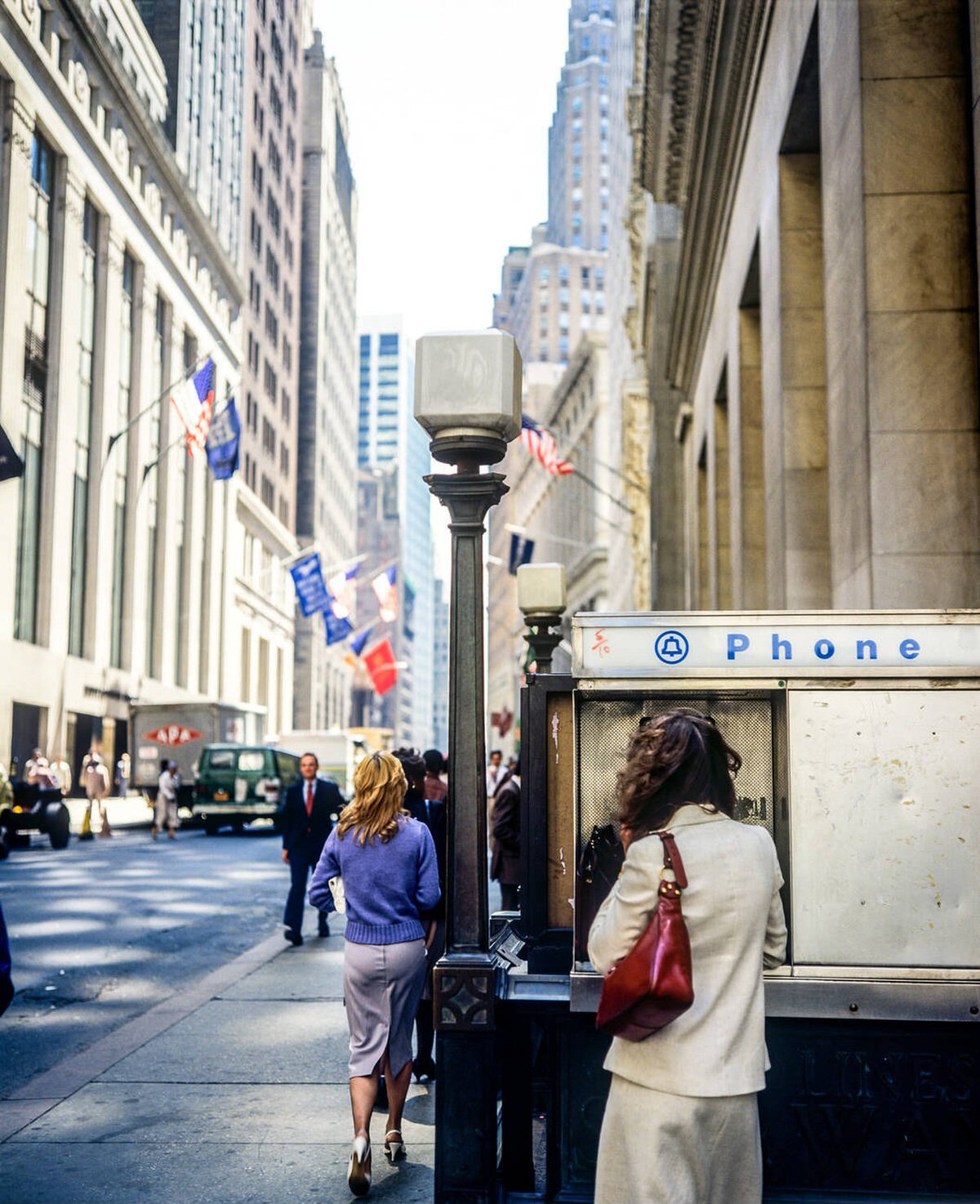
#14 Woman using a public pay phone booth on Wall Street, 1982.

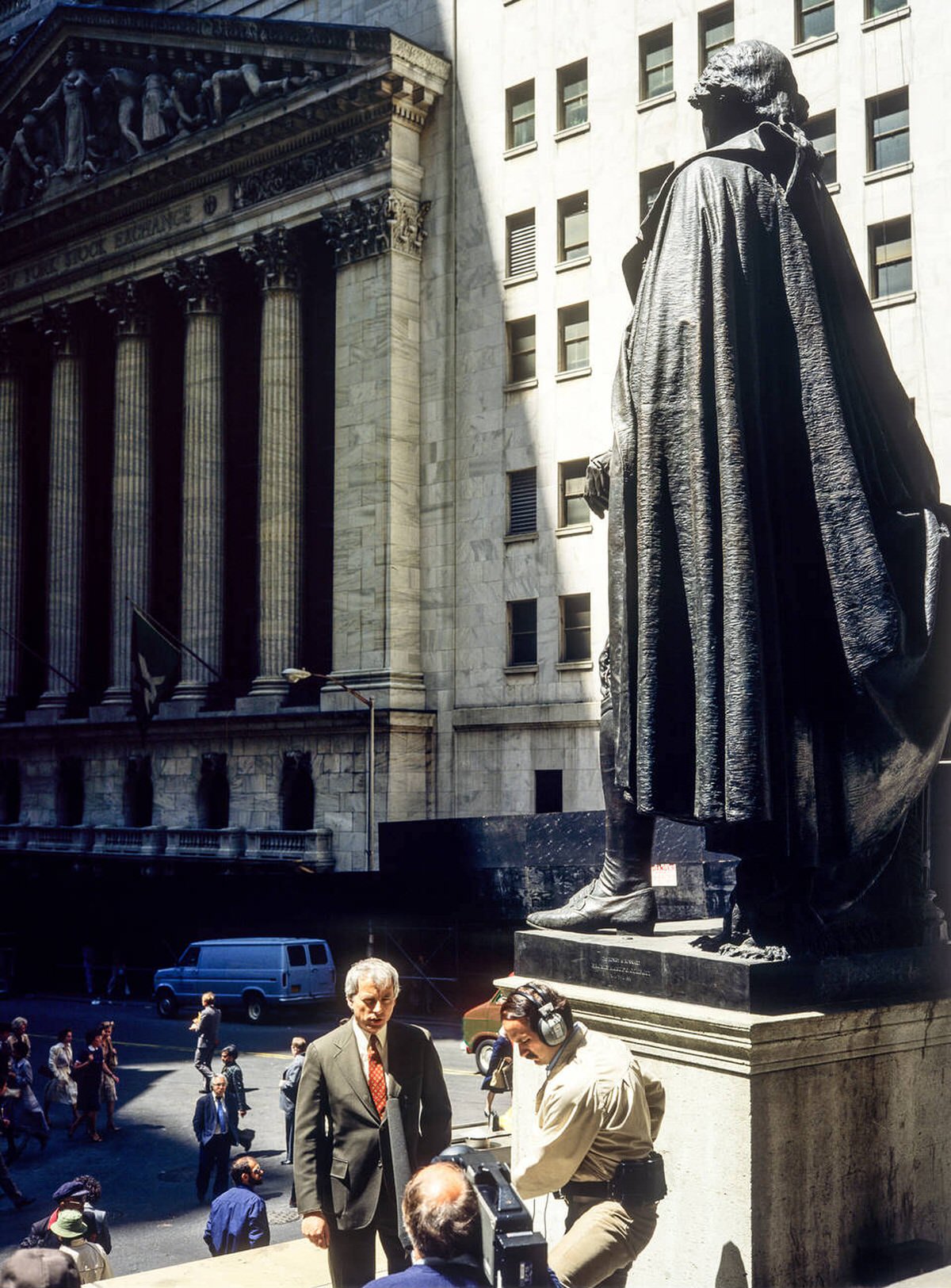
#15 Television crew conducting an interview near the George Washington statue and New York Stock Exchange, 1982.

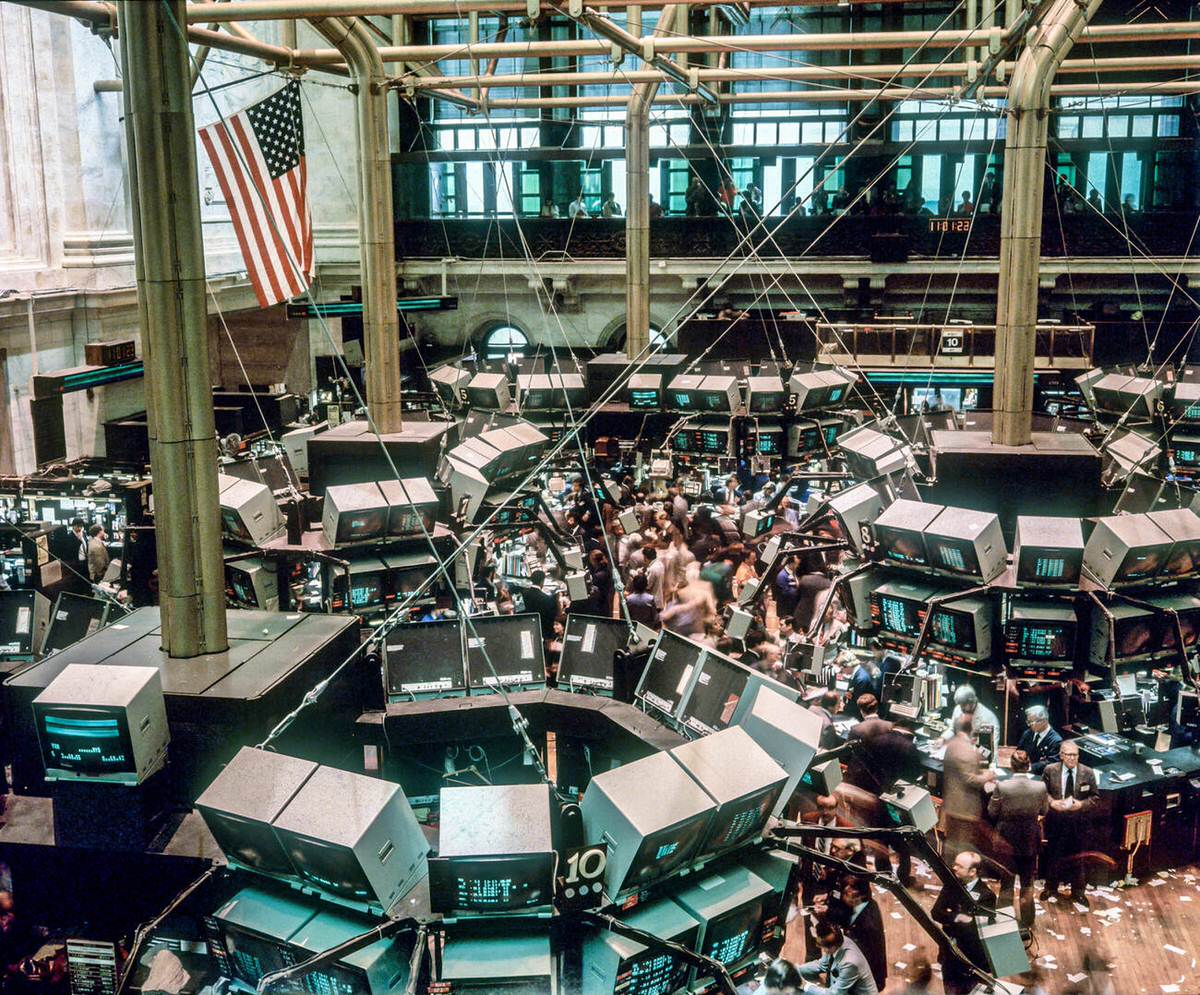
#16 Interior of the New York Stock Exchange trading floor, Manhattan, 1982.

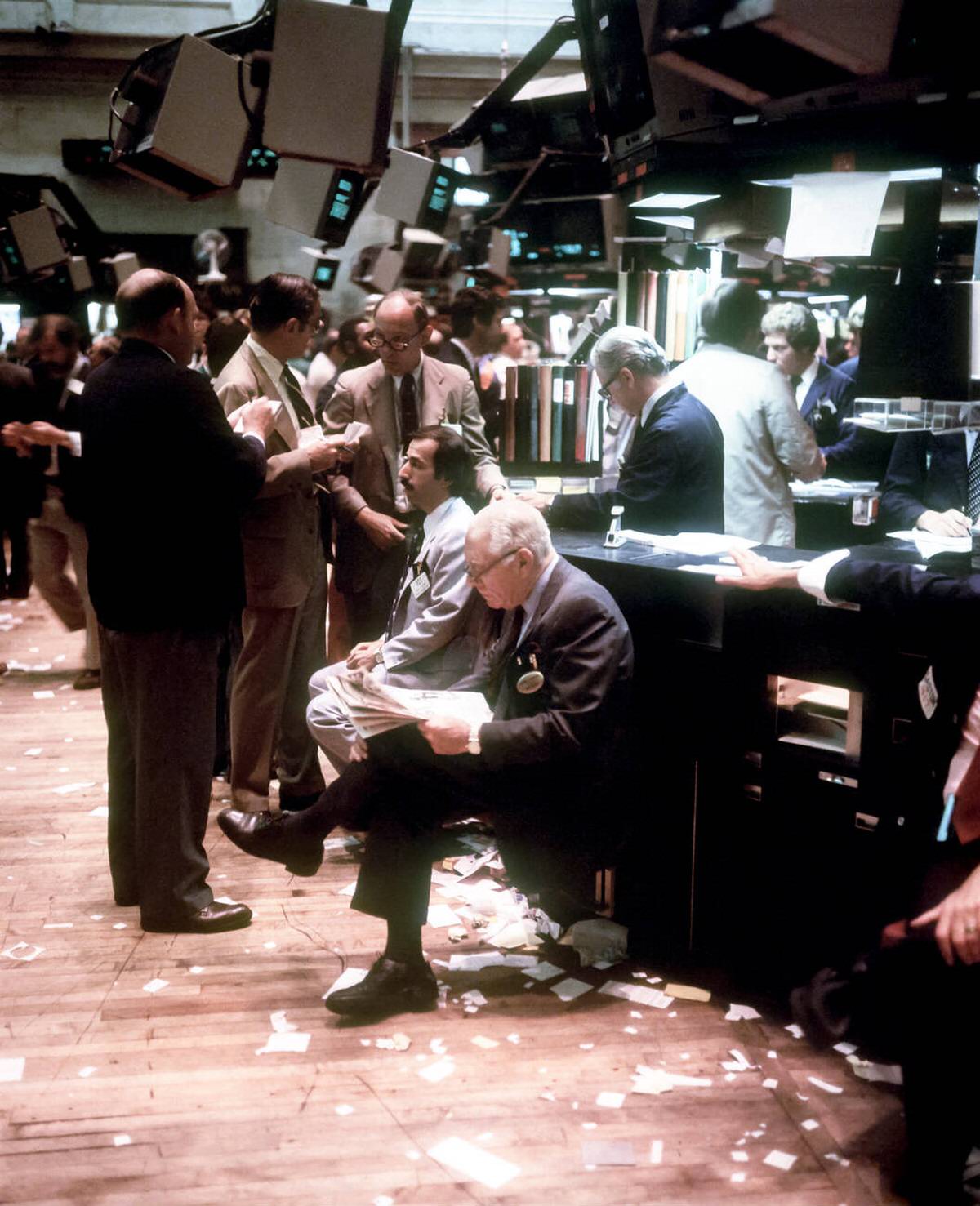
#17 Broker reading a financial paper on the New York Stock Exchange trading floor, 1982.

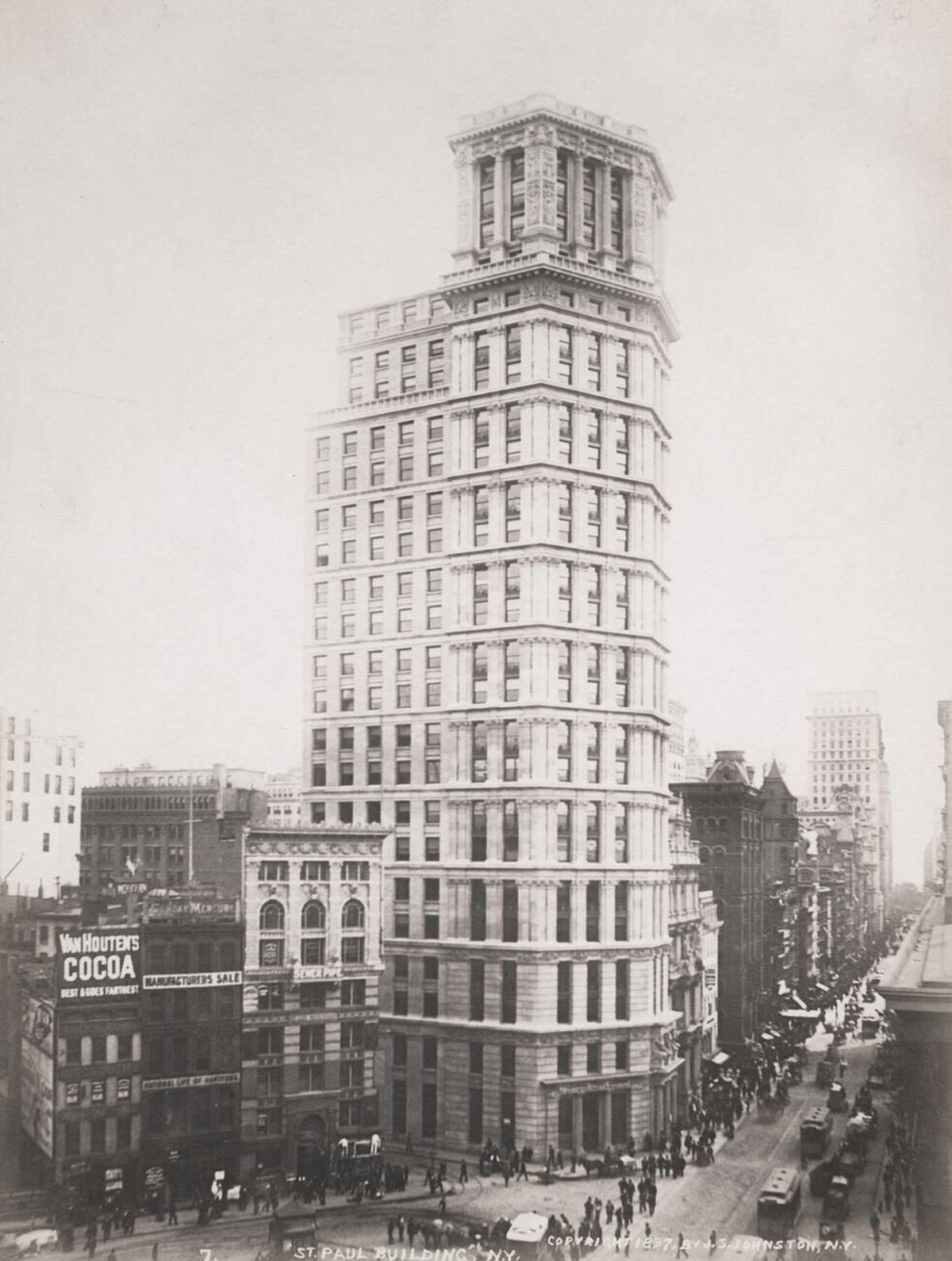
#18 St. Paul Building at 220 Broadway and Ann Street, Financial District, 1900.

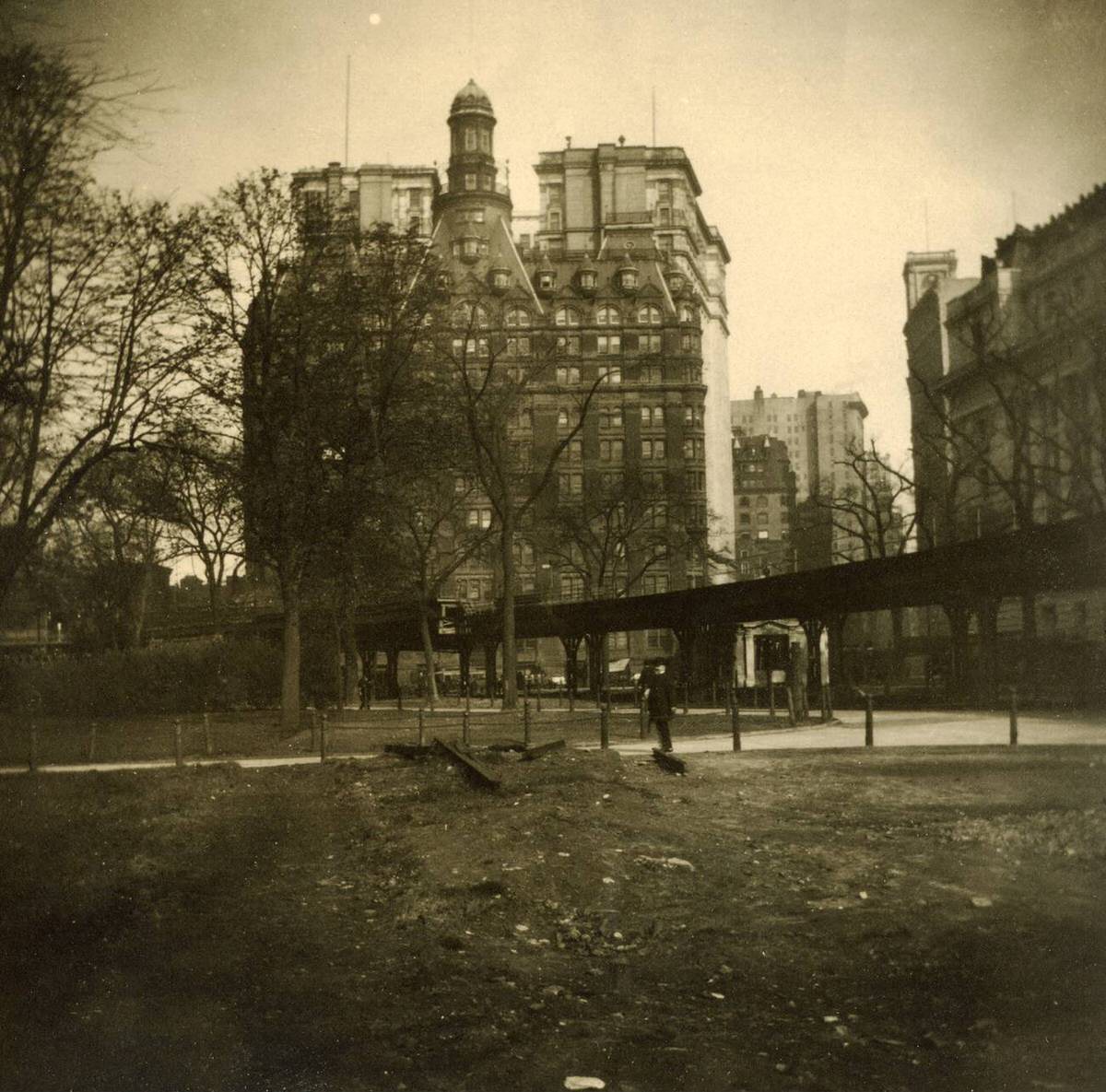
#19 Washington Building at No. 1 Broadway near Battery Park, Manhattan, 1900.

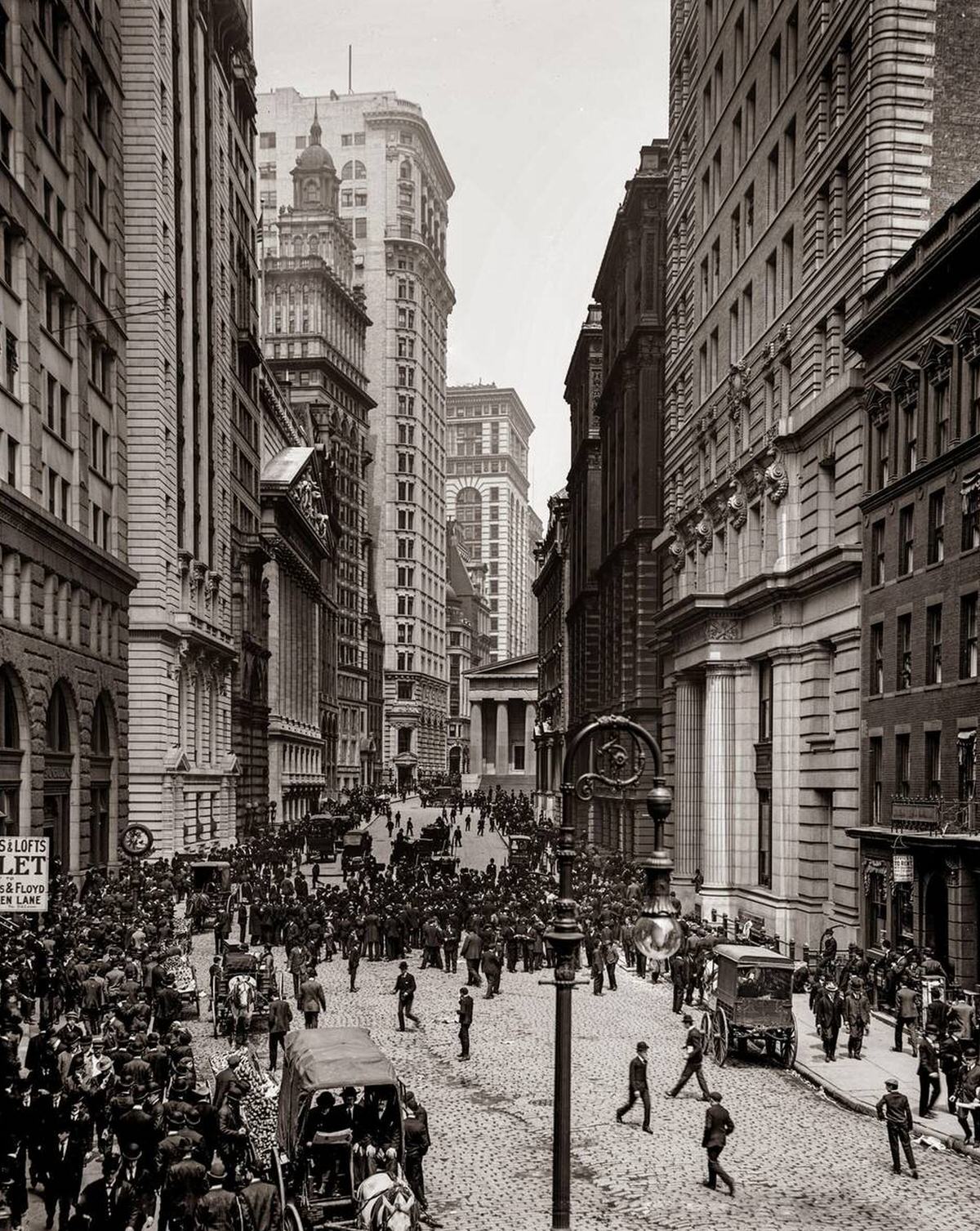
#20 Curb Exchange brokers on Broad Street looking north toward Wall Street and Federal Hall, 1906.

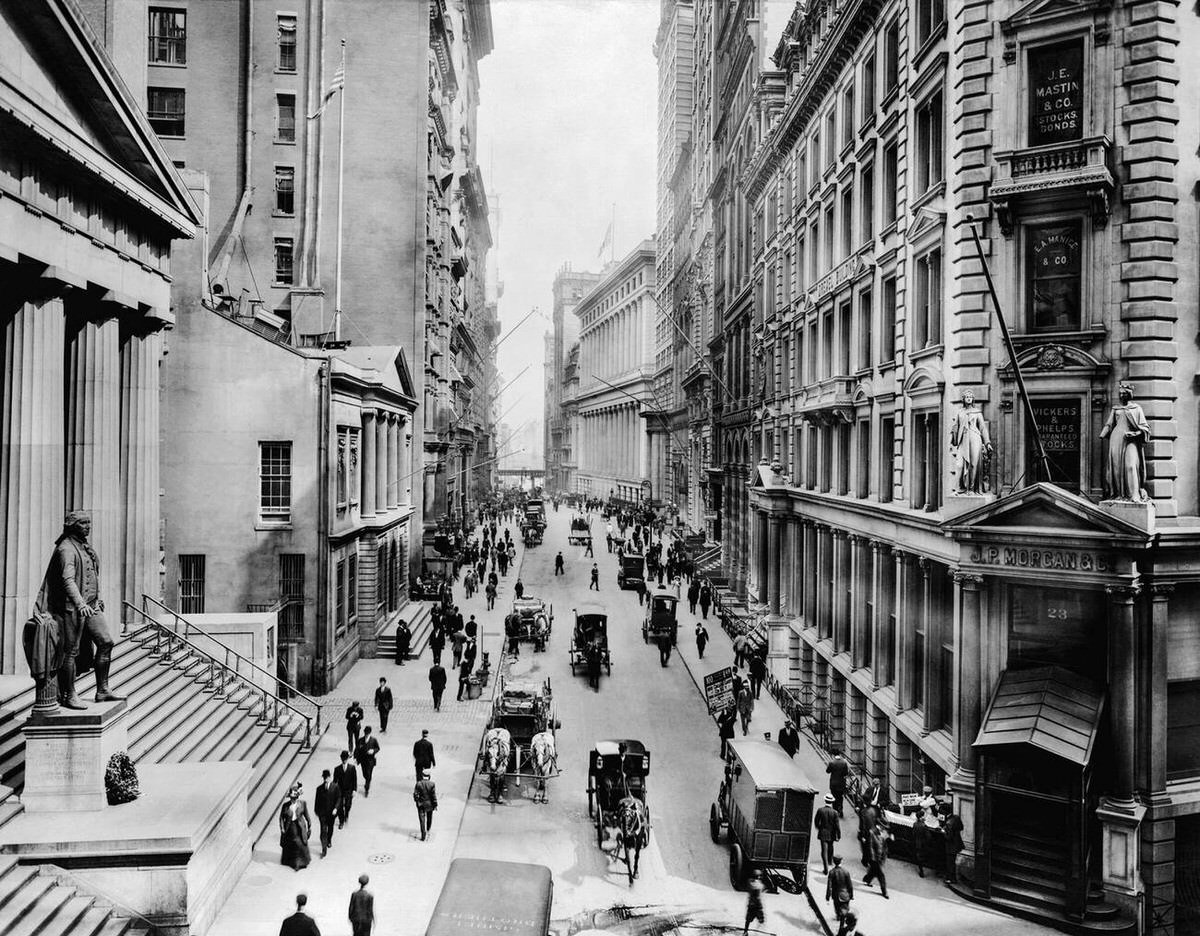
#21 Wall Street looking east from Nassau Street, New York, 1911.

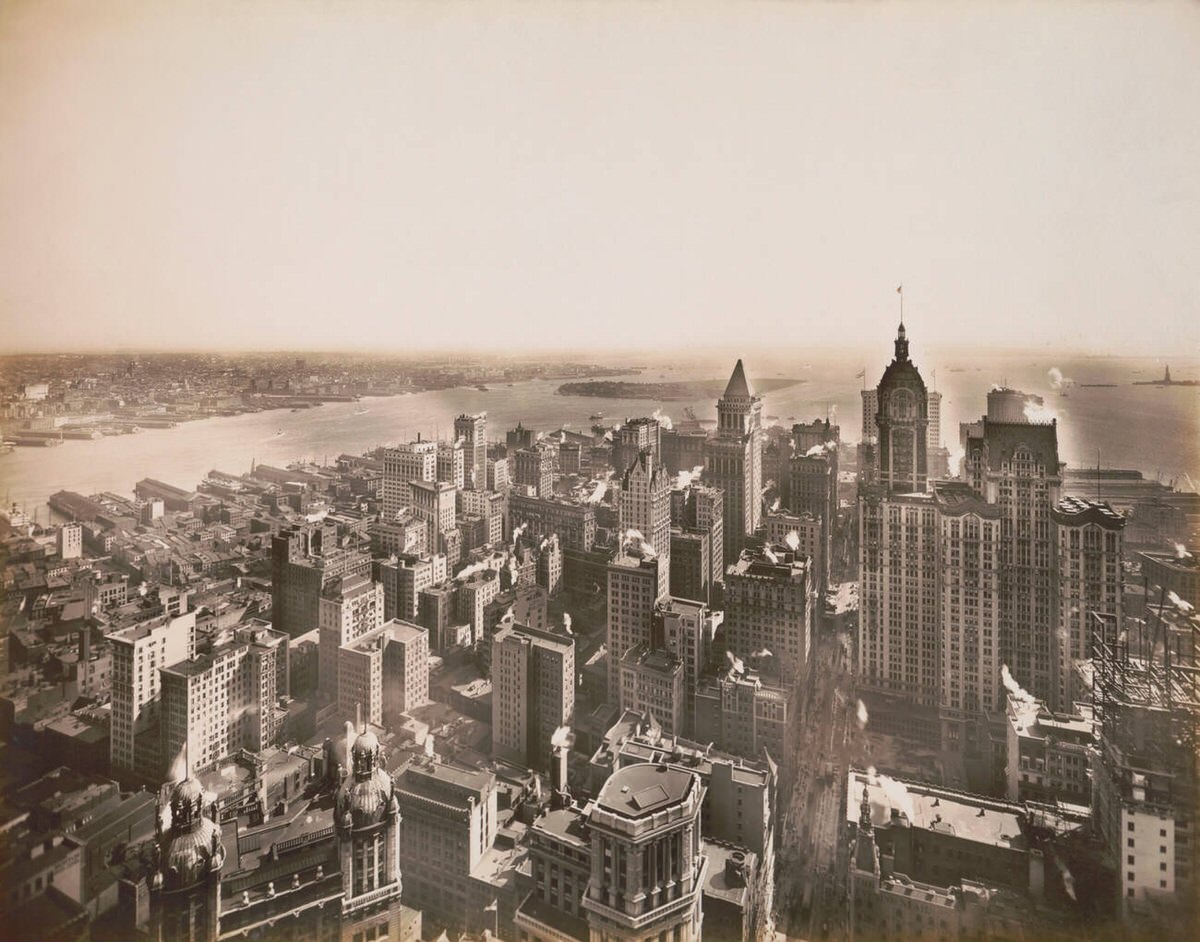
#22 Cityscape looking south from the Woolworth Building, New York, 1913.

#23 View north from Battery Park toward the Financial District featuring the Singer Building and Equitable Building, 1915.

#24 Curb exchange trading on Broad Street, New York, 1915.

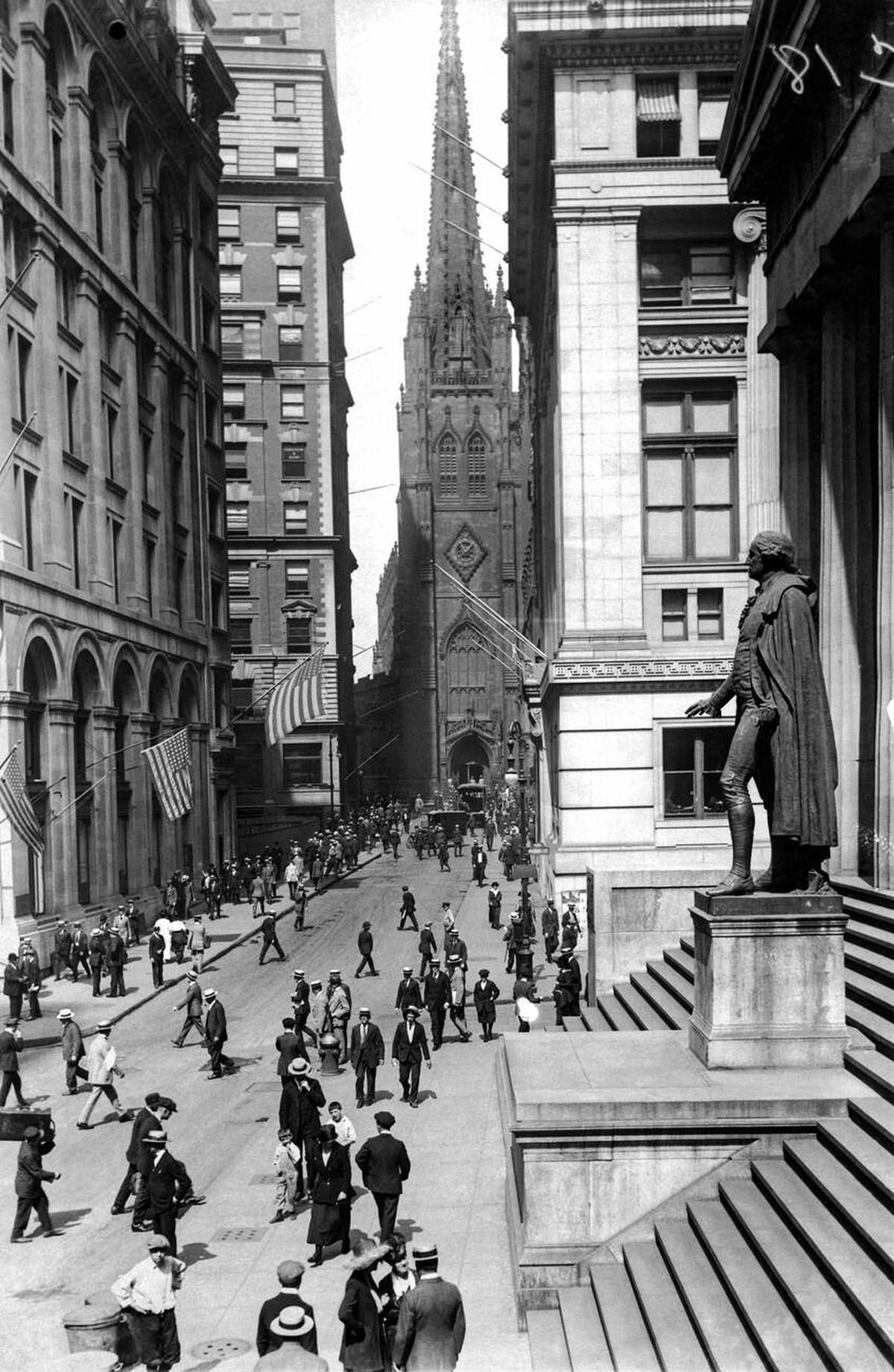
#25 Wall Street looking west from the U.S. Treasury toward Broadway and Trinity Church, 1924.

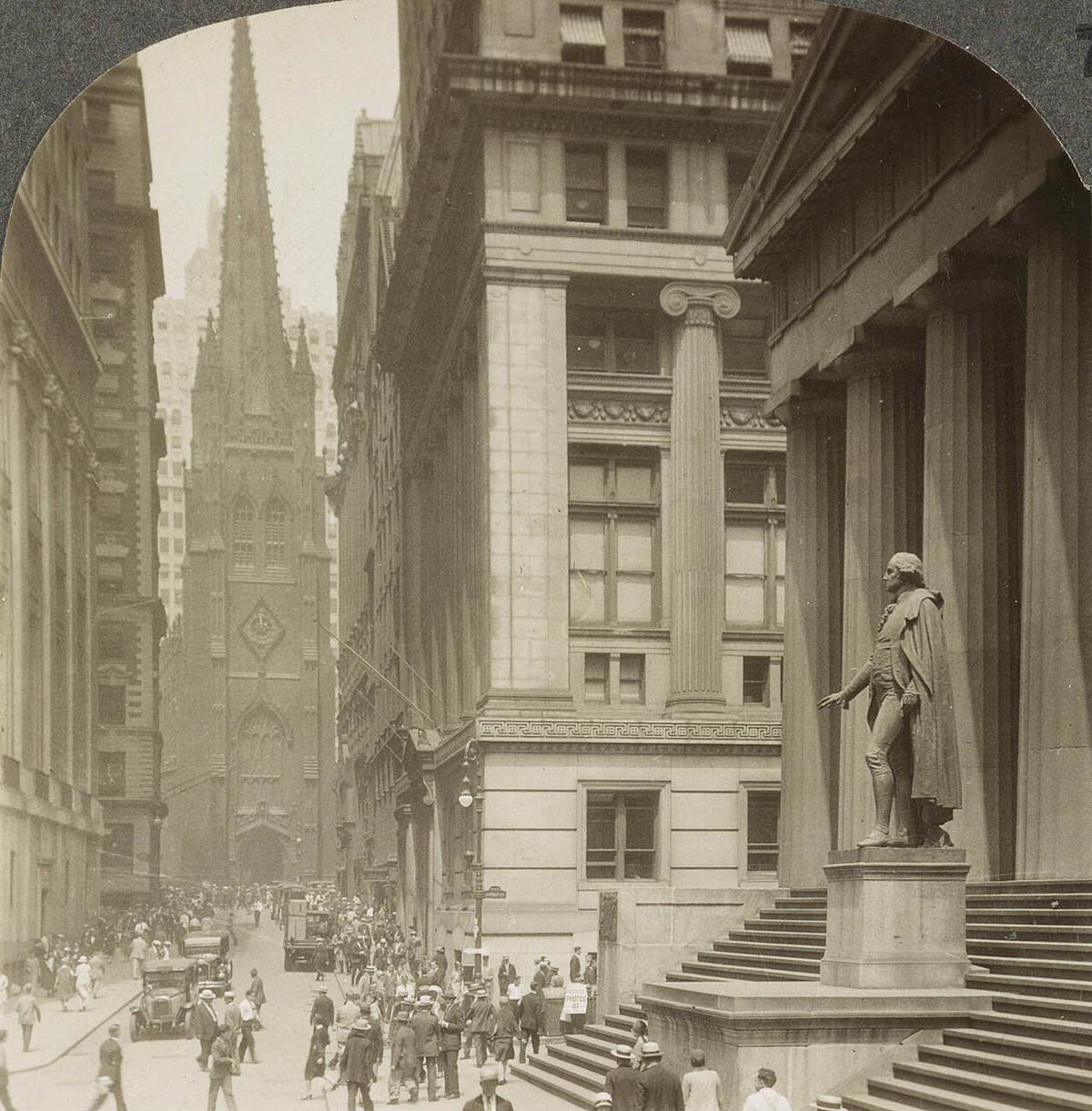
#26 Federal Hall National Memorial and Trinity Church, New York, 1928.

#27 Federal Hall National Memorial and Trinity Church, New York, 1928.

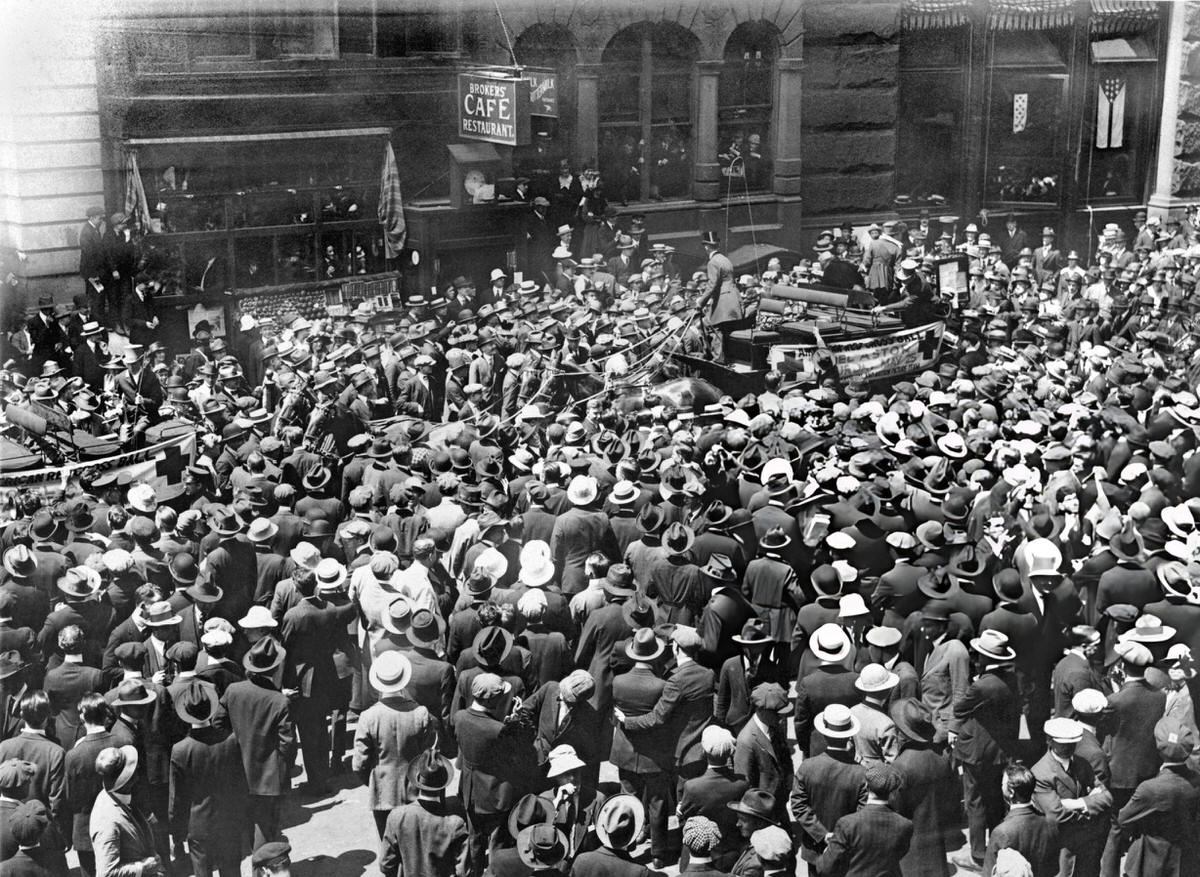
#28 Crowds in the Wall Street district during heavy trading on the stock market, 1929.

#29 Crowds gathering outside the New York Stock Exchange, 1929.

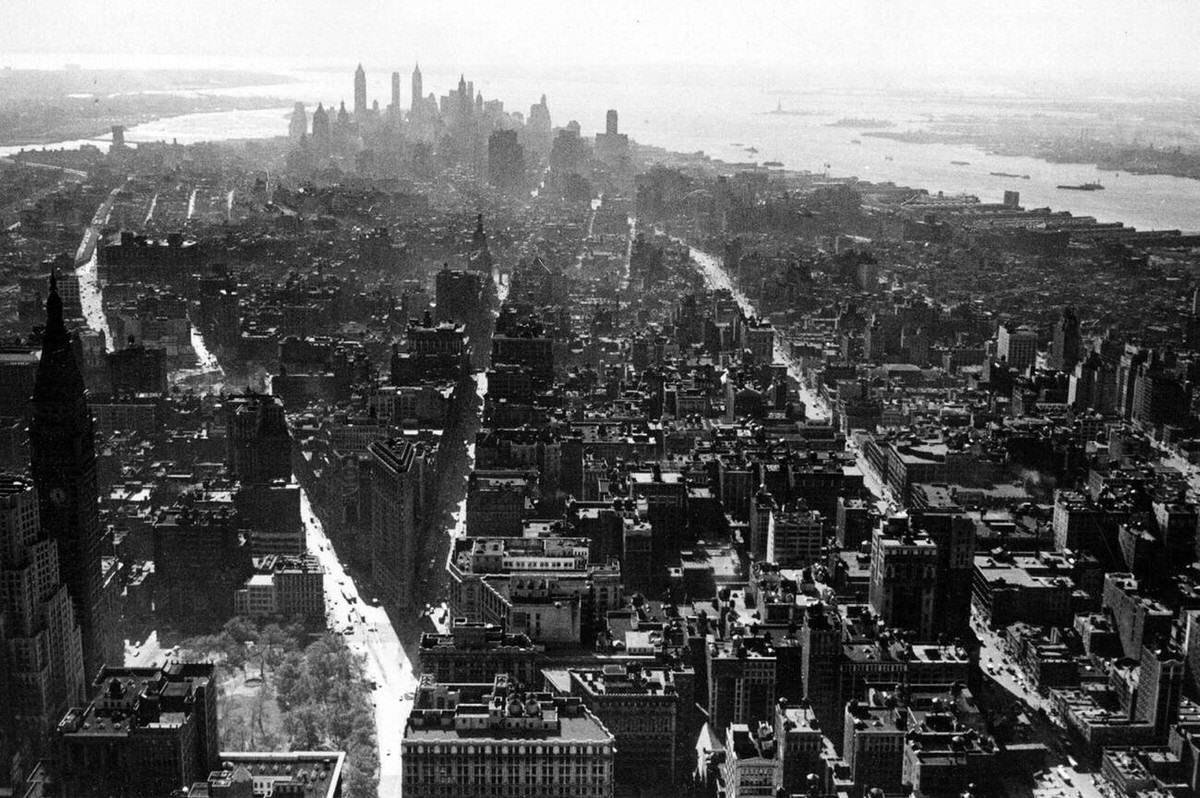
#30 Aerial view of the Manhattan cityscape looking south toward the Financial District and Statue of Liberty, 1930s.

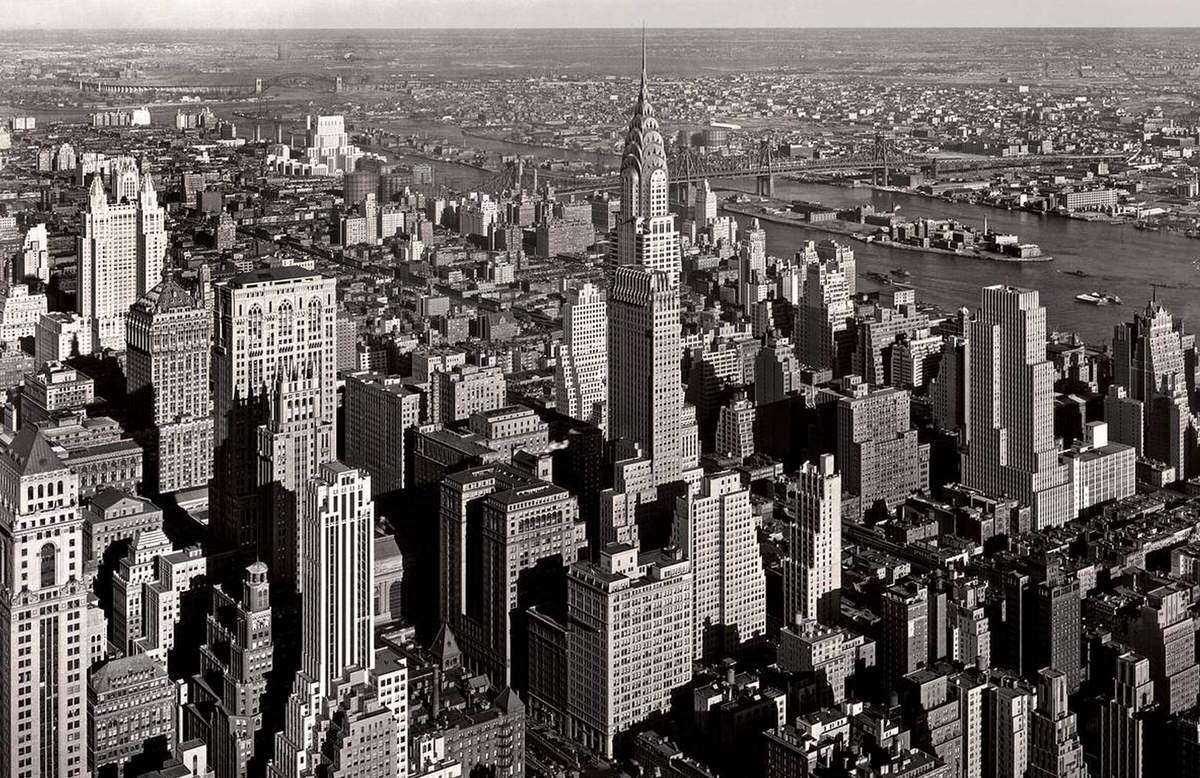
#31 Aerial view of the Chrysler Building and Midtown Manhattan skyscrapers, 1932.

#32 Interior of the New York Stock Exchange with the visitors’ gallery, 1936.

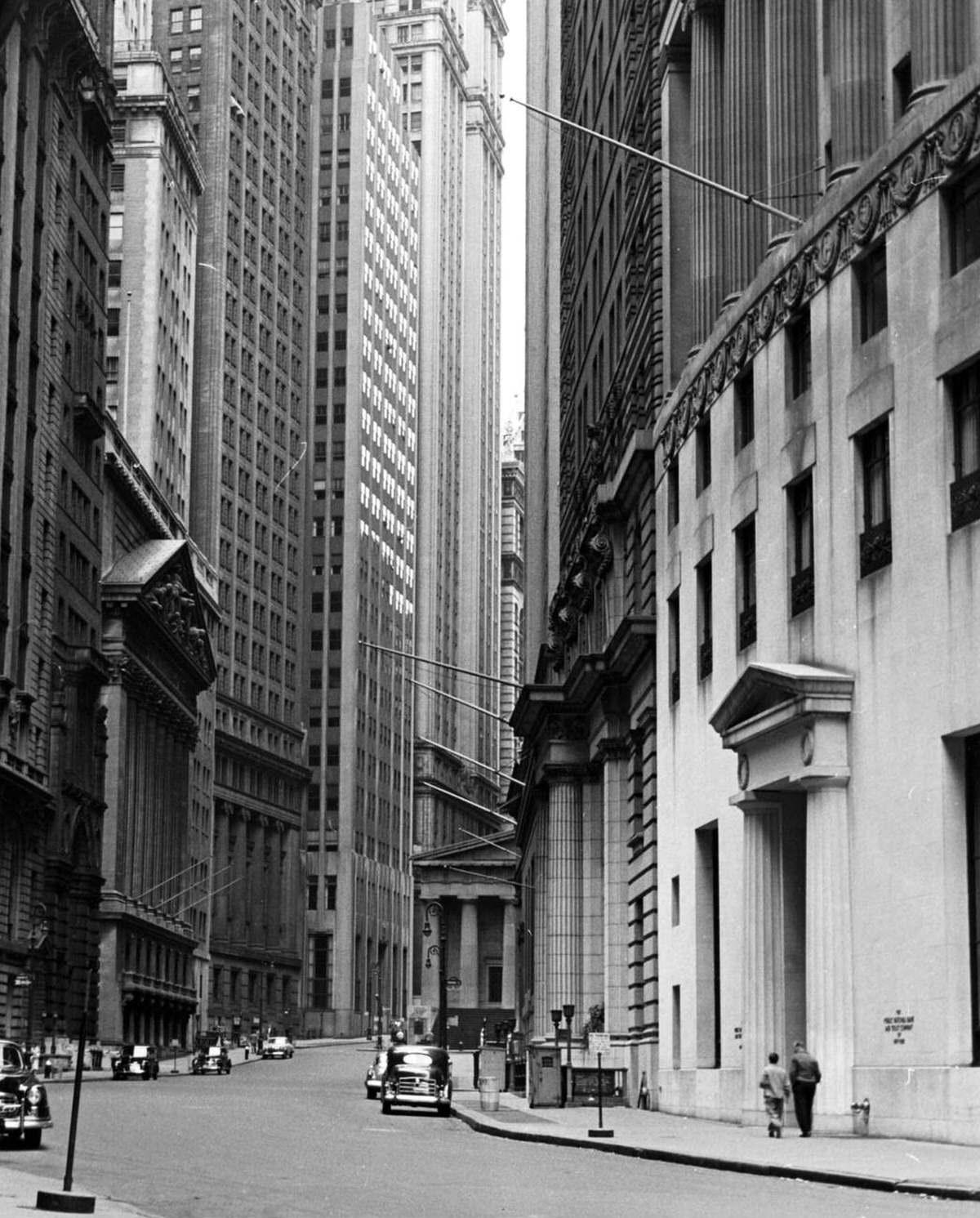
#33 Broad Street looking toward Wall Street in the Financial District, 1940s.

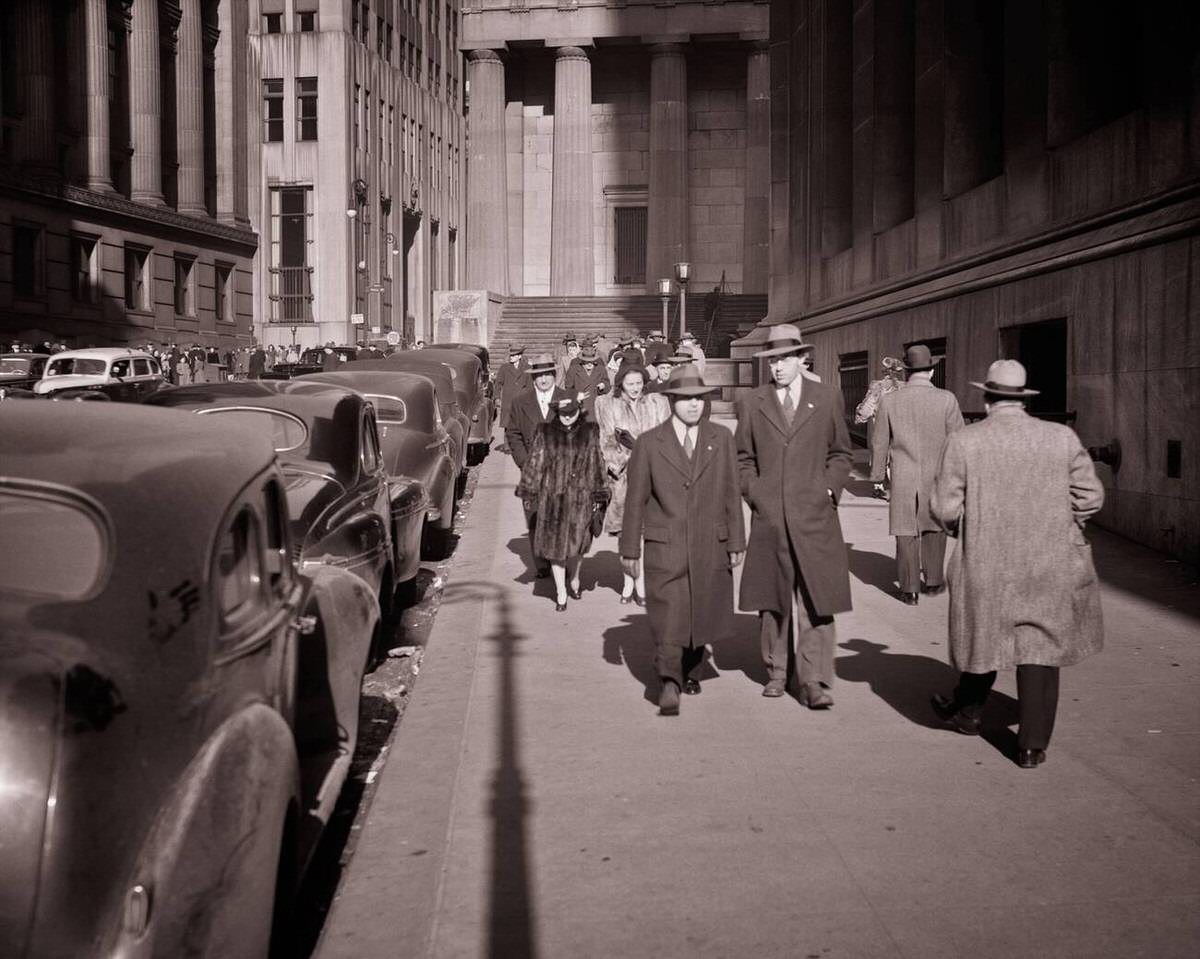
#34 Businessmen in hats and overcoats walking near Wall Street, 1943.

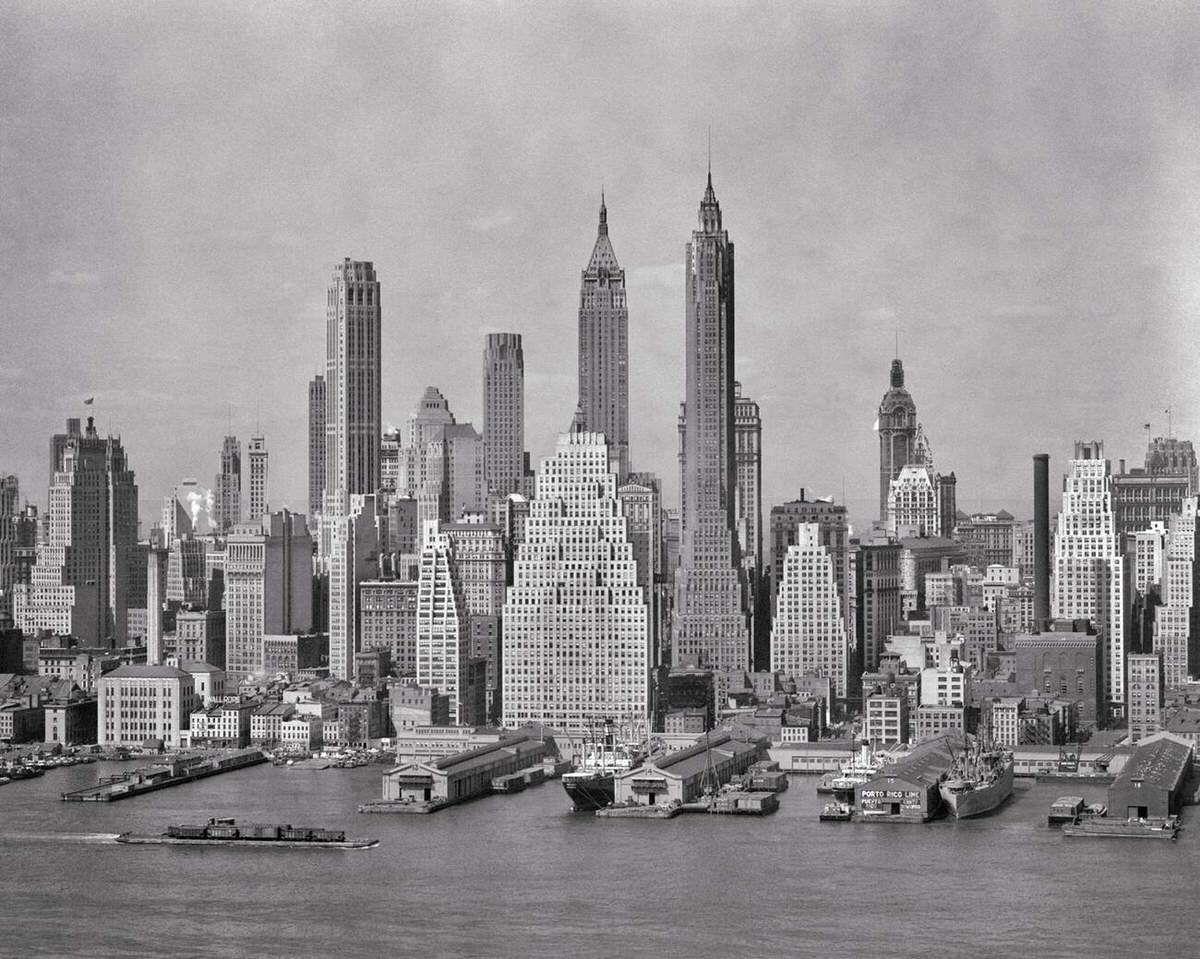
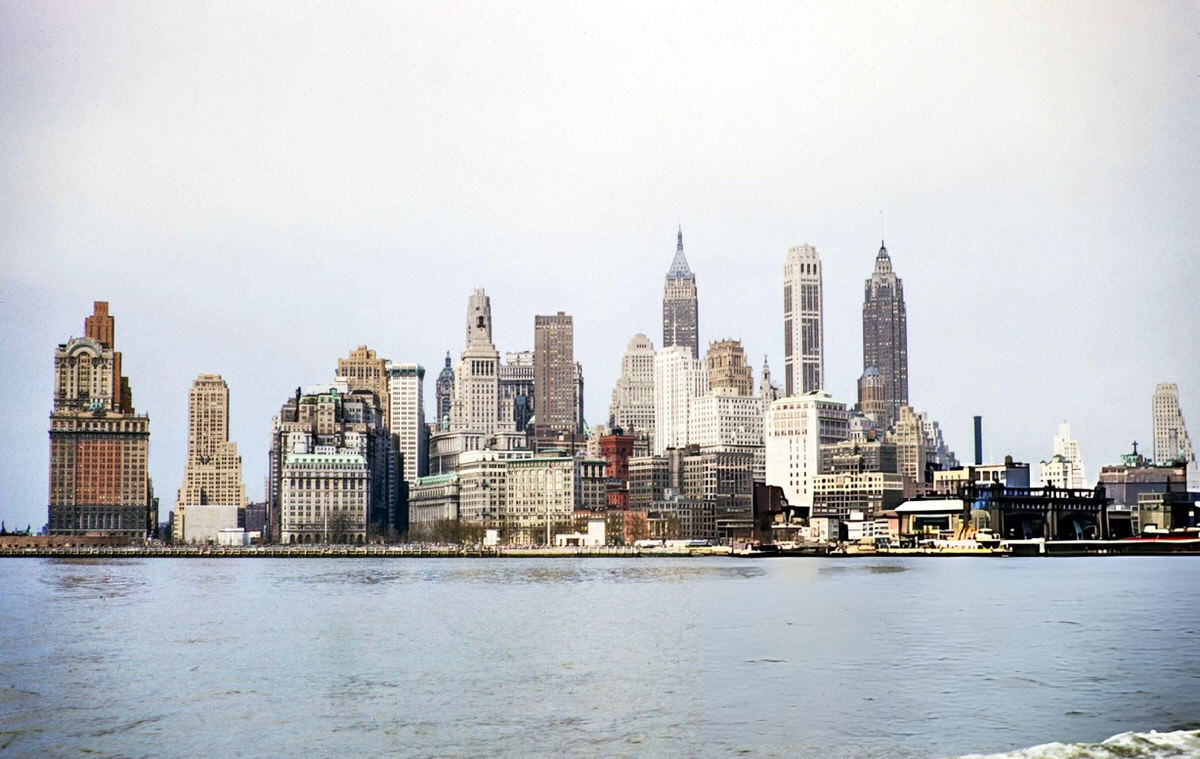
#35 Skyline of the Financial District featuring the Woolworth Building, Irving Trust, and 40 Wall Street from Brooklyn, 1948.

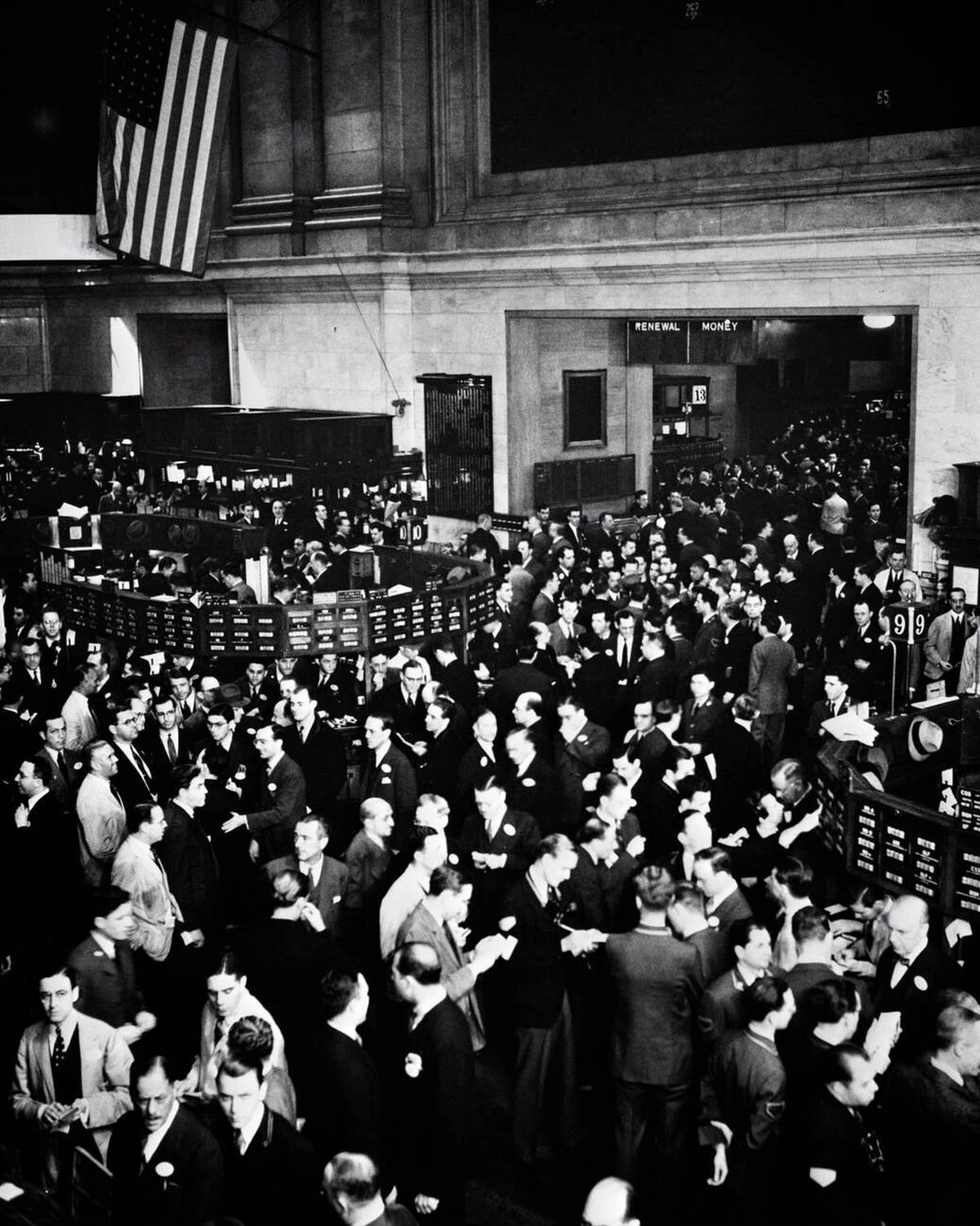
#36 Brokers and traders on the floor of the New York Stock Exchange, 1949.

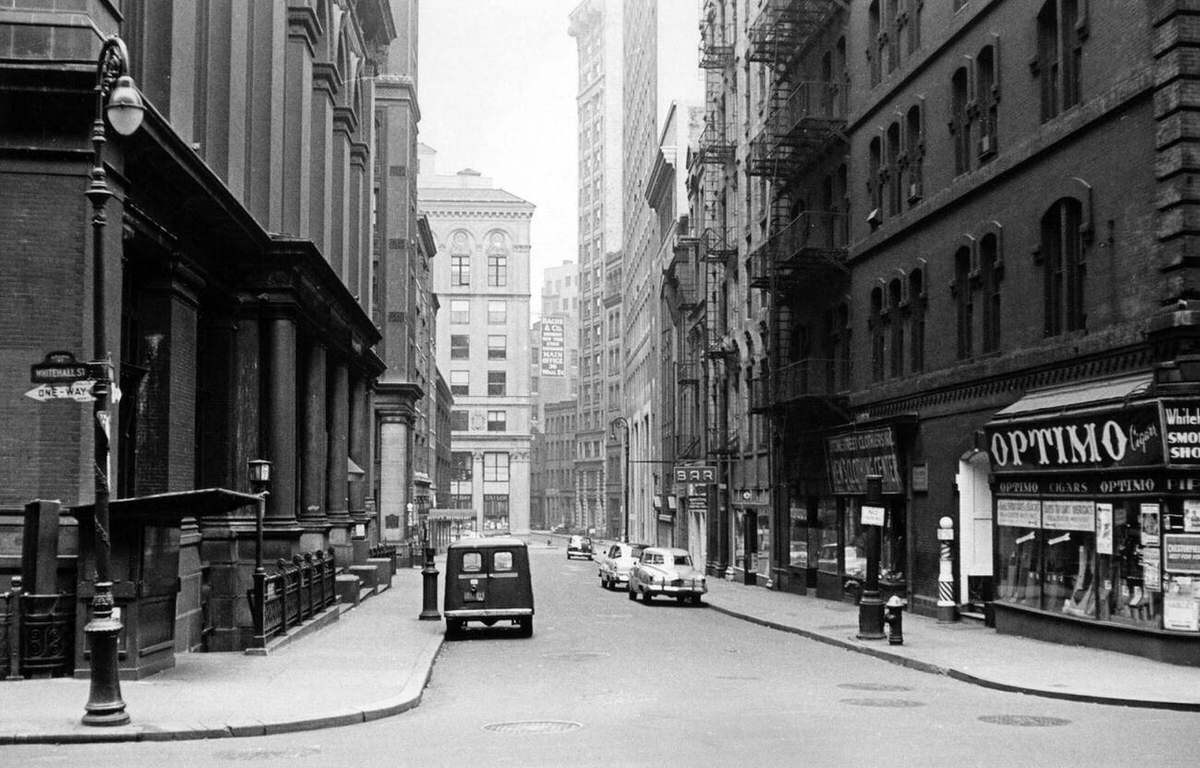
#37 Whitehall Street featuring an Optimo Cigars sign, New York, 1950s.

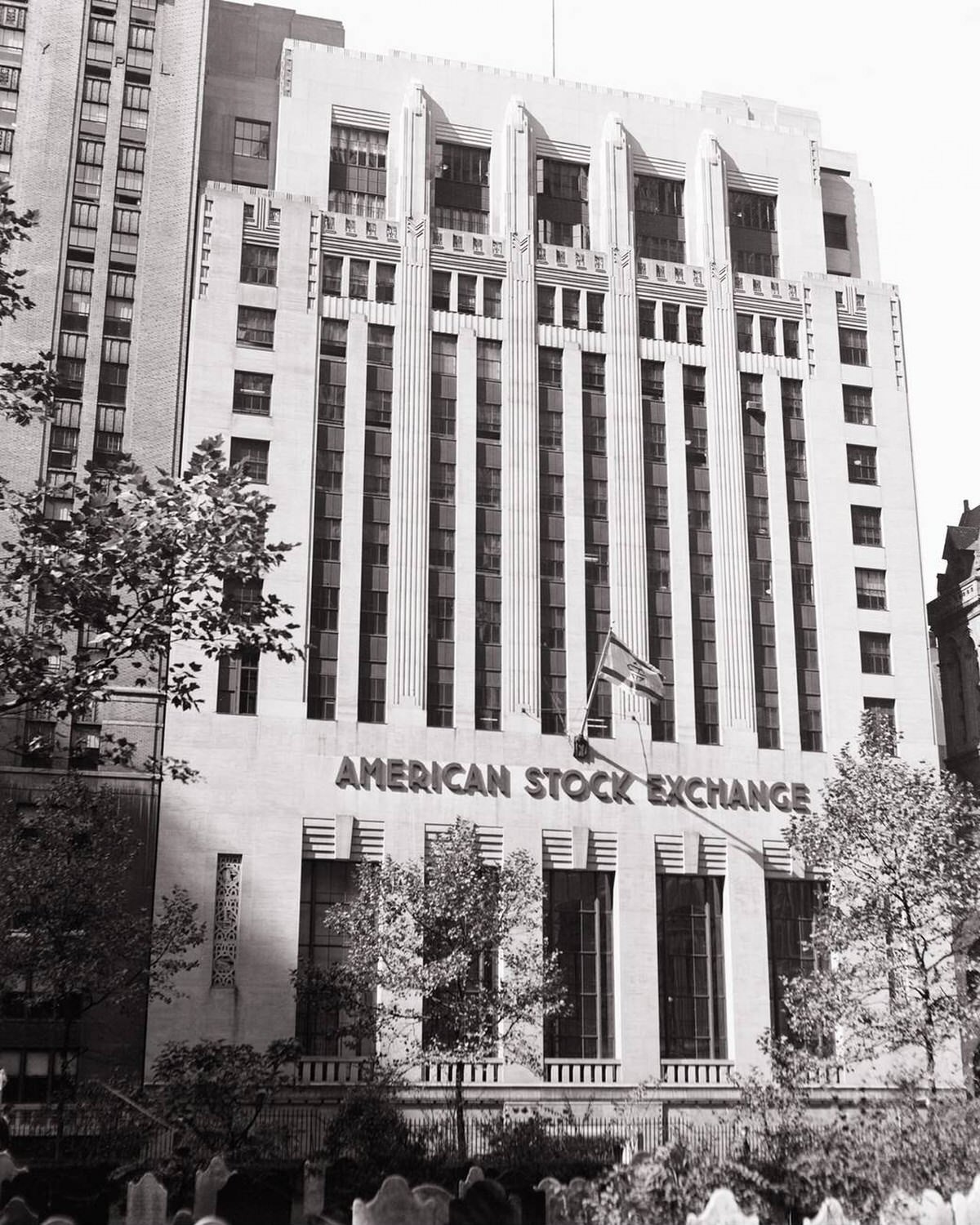
#38 American Stock Exchange building at 86 Trinity Place, Downtown Manhattan, 1950.

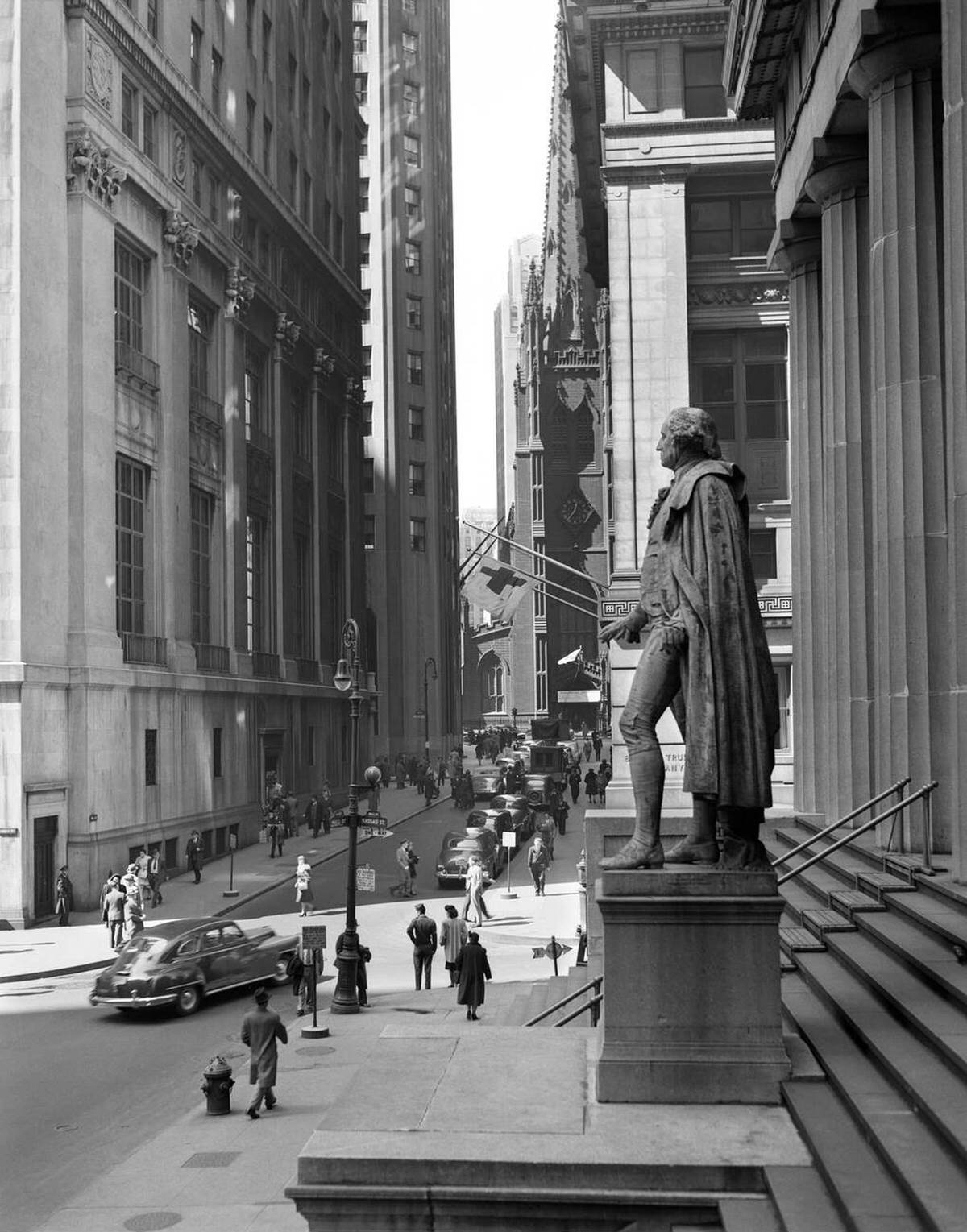
#39 Wall Street viewed from the steps of Federal Hall looking toward Trinity Church, 1950.

#40 Trading floor of the New York Stock Exchange, 1950s.

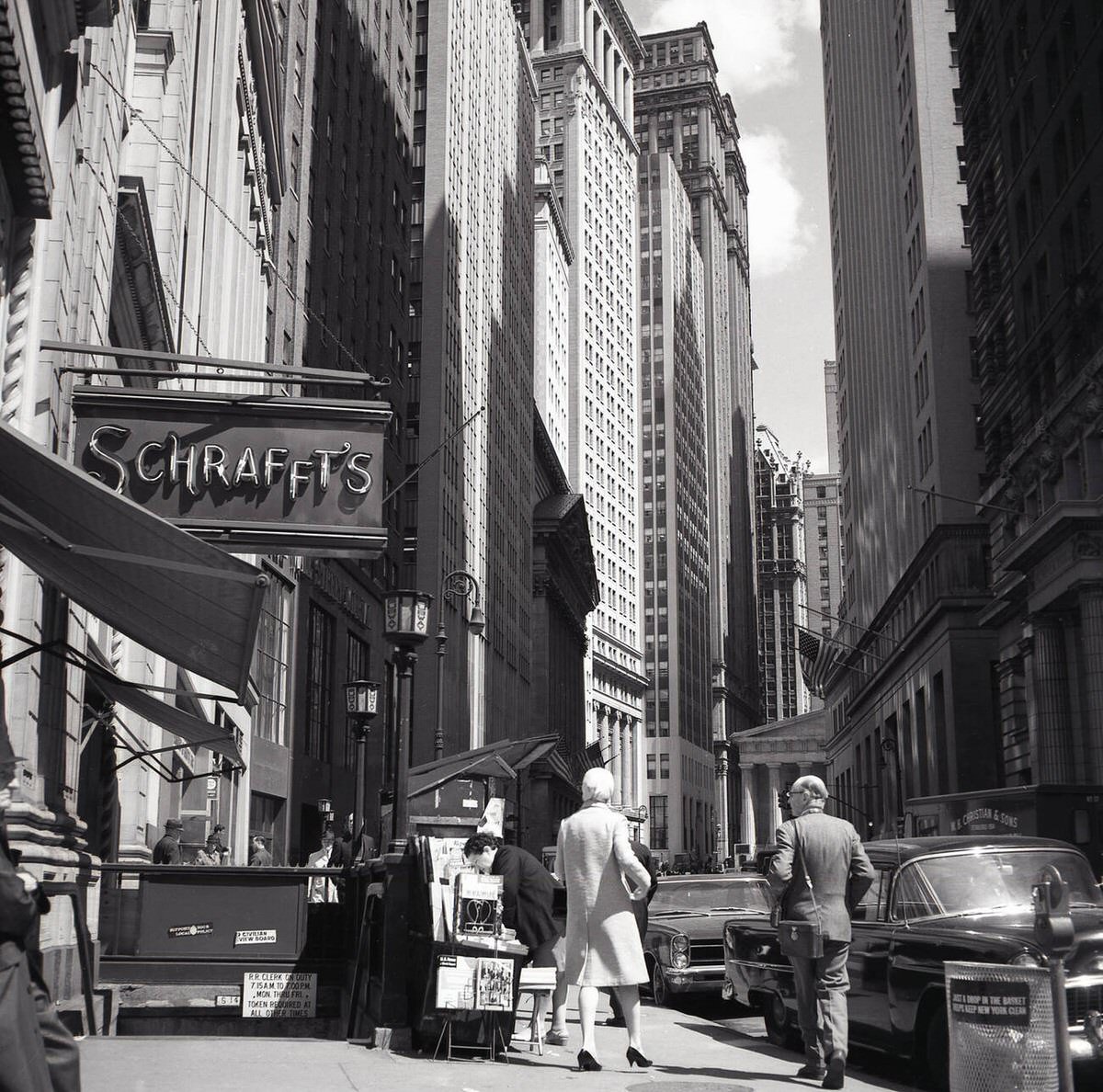
#41 Wall Street skyscrapers and a sign for Schrafft’s restaurant, Manhattan, 1950s.

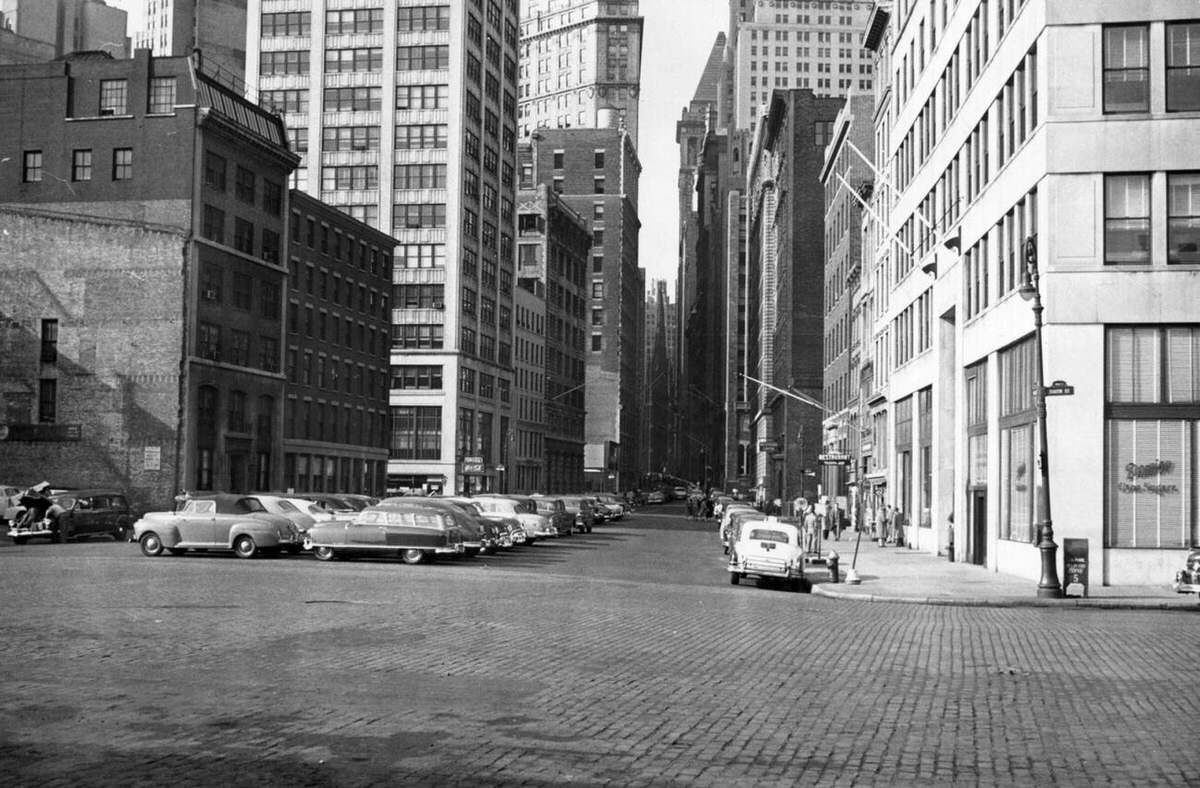
#42 Wall Street looking northwest from South Street, New York, 1950s.

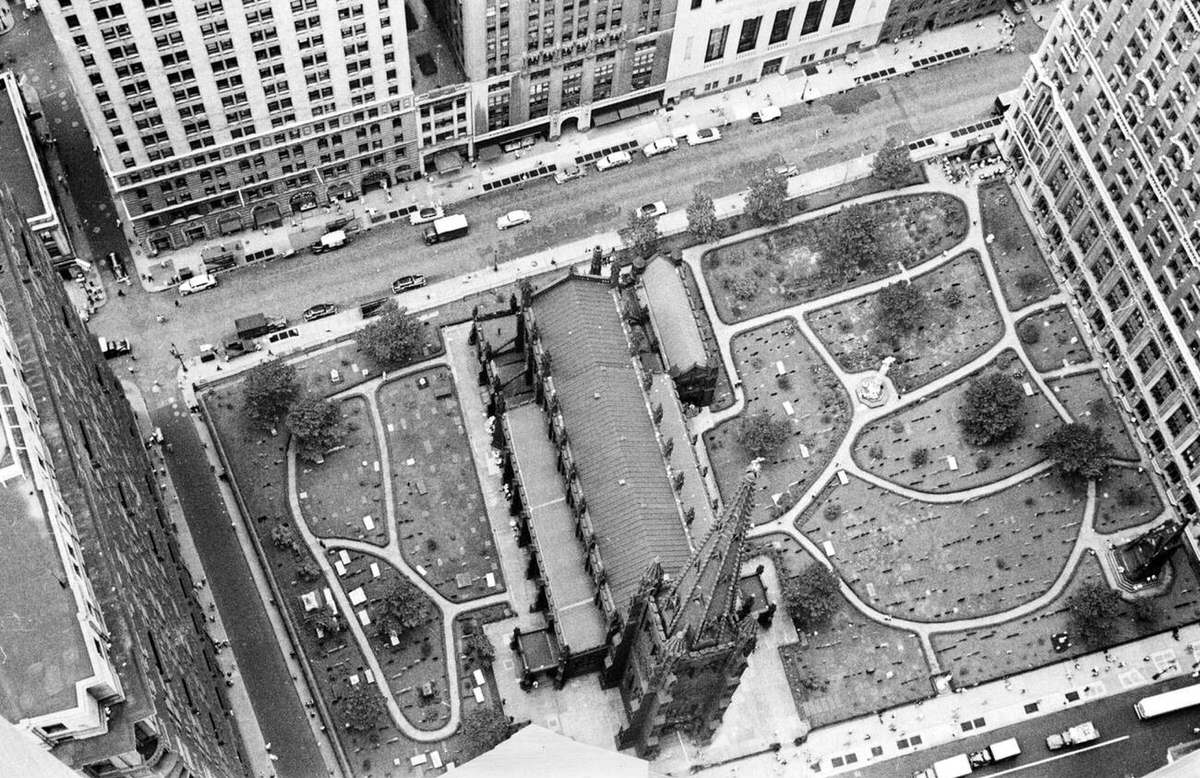
#43 Aerial view of Trinity Church and its cemetery in Lower Manhattan, 1950s.

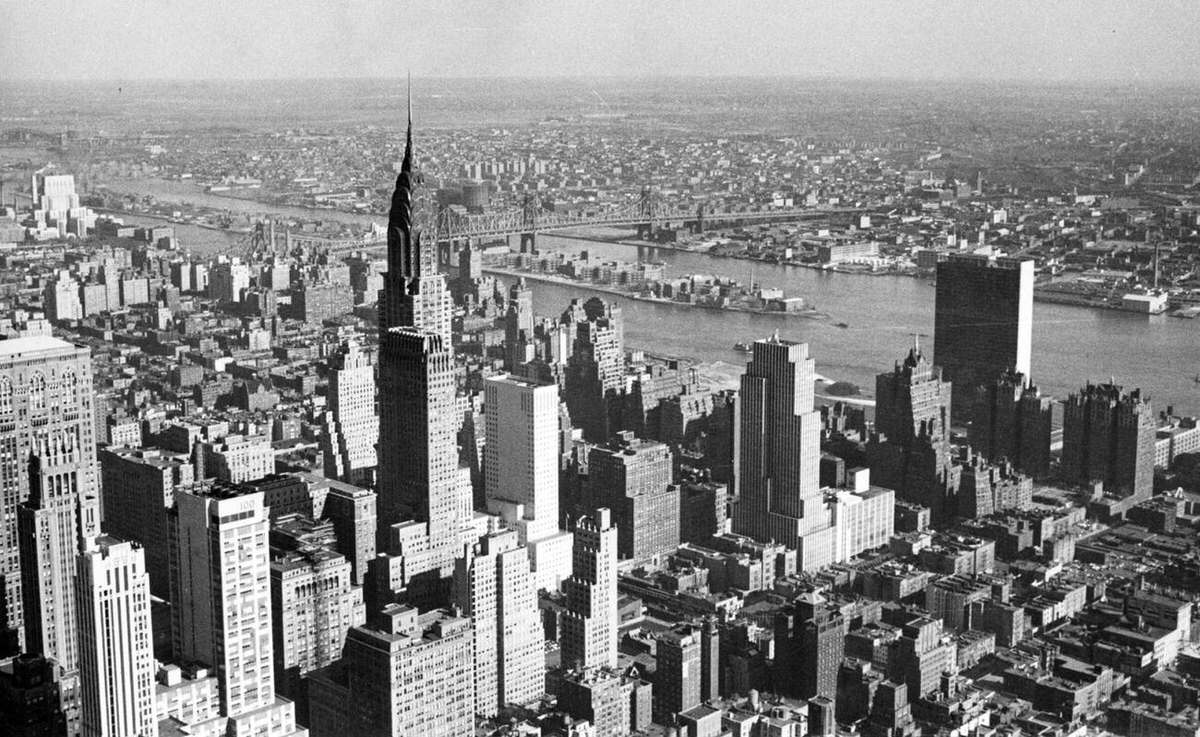
#44 Aerial view of Manhattan and Queens featuring the Chrysler Building, United Nations, and Queensboro Bridge, 1950s.

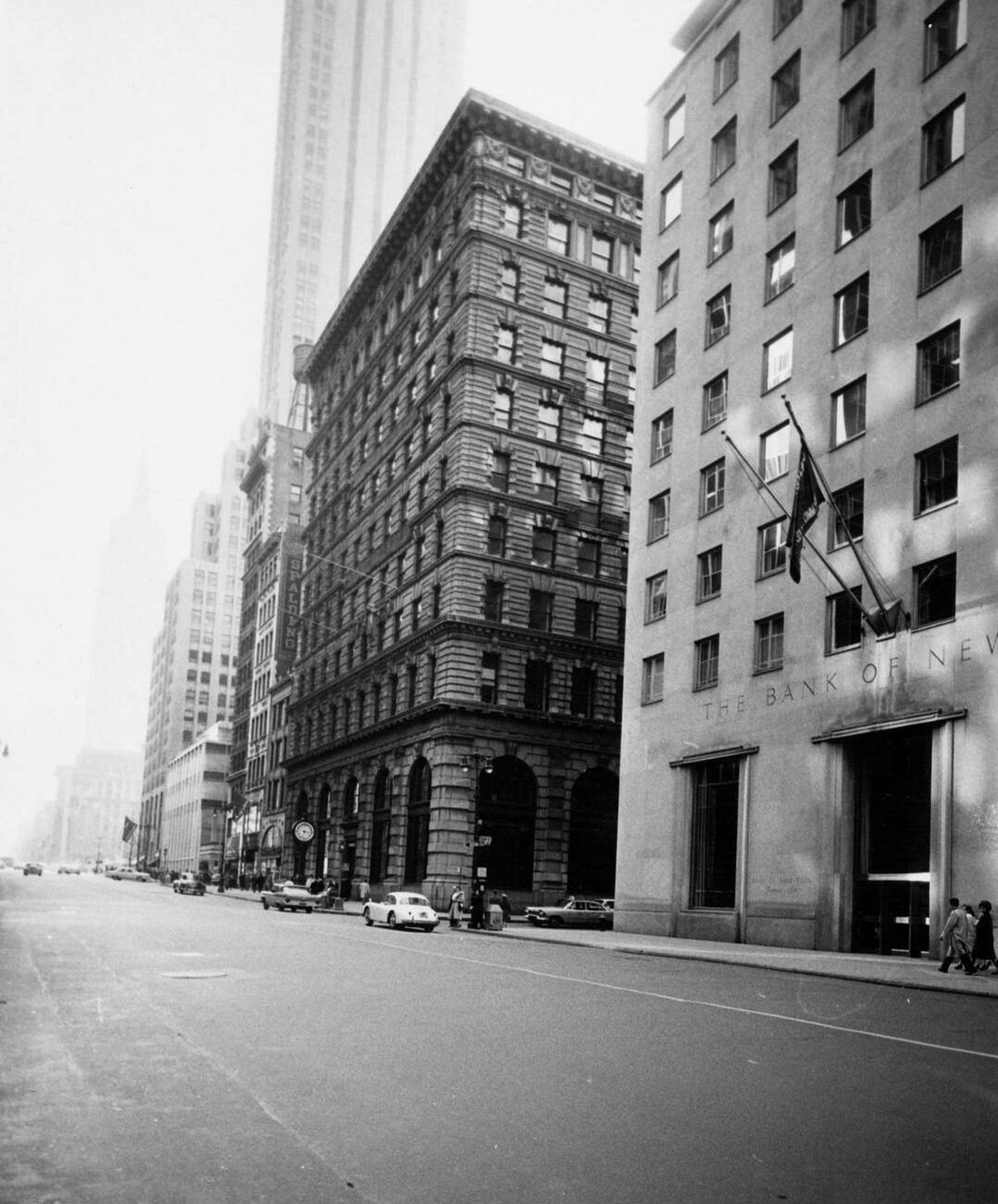
#45 Cityscape featuring the Bank of New York building, 1950s.

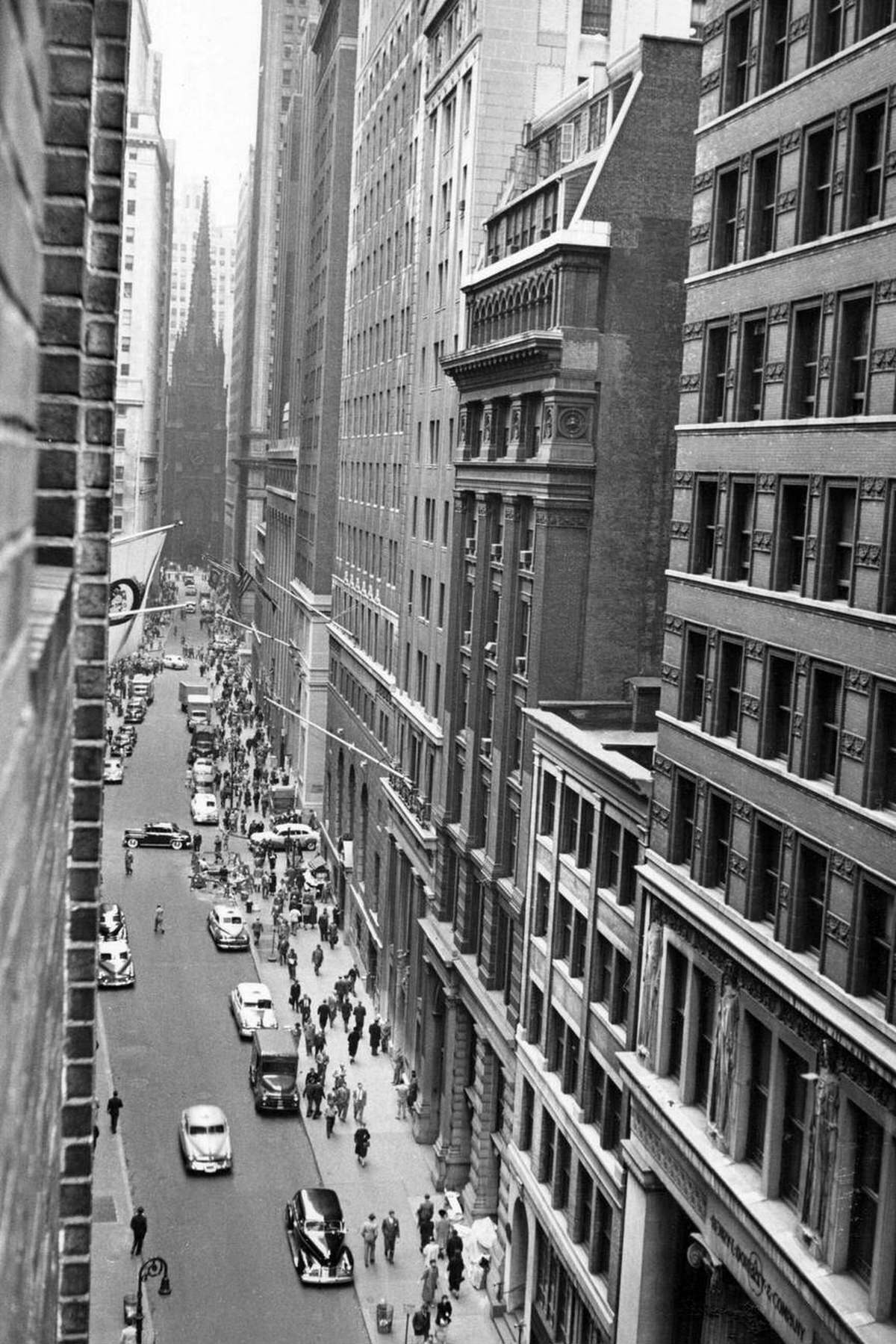
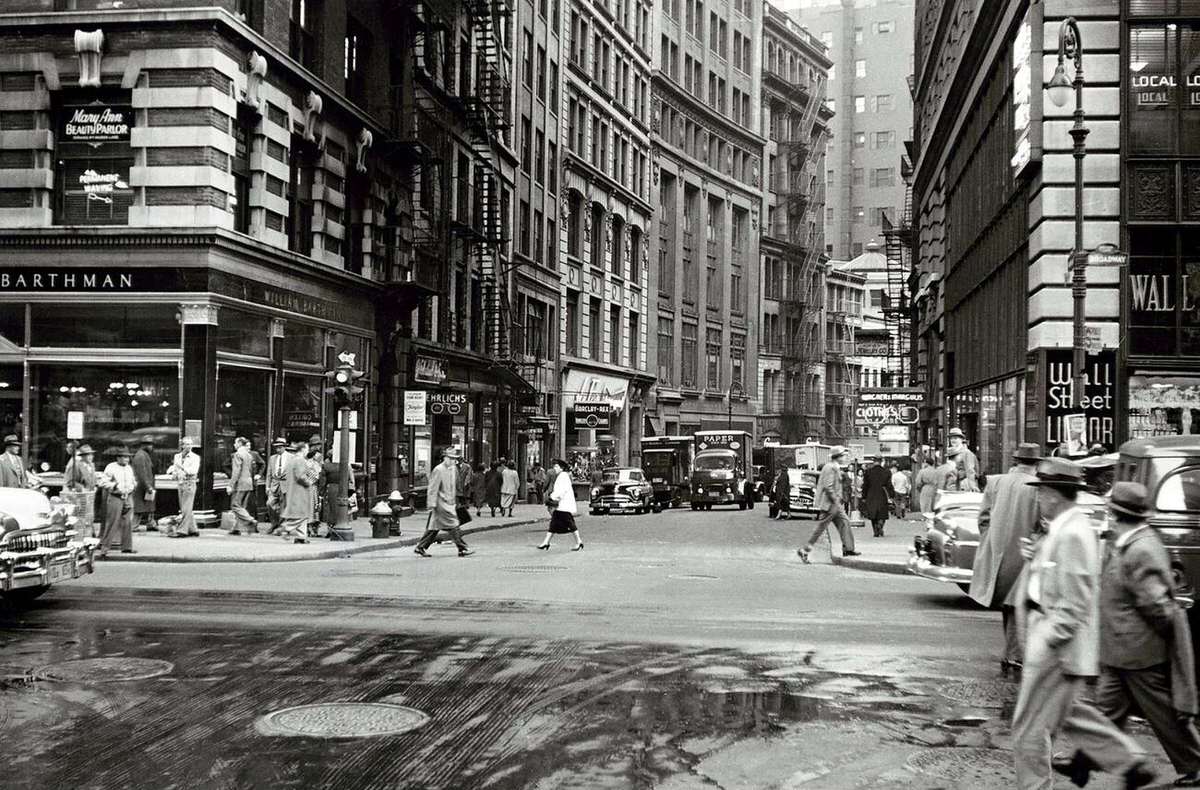
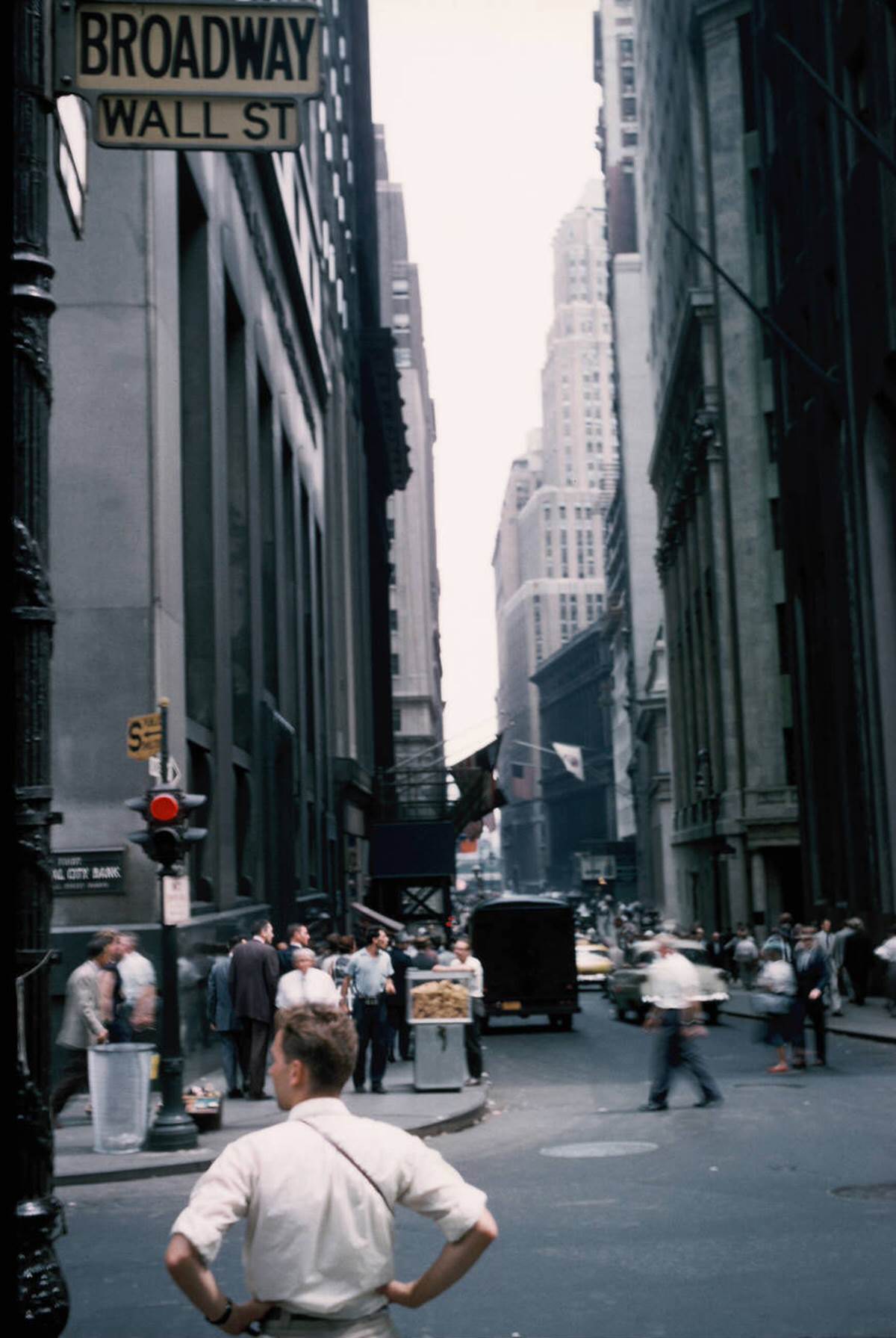
#46 Wall Street looking toward Broadway, New York, 1950s.

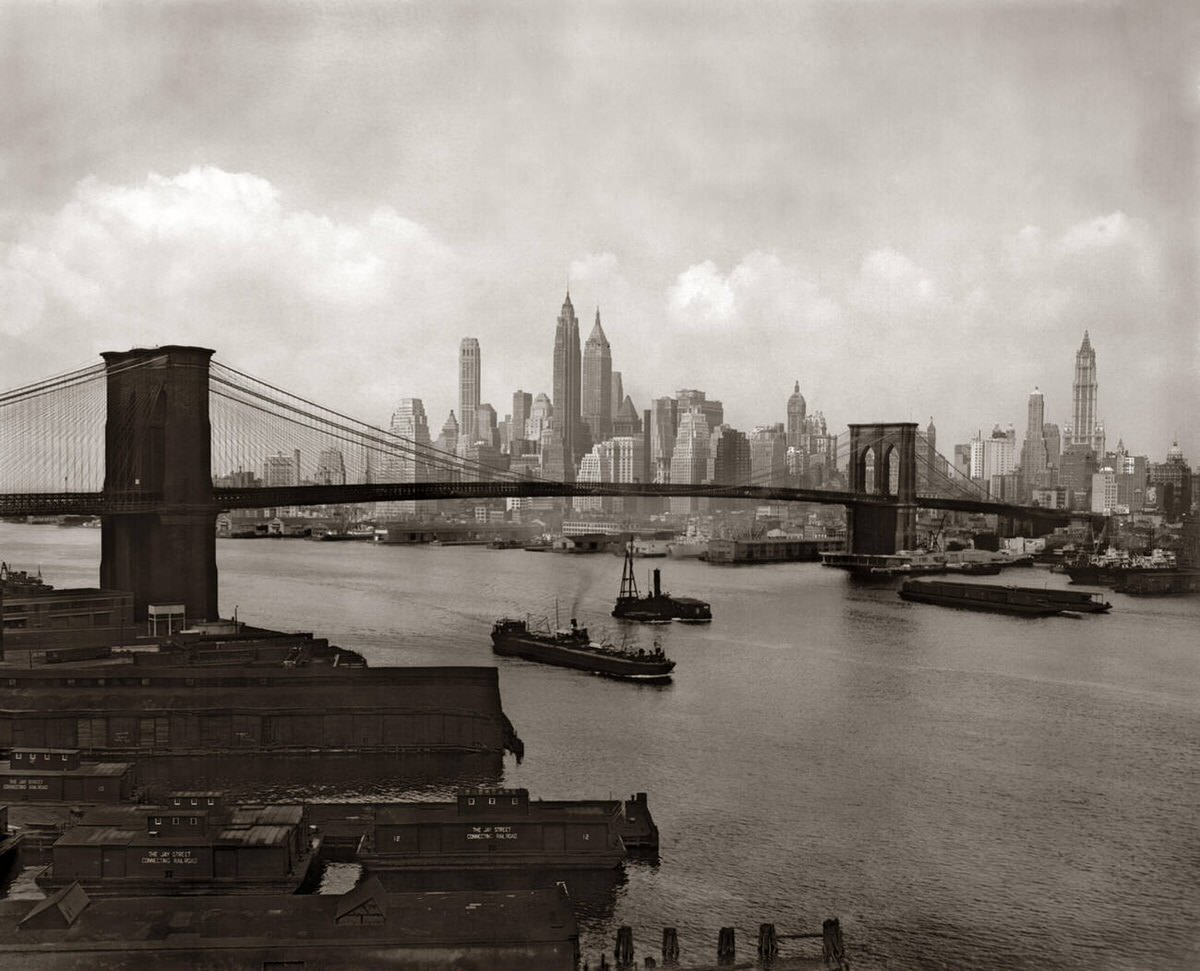
#47 Skyline and the Brooklyn Bridge from Brooklyn, 1950.

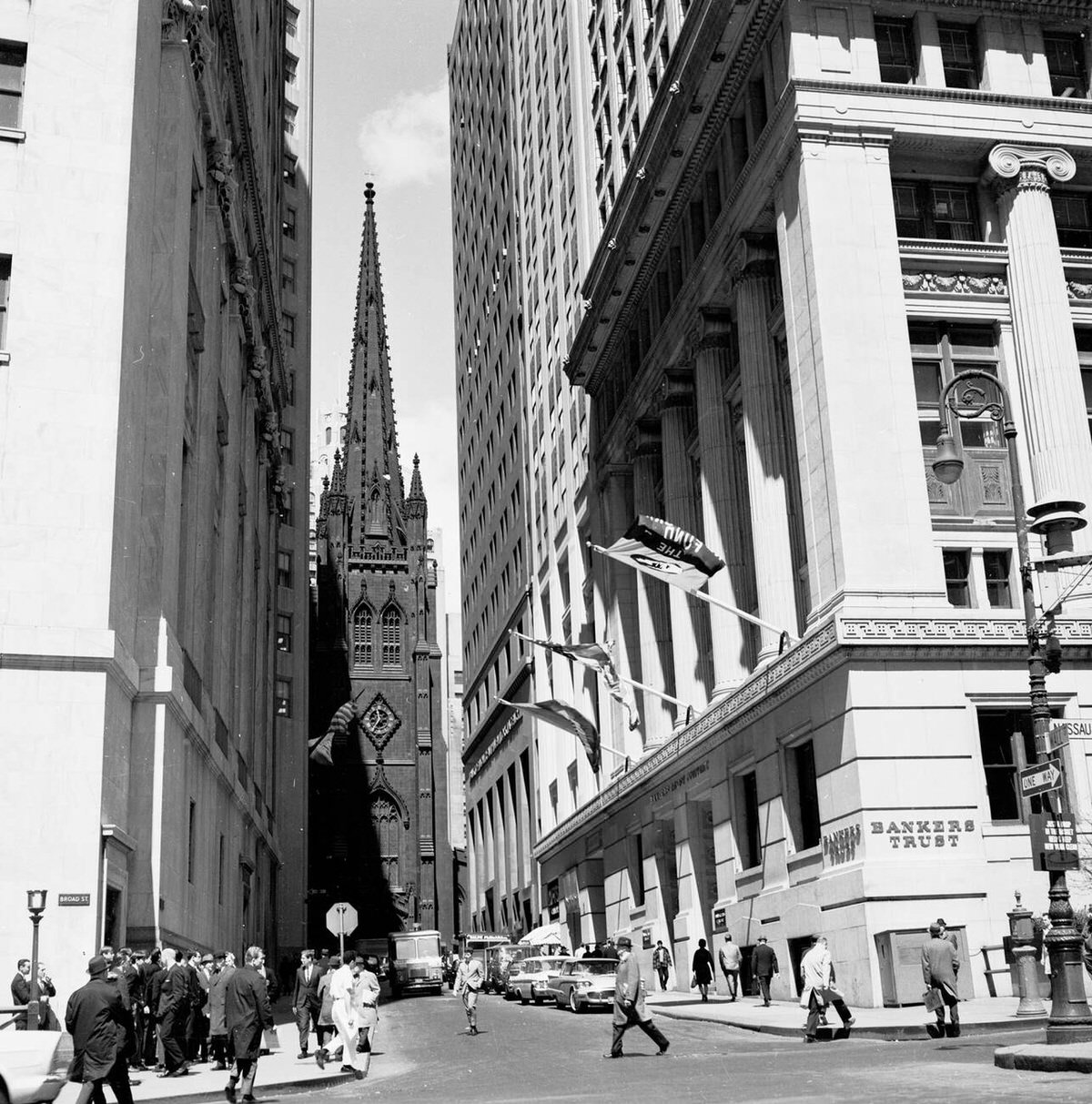
#49 Trinity Church situated between high-rise office buildings on Wall Street, 1950.

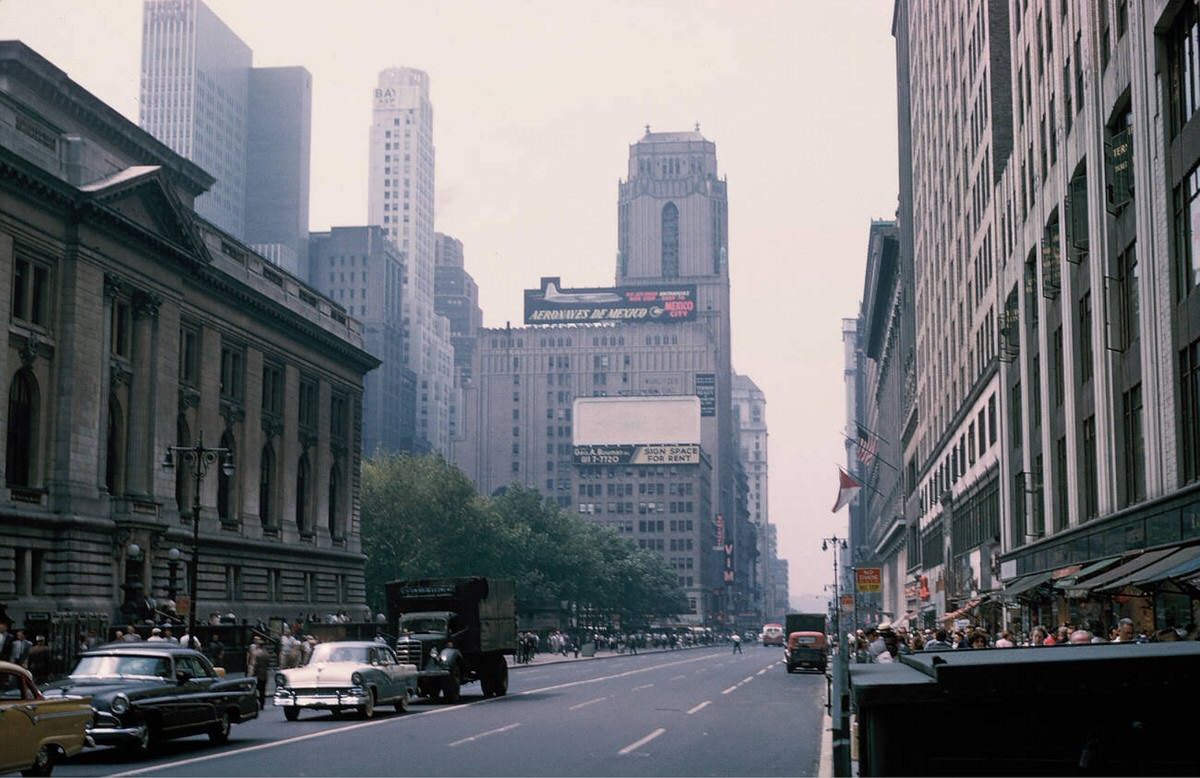
#51 Intersection of Maiden Lane and Broadway viewed from Cortlandt Street, 1952.

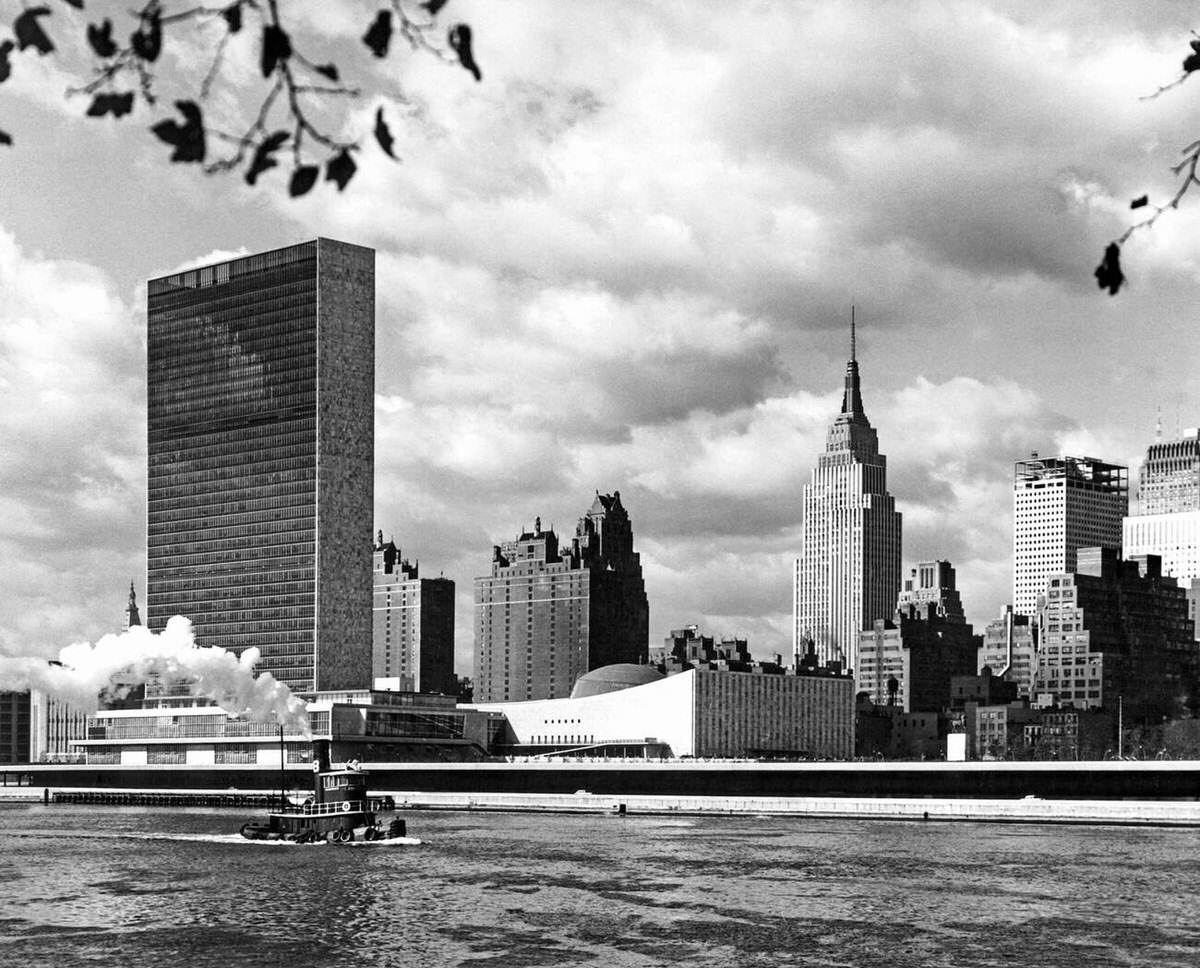
#52 United Nations buildings on the East River with the Empire State Building in the background, 1955.

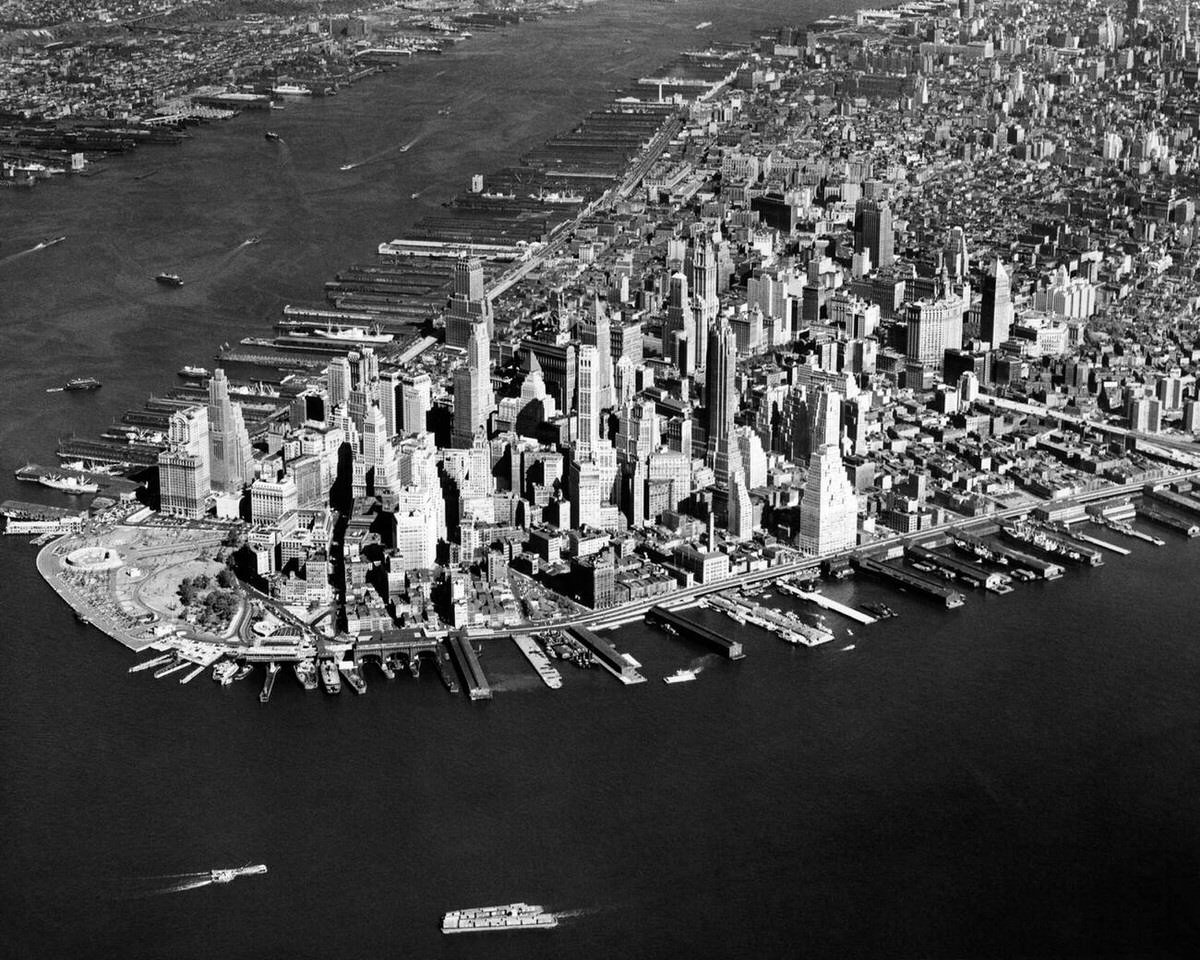
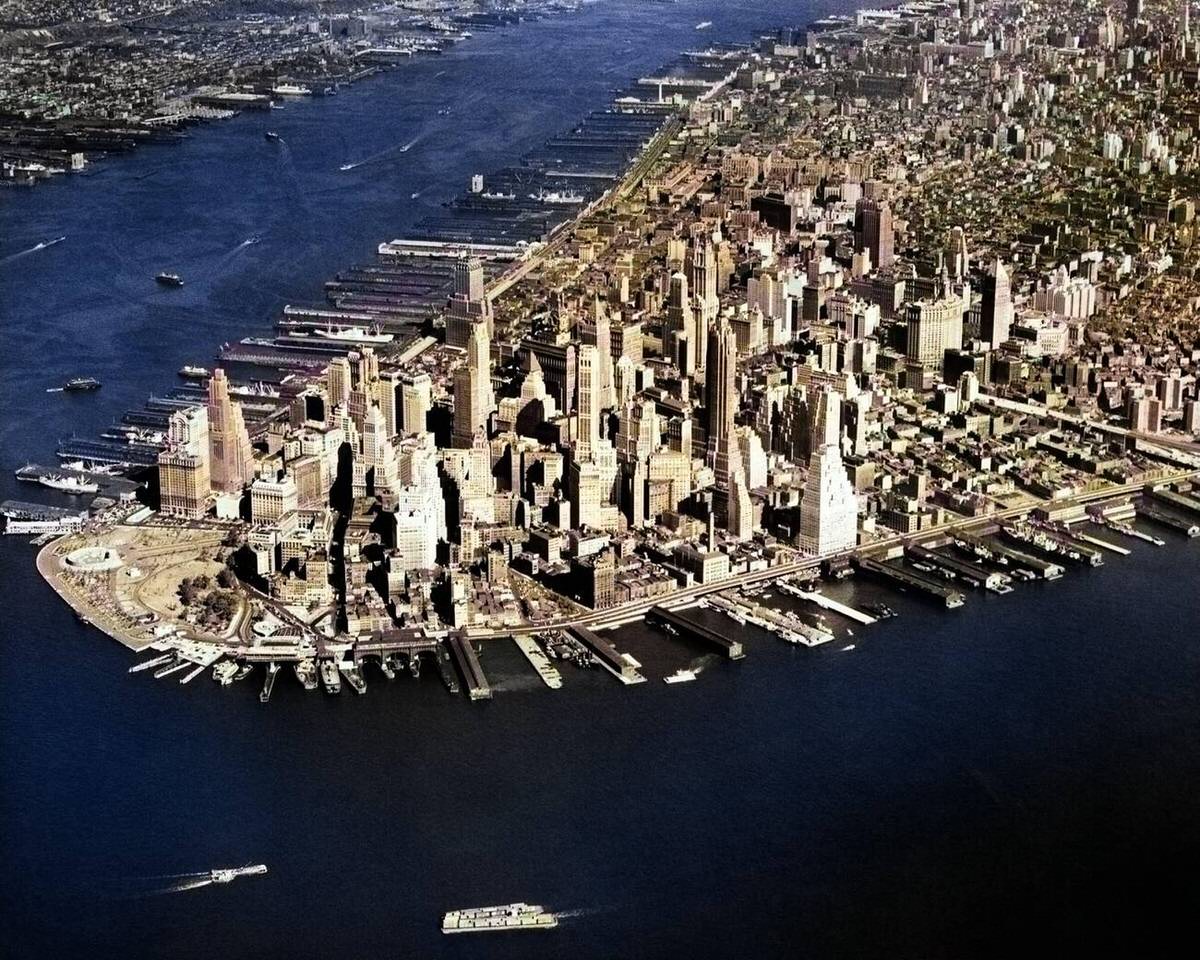
#53 Aerial view of the southern tip of Manhattan, 1956.

#54 Aerial view of the southern tip of Manhattan, 1956.

#57 New York Stock Exchange at 18 Broad Street, 1930.

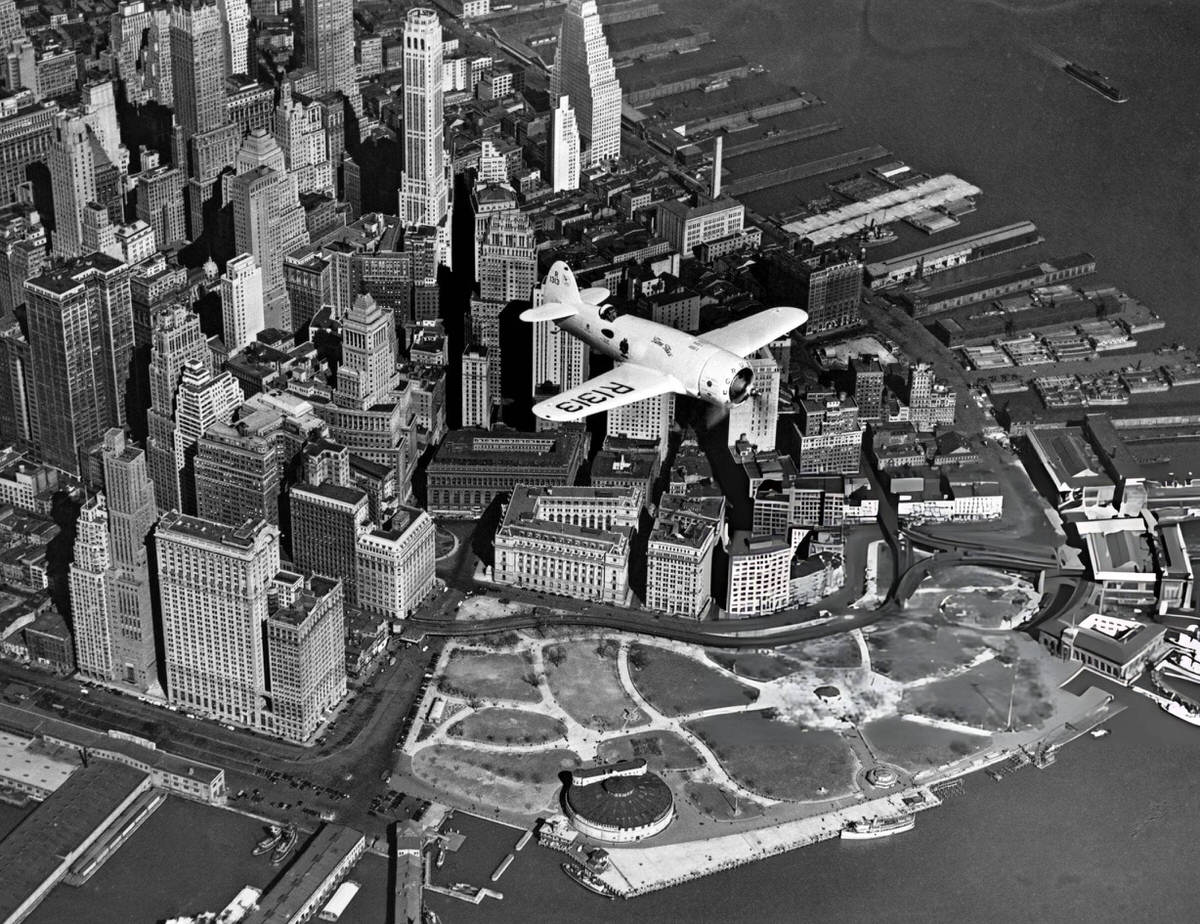
#59 Captain Frank Hawks flying a speed plane over Battery Park and the Financial District, 1937.

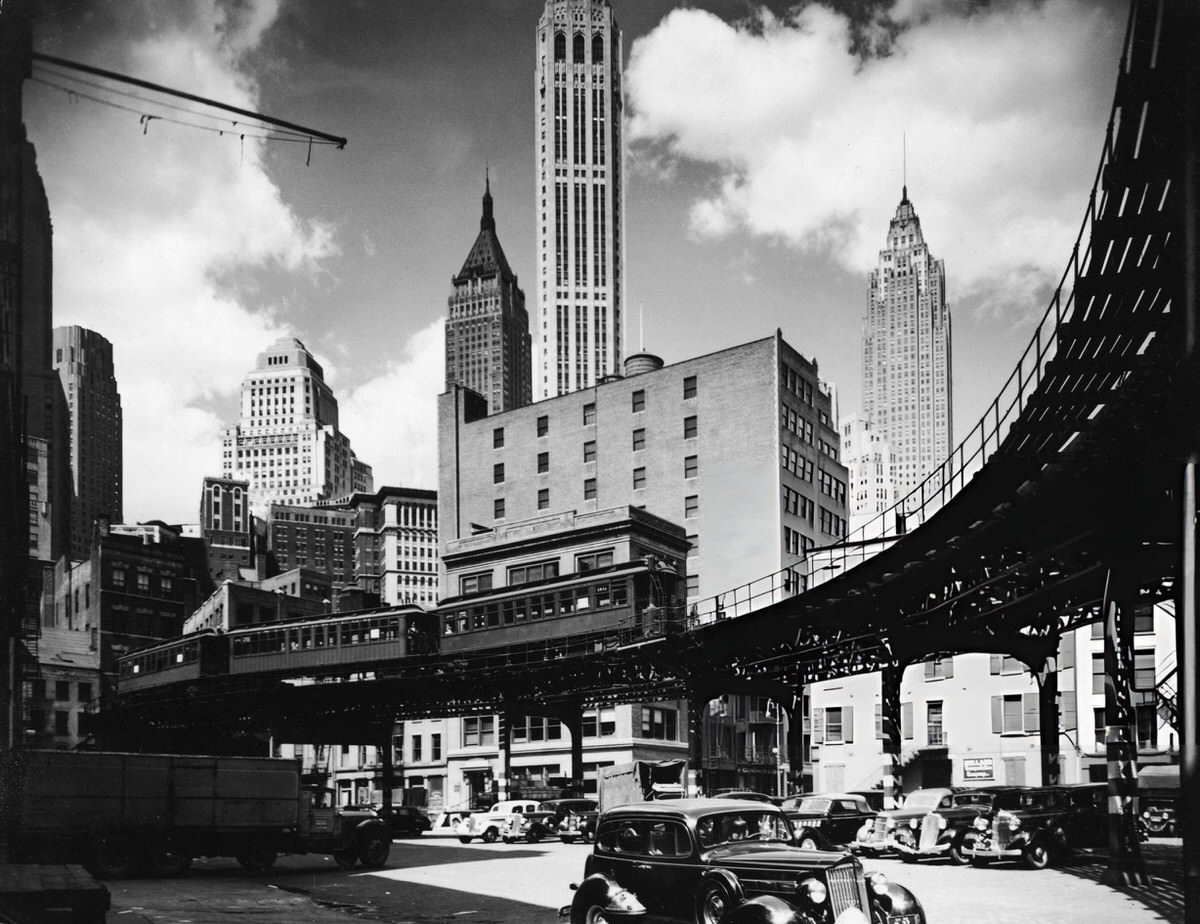
#60 Financial District skyline featuring an elevated train line and the Cities Service Building, 1930s.

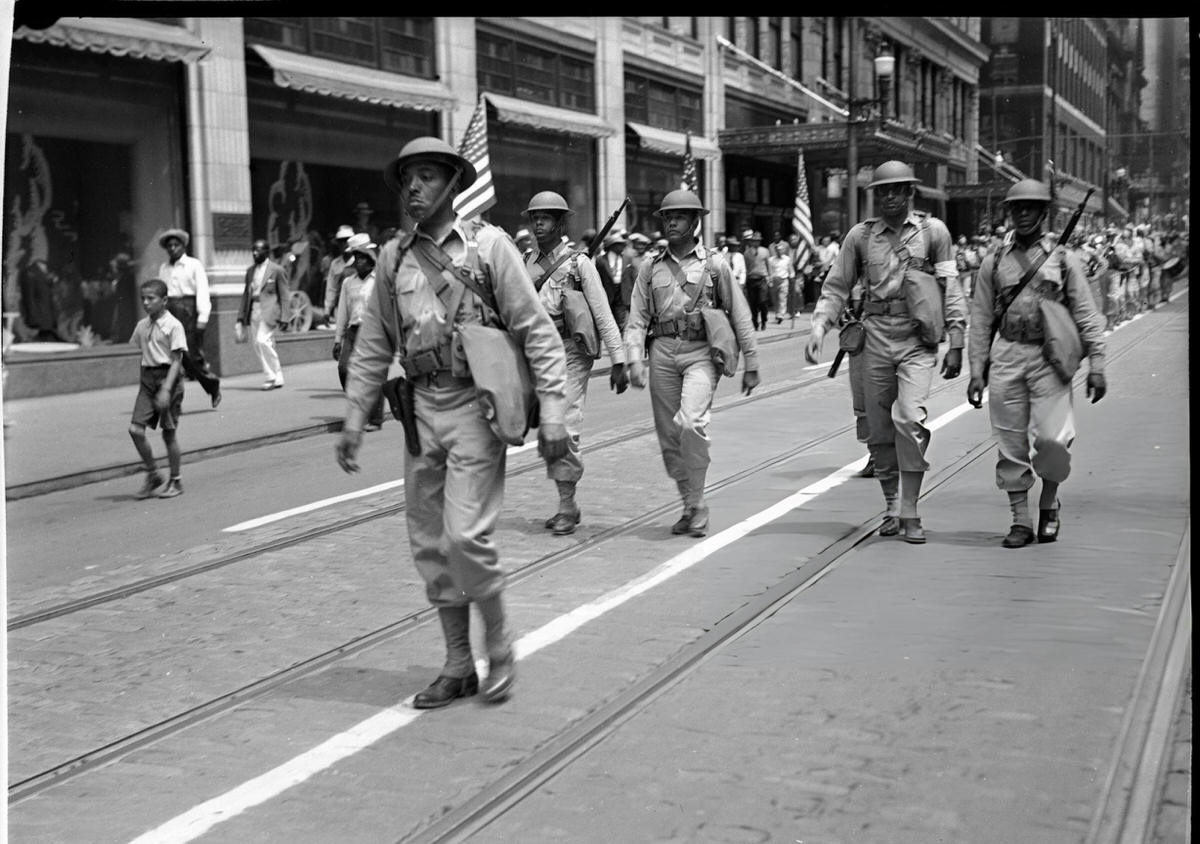
#61 Soldiers from the 372nd Infantry marching in a parade on Fifth Avenue, Pittsburgh, Pennsylvania, 1942.

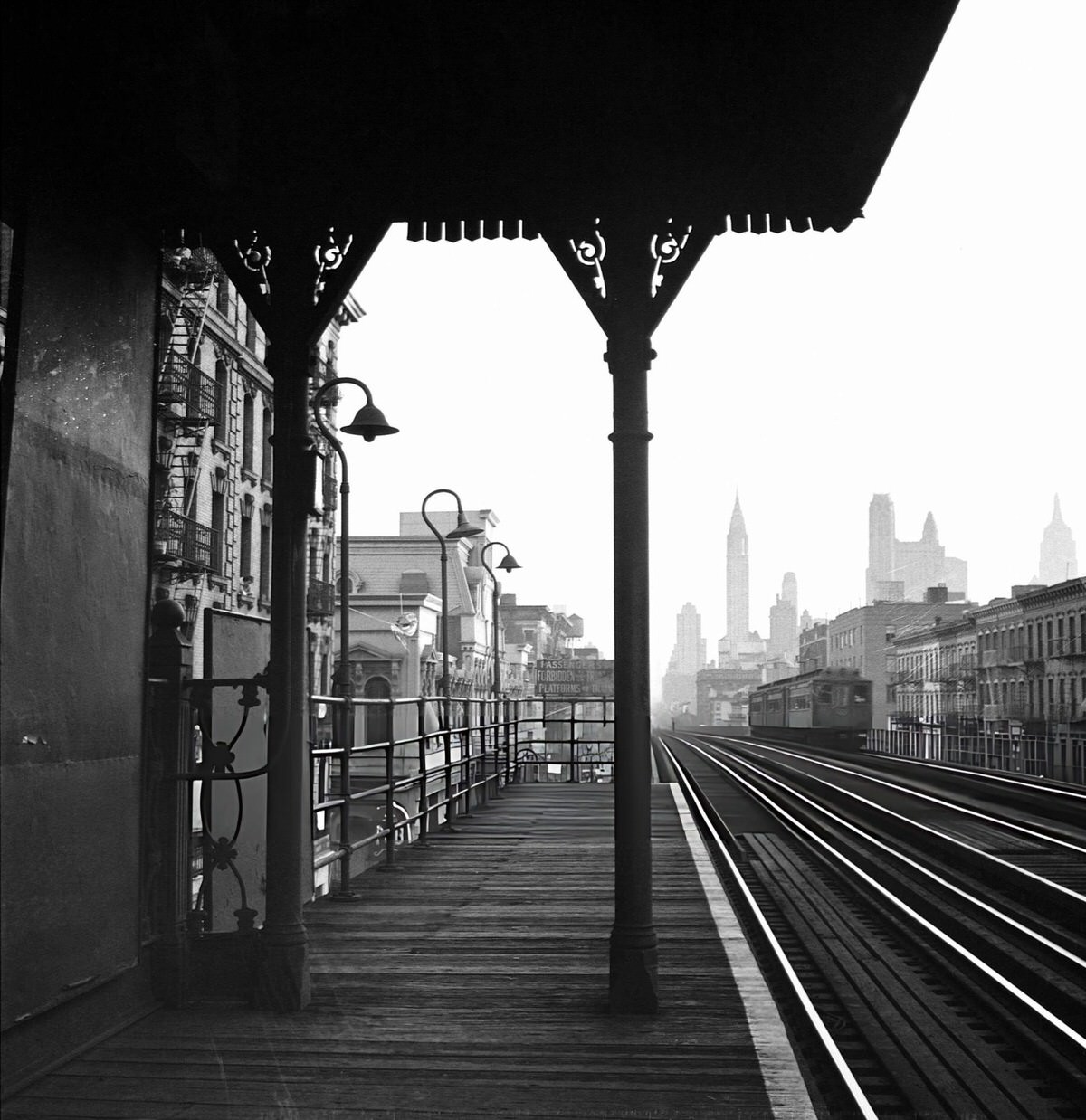
#62 View of downtown from a station on the Third Avenue Elevated, 1942.

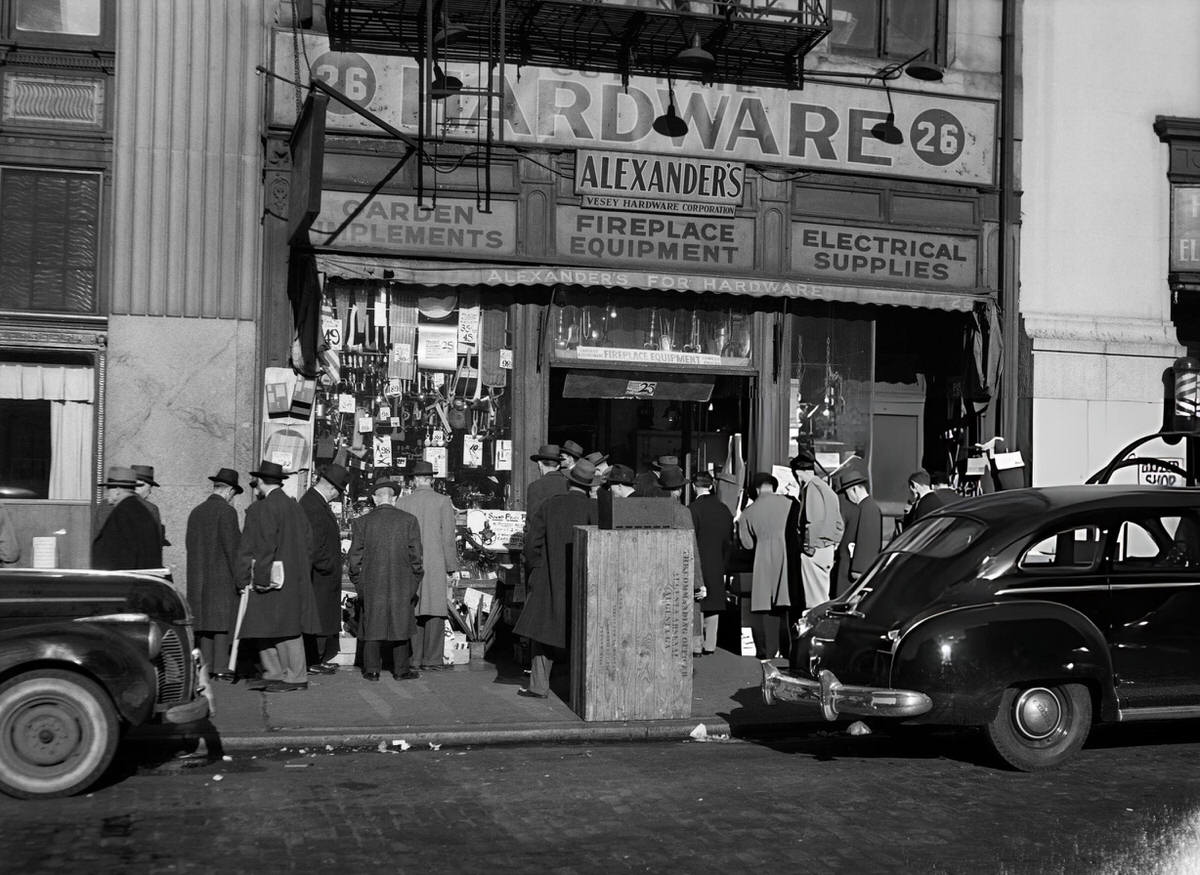
#63 Pedestrians in front of Alexander’s Hardware Store, New York, 1940s.

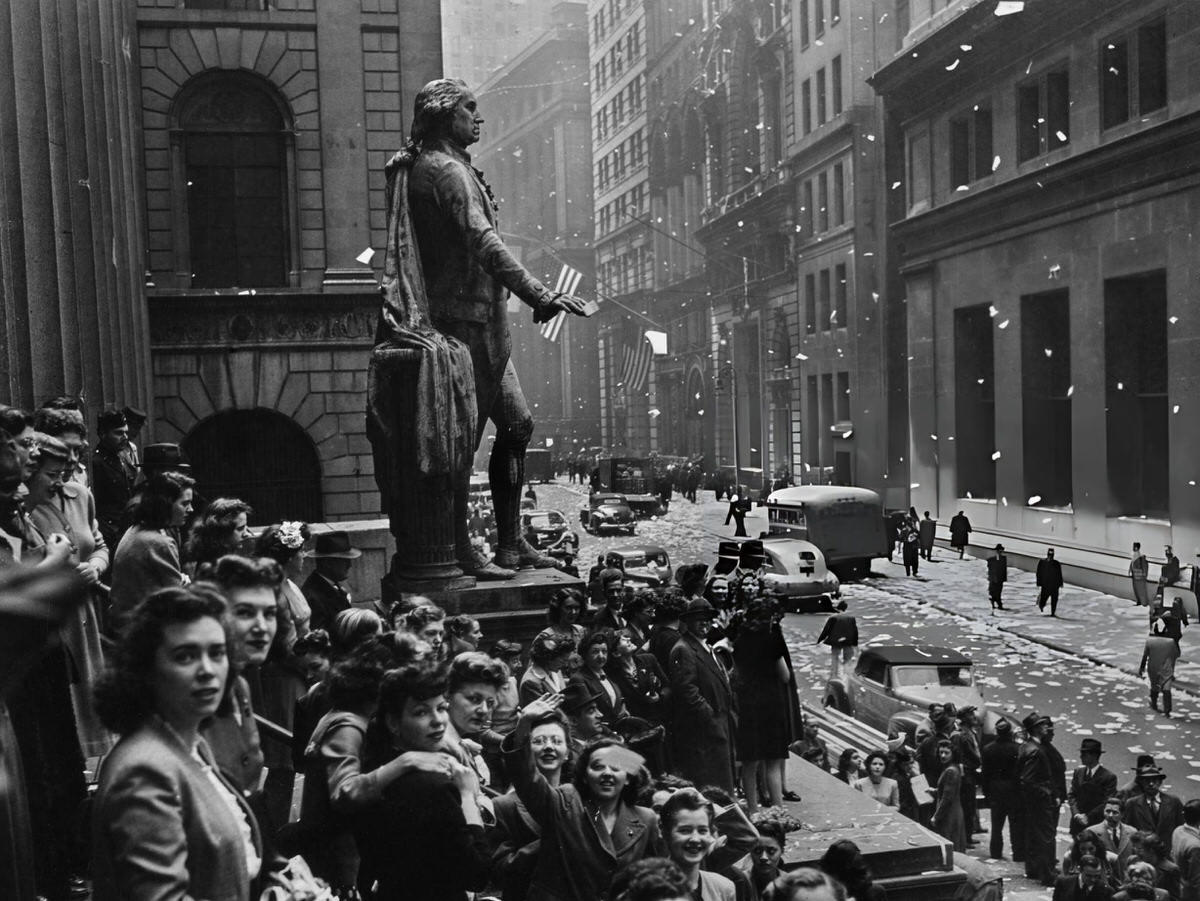
#64 Revellers at the George Washington statue on the steps of Federal Hall during V-E Day celebrations, 1945.

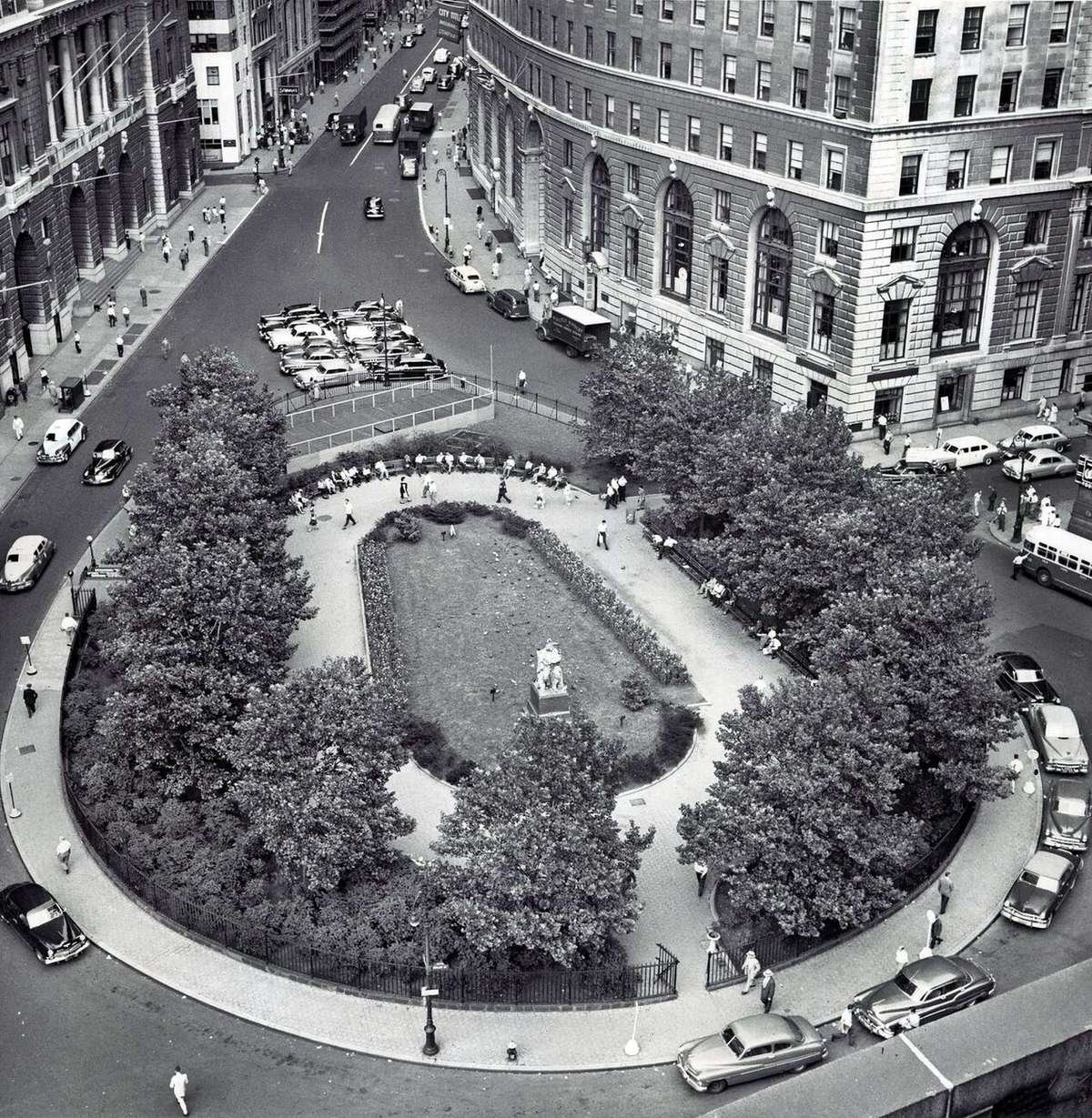
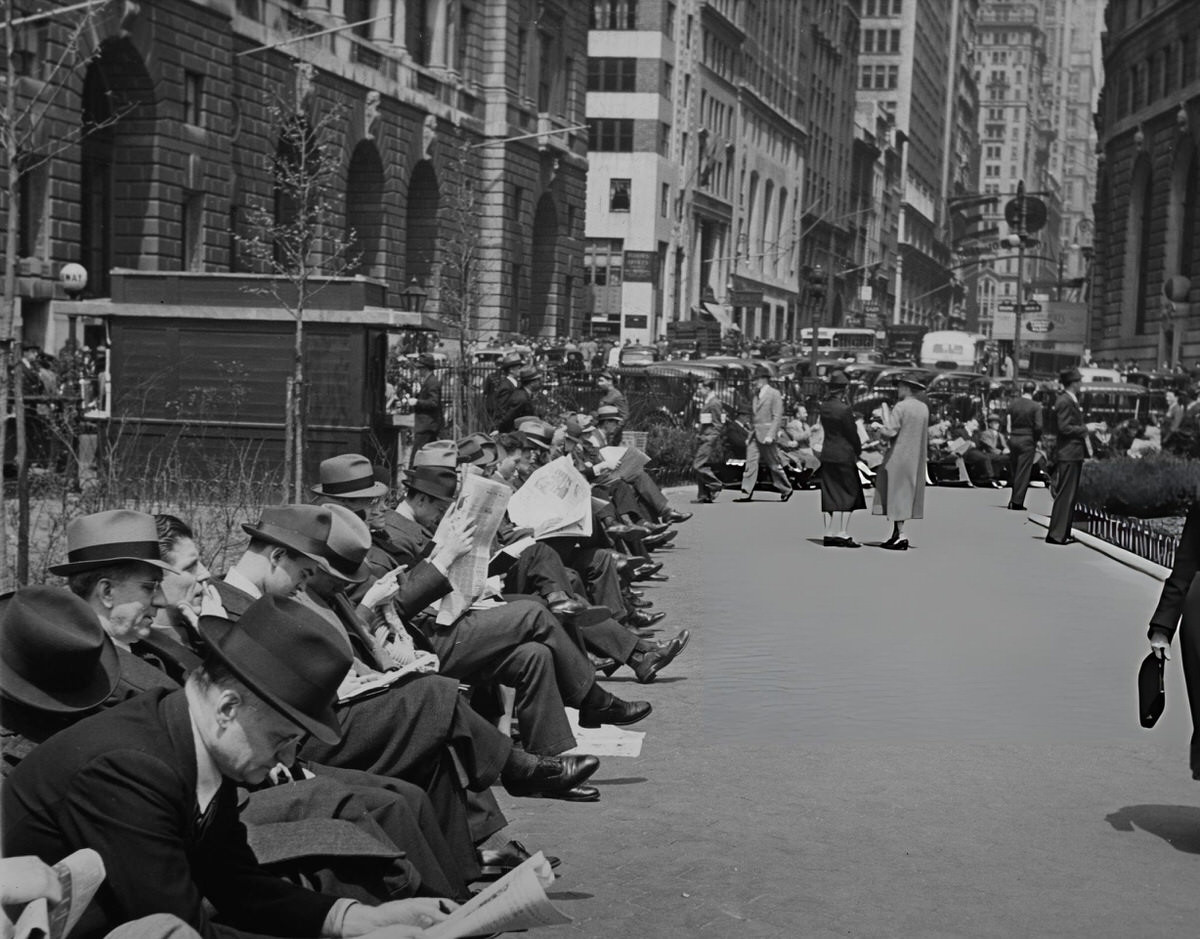
#65 Men reading newspapers on benches at Bowling Green, 1947.

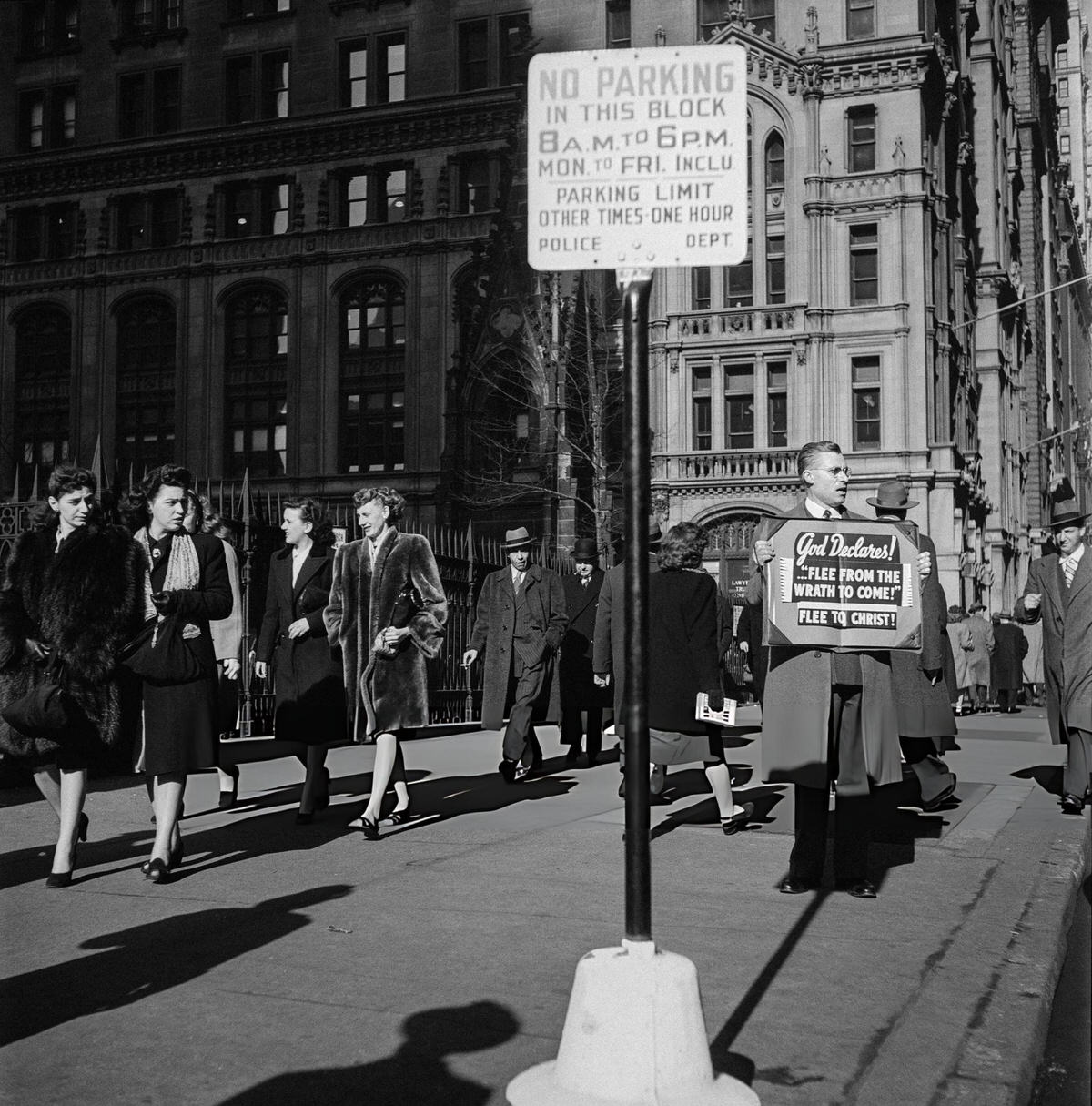
#66 Pedestrians passing a man preaching at the gates of Trinity Church, 1947.

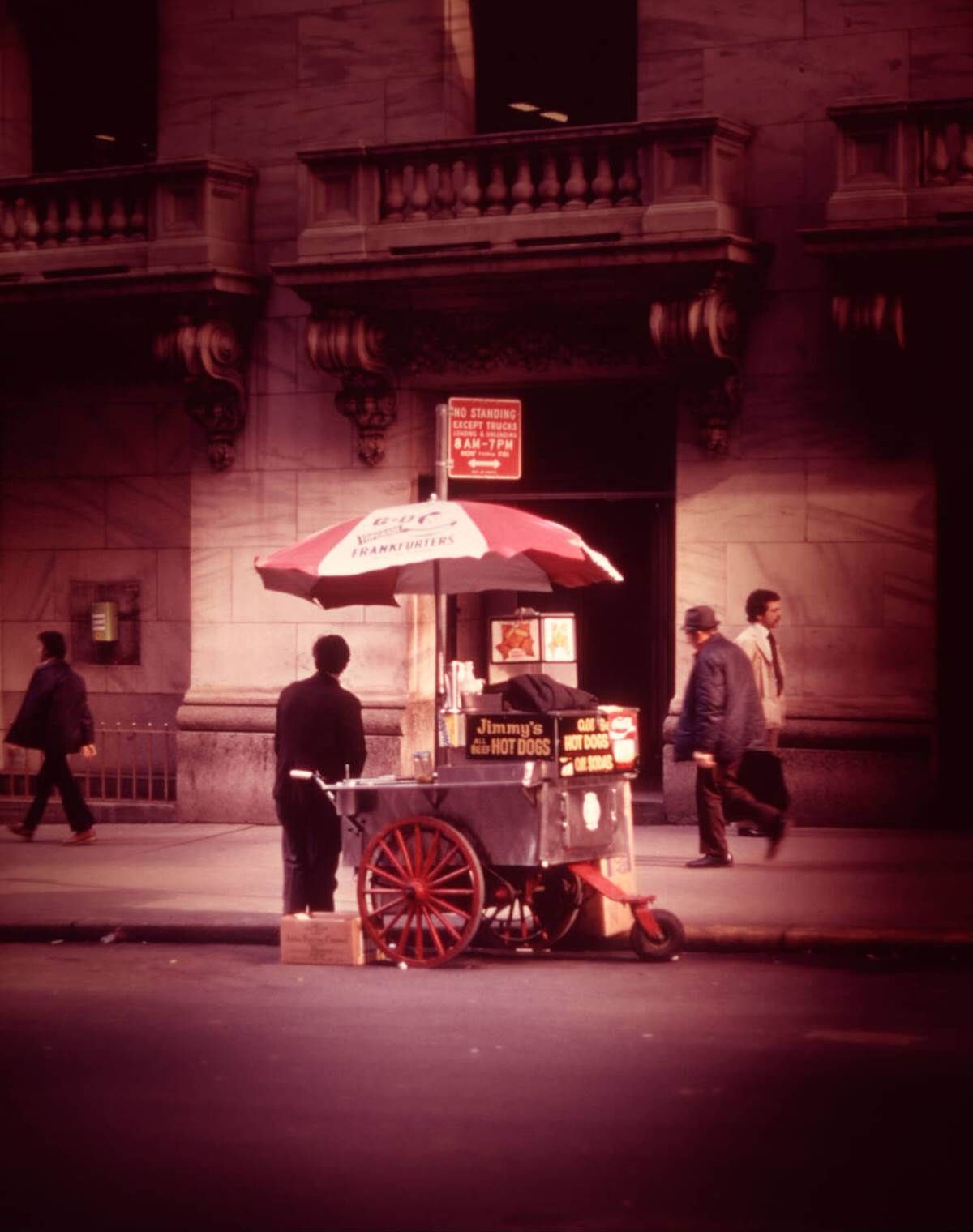
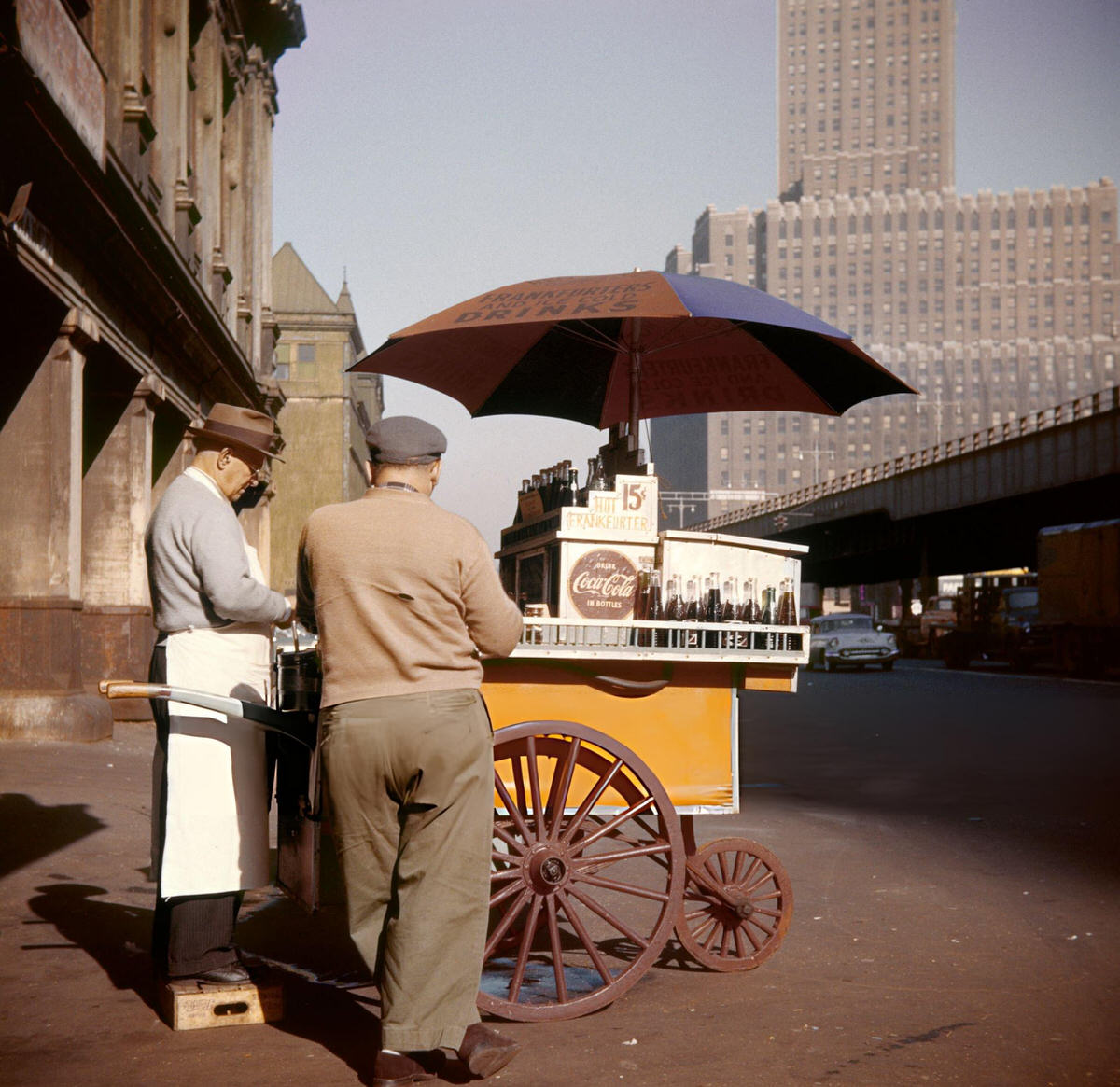
#67 Hot dog vendor on West Street in Downtown Manhattan, 1950s.

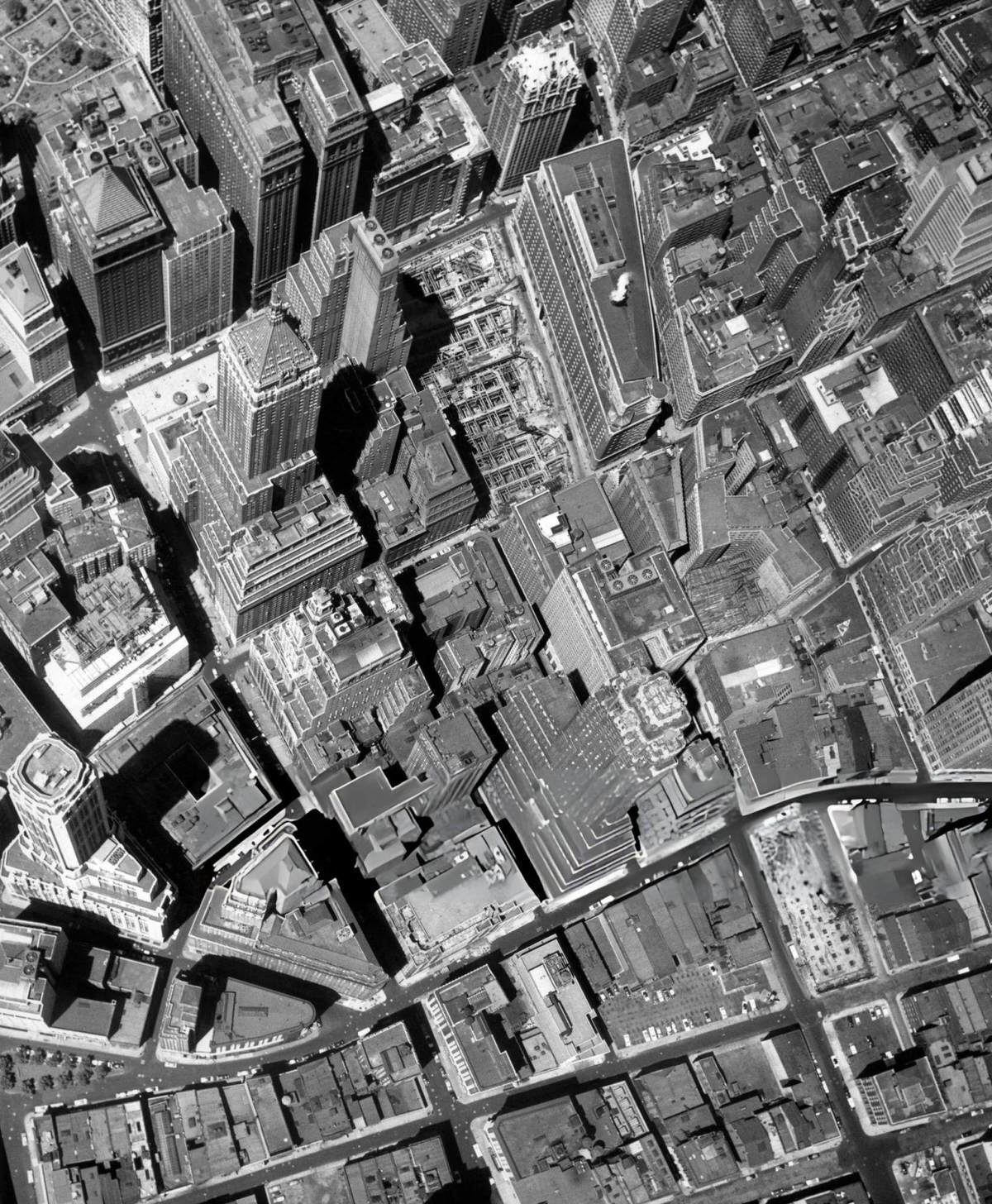
#68 Vertical view of the Wall Street section of Downtown New York, 1950s.

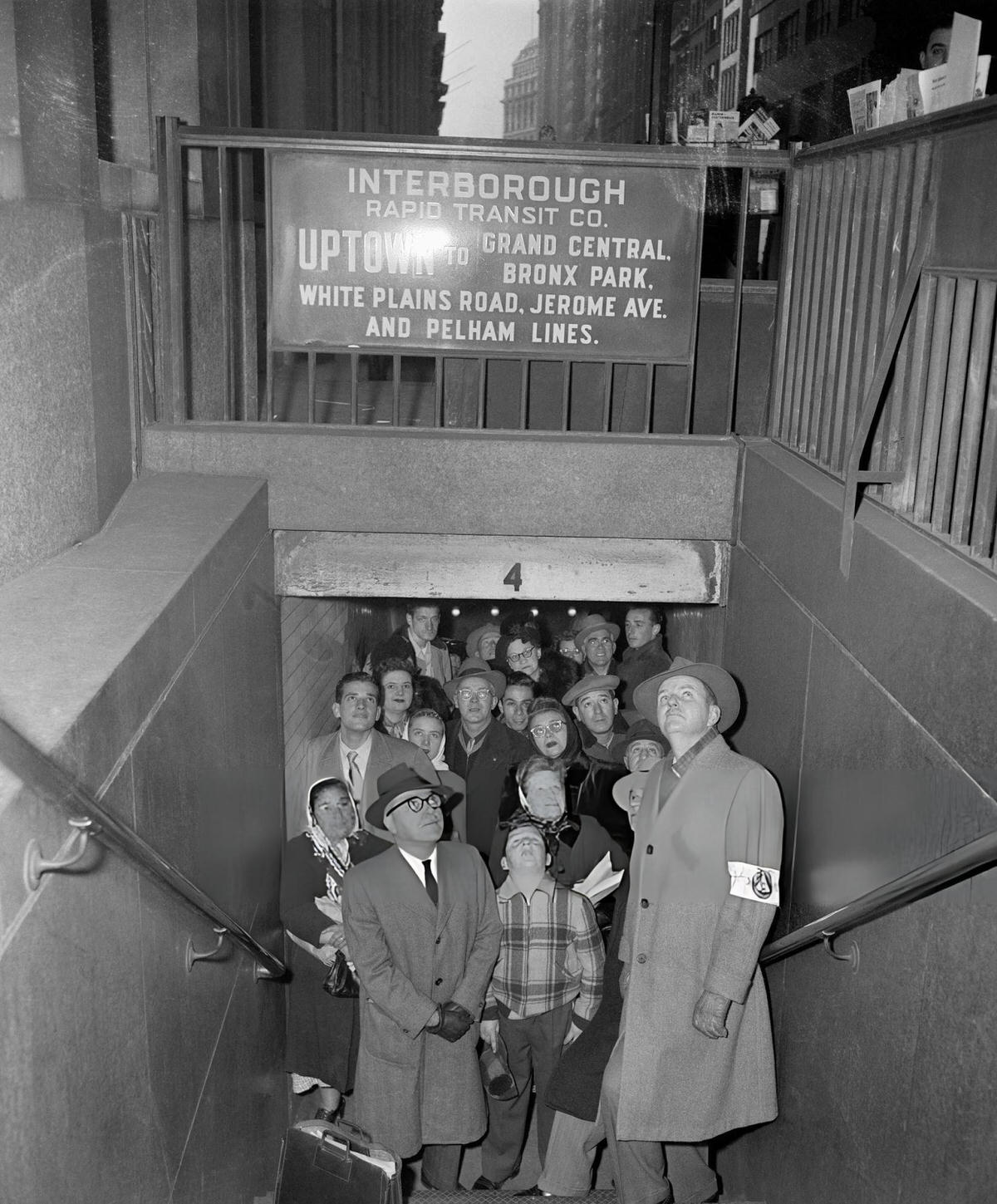
#69 People looking up from a subway entrance at Wall Street and Broadway during an air raid drill, 1951.

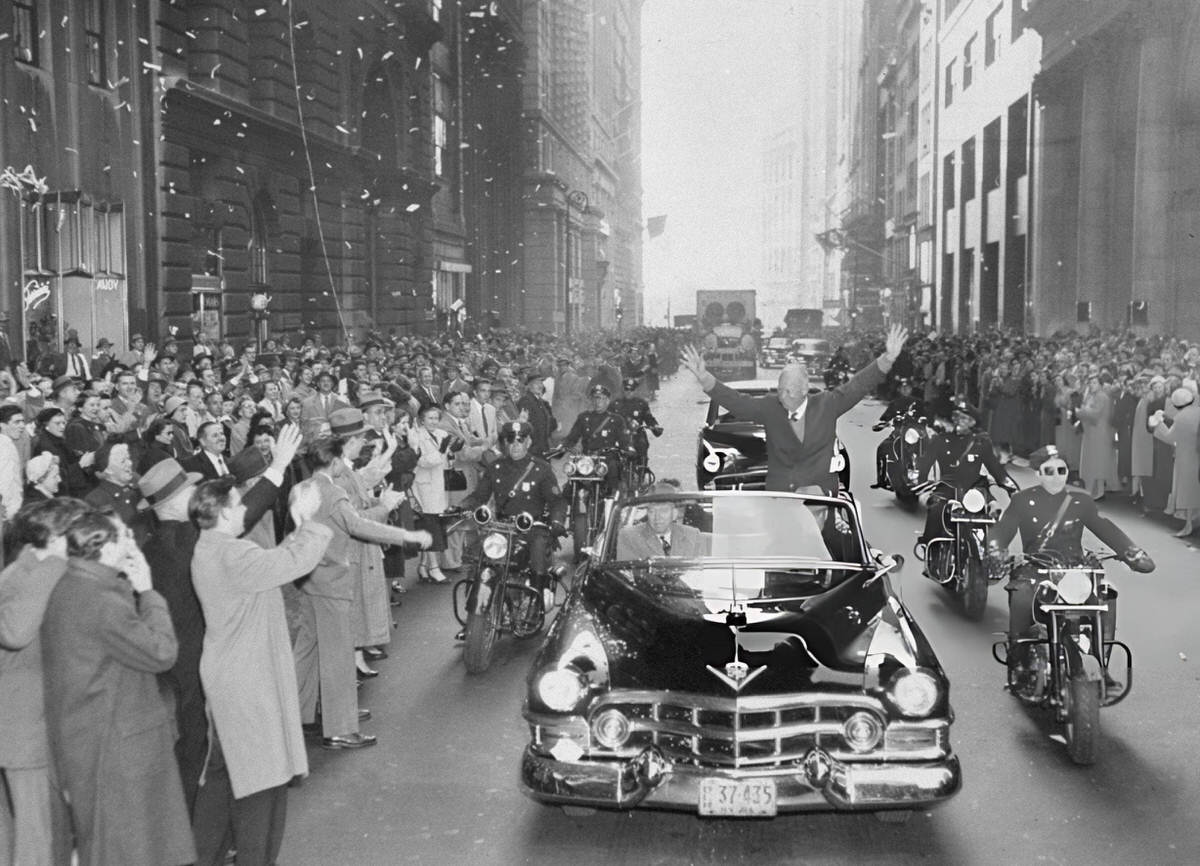
#70 President Dwight D. Eisenhower riding through the Financial District along Lower Broadway, 1952.

#72 View north from Battery Park toward the Singer Building and Equitable Building, 1915.

#73 Crowds outside the New York Stock Exchange during the Wall Street Crash, 1929.

#76 Marie Gaynor dressed as Lady Liberty selling Liberty bonds at the Equitable Building, 1918.

#77 Showgirls in the Financial District selling tickets to the Red Cross Ball on Wall Street, 1918.

Written by Henry Parker

Content writer, SEO analyst and Marketer. You cannot find me playing any outdoor sports, but I waste my precious time playing Video Games..

Leave a Reply

Comment using name and email. Or Register an account

GIPHY App Key not set. Please check settings