

 Dennis Saul
For nearly half a century, New York City moved on four legs. Over 100,000 horses powered the streets at the peak of the horse era — and the city that replaced them with machines did so faster than anyone expected.
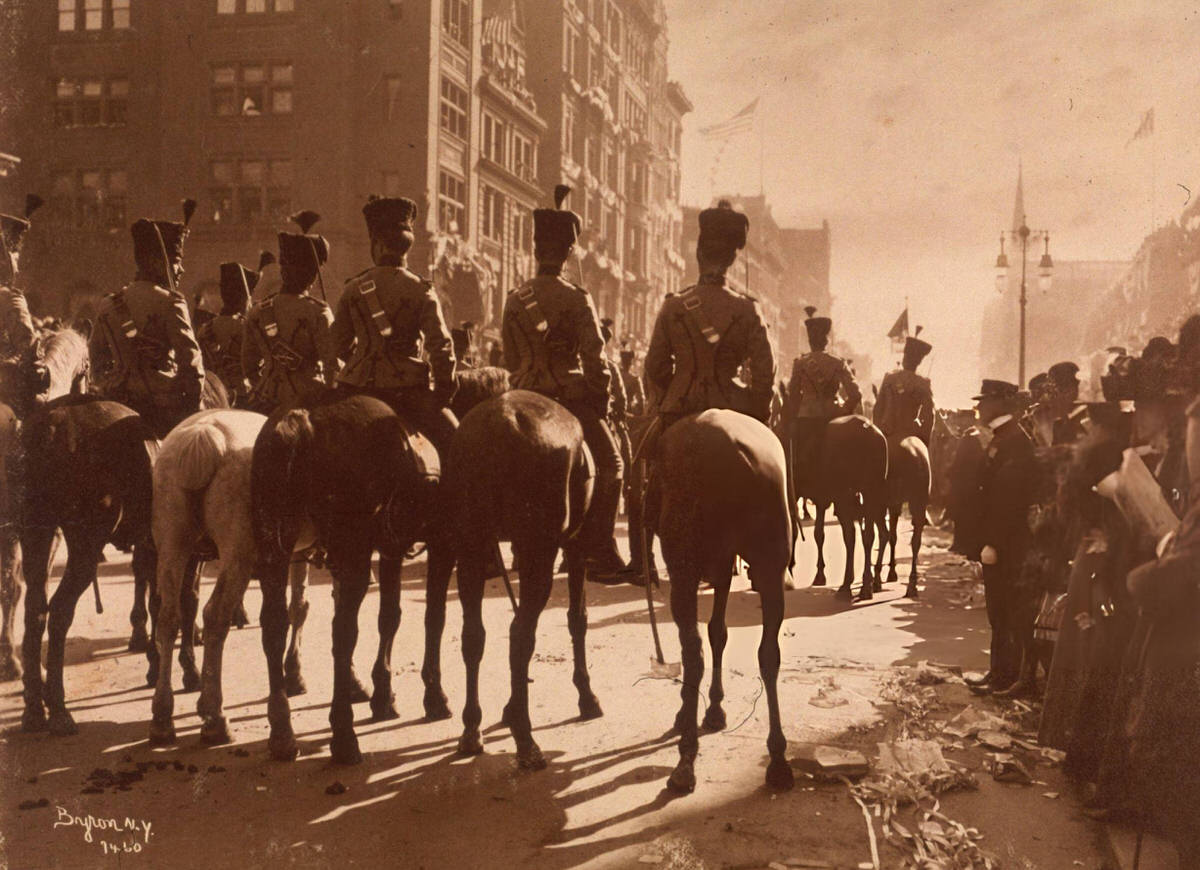
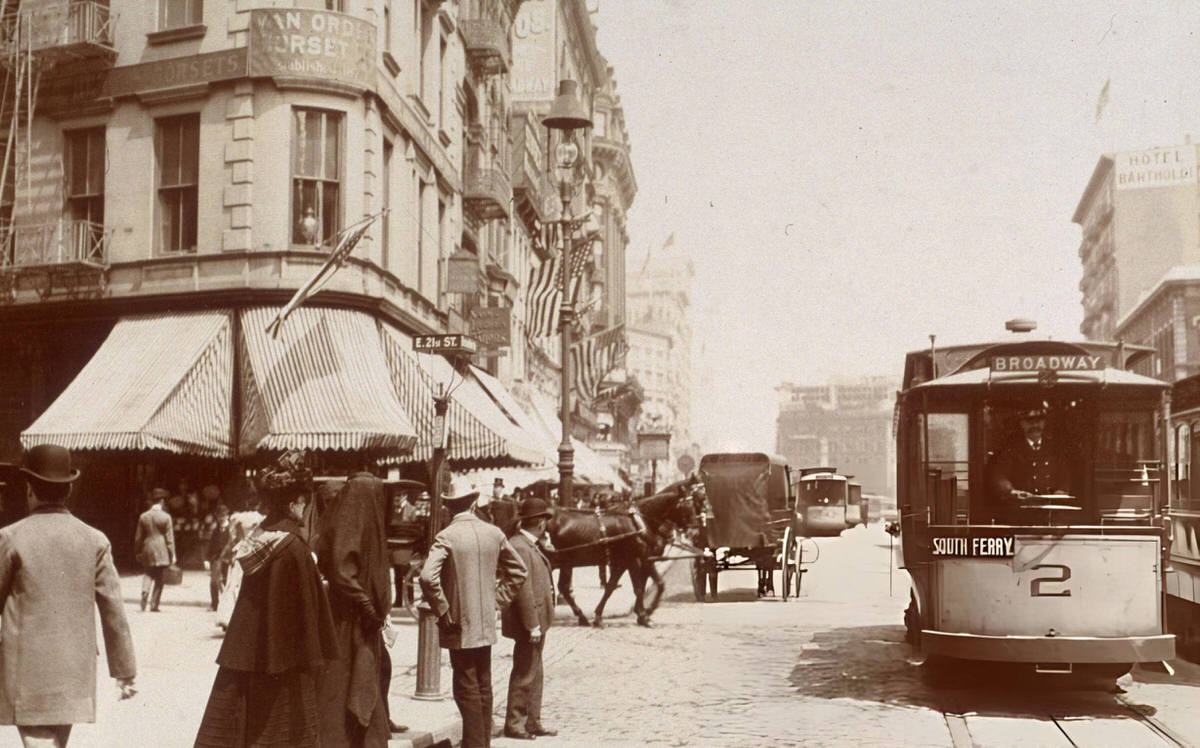
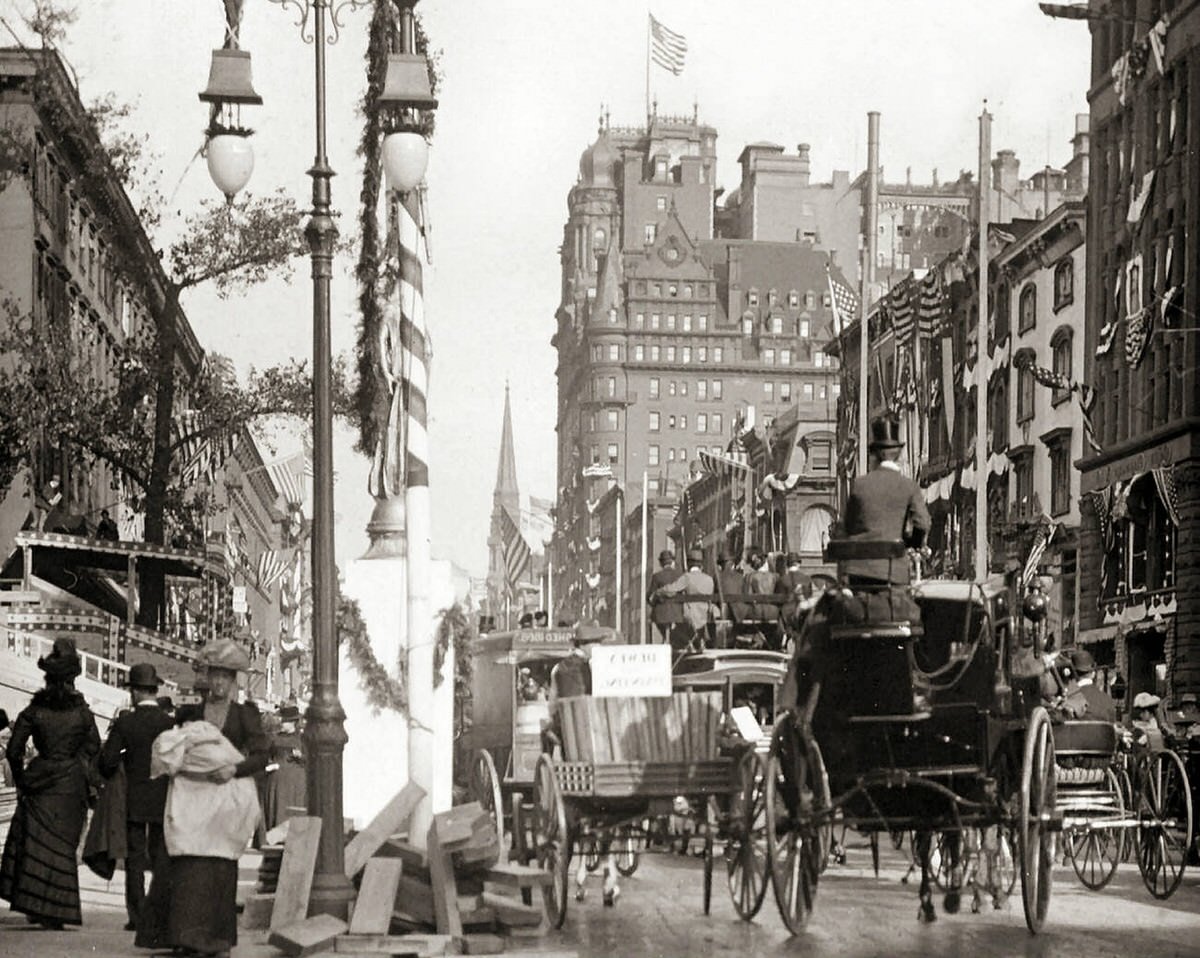
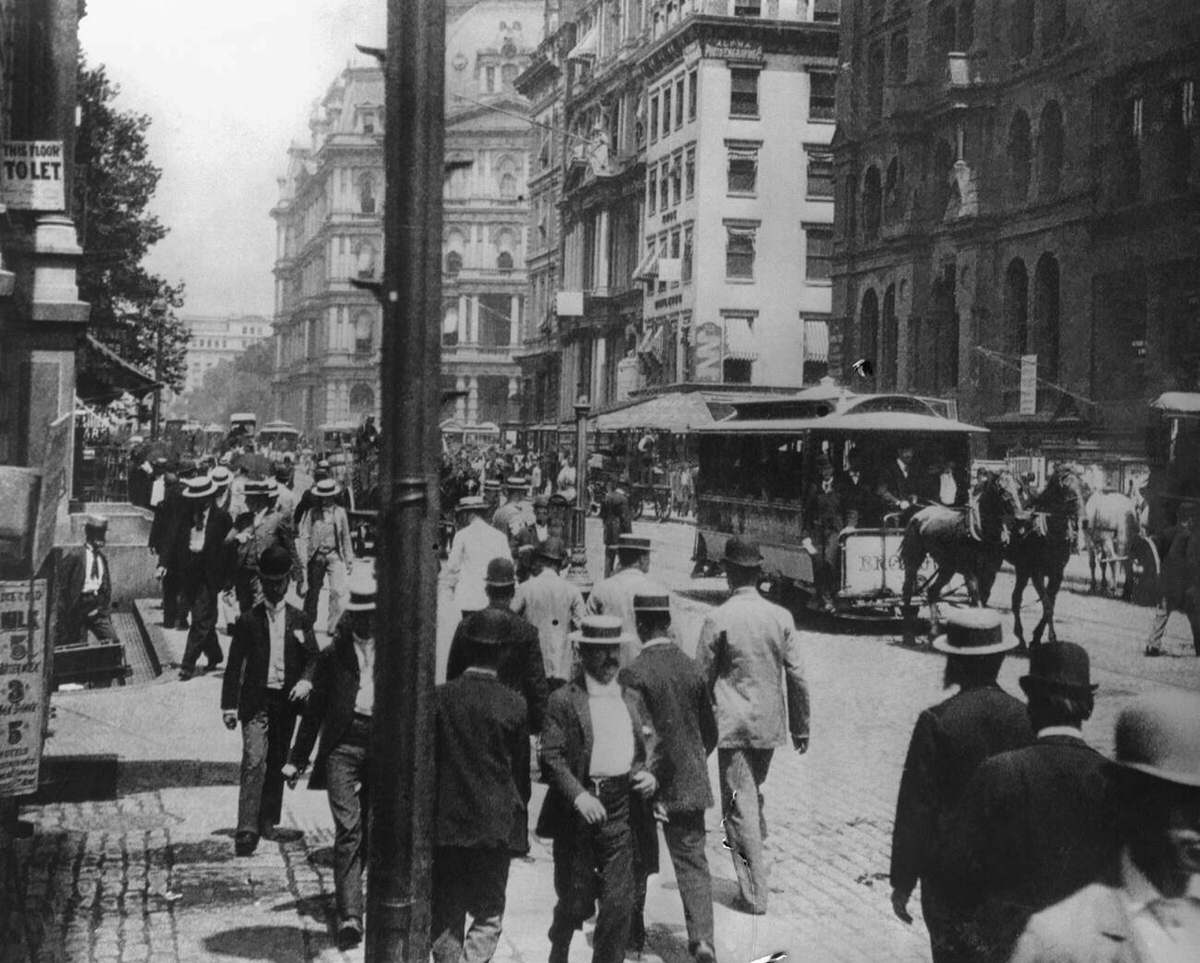
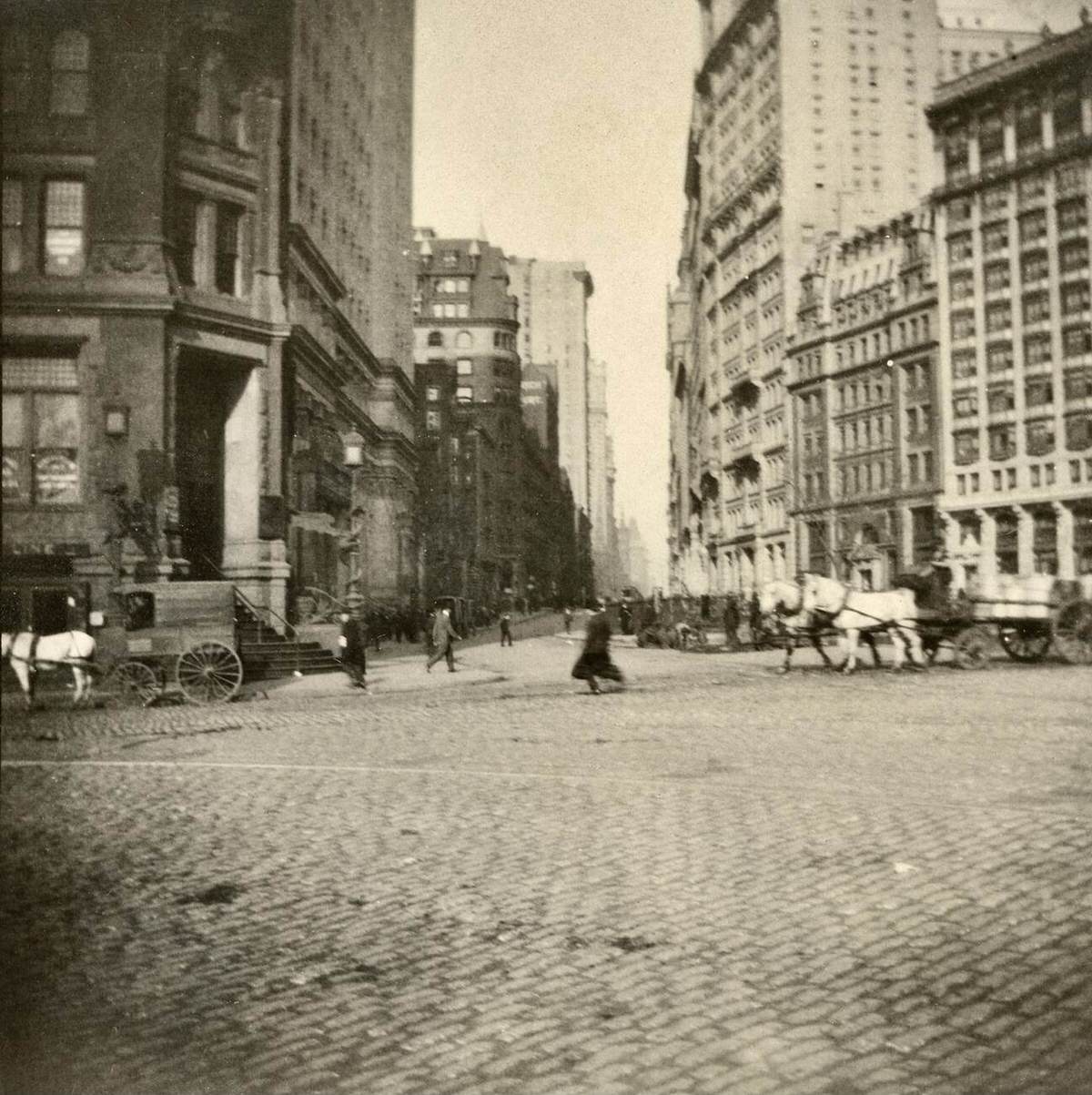
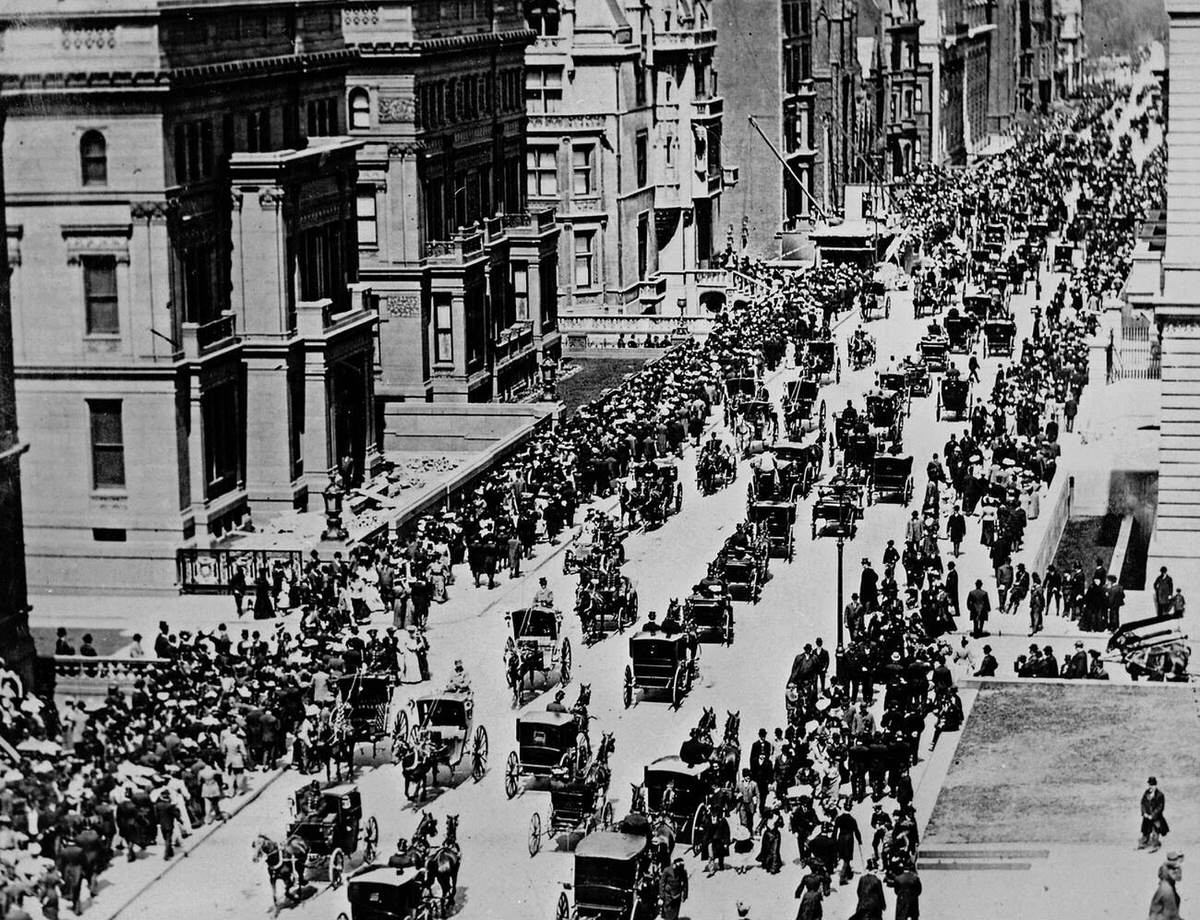
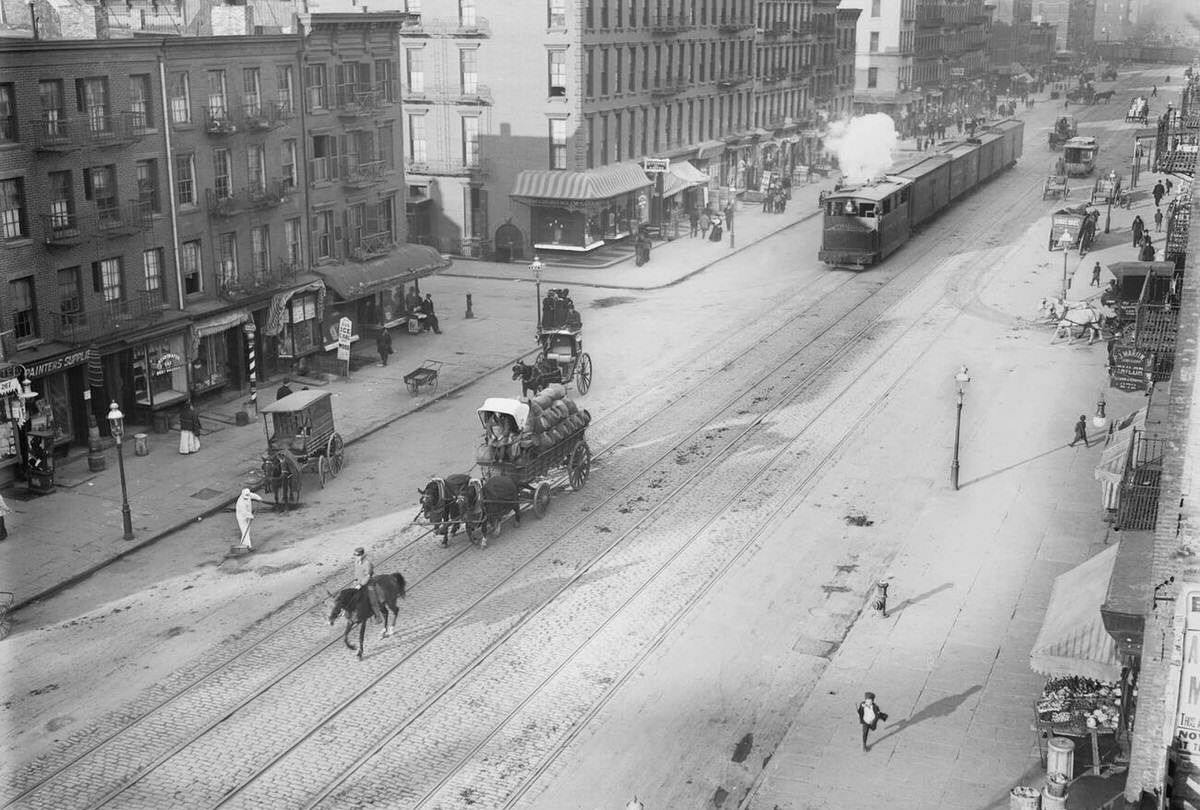
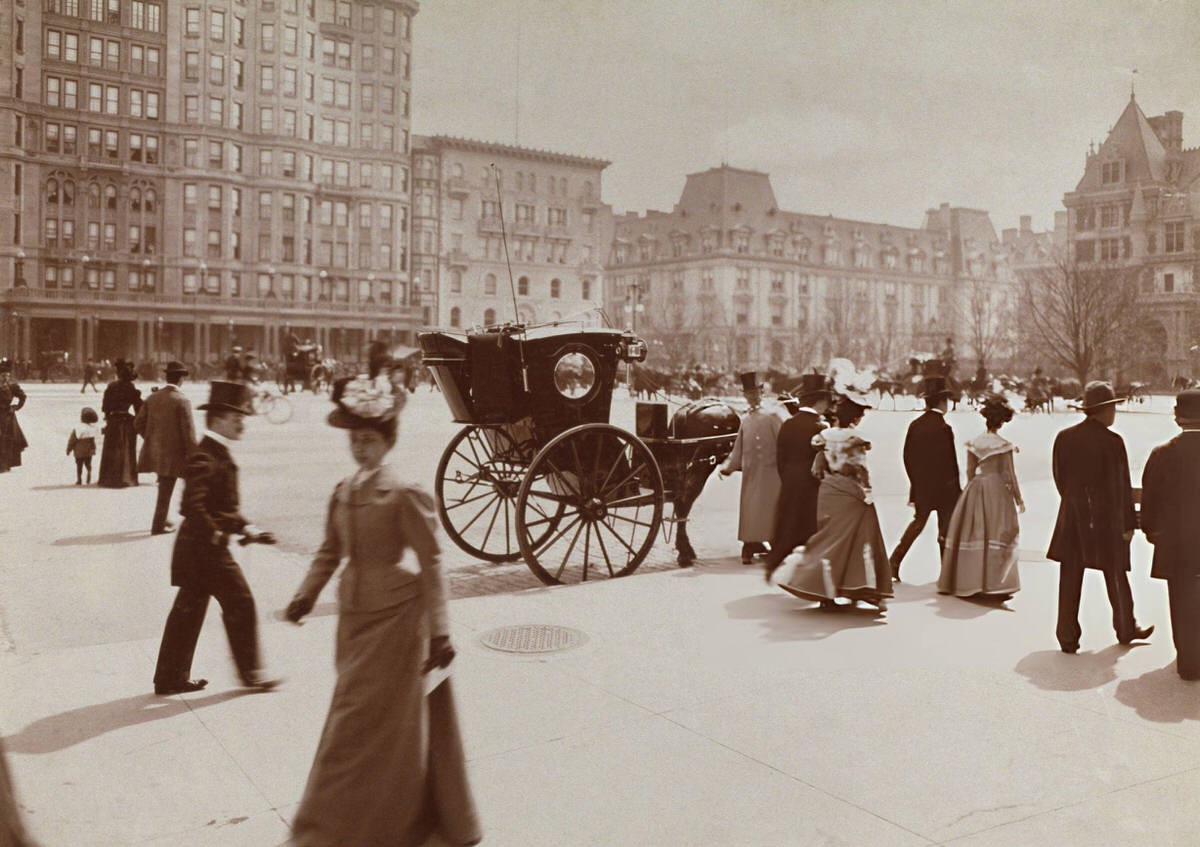
Walk down Broadway in 1890 and the first thing that hits you is the noise. Not the noise of engines — there are no engines yet. What you hear is hooves. Thousands of iron horseshoes striking granite cobblestone, all day and into the night, a sound so constant and so loud that people who lived near the major avenues slept through it the way later generations slept through traffic. The horse was not a quaint detail of old New York. The horse was the engine of the entire city.
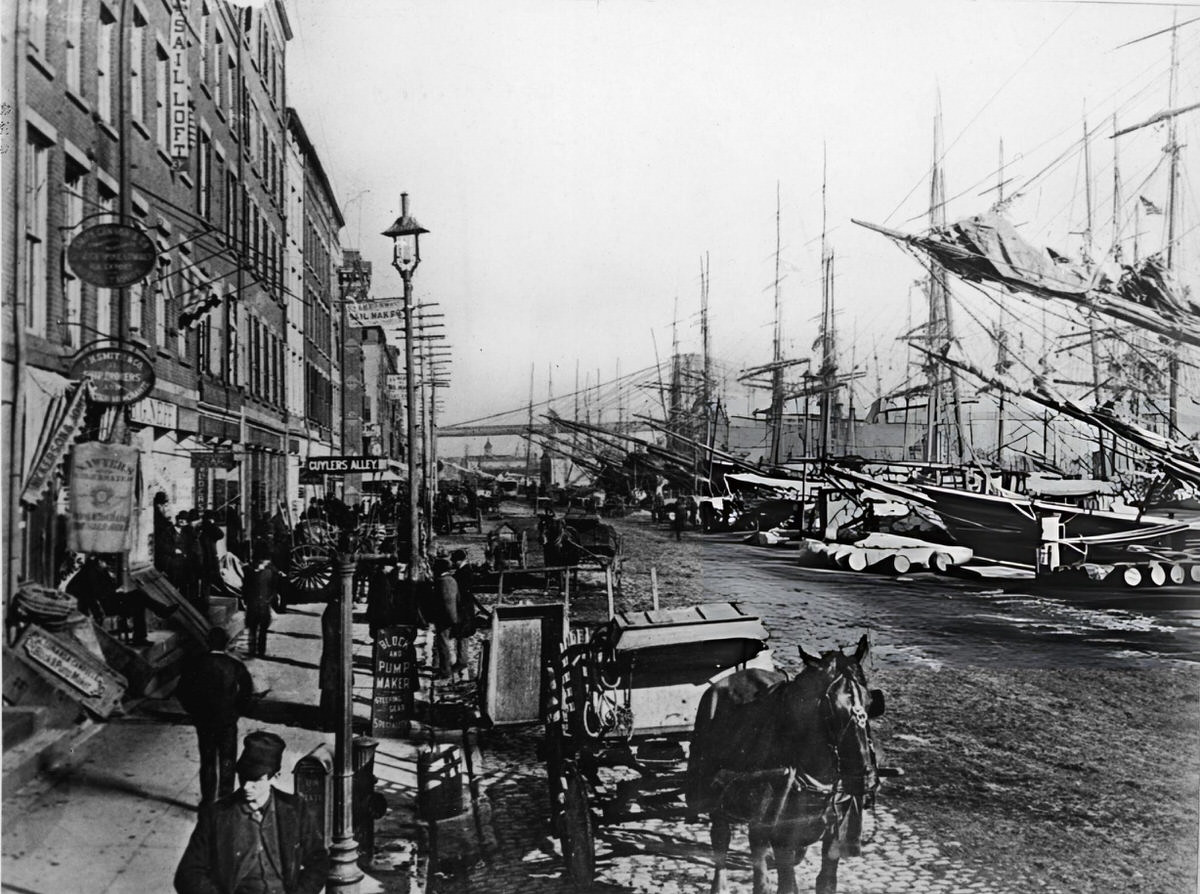
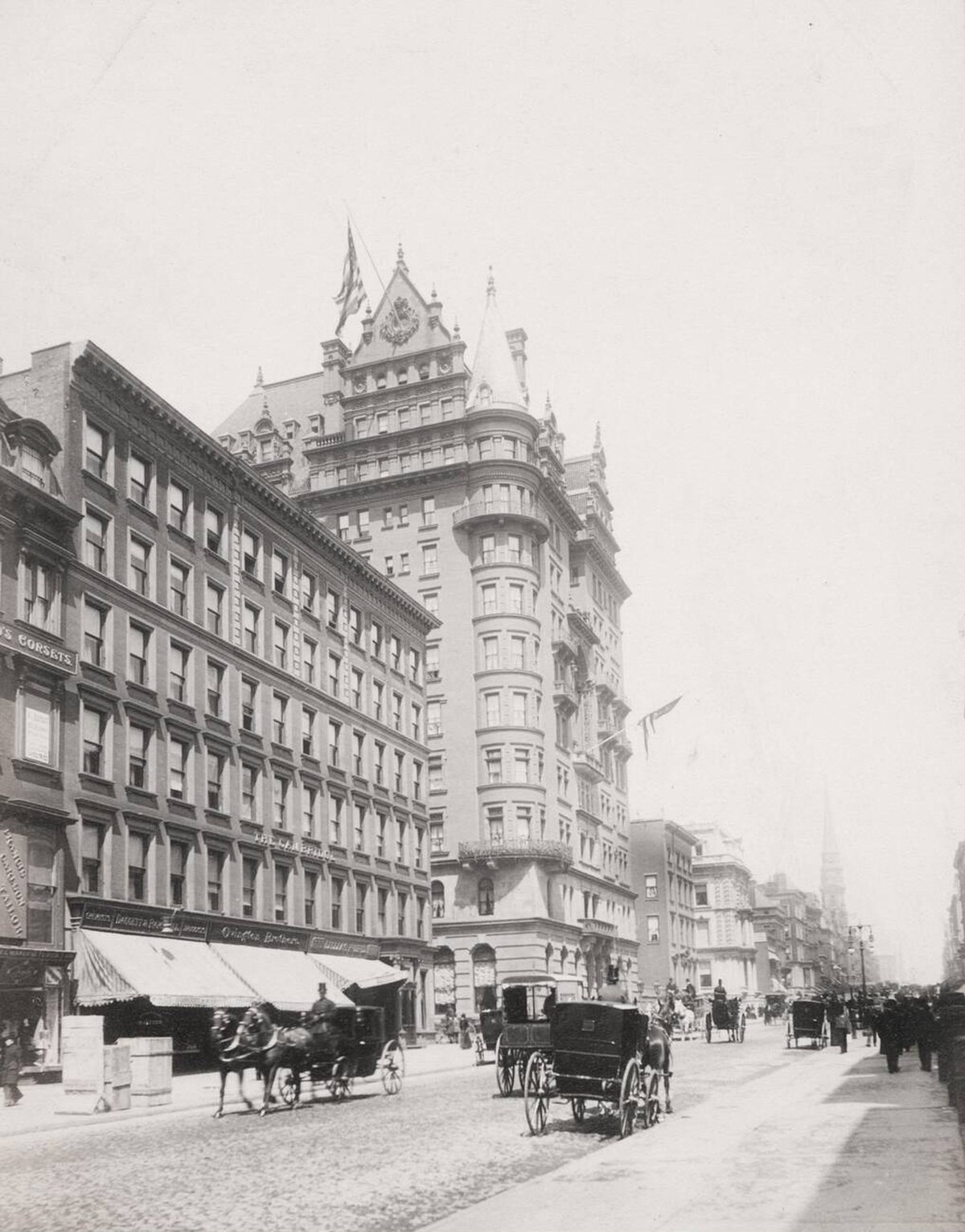
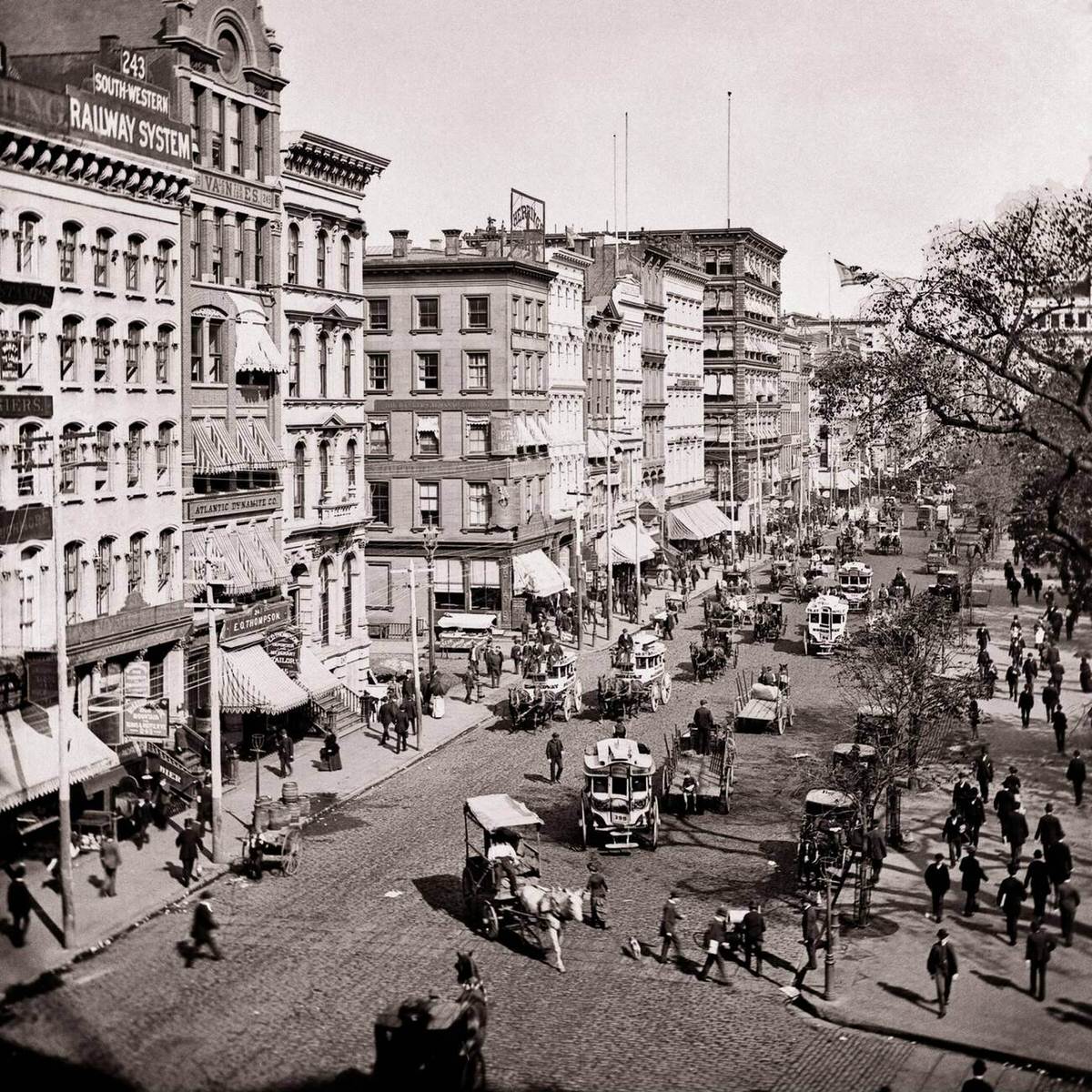
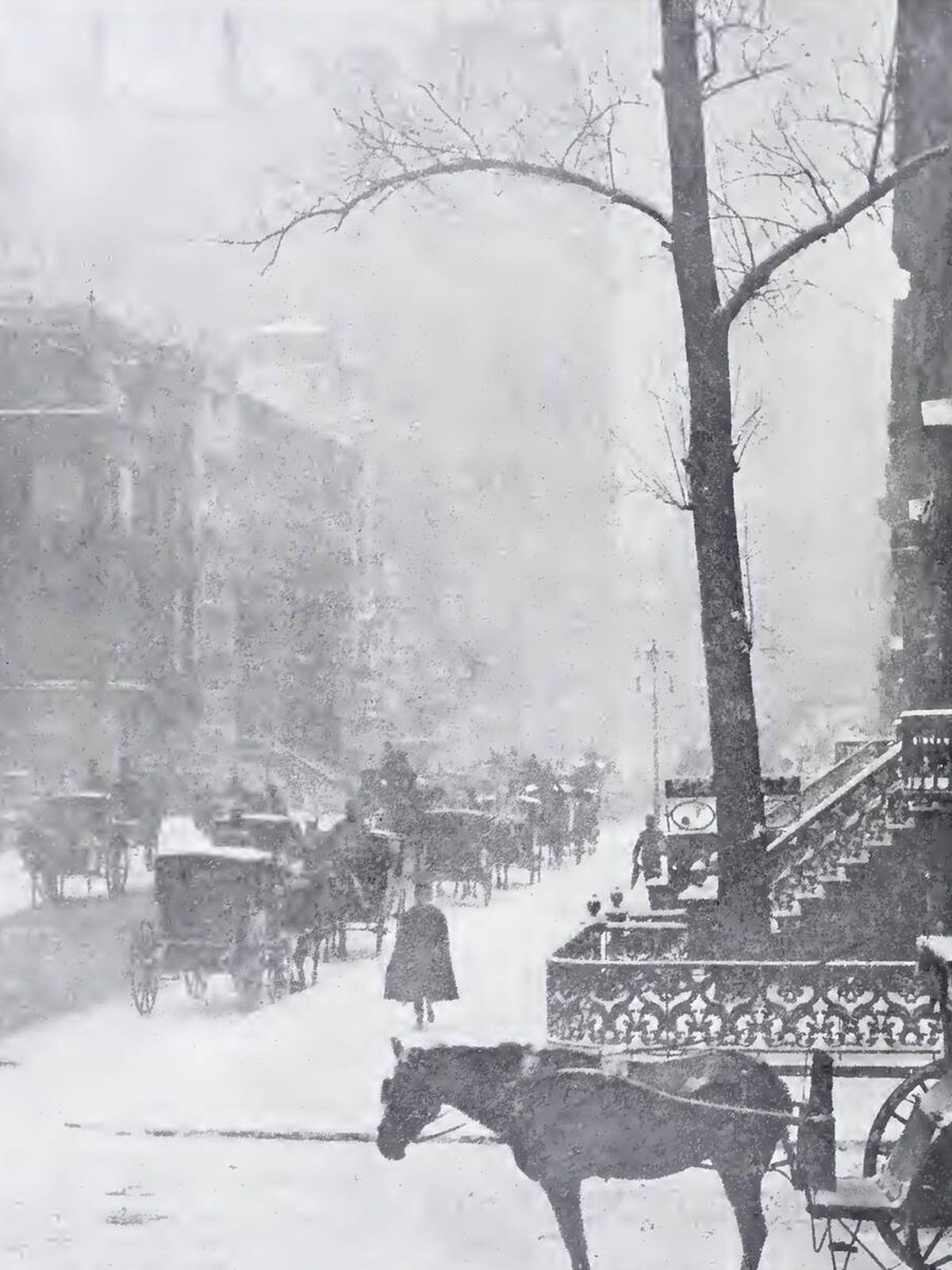
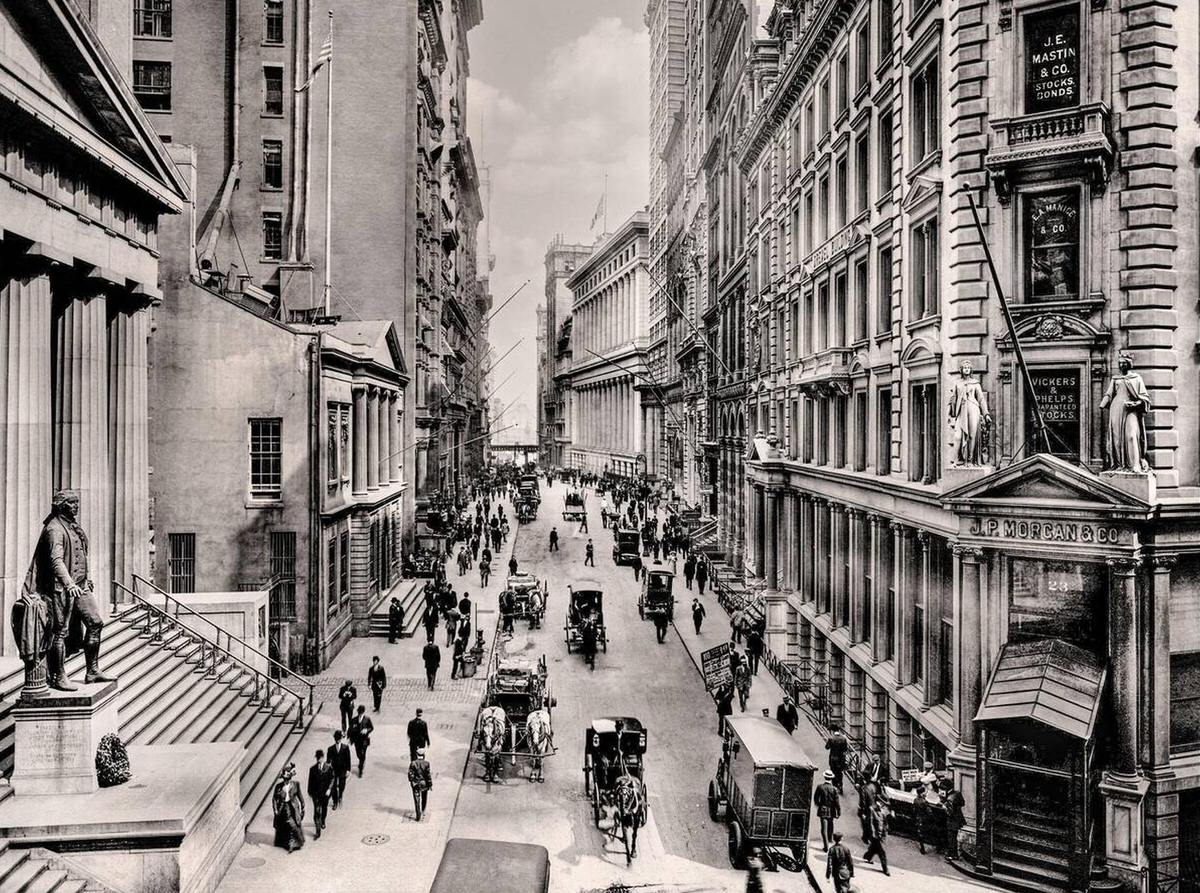
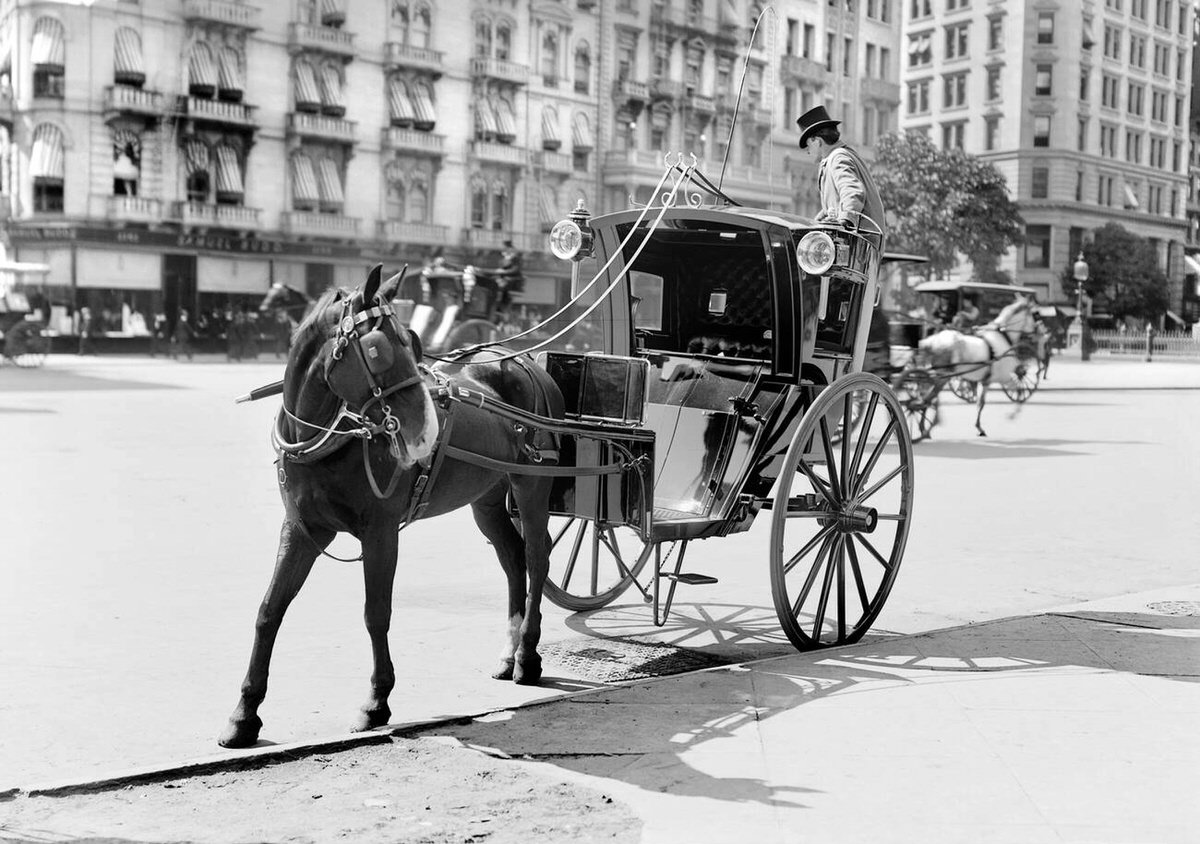
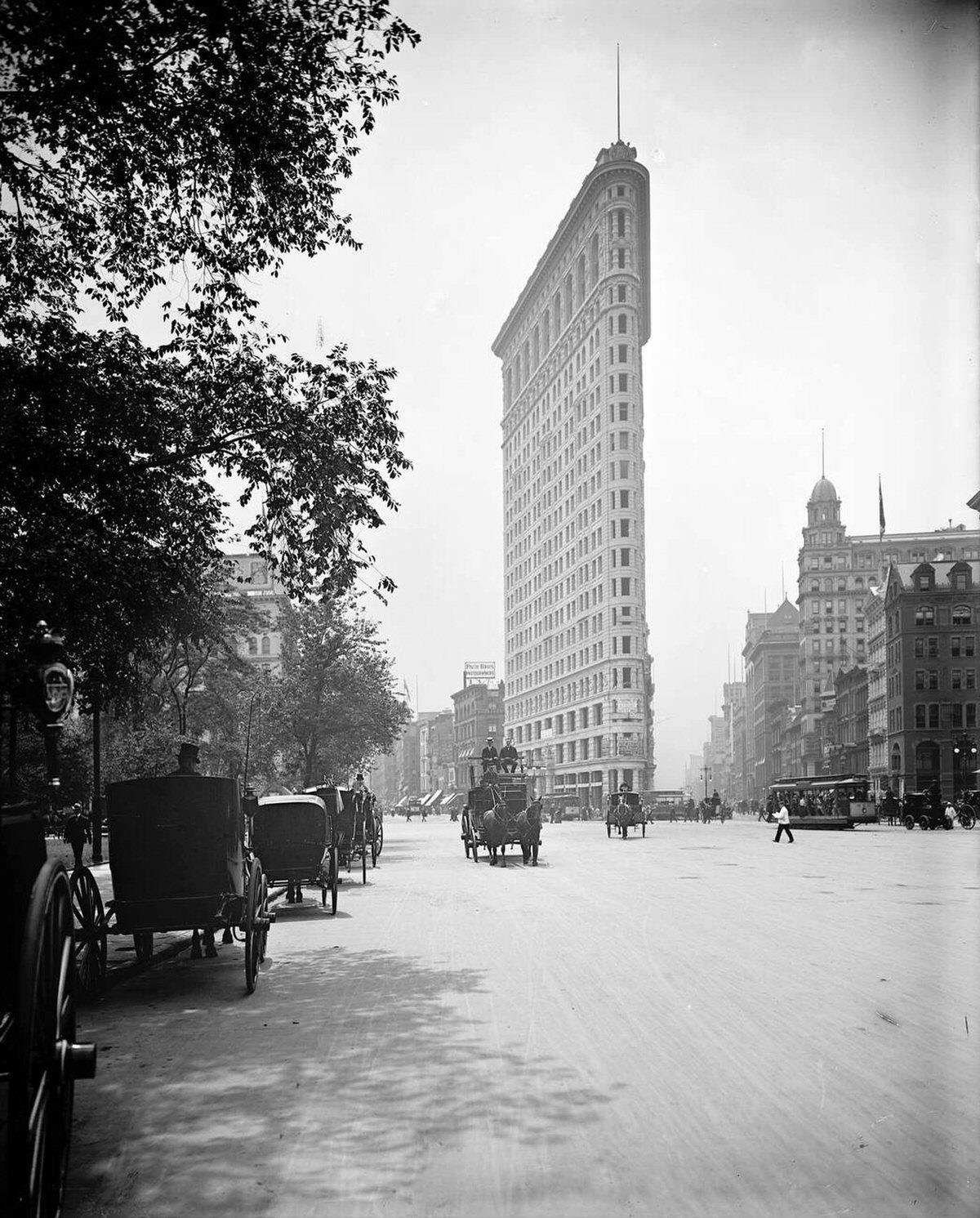
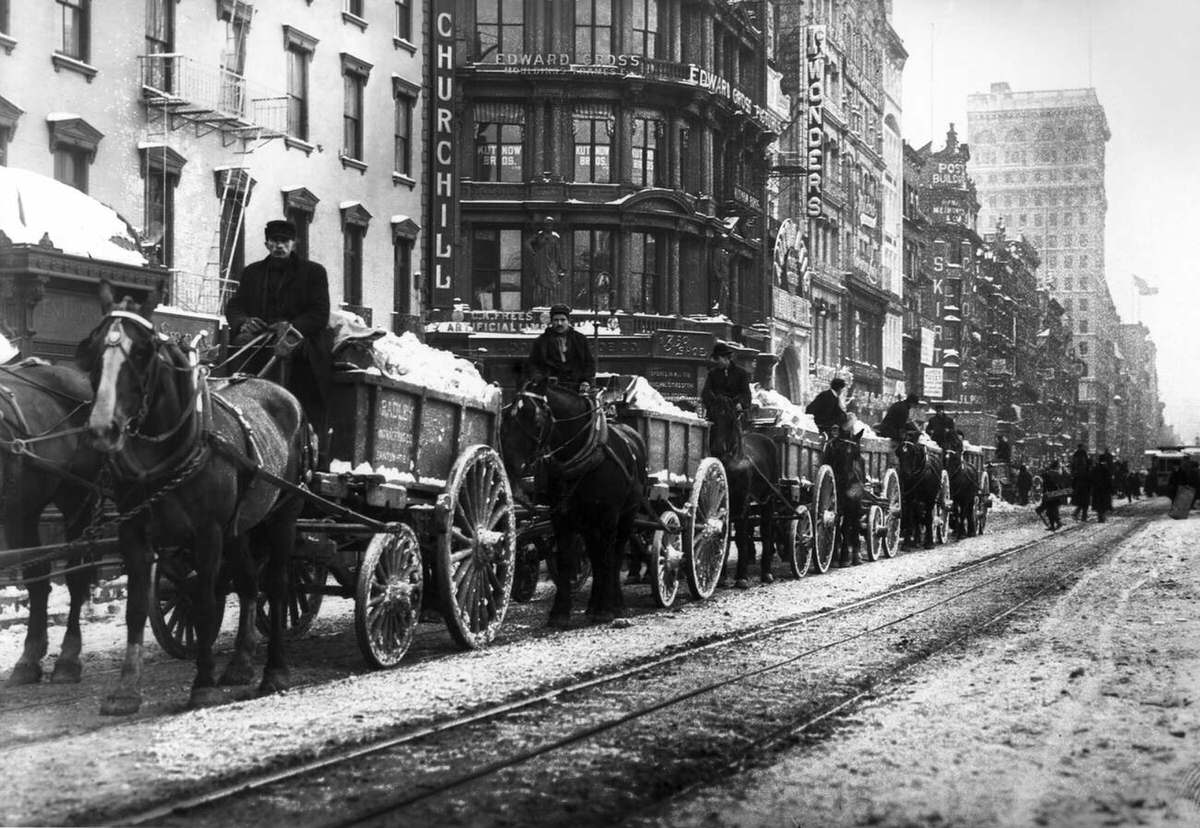
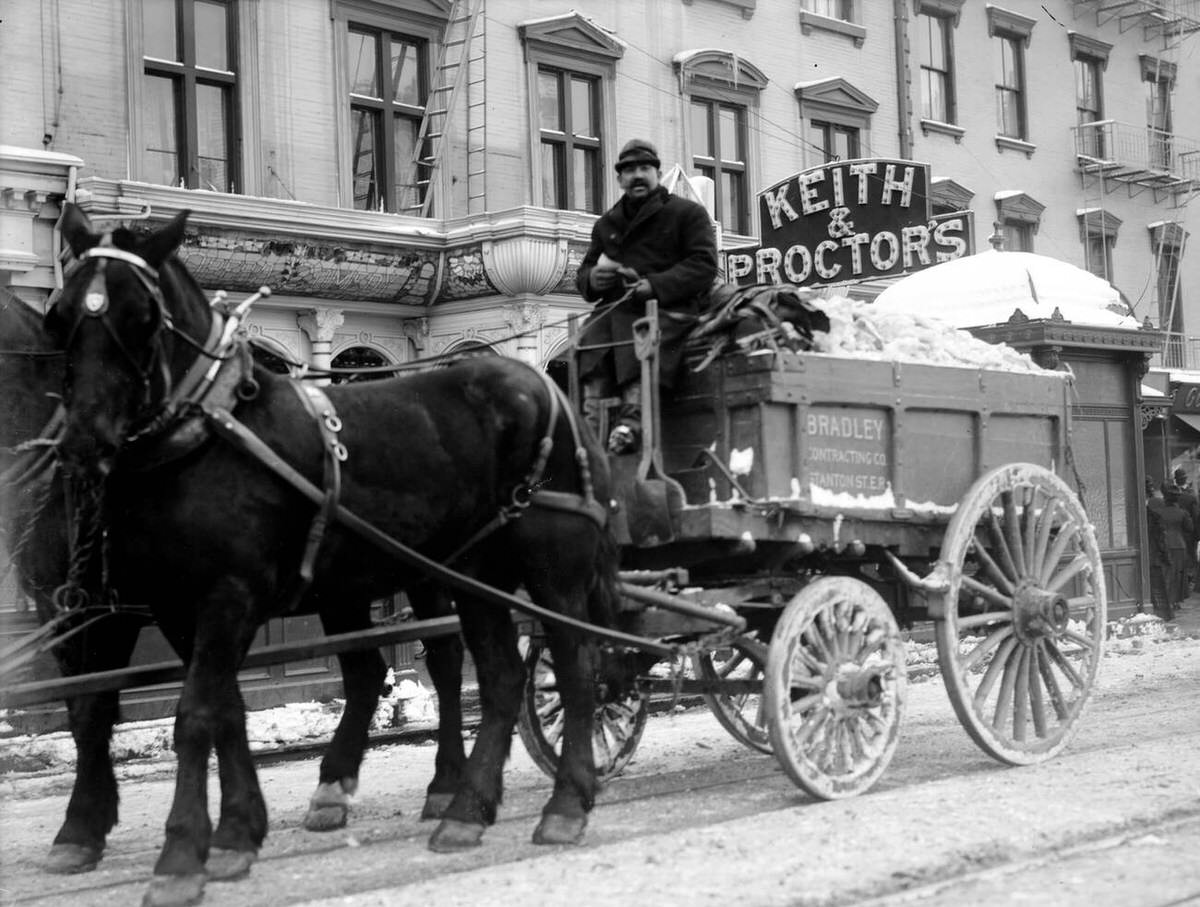
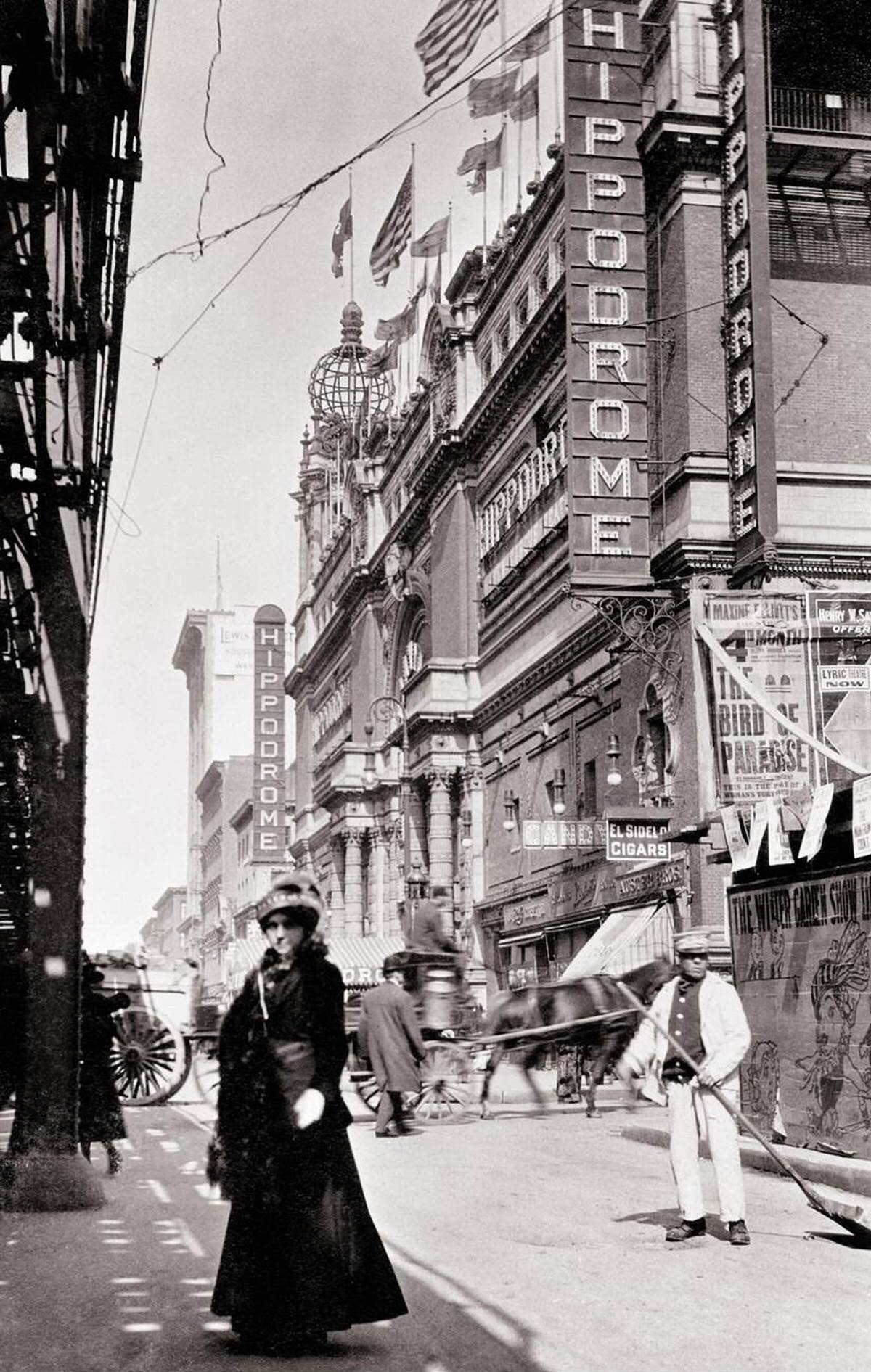
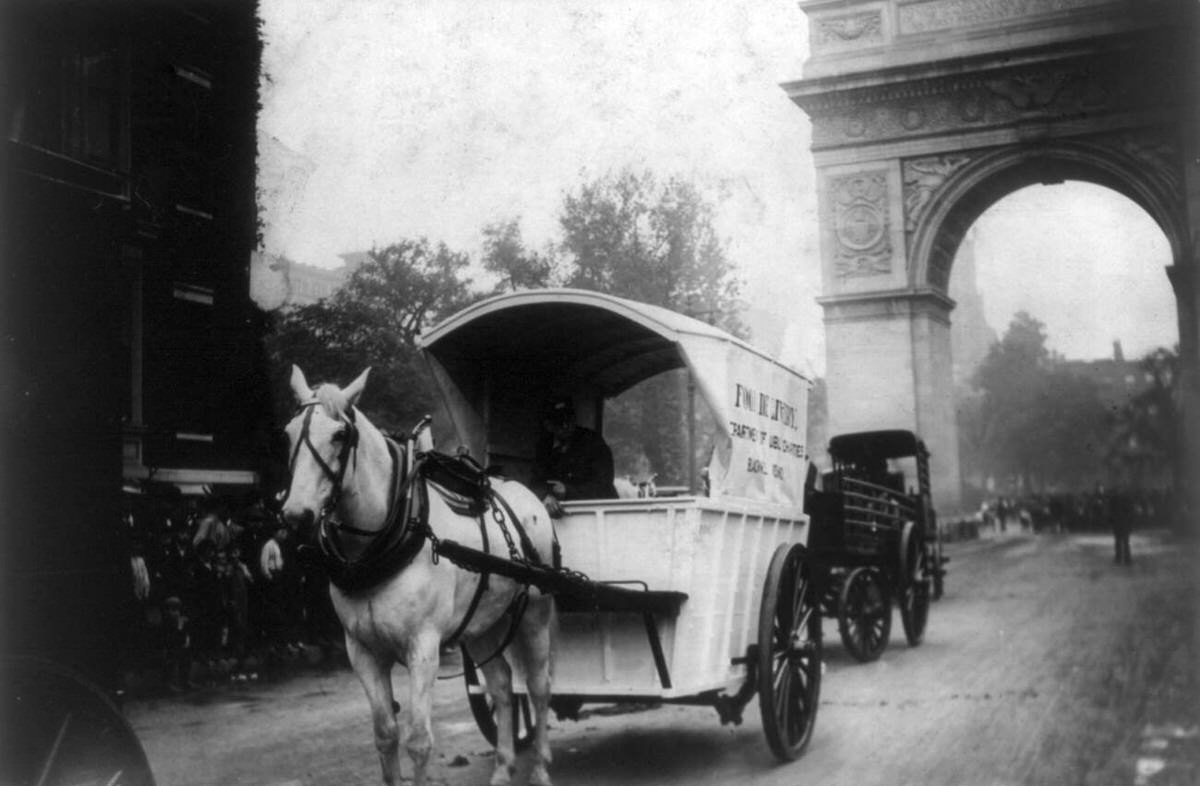
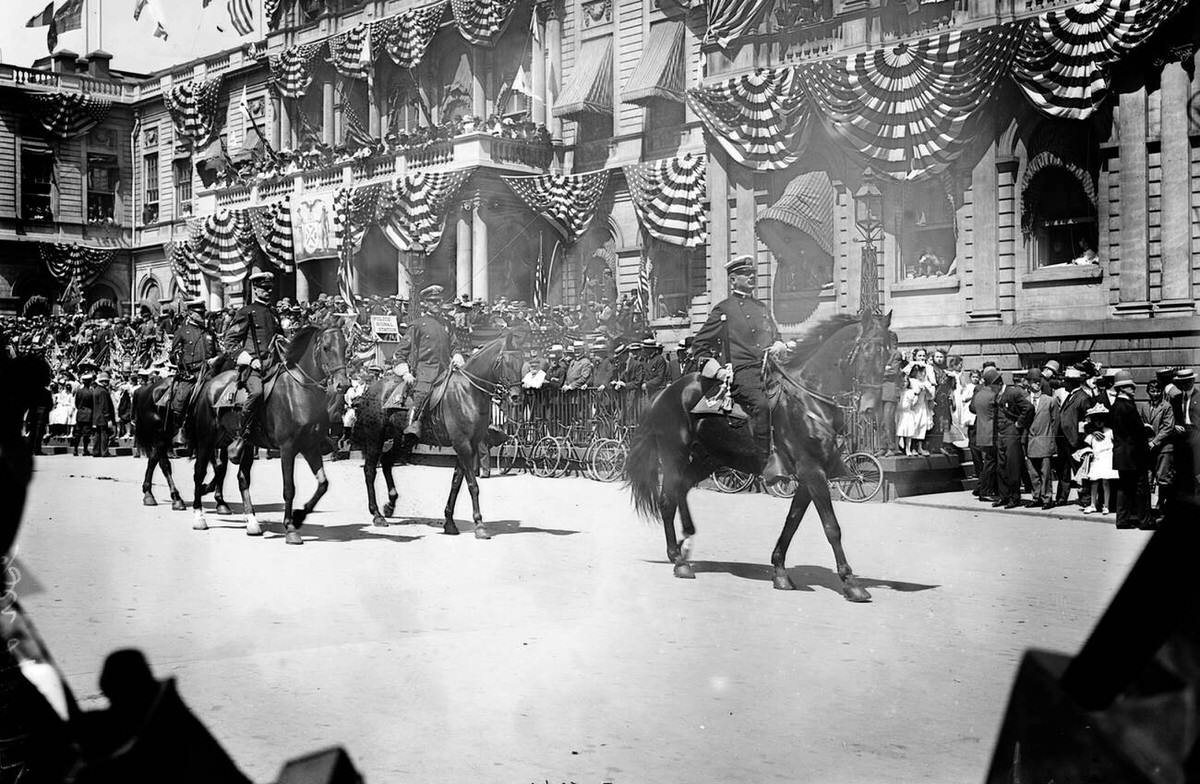
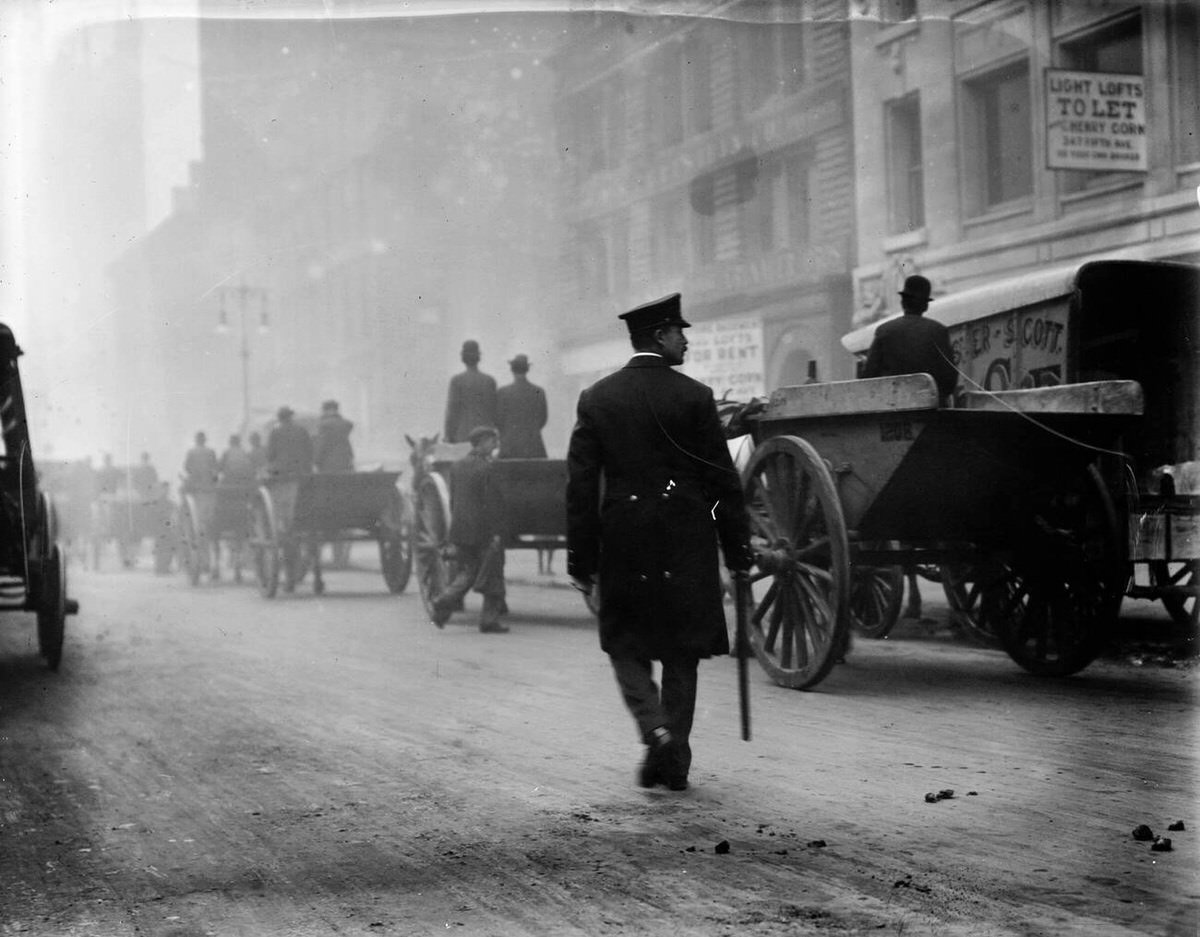
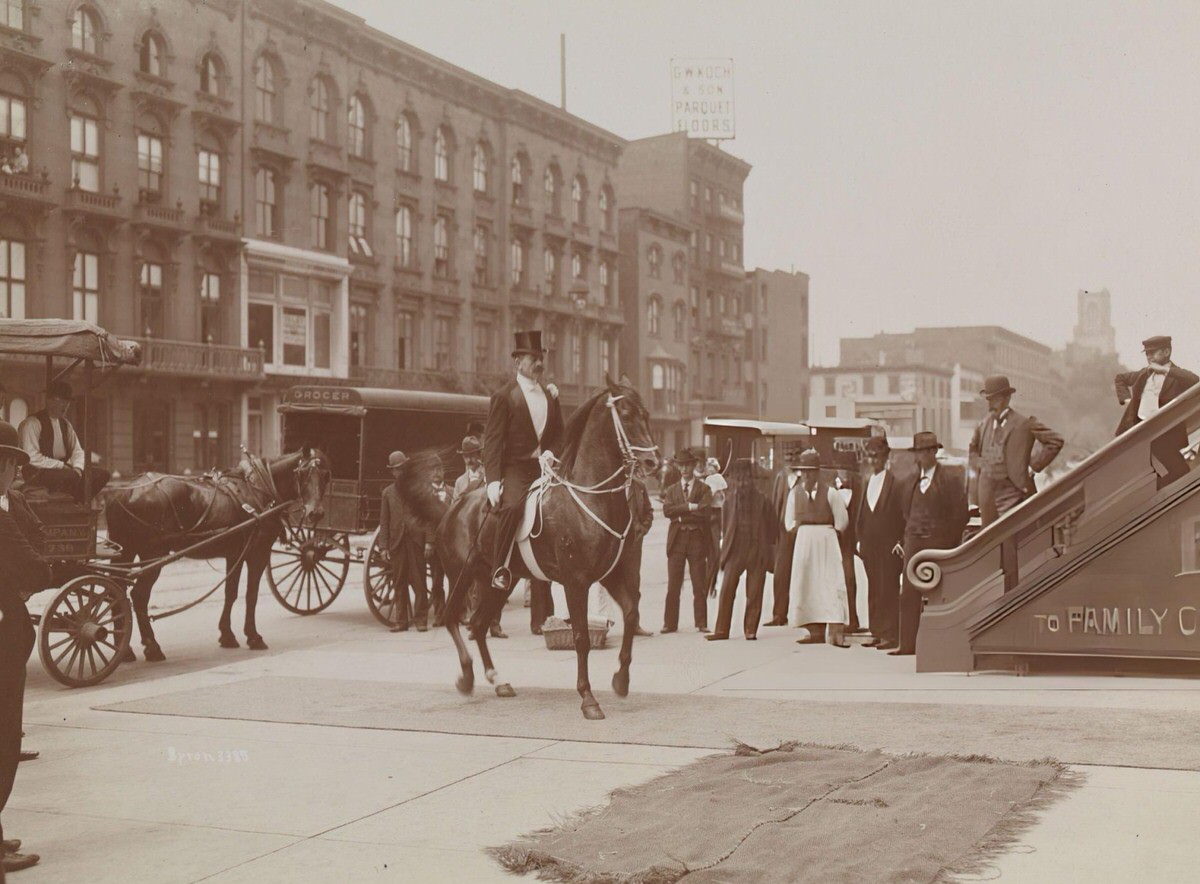
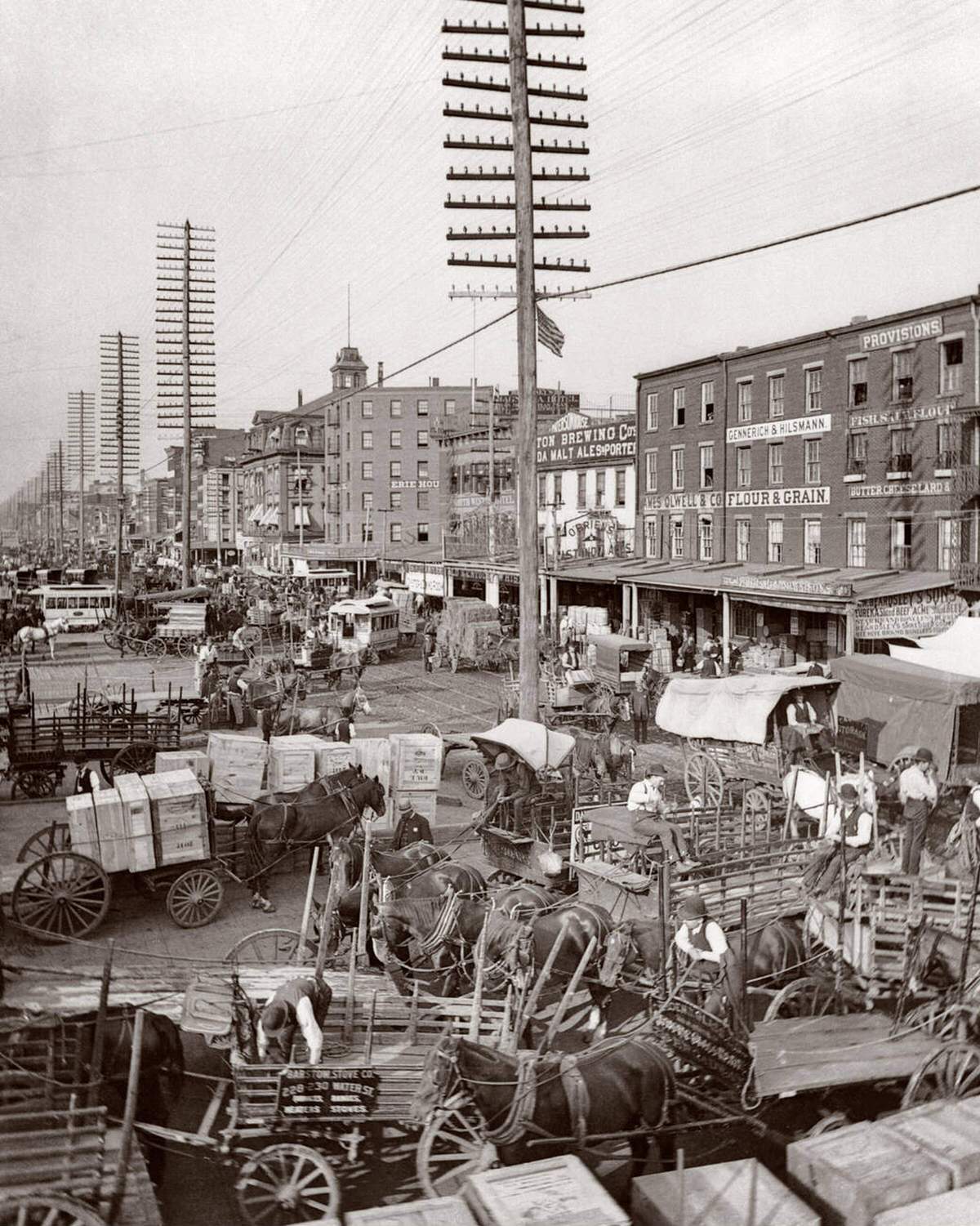
By the 1880s, New York had more horses per square mile than any other city in the world. The count at the peak of the era — roughly 1880 to 1910 — stood at somewhere between 100,000 and 150,000 horses working within the five boroughs on any given day. They pulled streetcars, delivery wagons, fire engines, ambulances, private carriages, milk carts, coal wagons, garbage trucks, and the heavy freight that moved between the docks and the warehouses. The city depended on them completely.
What Horses Actually Did
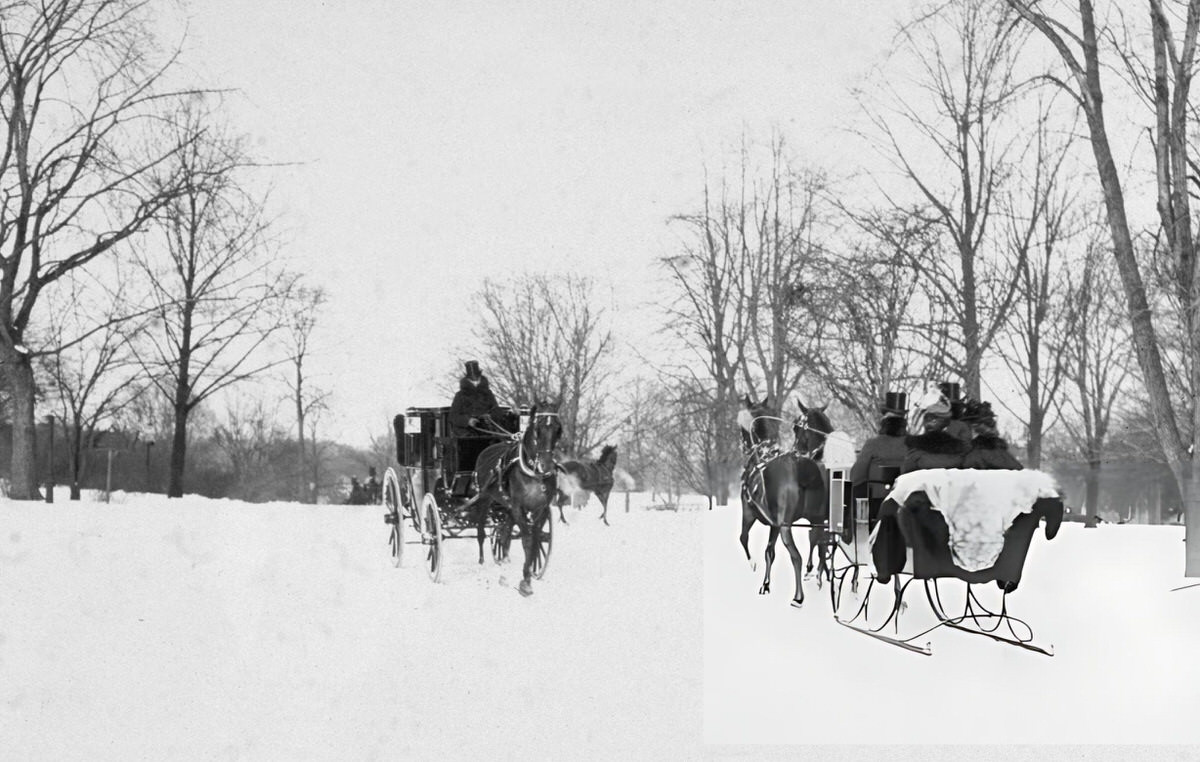
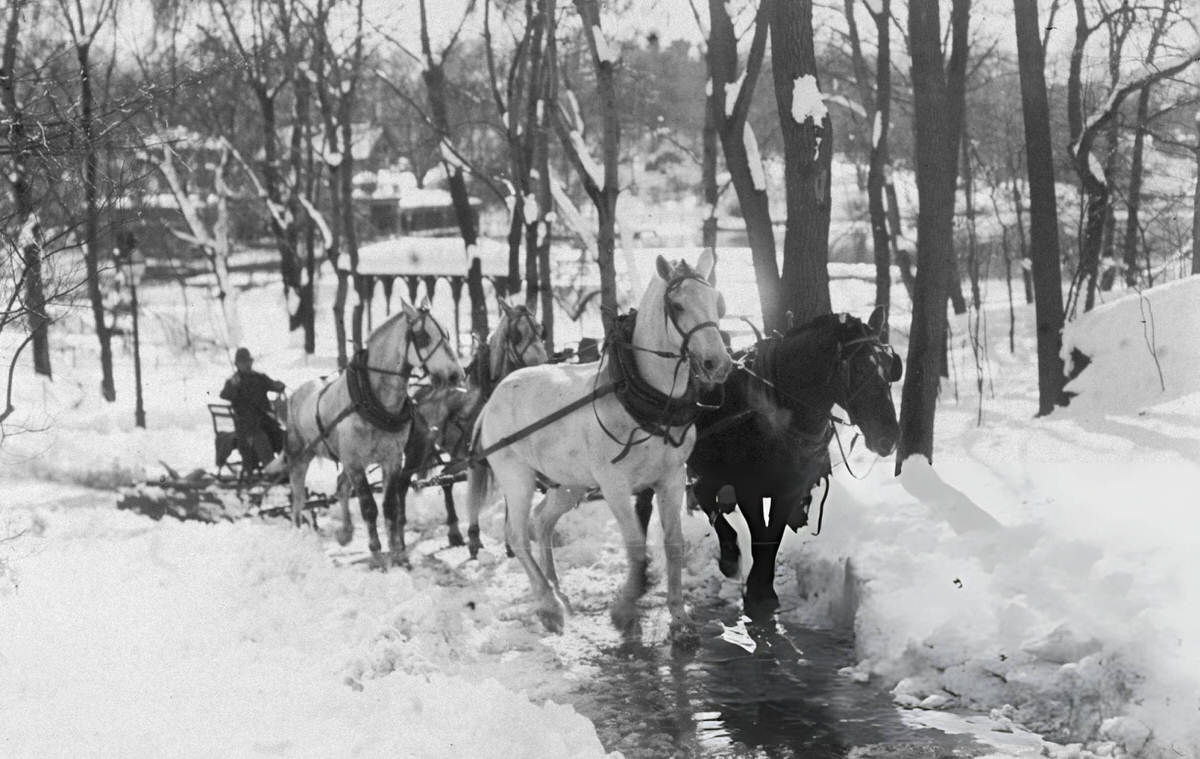
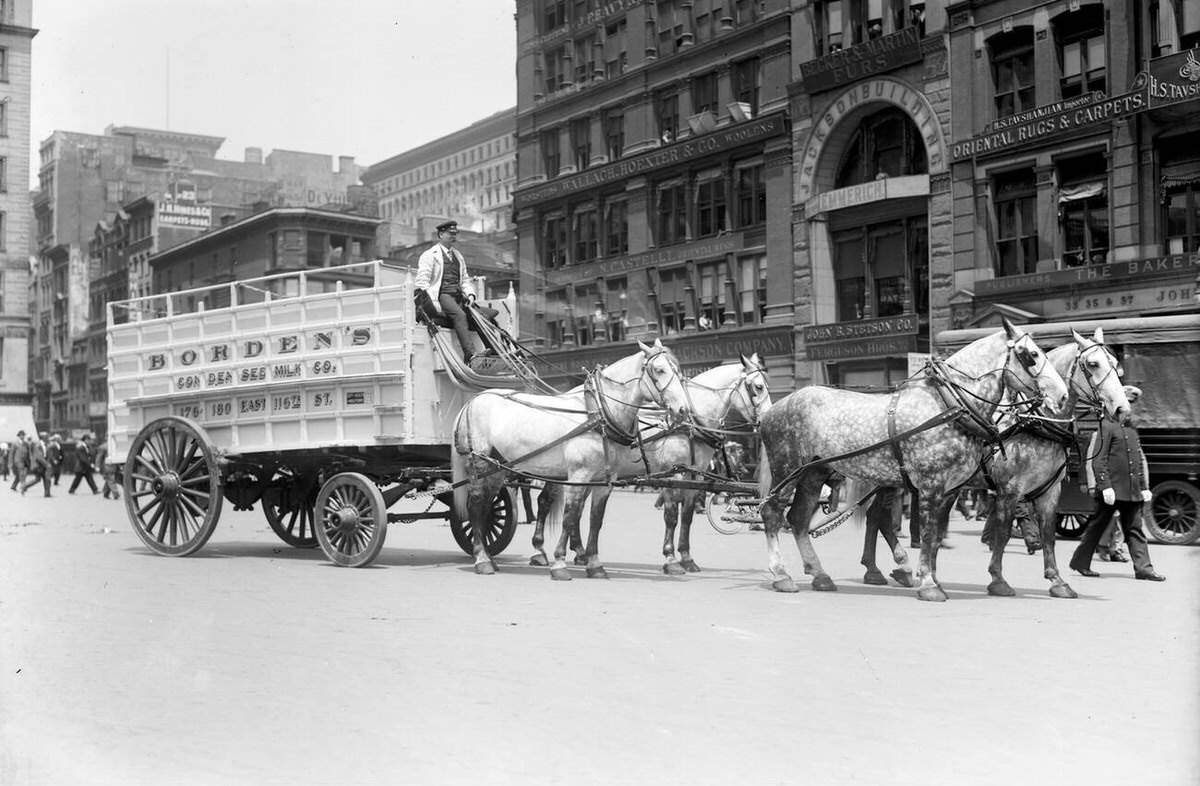
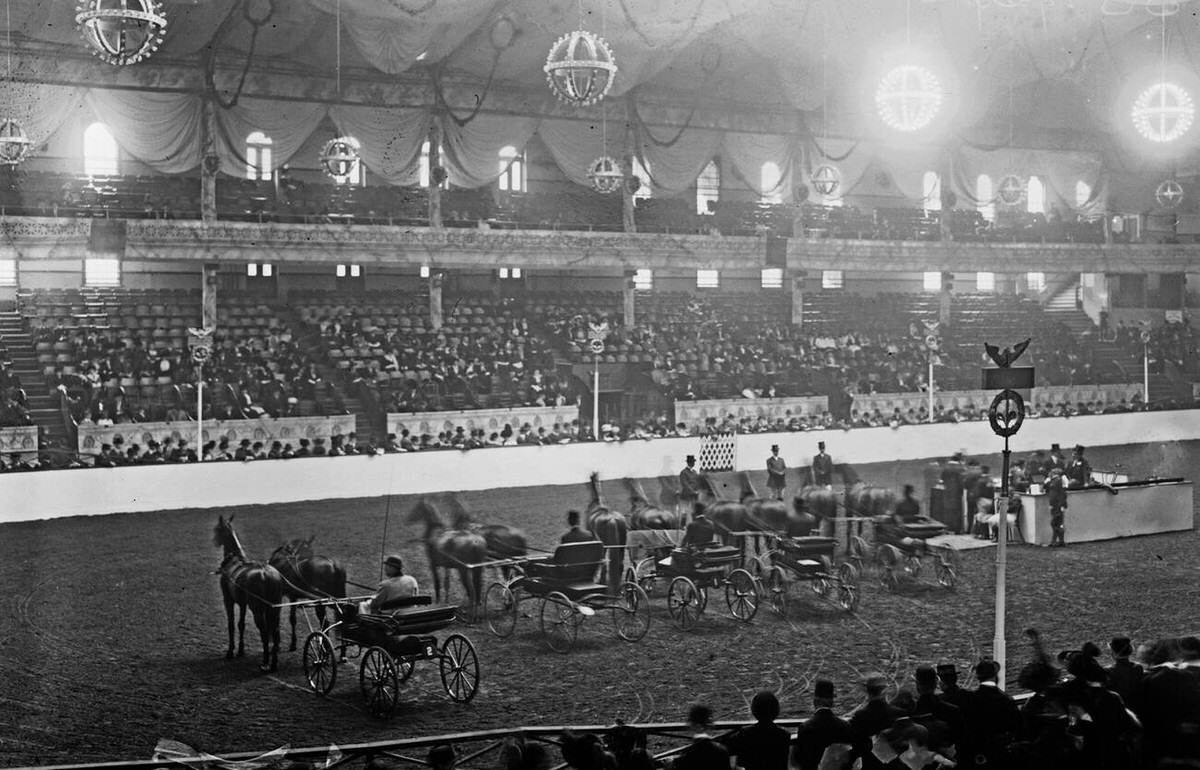
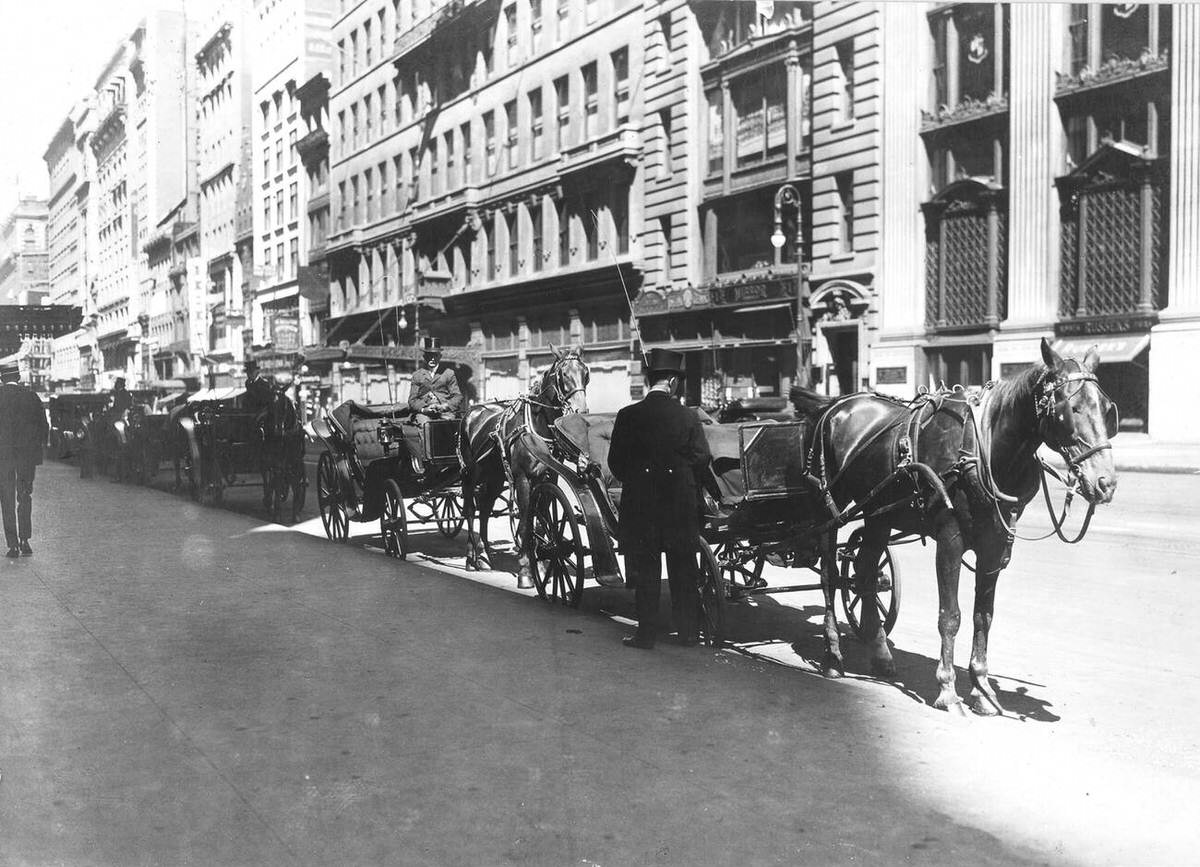
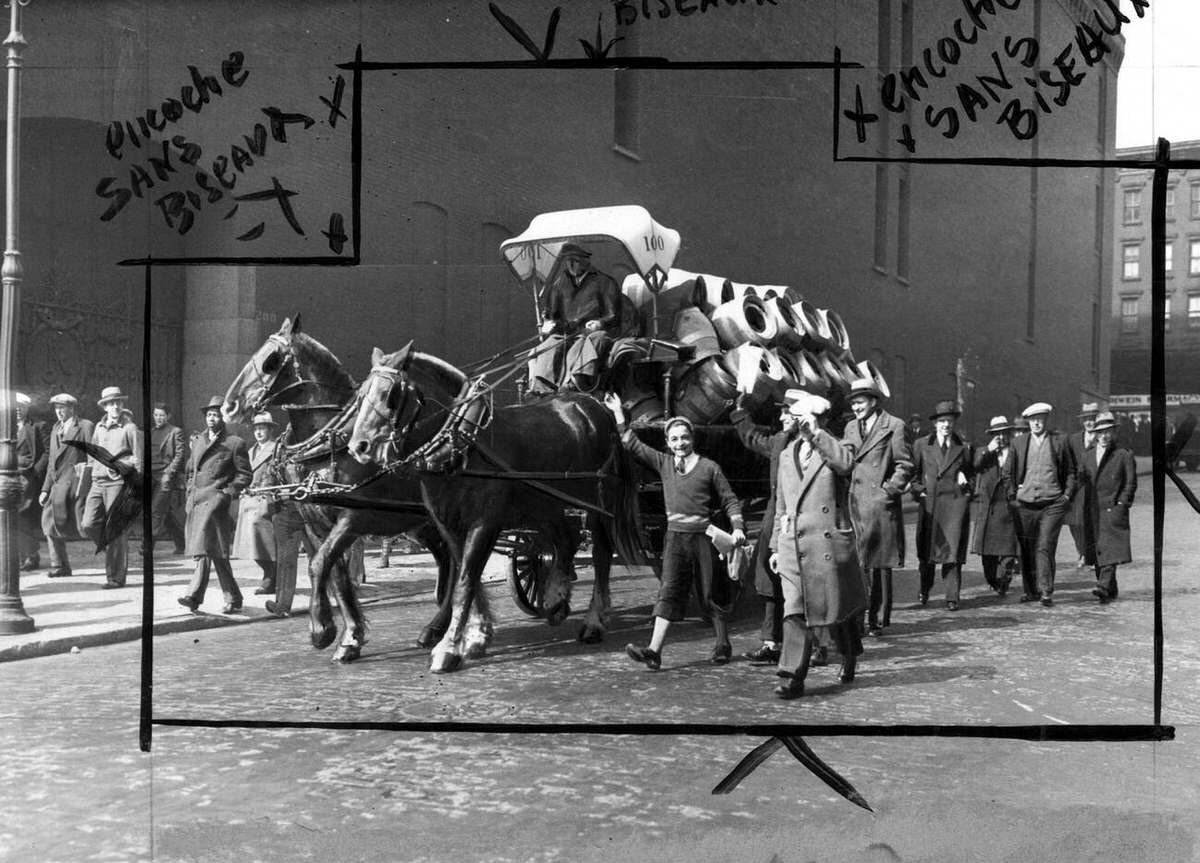
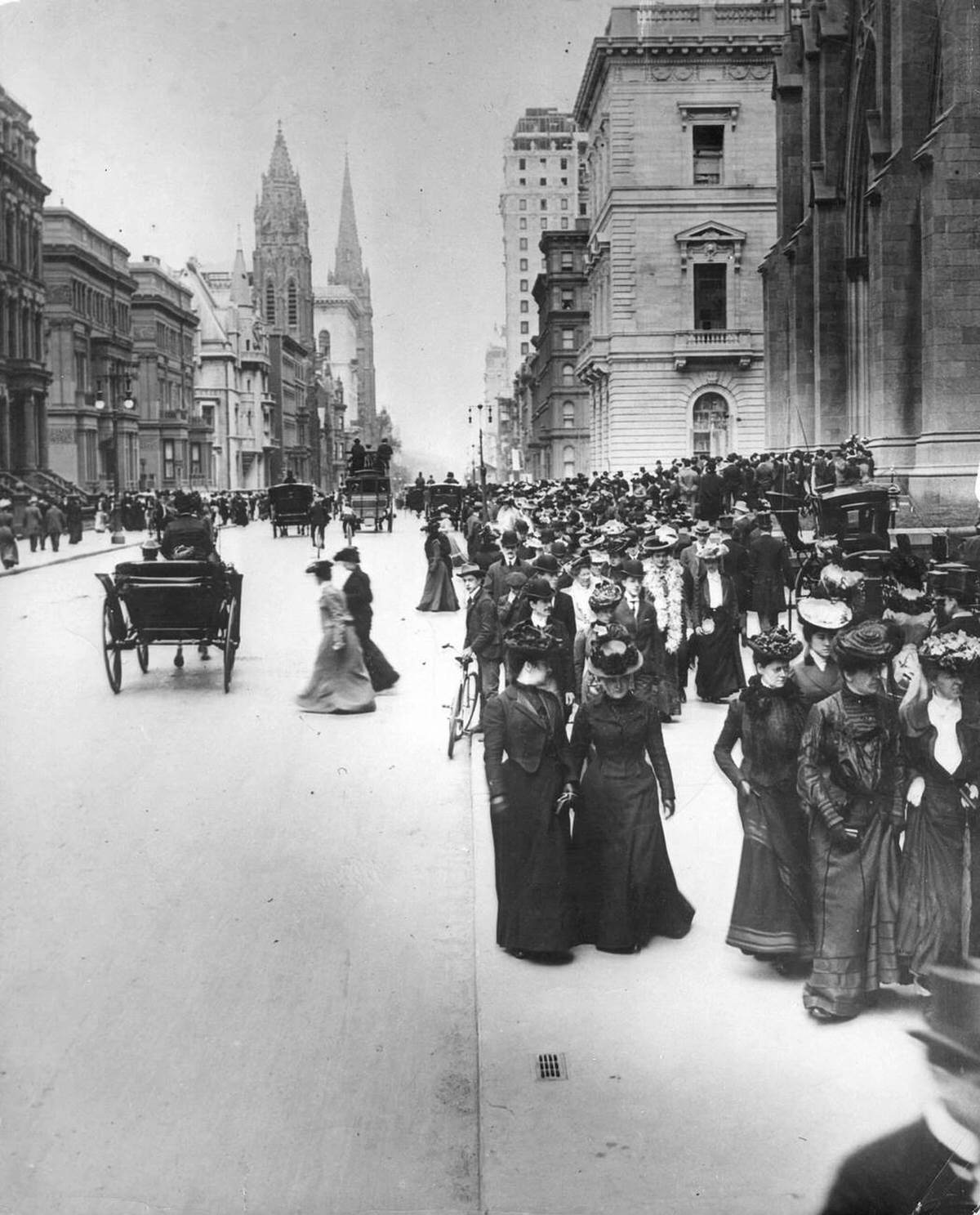
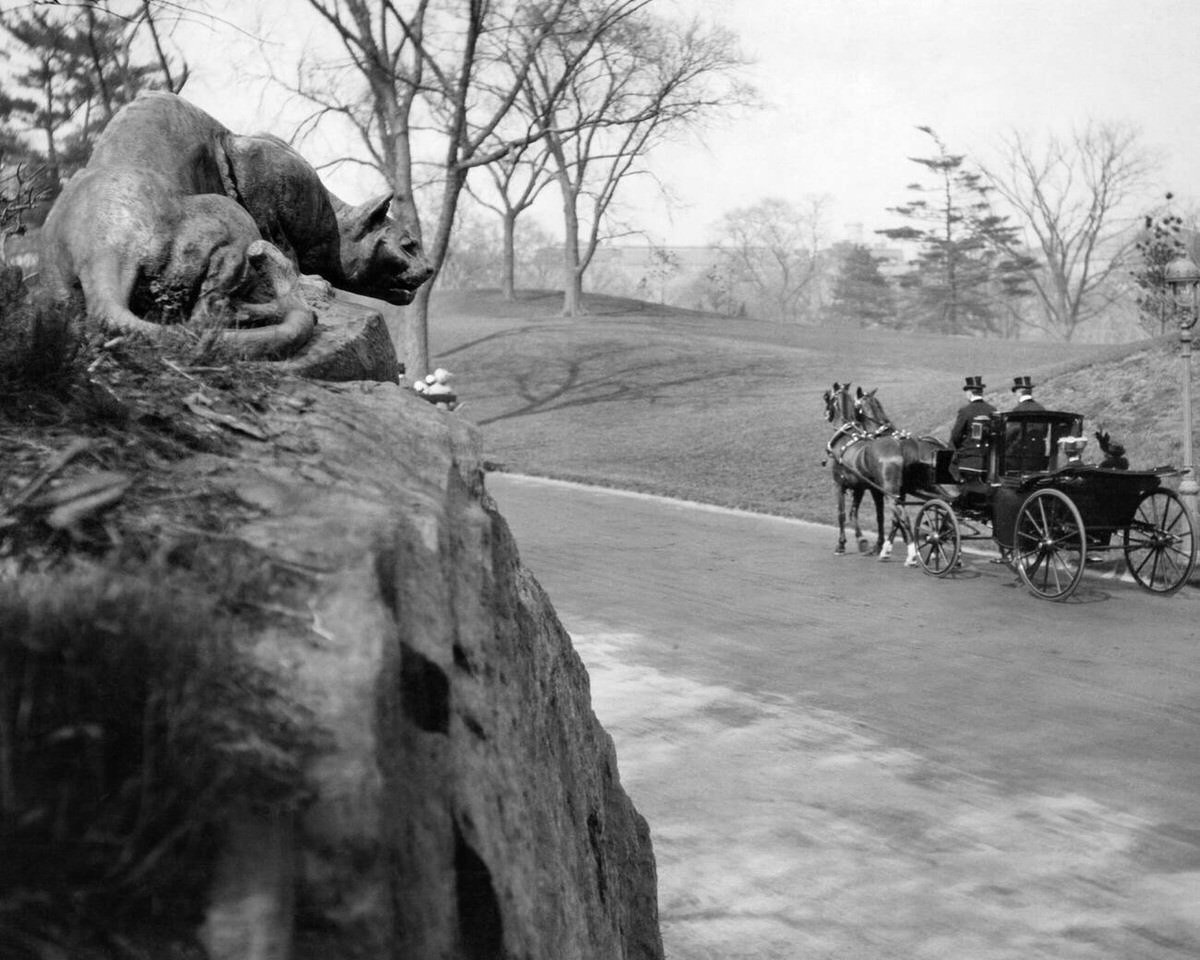
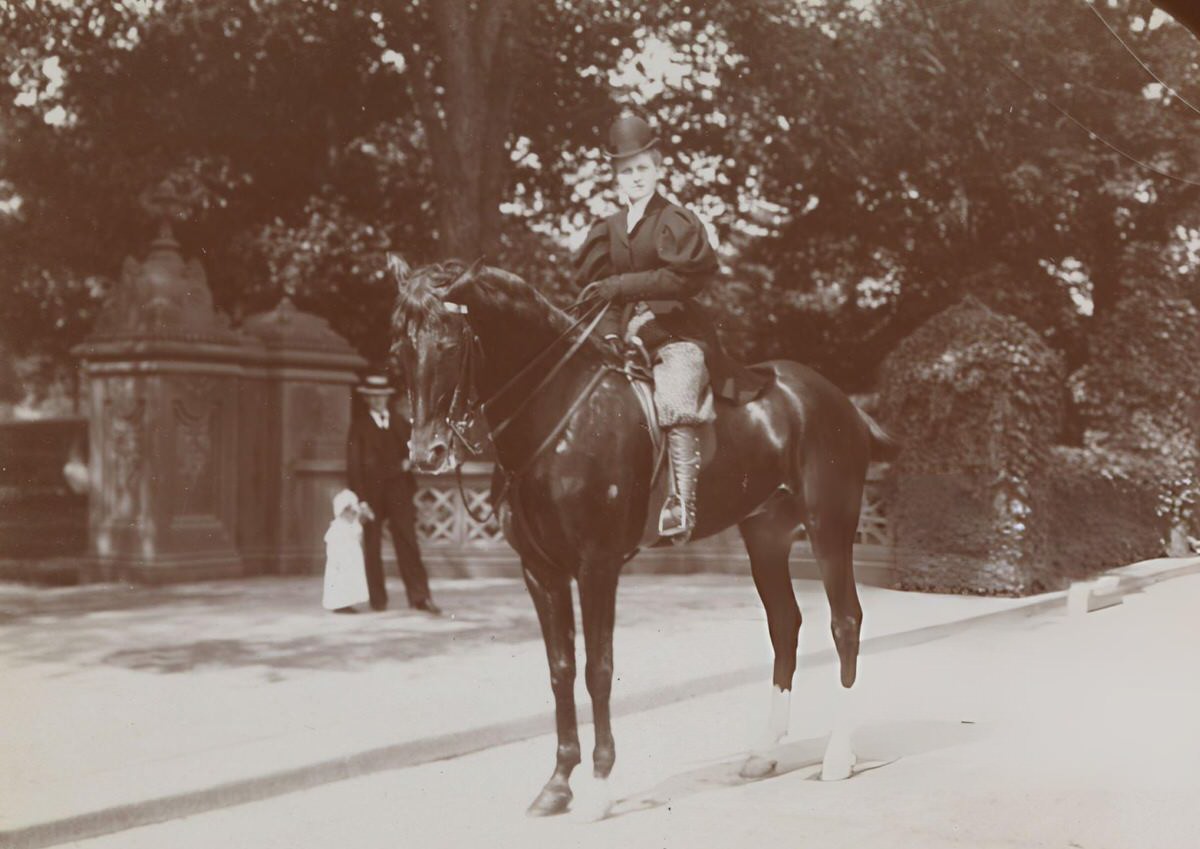
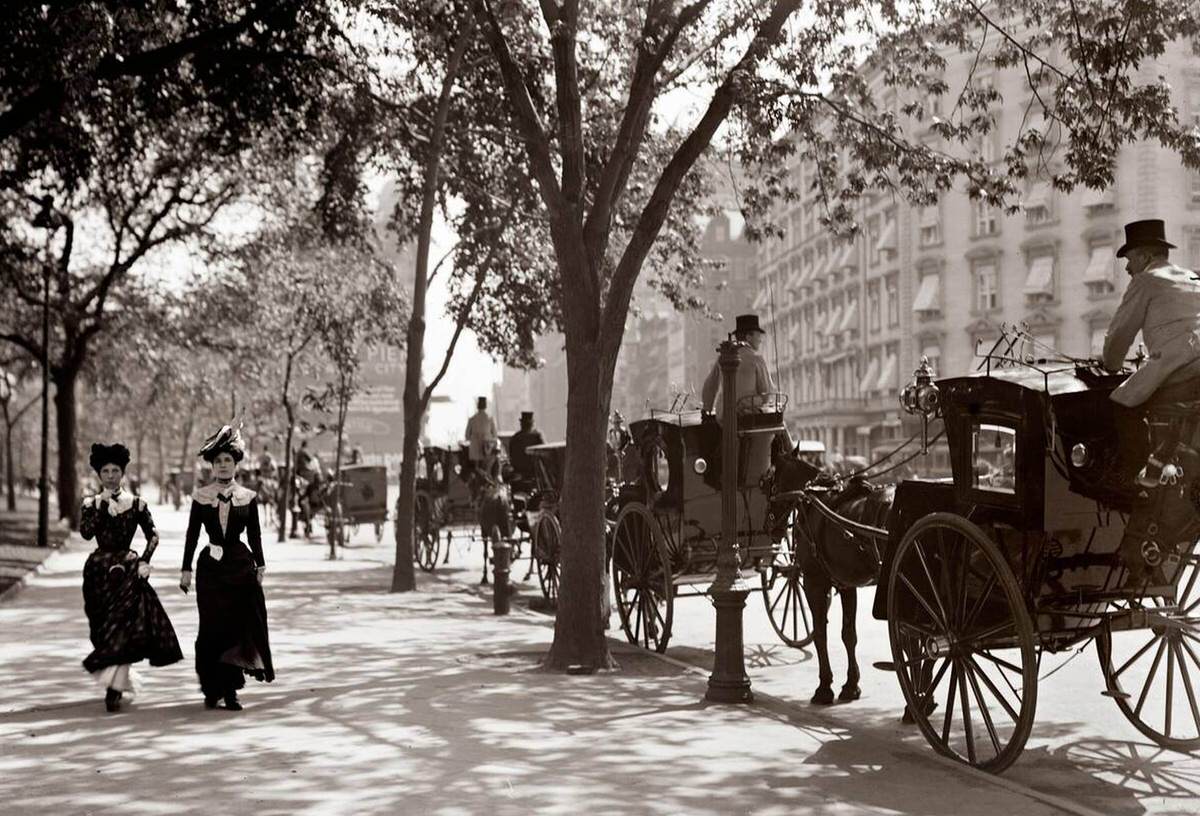
People tend to think of horse-drawn carriages as something for wealthy families out for a Sunday ride in Central Park. That was a tiny fraction of the horse’s role in the city. The real work was brutal and unglamorous. Draft horses — the big ones, Percherons and Clydesdales standing over six feet at the shoulder — pulled the heavy loads. A single brewery wagon carrying kegs of beer weighed several tons, and the horse pulling it worked a ten-hour day on city cobblestones, six days a week.
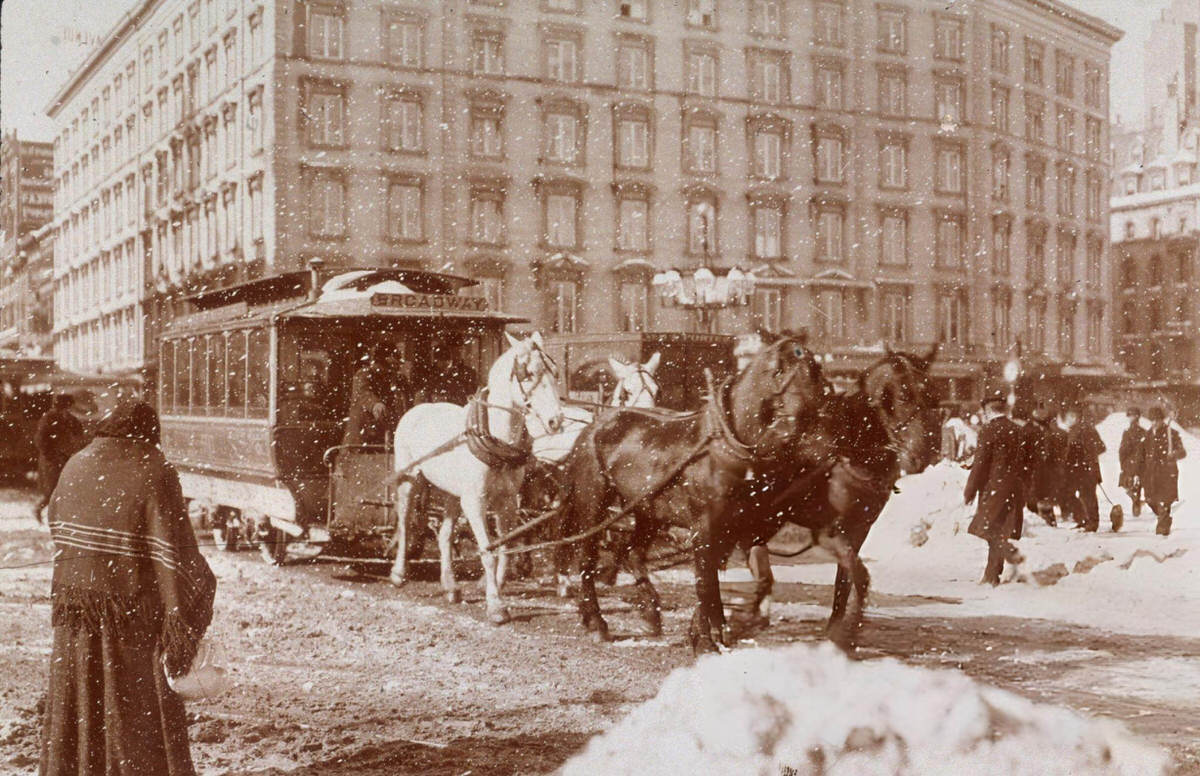
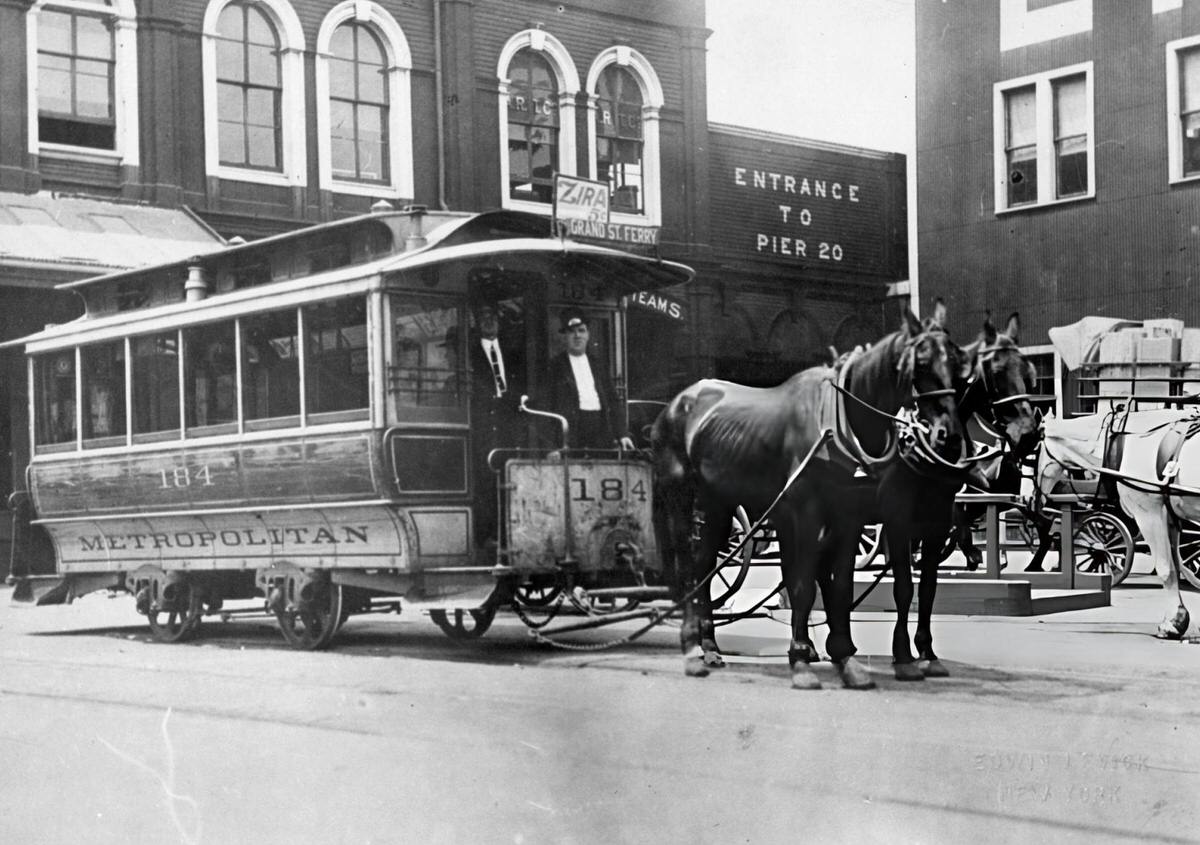
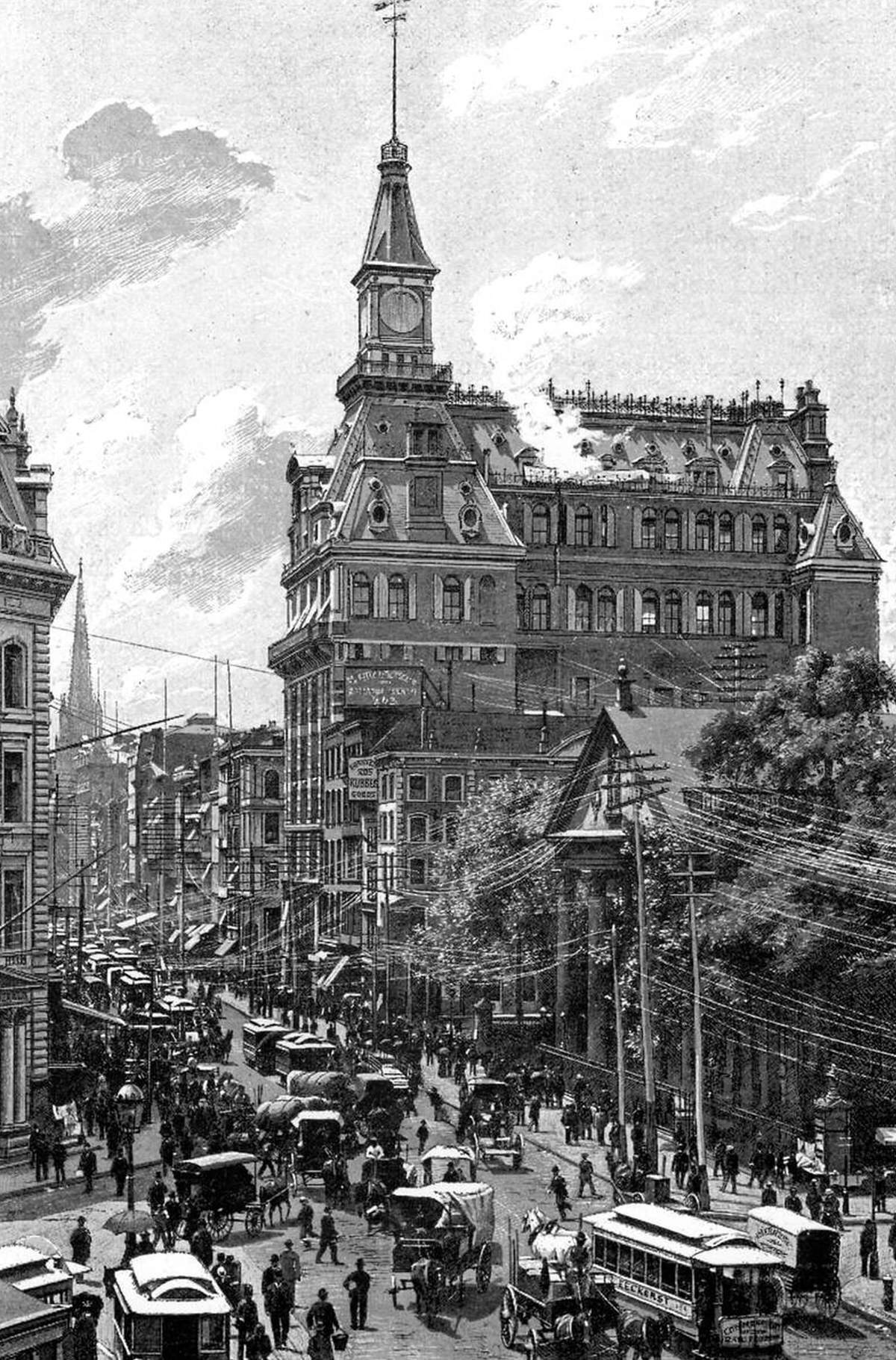
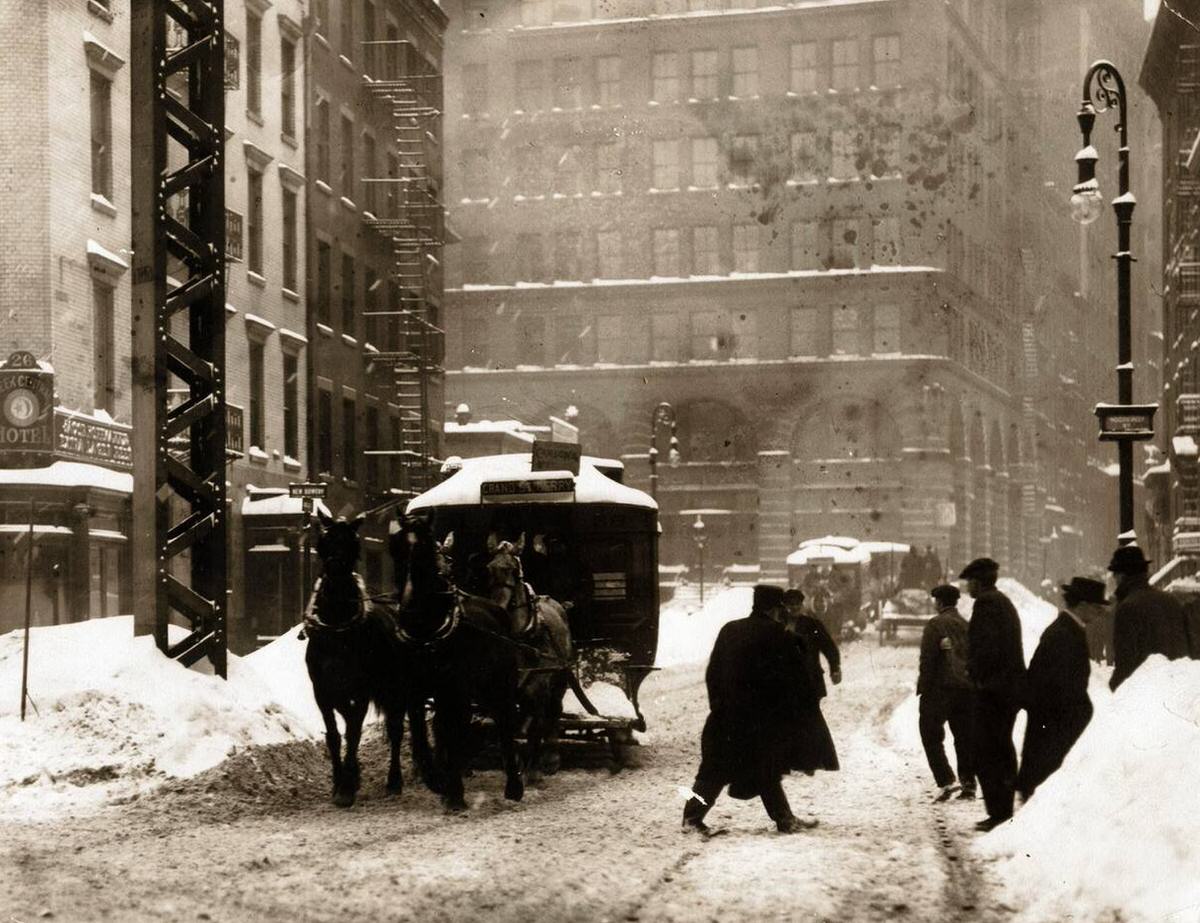
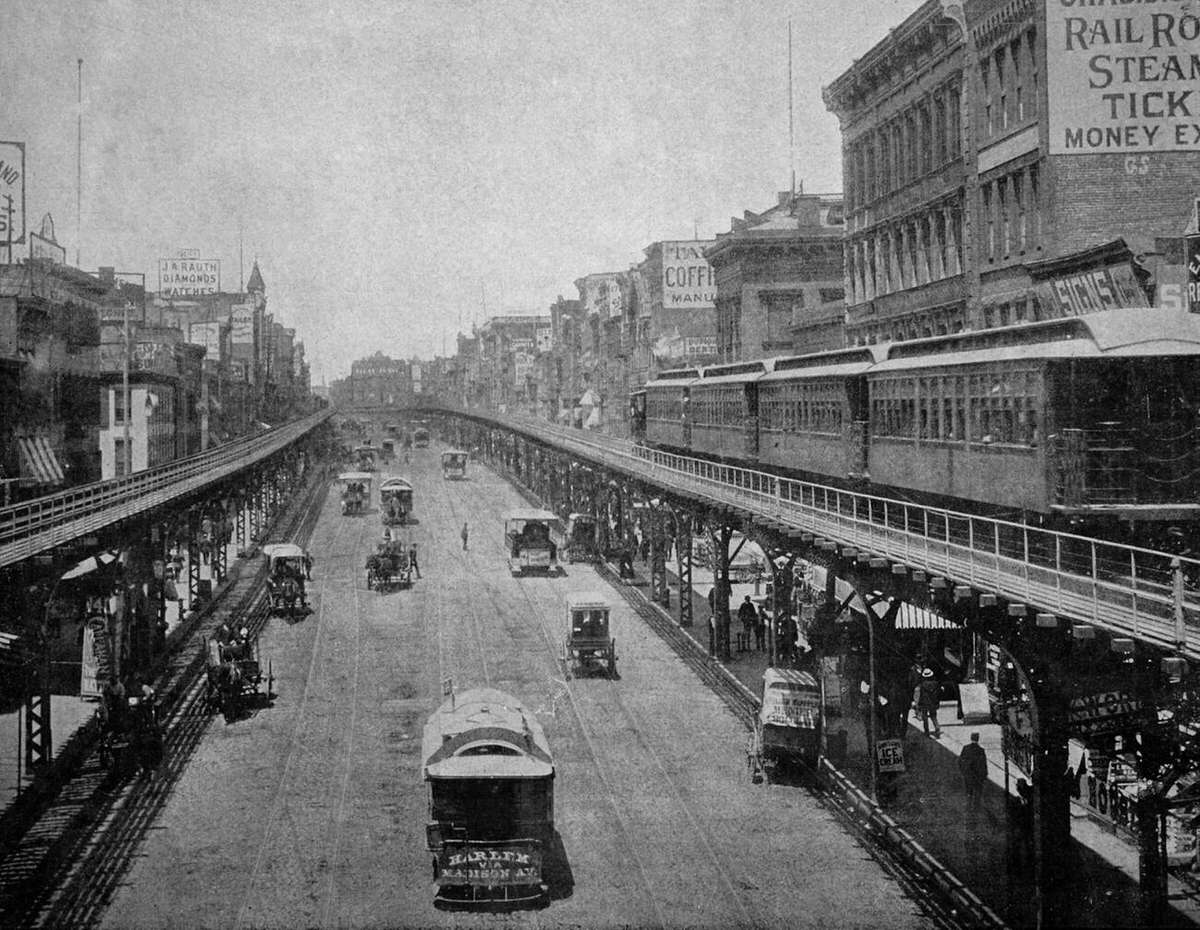
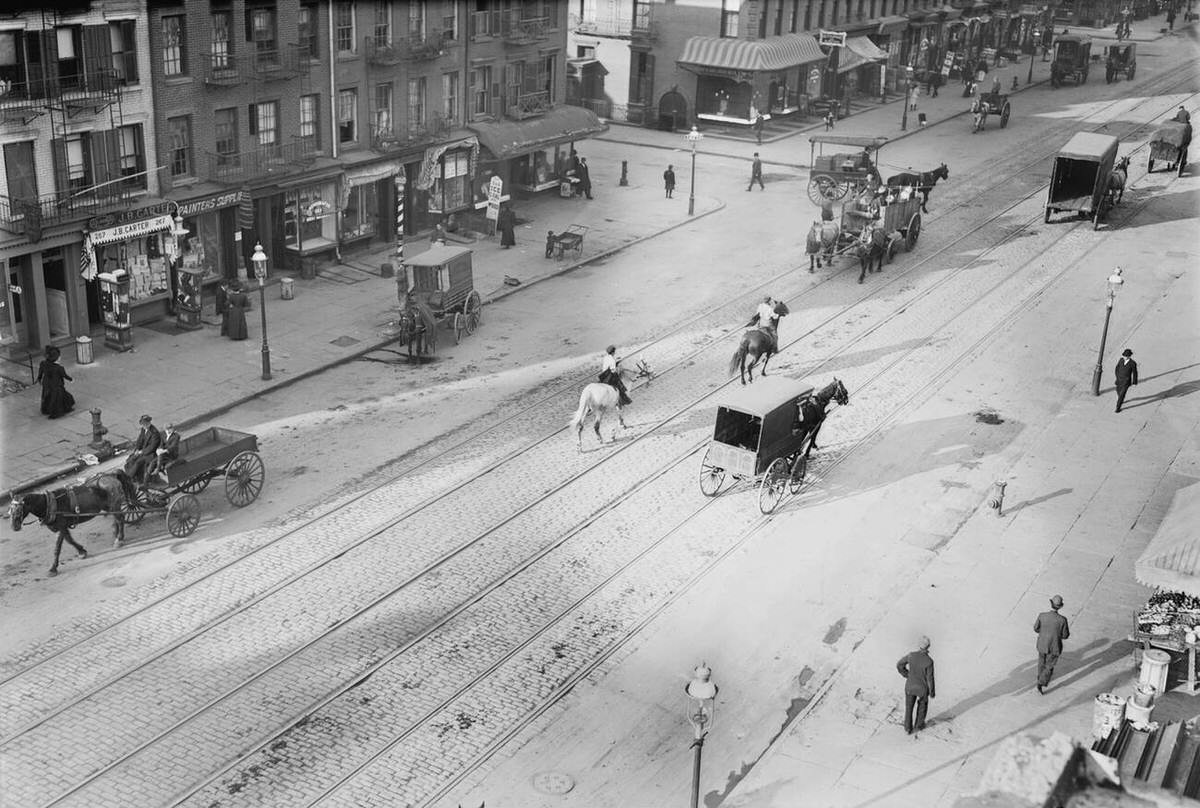
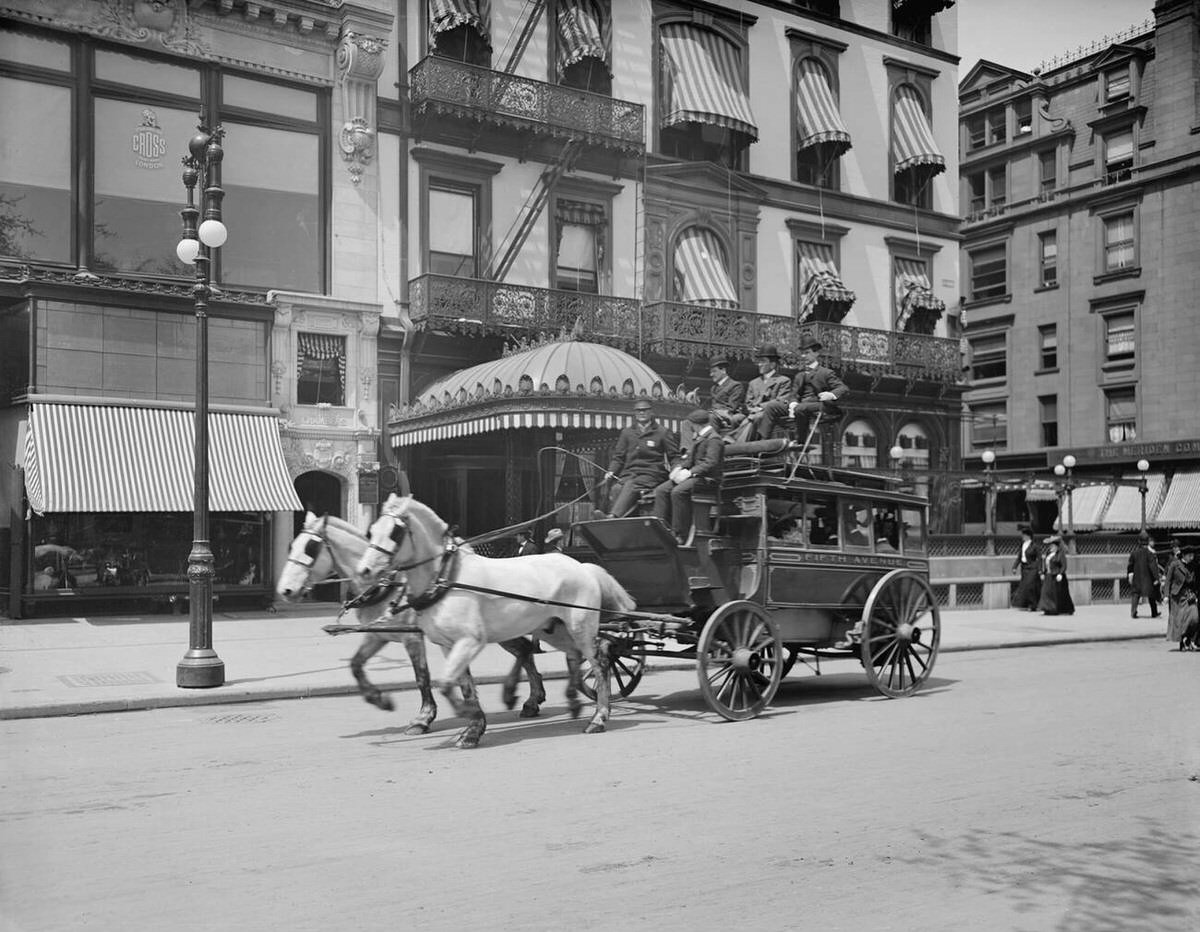
The streetcar lines were the most visible use of horse power in the city before electrification. The Broadway line, the Fulton Street line in Brooklyn, the lines running up the Bowery — all of them ran on horse-drawn cars through the 1880s. A single car required two horses, and a busy line kept dozens of teams in rotation. The animals were worked in shifts, rested in stables at each end of the line, and rotated out when they were spent. The New York City street railway companies collectively owned tens of thousands of horses at the height of the horse-car era.
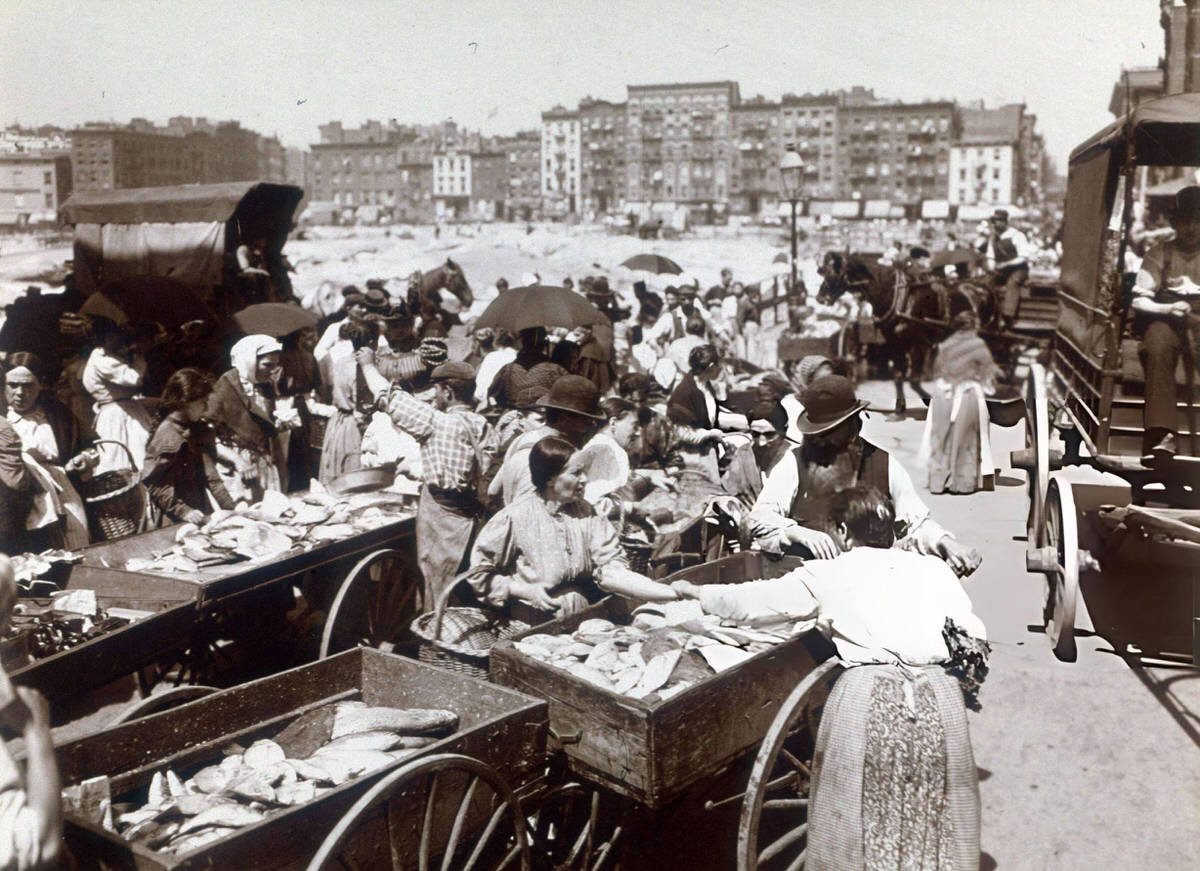
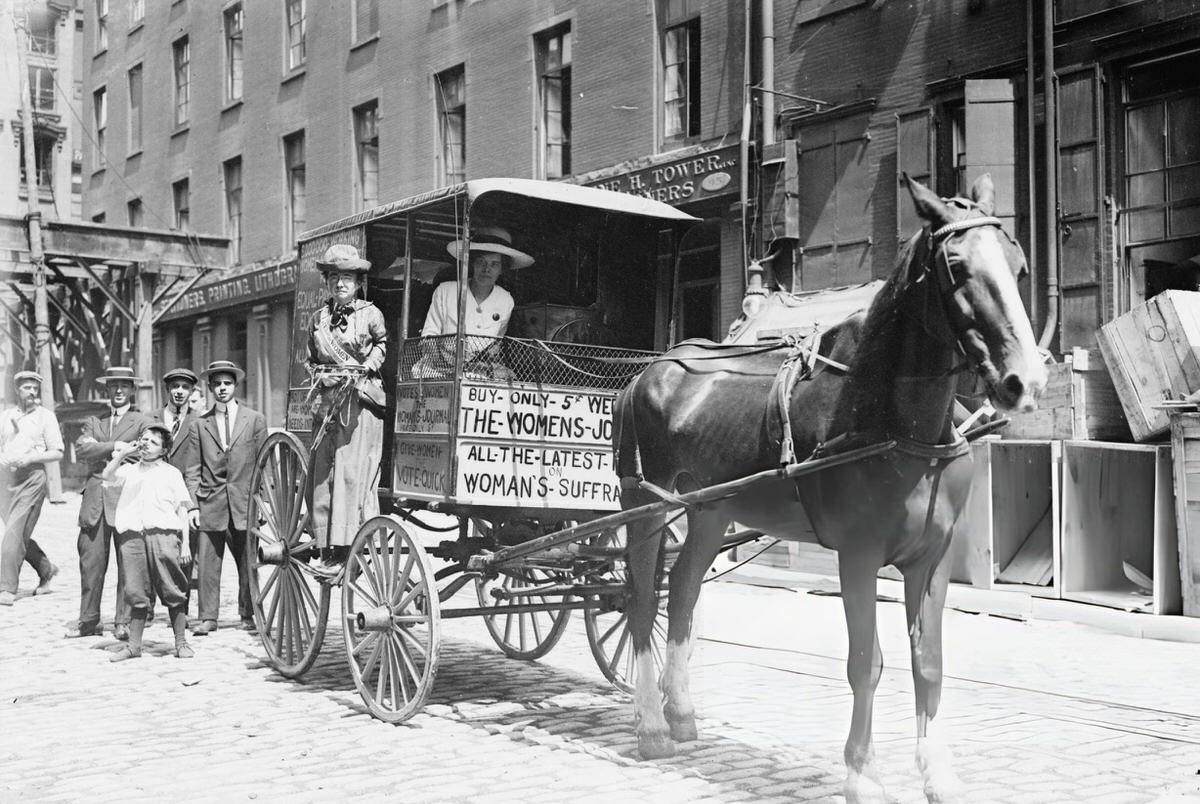
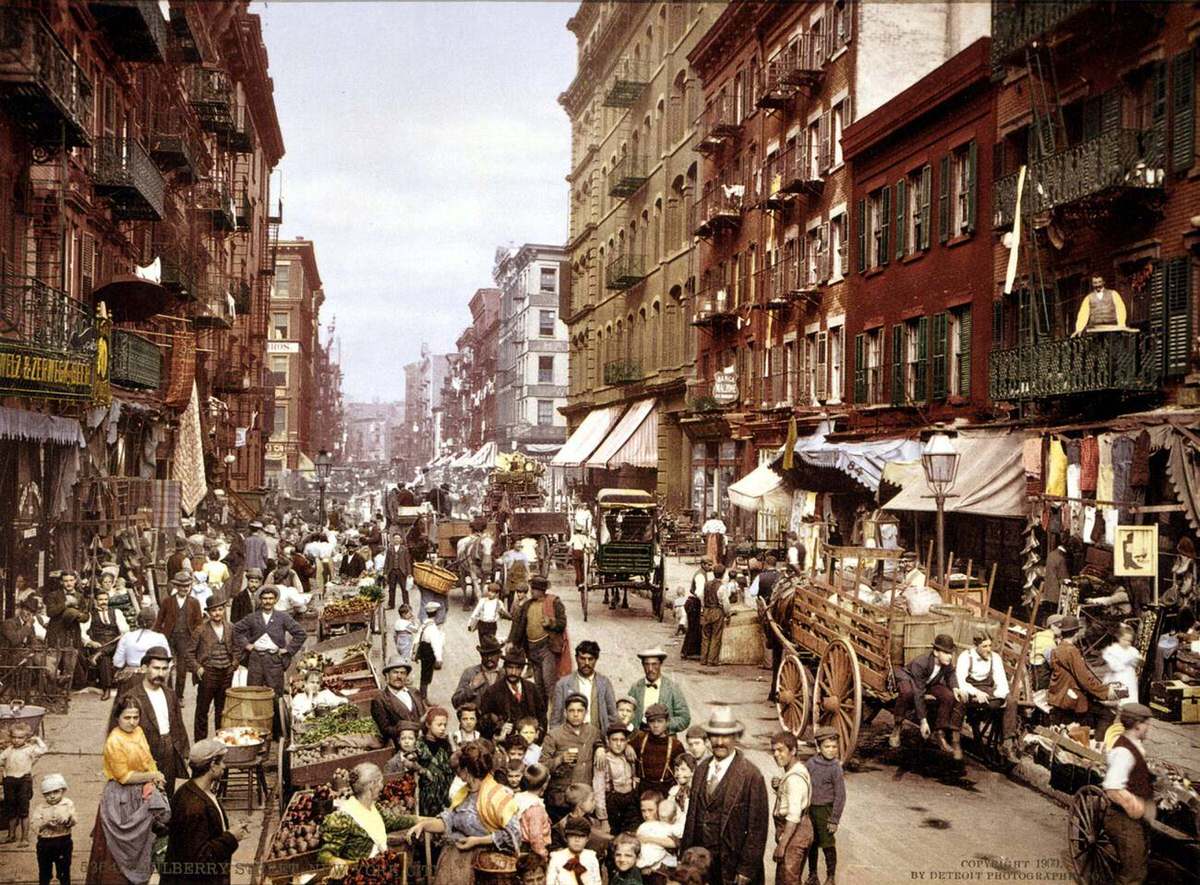
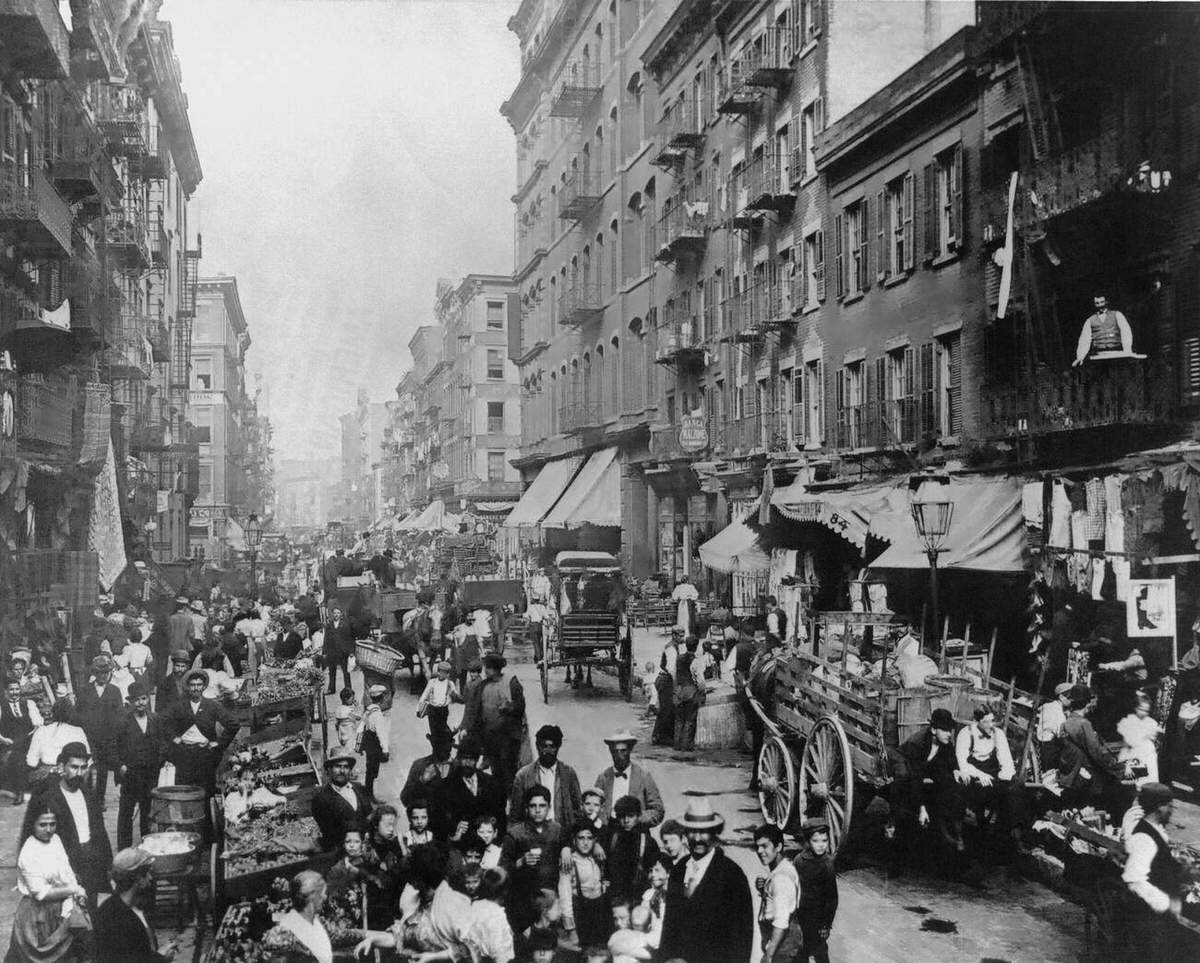
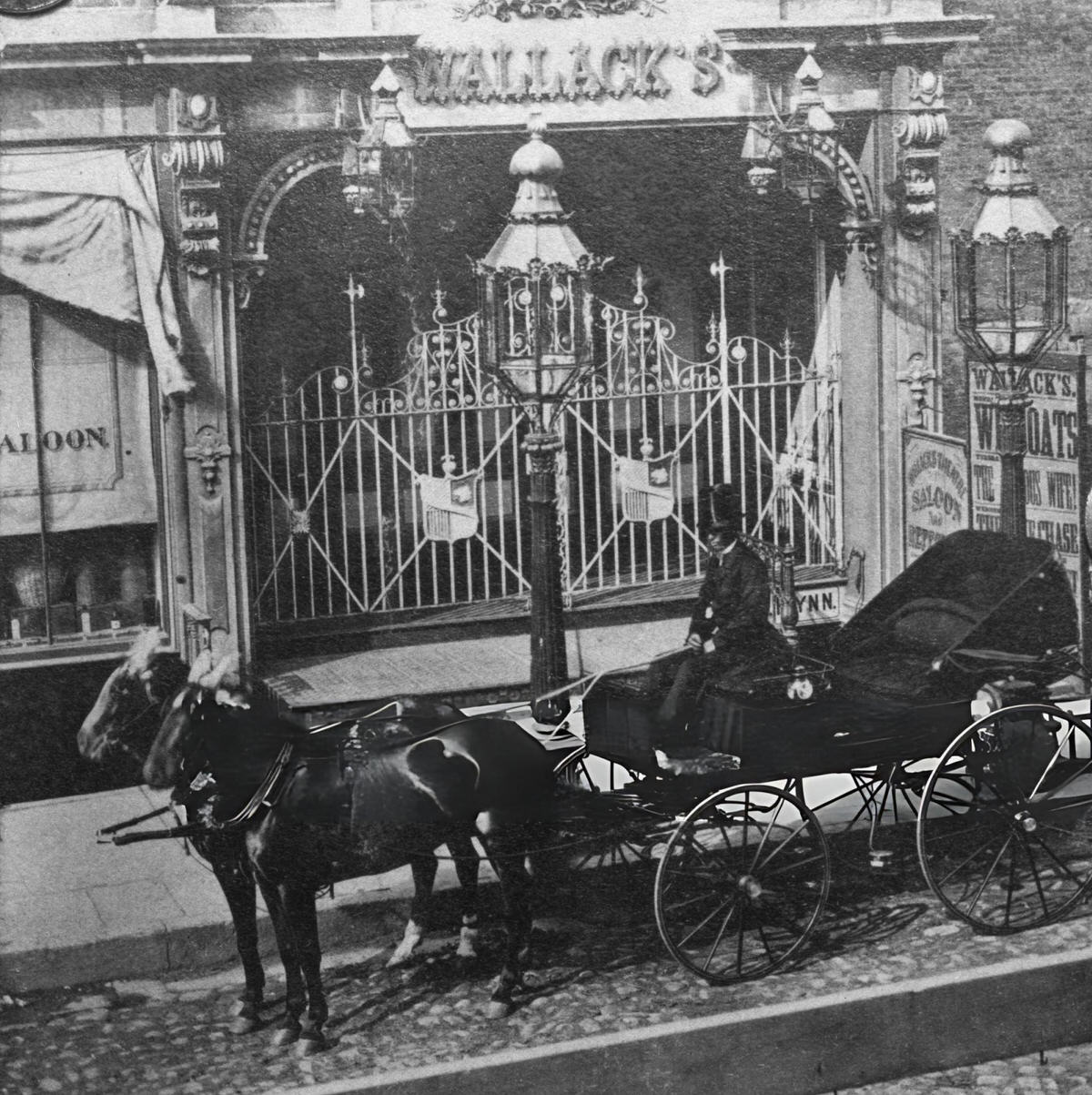
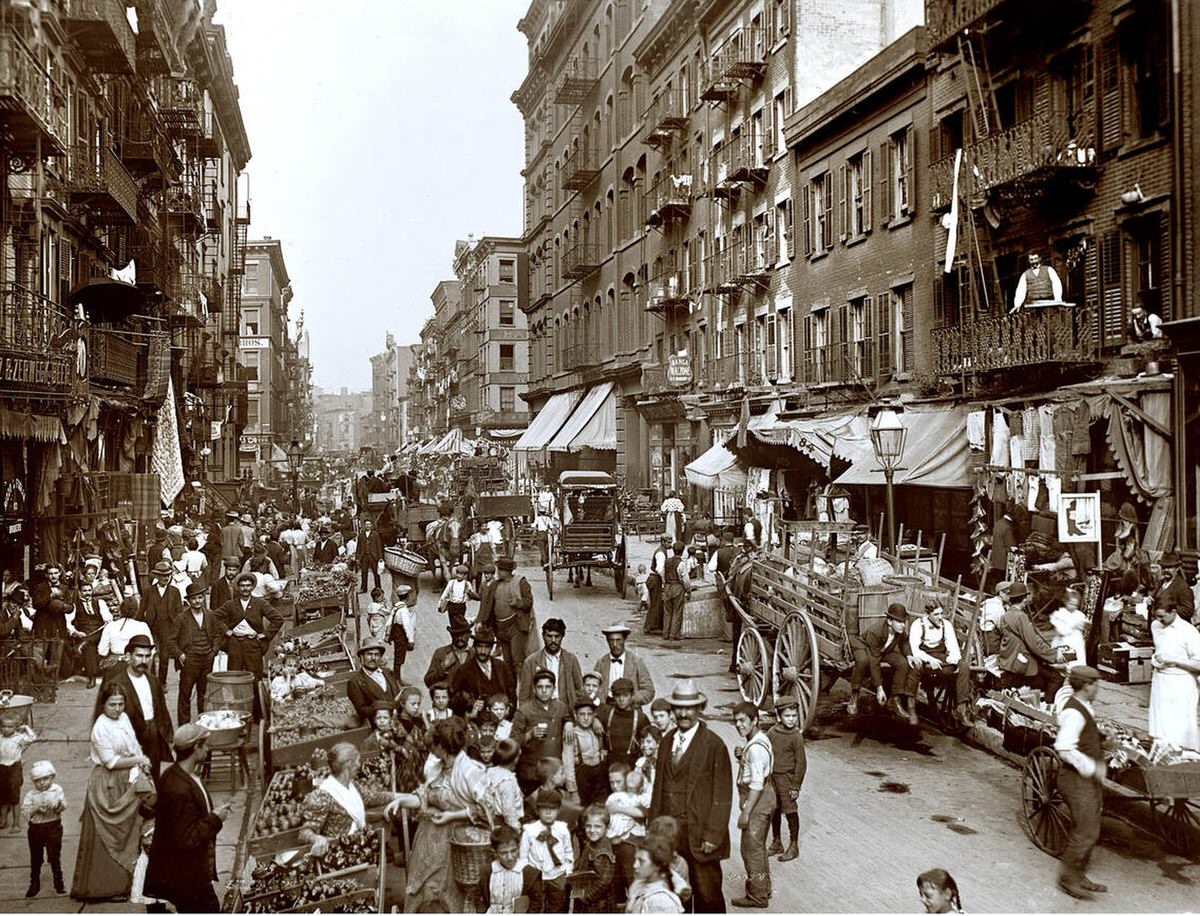
Delivery was the other massive category. The city’s commercial economy ran on horse-drawn wagons. Bread, ice, coal, milk, dry goods, furniture, building materials — none of it moved without a horse and a driver. The milk wagon was the most common sight in residential neighborhoods. Drivers started their routes before dawn, stopping at each building, carrying bottles up stairs and bringing empties back down, while the horse stood at the curb and waited, trained to move forward one stop at a time without being told.
Read more
The Stable System
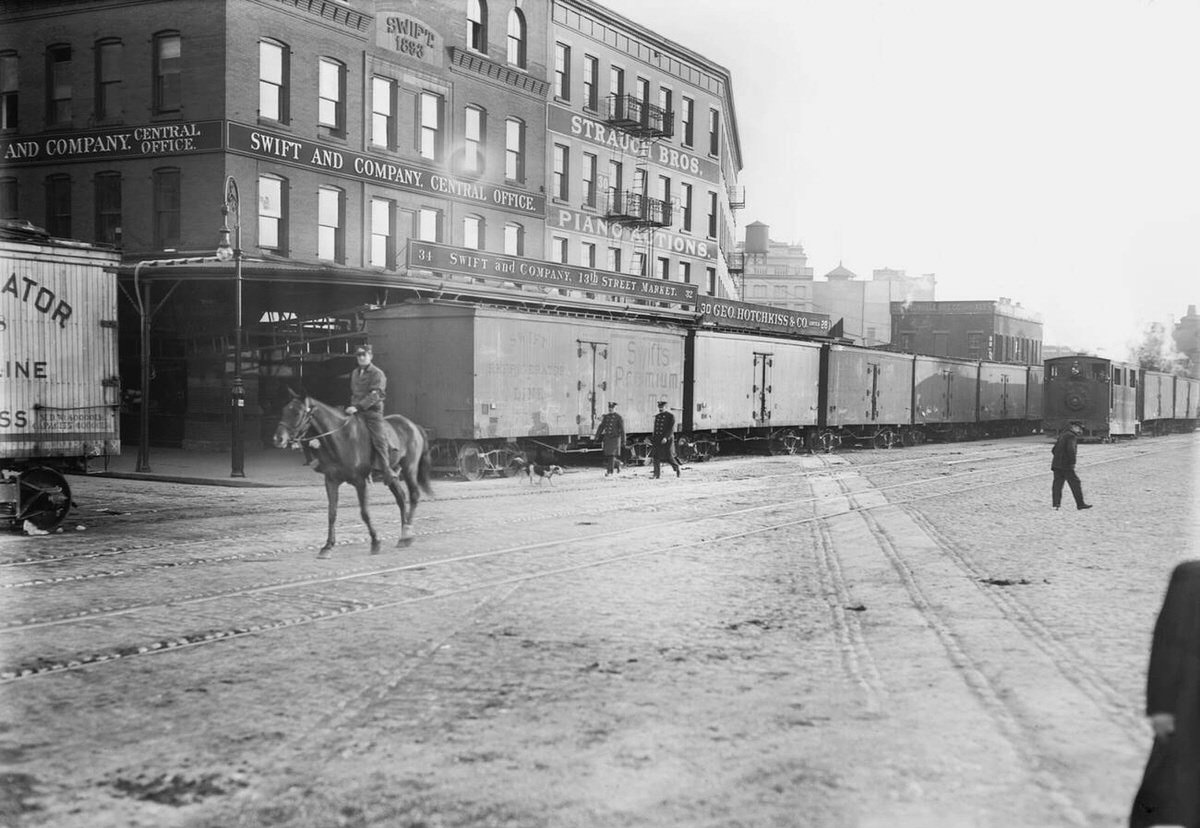
Behind every working horse was a stable, and behind every stable was a small industry. Manhattan alone had hundreds of livery stables and commercial stables spread across every neighborhood. They were concentrated in certain blocks — the West 50s and 60s around what is now the West Side, the blocks east of Third Avenue in the 20s and 30s, and along the waterfront streets near the major freight piers. A large commercial stable housed 200 horses or more, employed dozens of stablemen, blacksmiths, harness makers, and veterinarians, and operated around the clock.
The blacksmith was essential. A working horse went through a set of iron shoes in a matter of weeks on hard city pavement. The farriers — the men who shod the horses — worked fast and worked constantly. A busy Manhattan blacksmith shop shod ten to fifteen horses a day as a matter of routine. The skill required was real: a poorly fitted shoe on a horse that worked ten hours a day on cobblestones caused lameness quickly, and a lame horse was a horse that could not work.
The stables themselves were a fire hazard of the first order. Hay and straw packed into buildings full of gas lanterns and open flames burned fast and killed horses that could not be gotten out in time. Stable fires were a regular feature of city news in the 1880s and 1890s. A bad fire could kill fifty or a hundred horses in a single building, and the financial loss — each working horse was worth between $150 and $200, real money at the time — was catastrophic for the owners.
The Manure Problem
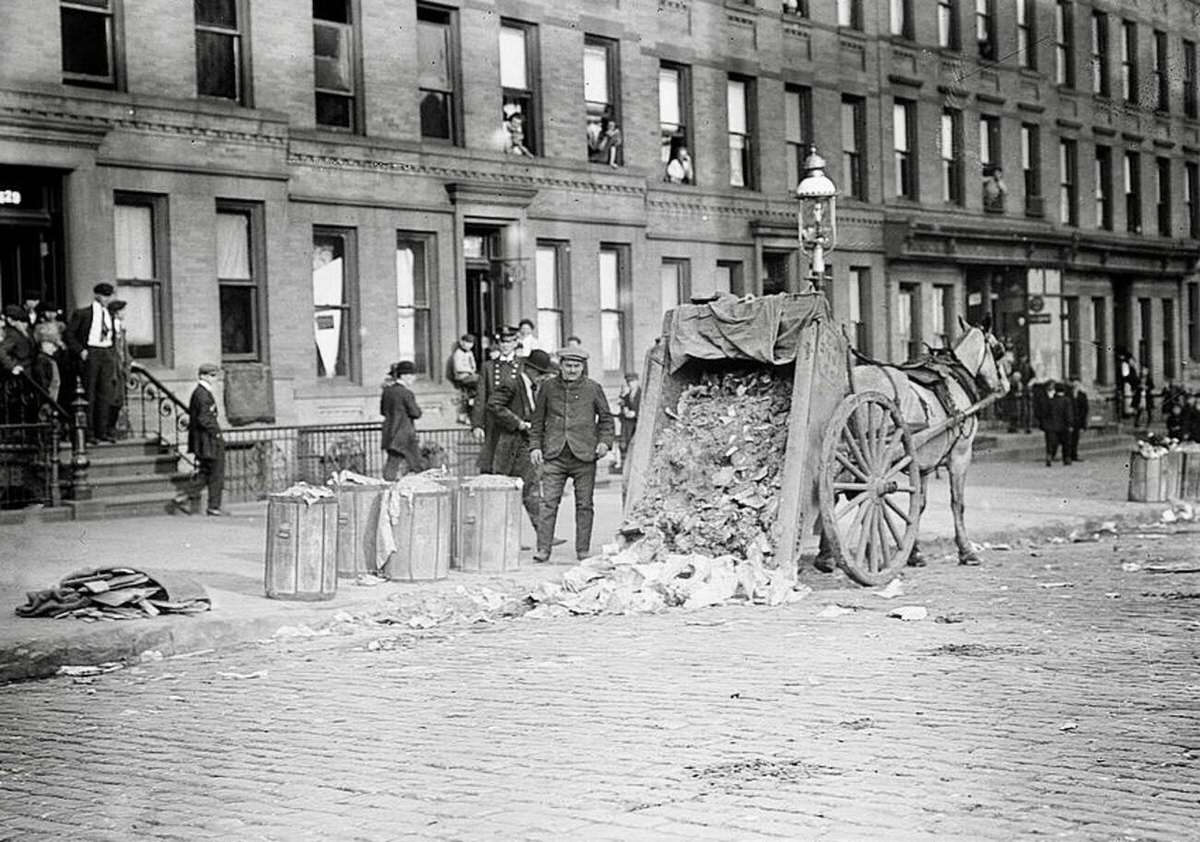
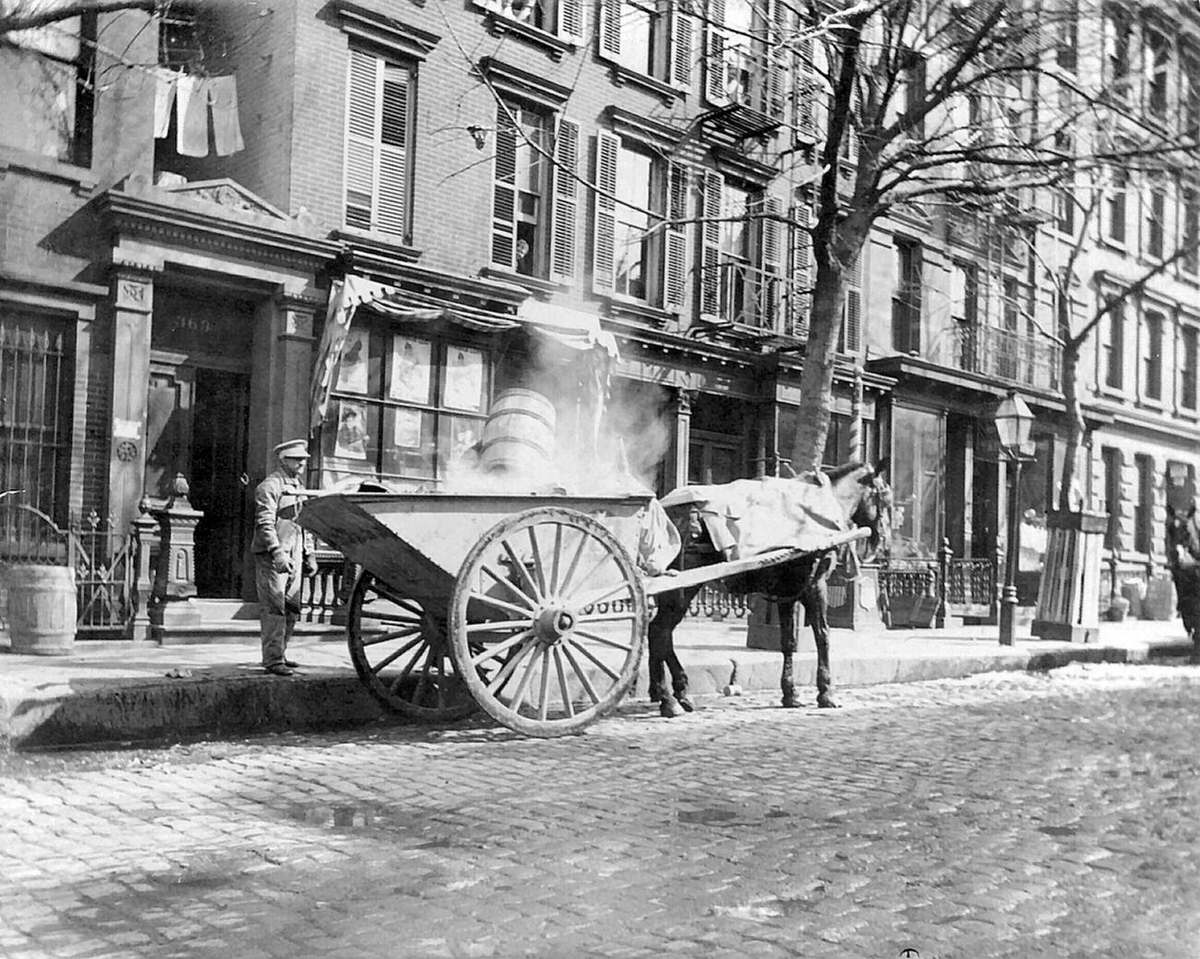
This is the part of the horse era that the old photographs don’t show, but it was the defining daily reality of the city. Each horse produced between 20 and 25 pounds of manure per day. Multiply that by 100,000 horses and you have over two million pounds of manure falling on New York City’s streets every single day. It piled up faster than it could be cleared. In wet weather it turned to a slick brown soup that covered the cobblestones and splashed onto pedestrians crossing the street. In dry summer heat it dried, pulverized under hooves and wheels, and rose into the air as fine dust that people breathed and that settled on food displayed in shop windows.
The city employed an army of street cleaners, but they were always behind. The worst blocks were in the commercial districts near the freight piers and the markets, where hundreds of wagons came and went all day. The smell in summer was overpowering. New Yorkers who lived through the period described it matter-of-factly — it was simply the smell of the city, the way exhaust fumes became the smell of the city a generation later.
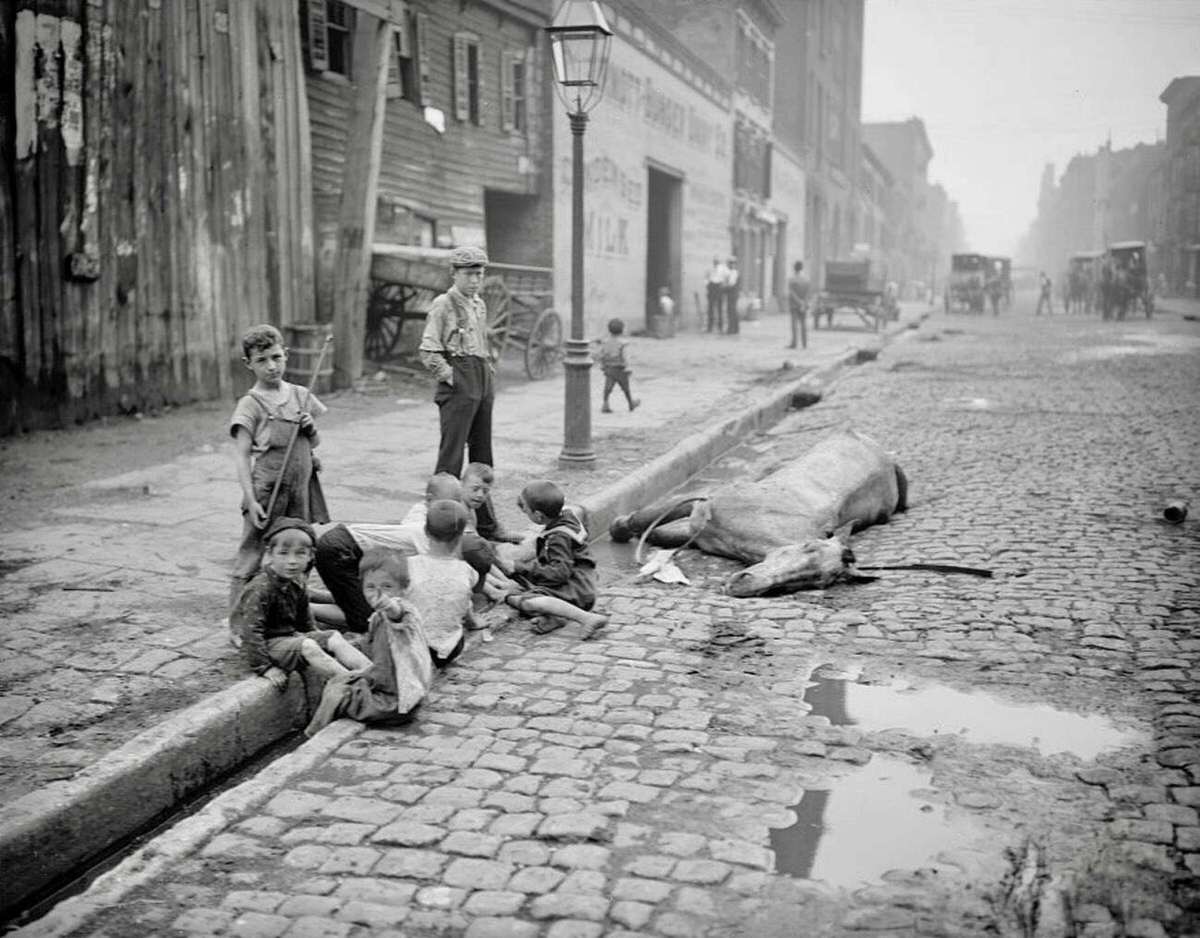
Dead horses added another dimension to the problem. A working horse in New York had an average lifespan of about three years under the brutal conditions of city work. When a horse died in the street — from exhaustion, injury, or disease — it had to be removed, and a dead draft horse weighed over a thousand pounds. The city’s sanitation department removed roughly 15,000 horse carcasses from New York streets per year in the 1880s. On hot days, a dead horse could lie in the street for hours before the removal wagon arrived, bloating in the heat while traffic moved around it.
The Electric Streetcar Arrives
The shift away from horses began with the streetcar lines. Electric streetcars — powered by overhead wires drawing current from generating stations — started replacing horse cars in American cities in the late 1880s. Richmond, Virginia ran the first successful electric streetcar line in 1888. New York was slower to convert because the scale of the city’s horse-car network was enormous and the investment required was massive. But conversion began in the early 1890s and accelerated through the decade.
The Brooklyn trolley system converted to electric operation through the 1890s, a process that was largely complete by 1898. Manhattan’s surface lines followed. By 1900, the electric streetcar had replaced the horse car on most major routes. The horse cars that remained were on secondary lines in lower-traffic neighborhoods where the economics of electrification had not yet penciled out. The last horse-drawn streetcar in New York City made its final run in 1917, on a line in Queens that had held out longer than any other.
Horses in the Delivery Economy
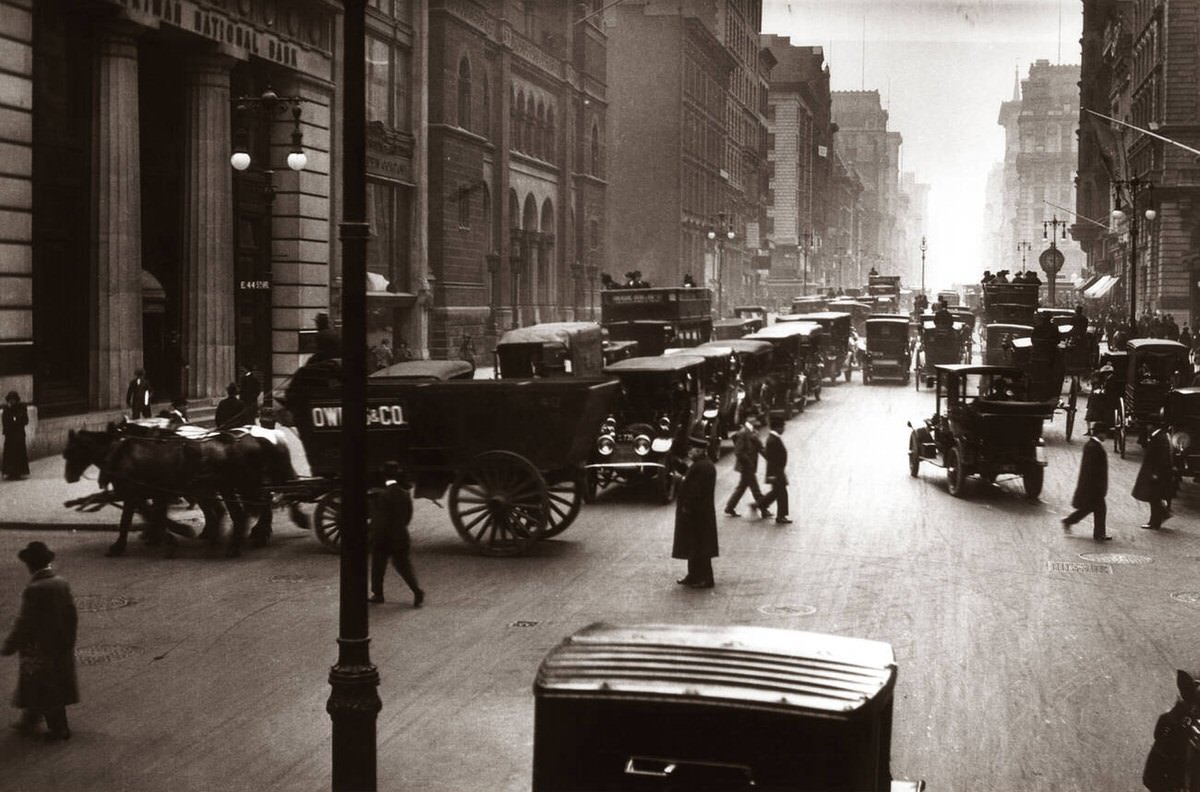
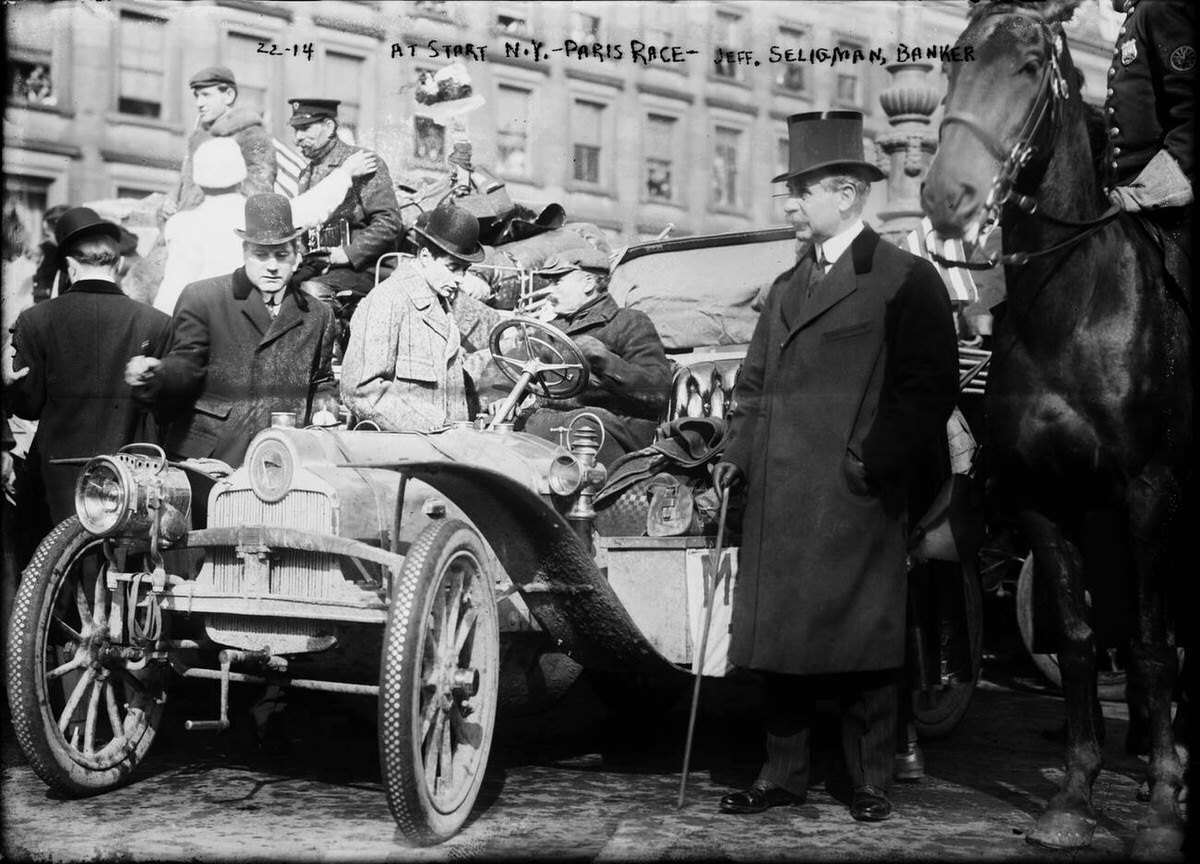
Streetcars were the first to go, but delivery horses lasted much longer. The motorized truck appeared in New York around 1900, but for the first decade of the century it was unreliable, expensive to maintain, and unable to handle the cobblestone streets that horses navigated easily. Teamsters — the men who drove horse-drawn wagons — were a powerful organized labor force, and they were not going quietly. Their union, which would eventually become the International Brotherhood of Teamsters, was already a significant political force in the city by 1905.
The delivery horse hung on through World War One and into the 1920s in sectors where the horse still made economic sense. The ice trade ran on horses until refrigerated trucks made the ice man obsolete. Ragpickers and junk collectors used horse-drawn wagons into the 1930s in some neighborhoods. The last milk delivery horse in Manhattan retired in the 1940s. These were not sentimental holdouts — the economics simply favored the horse in certain narrow applications until the motor vehicle finally overtook it on every measure of cost and reliability.
The Men Who Worked with Horses
The horse economy supported an enormous workforce. Stable hands, drivers, blacksmiths, harness makers, veterinarians, feed merchants, and the workers at the rendering plants that processed dead horses into glue, grease, and fertilizer — all of them depended on the horse for their livelihood. When the horse went, these jobs went with it. A blacksmith who had shod horses for thirty years had no transferable skill in an economy running on internal combustion engines. The displacement was real and it was fast.
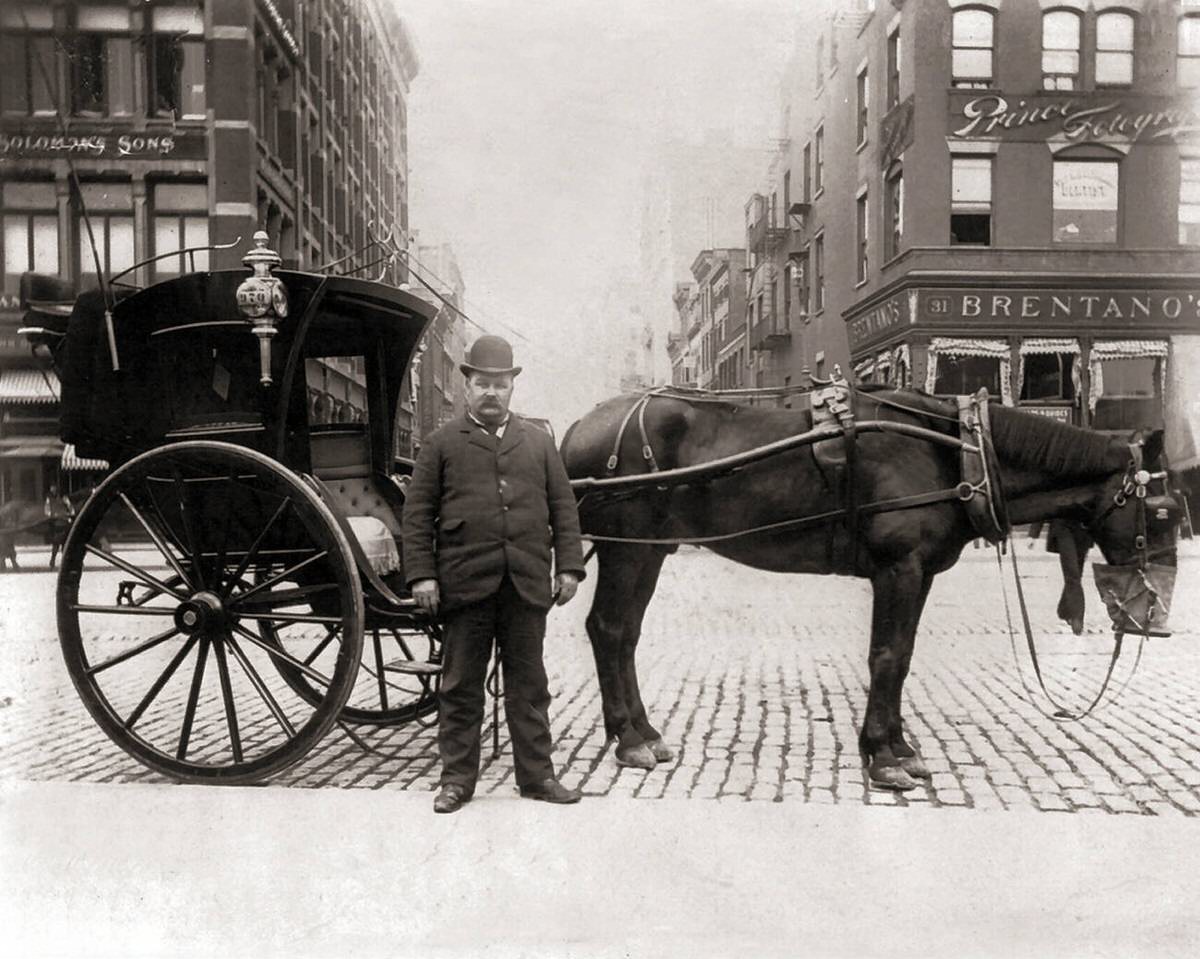
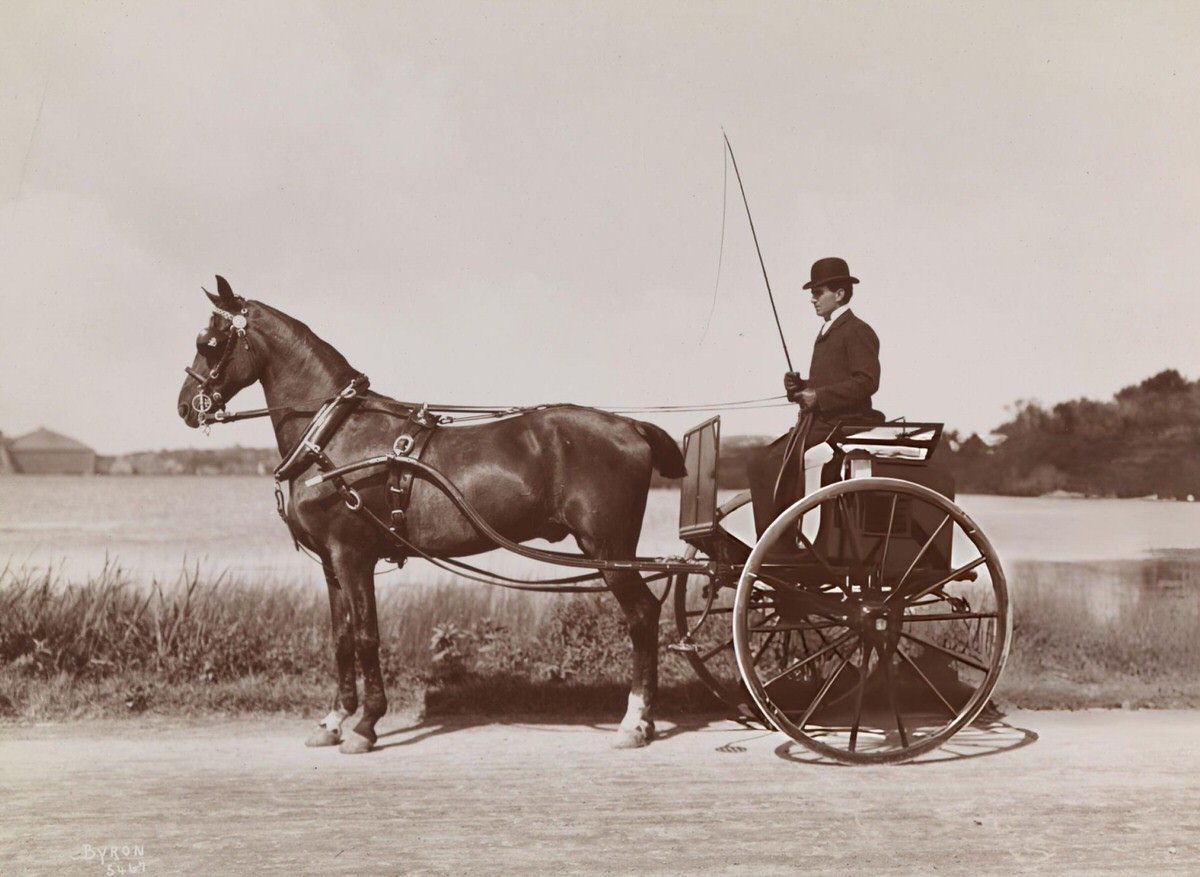
The drivers — the men who sat on the boxes of delivery wagons and streetcars — were a specific New York type. They were mostly Irish and Italian in the immigrant neighborhoods, men who had grown up with animals and knew how to read a horse’s temperament on a busy street. The good ones could handle a nervous horse in traffic that would have sent a lesser animal into a panic. They took pride in their teams. A deliveryman who kept his horses well-groomed and well-fed was a man who took his work seriously, and the neighborhood knew it.
![[Factually Corrected] Horse-Drawn Cart At 10Th Avenue And Main Street, Colorado.](https://seeoldnyc.com/wp-content/uploads/2026/04/The_Great_Horse_era_16.jpg)

GIPHY App Key not set. Please check settings