

 Henry Parker
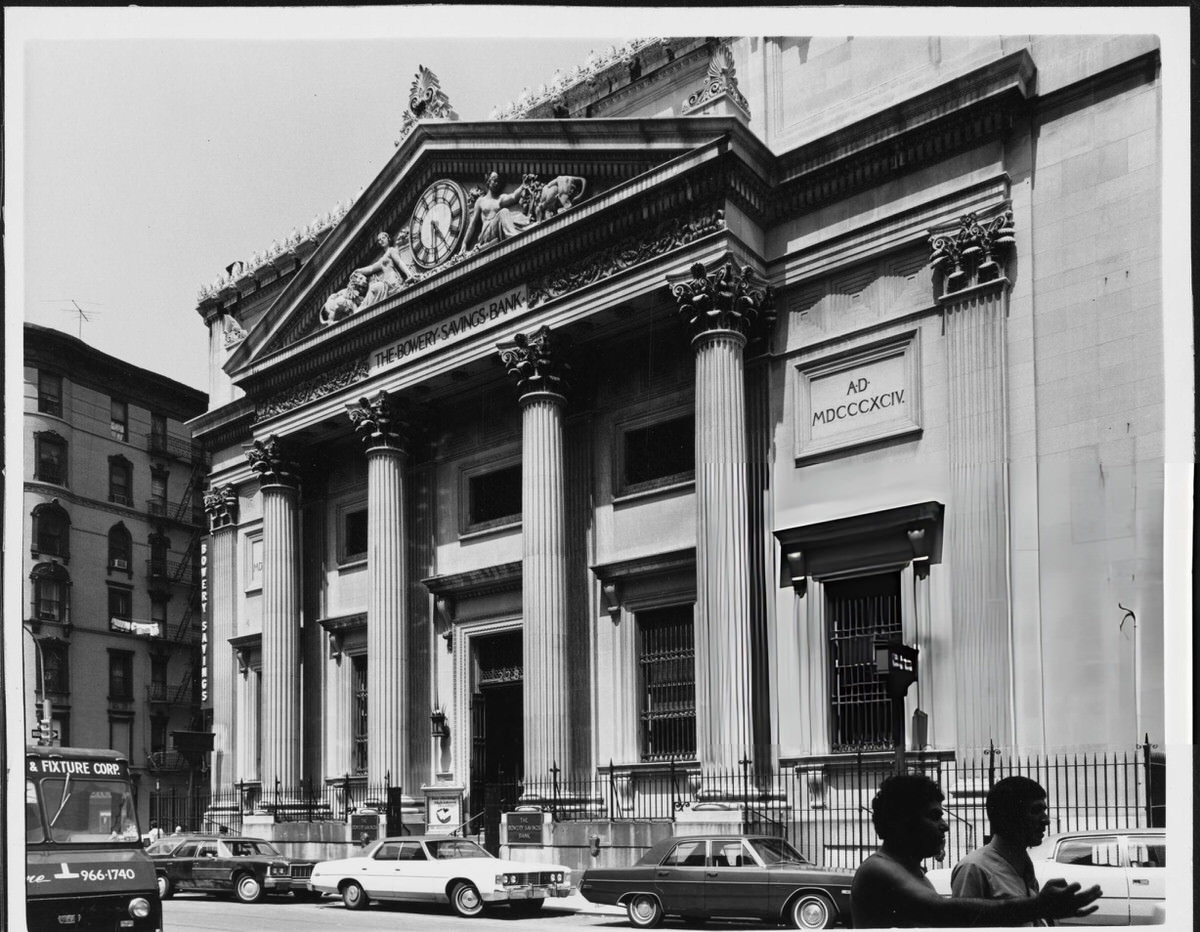
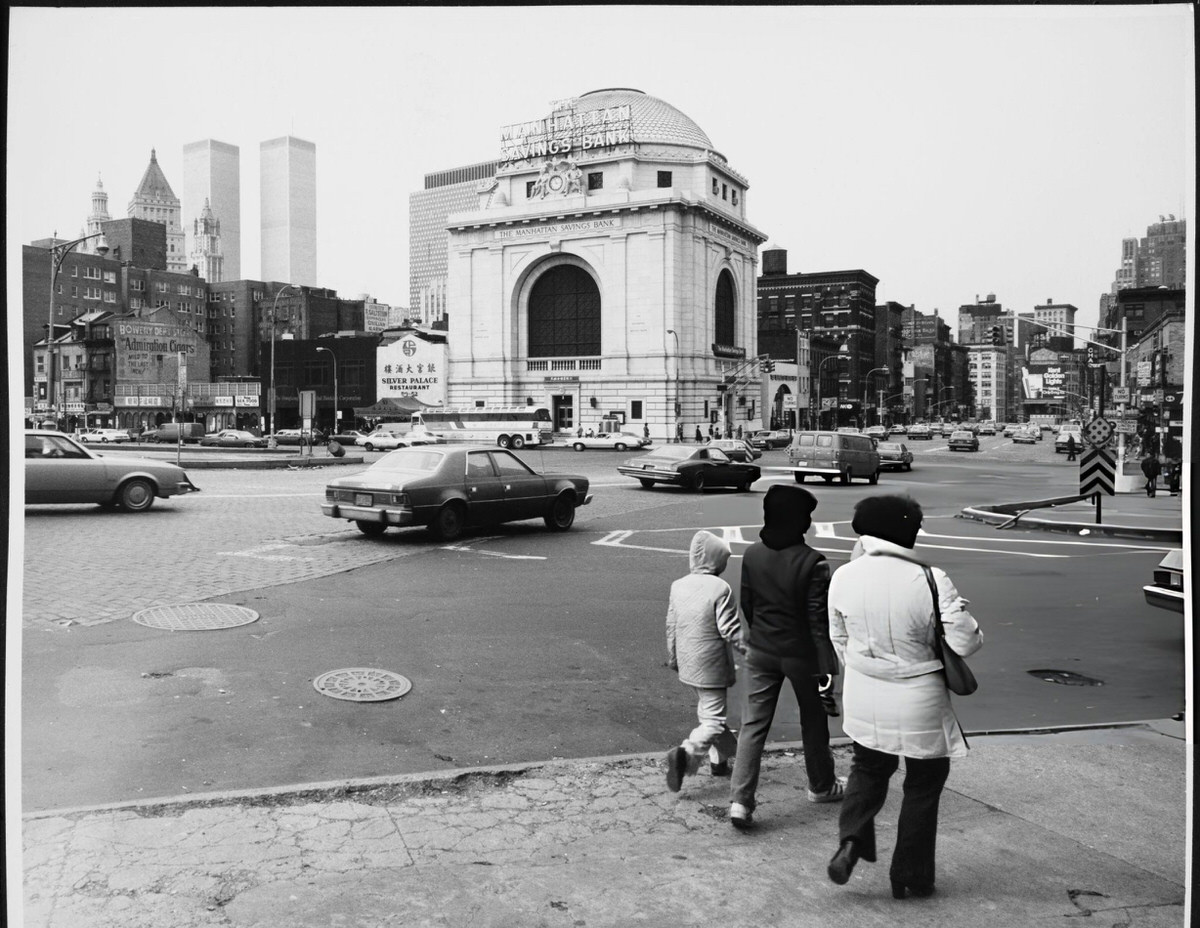
By 1970, the Bowery had been America’s most famous Skid Row for nearly forty years. The flophouses still lined the street. The missions still fed men by the hundreds every night. The saloons still opened before the rest of the city was awake. What changed in the 1970s was the world pressing in from every direction — a city on the edge of financial collapse, an art scene moving into the blocks directly west, and a music club that opened at 315 Bowery in December 1973 and turned the whole equation of the street upside down without displacing a single flophouse resident in the process.
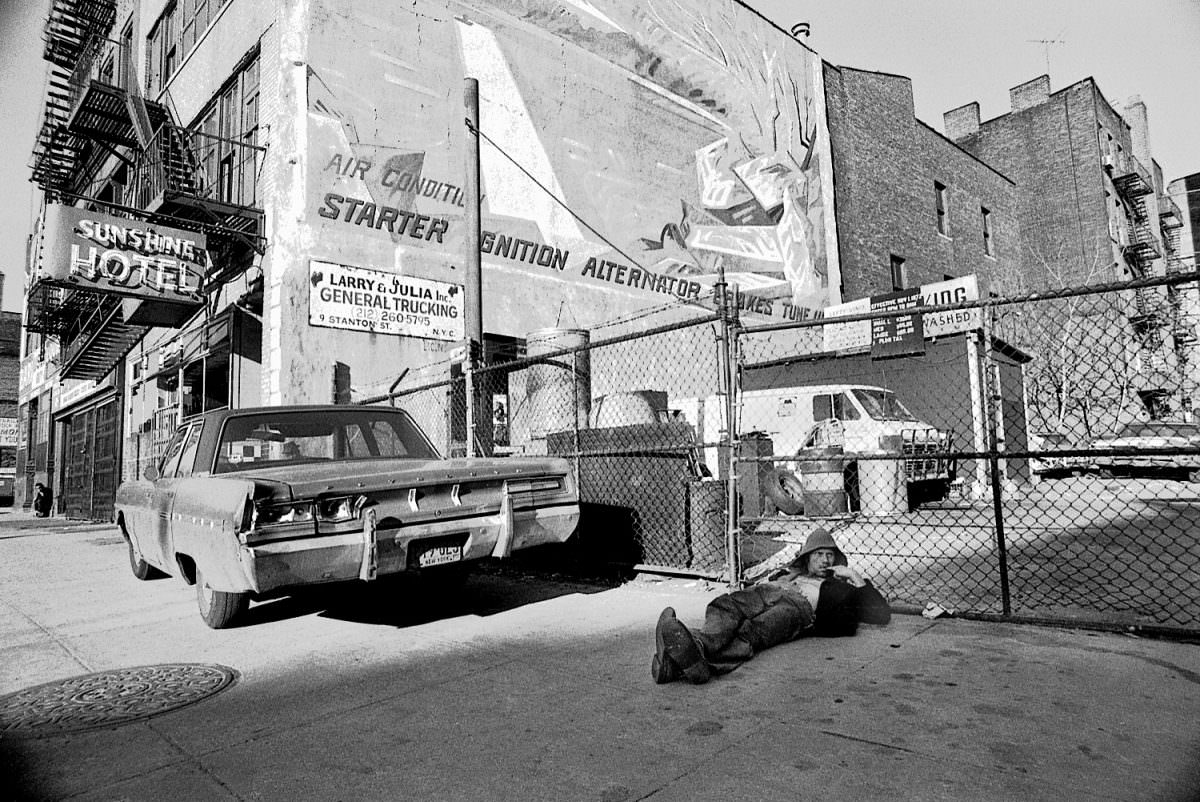
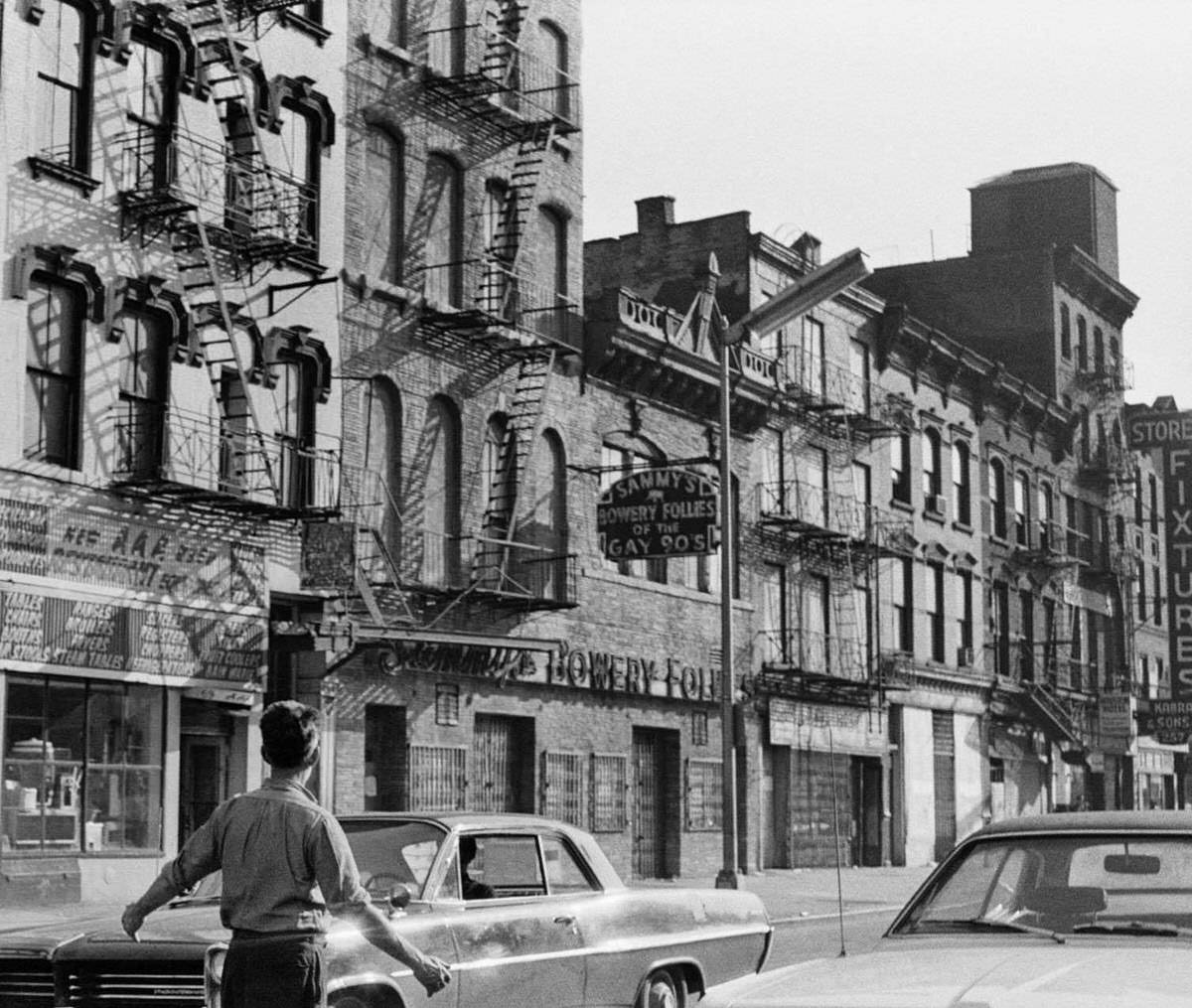
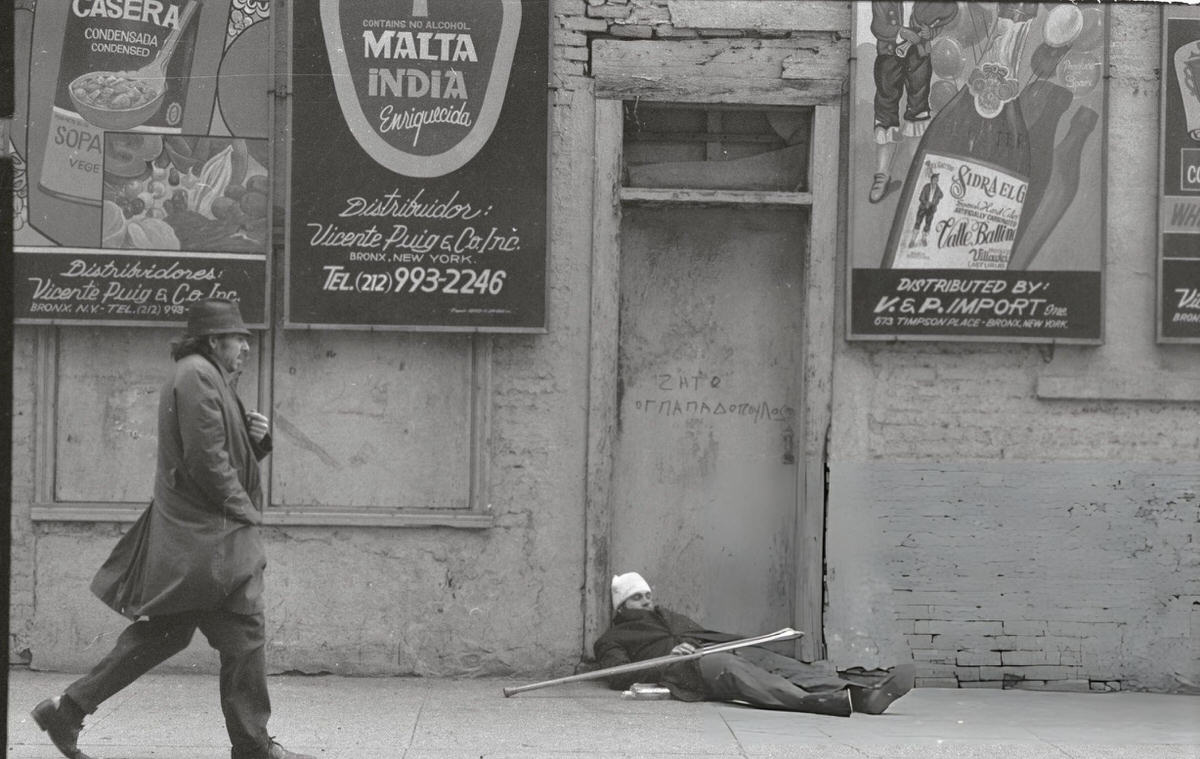
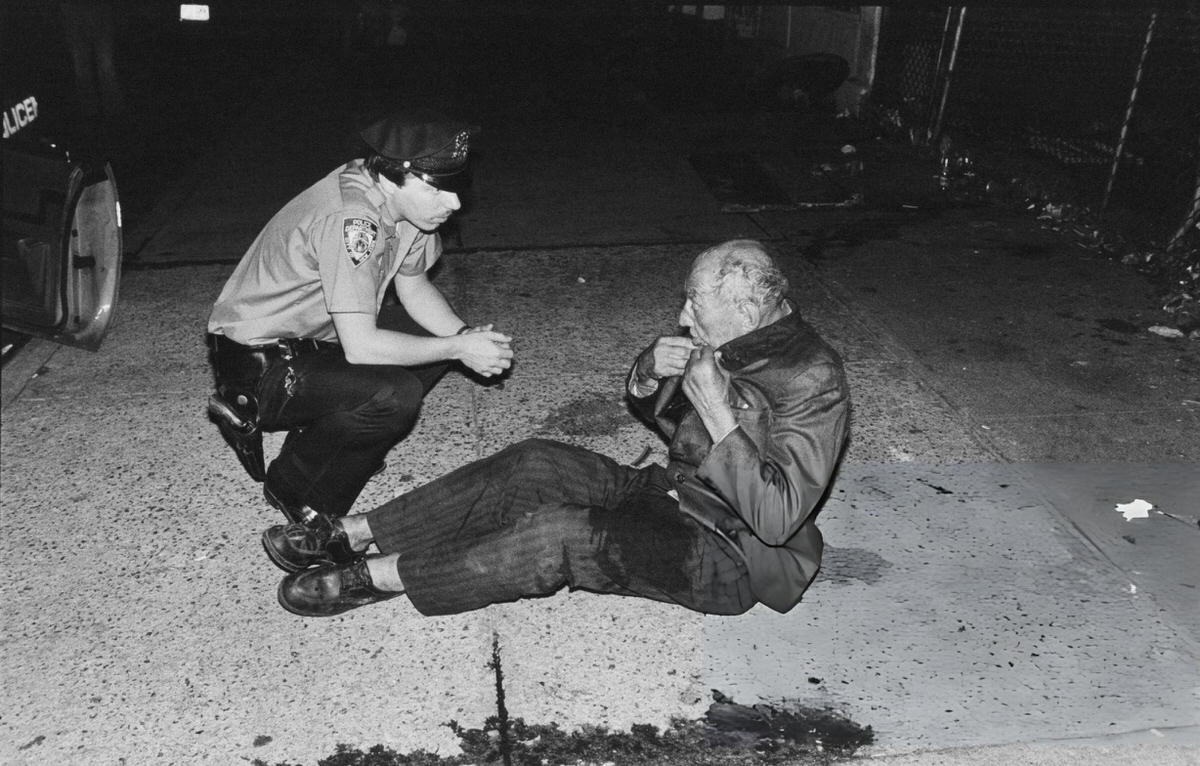
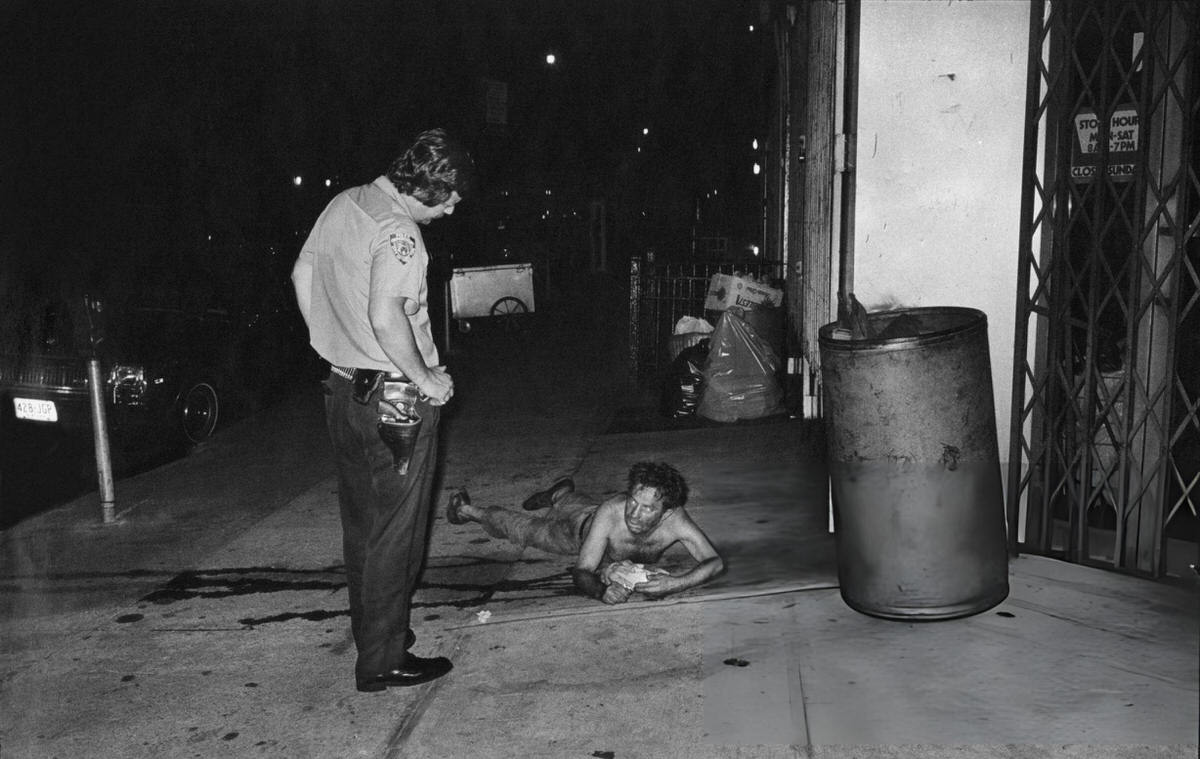
New York City’s fiscal crisis hit in 1975 with full force. The city was functionally broke, unable to meet its debt payments, and on the verge of declaring bankruptcy before the federal government and the state stepped in with emergency financing. The immediate effects on the Bowery were visible: fewer police patrols, garbage that went uncollected for longer stretches, city services reduced to the minimum. None of this was new to the Bowery, which had operated for decades without much city attention. The men in the cage hotels at the Whitehouse and the Providence had long understood that the city’s official indifference to their block was a permanent condition, not a temporary oversight.
Read more
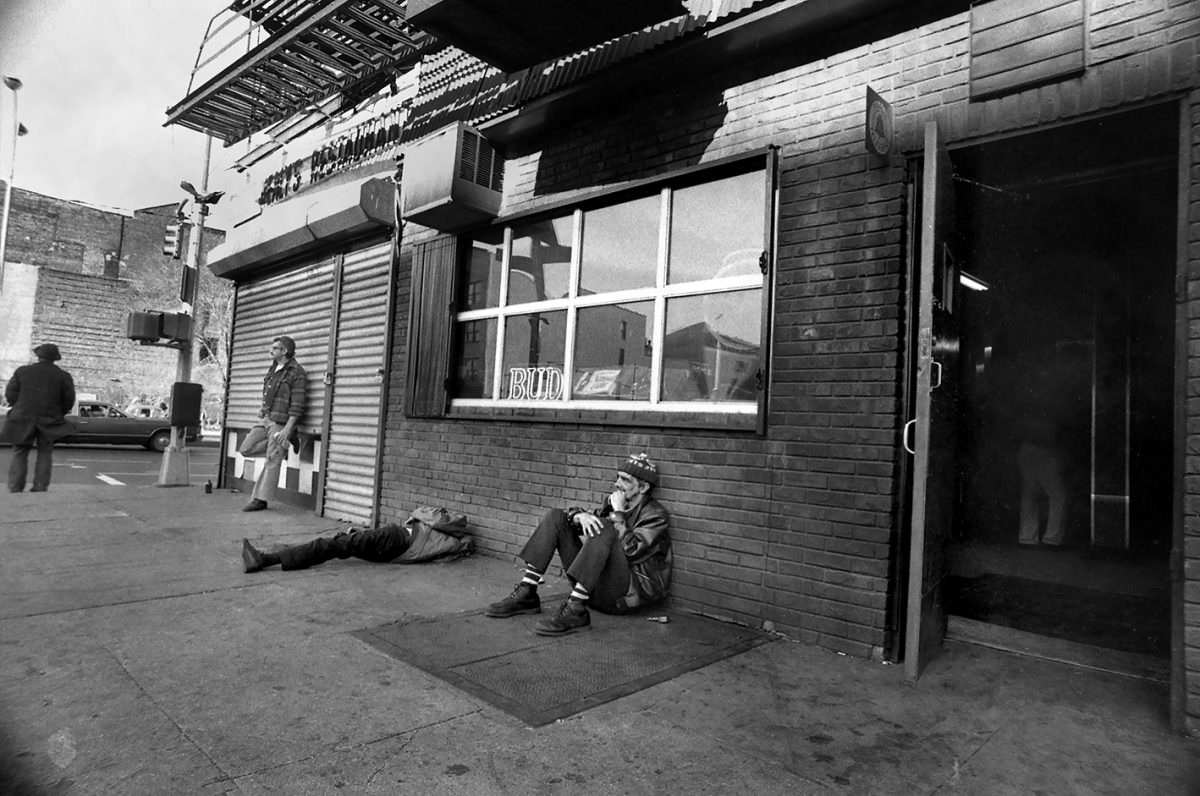
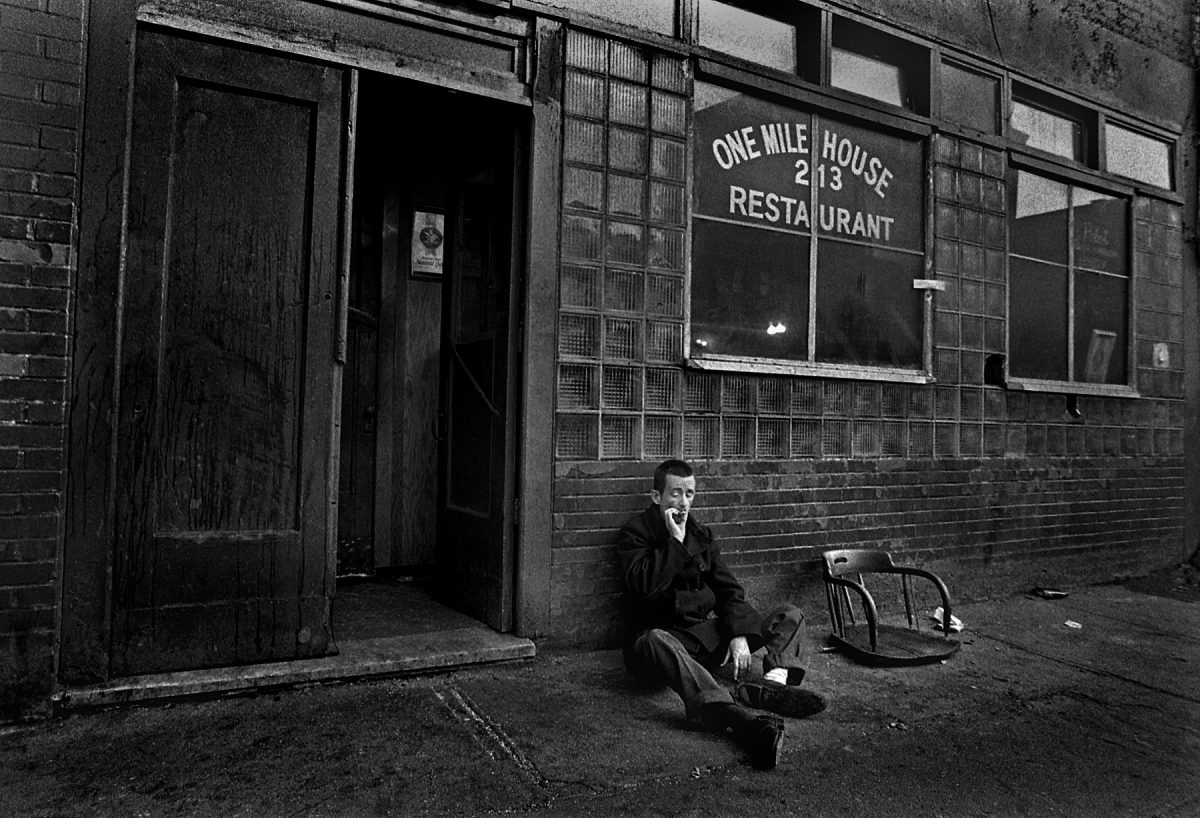
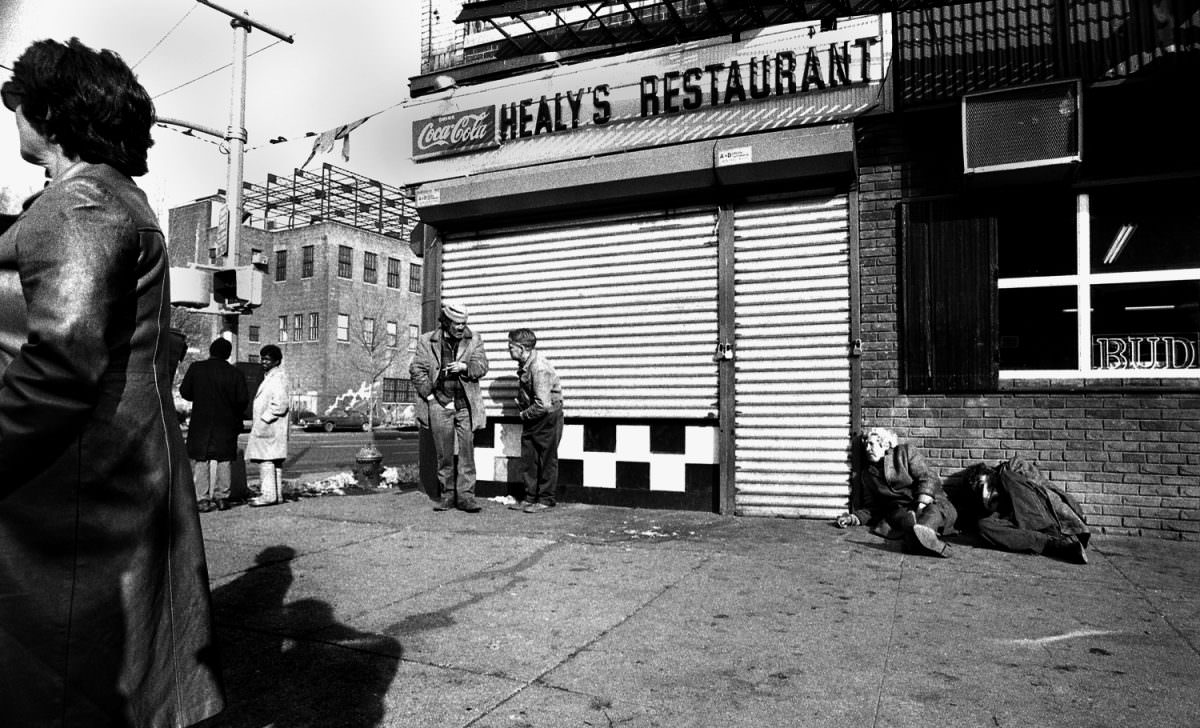
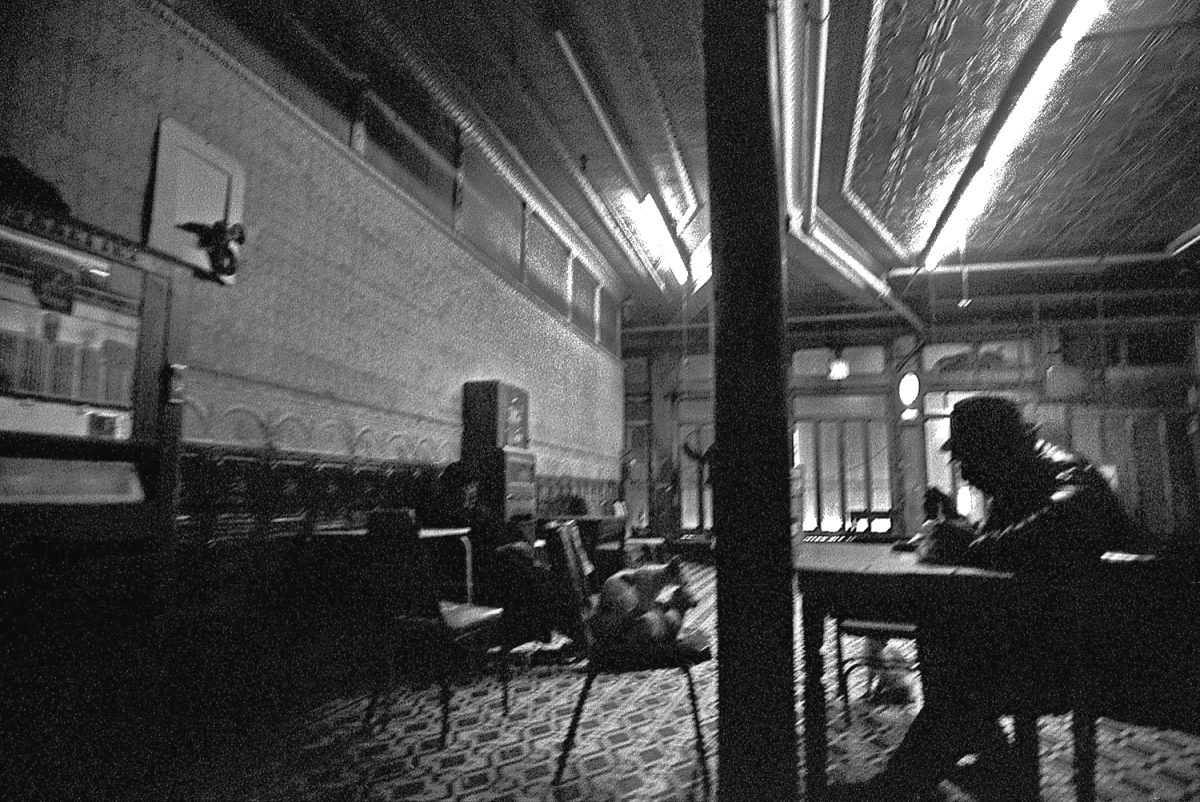
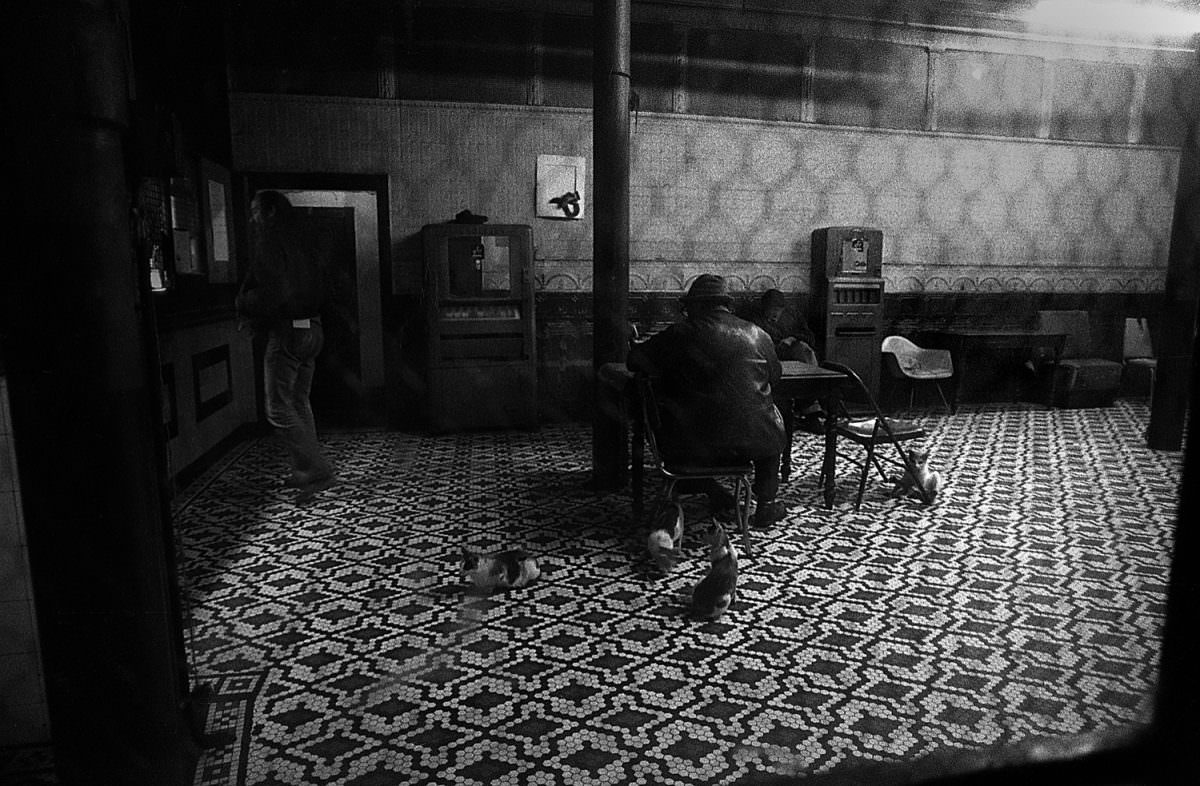
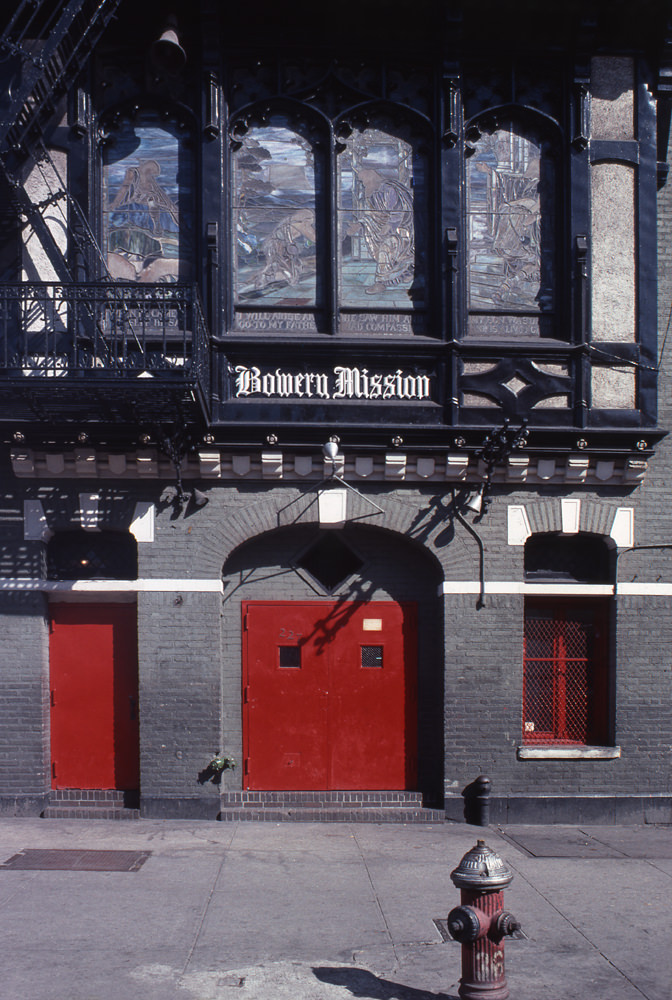
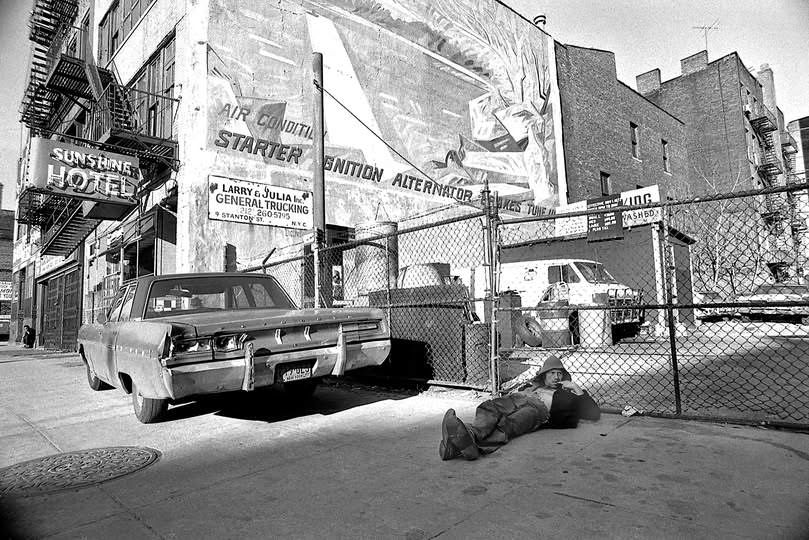
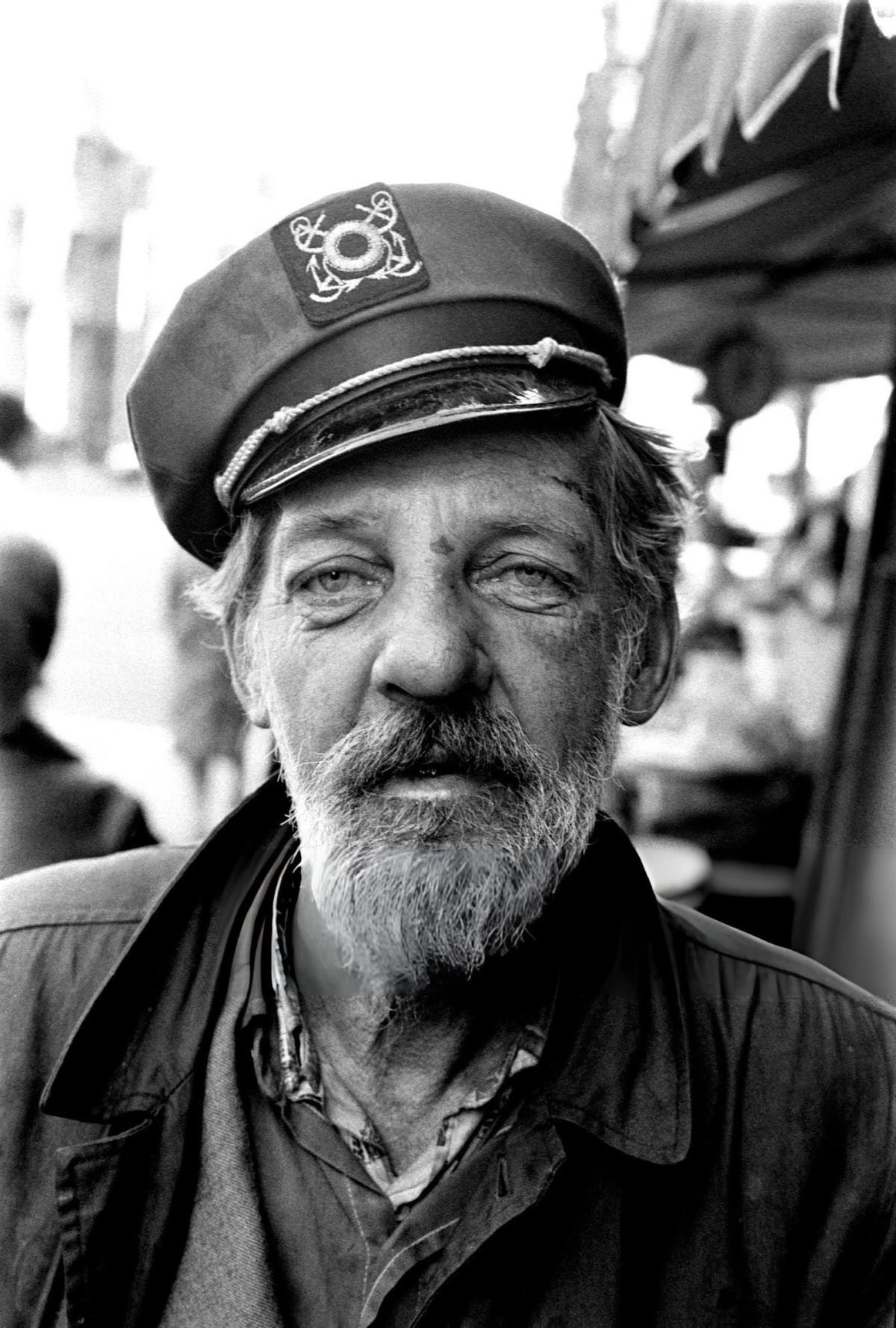
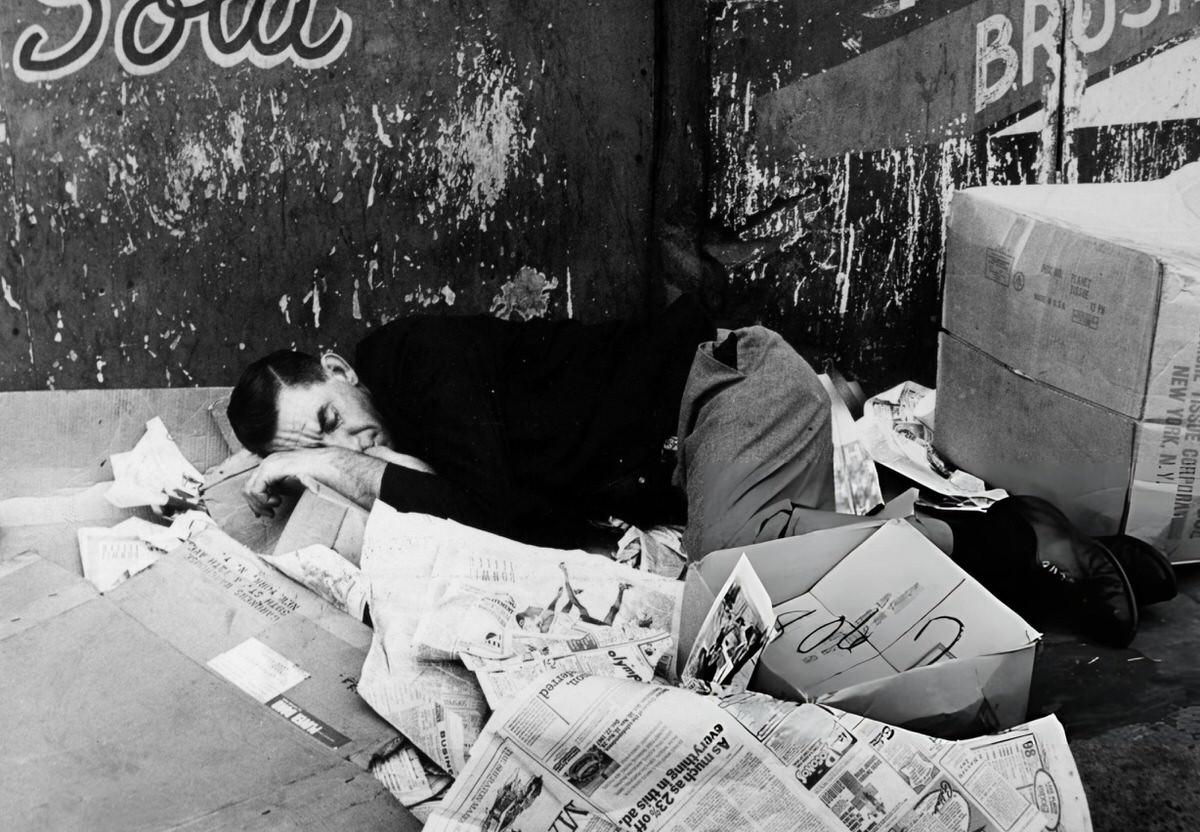
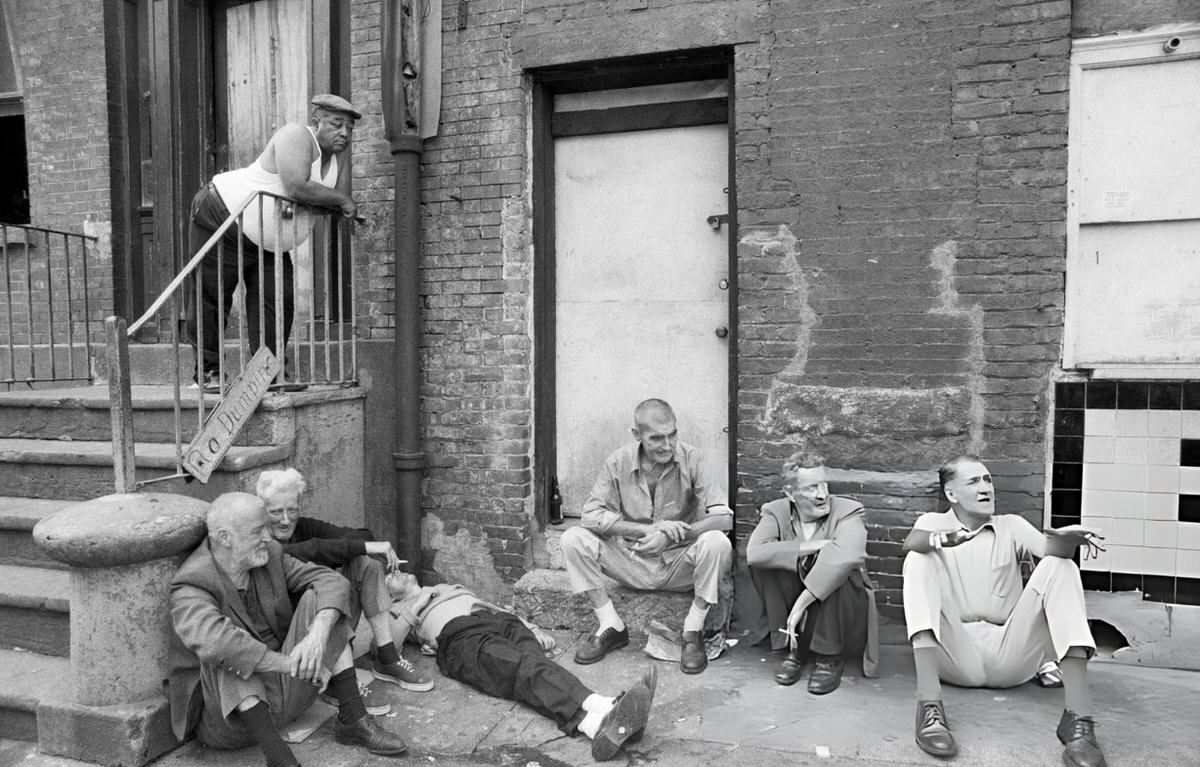
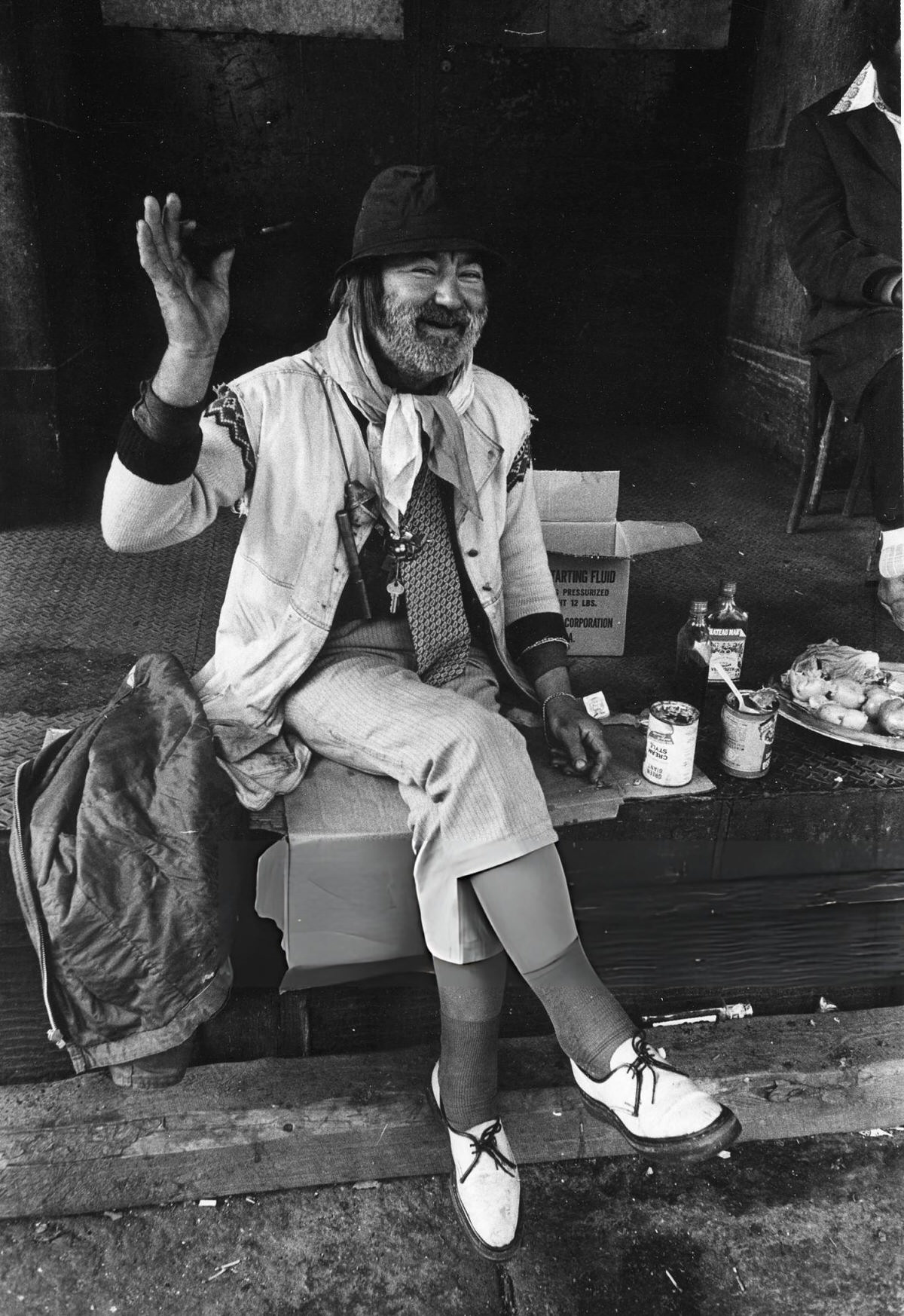
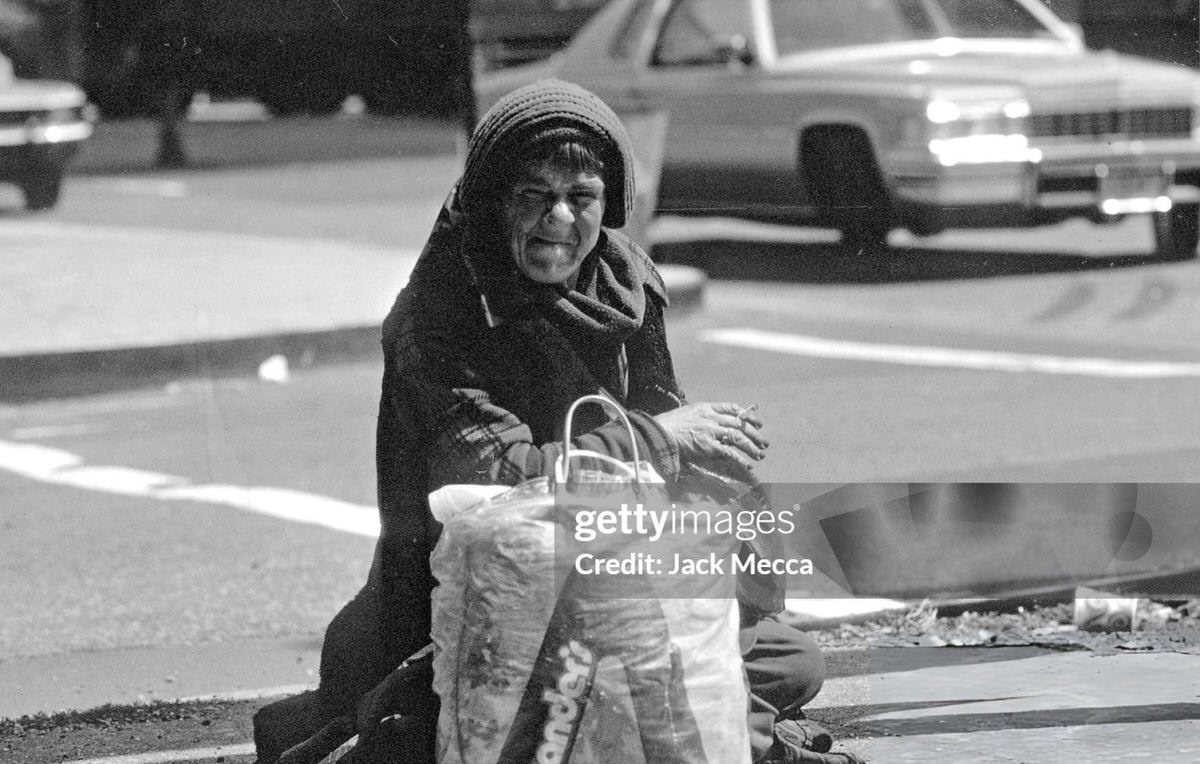
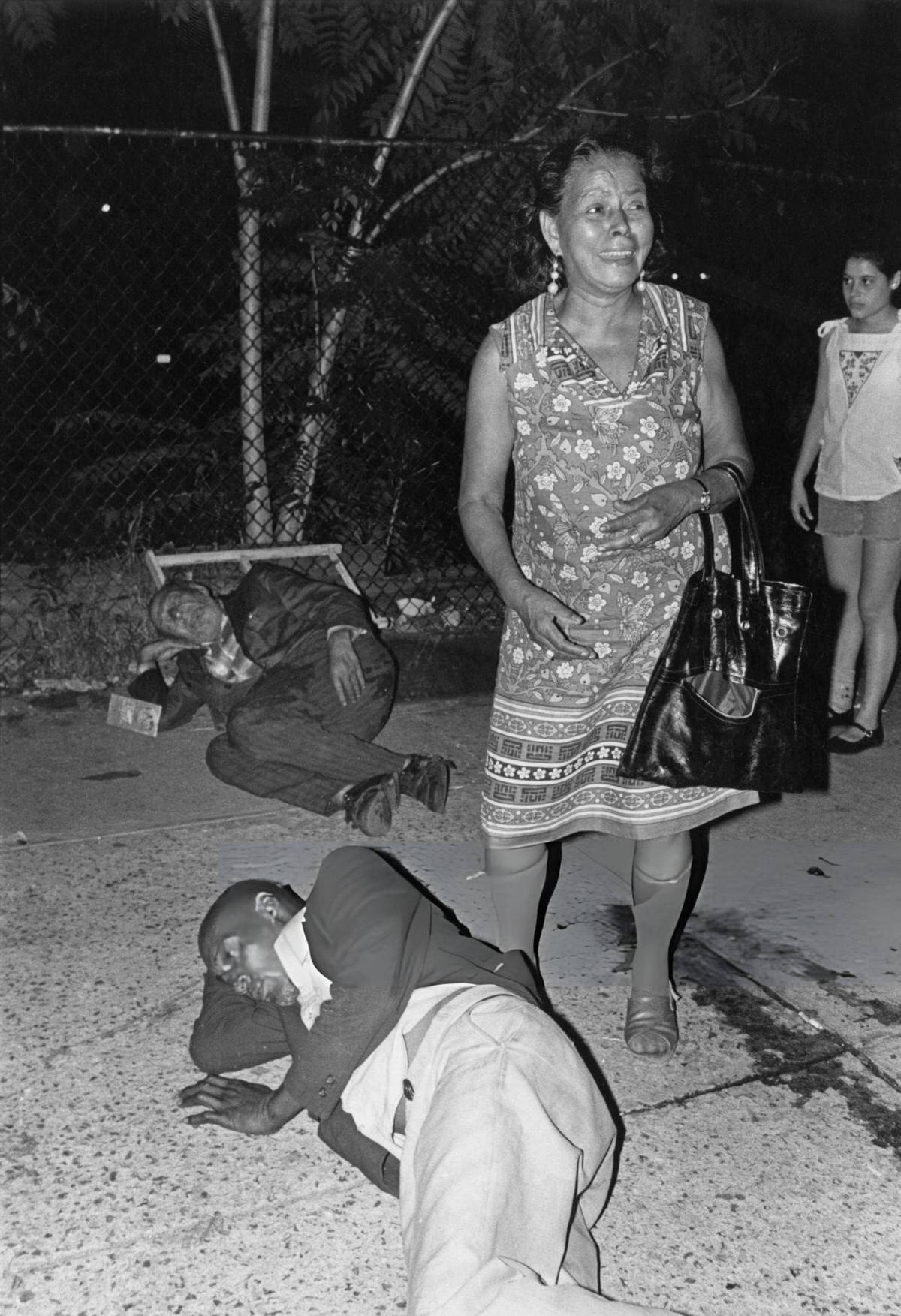
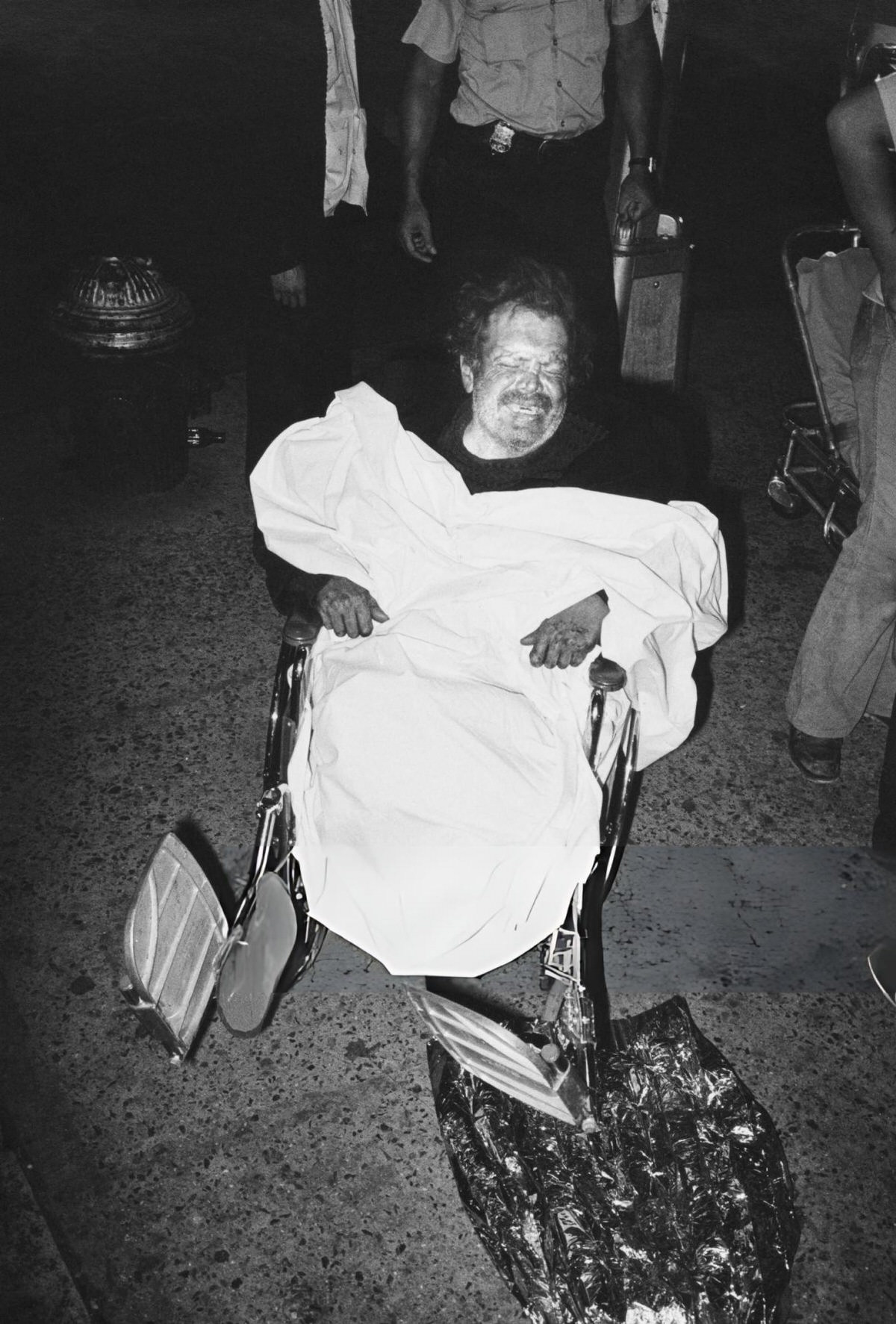
The Bowery Mission at 227 Bowery ran its operations through the decade the same way it always had — a religious service followed by a meal, every day, without interruption. The demand increased as the city’s economic situation deteriorated. Men who had been holding onto marginal employment in manufacturing jobs — the kind of work that had kept them just off the street in the 1960s — found those jobs disappearing as factories closed and moved out of the city through the early and mid-1970s. The Bowery’s population of homeless men, which had been declining slowly since the late 1940s, stopped declining and held steady through the decade at somewhere between 5,000 and 7,000 men.
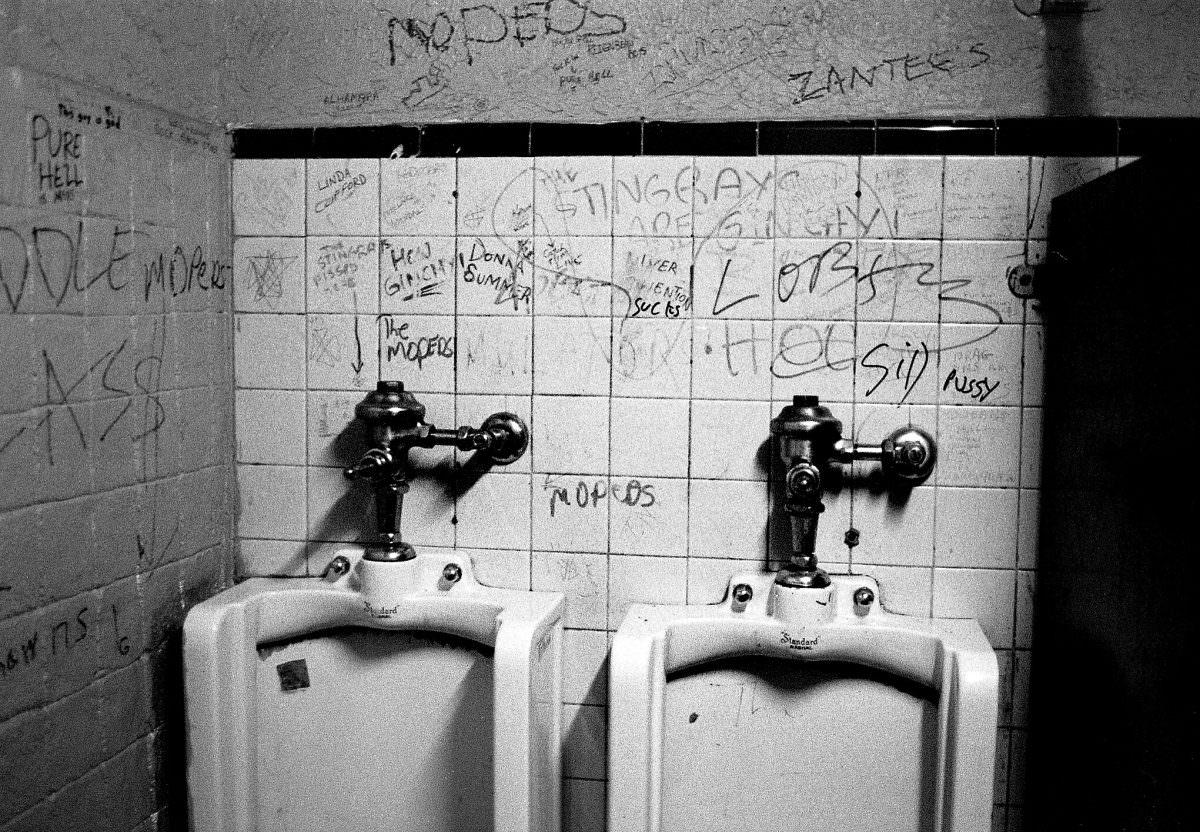
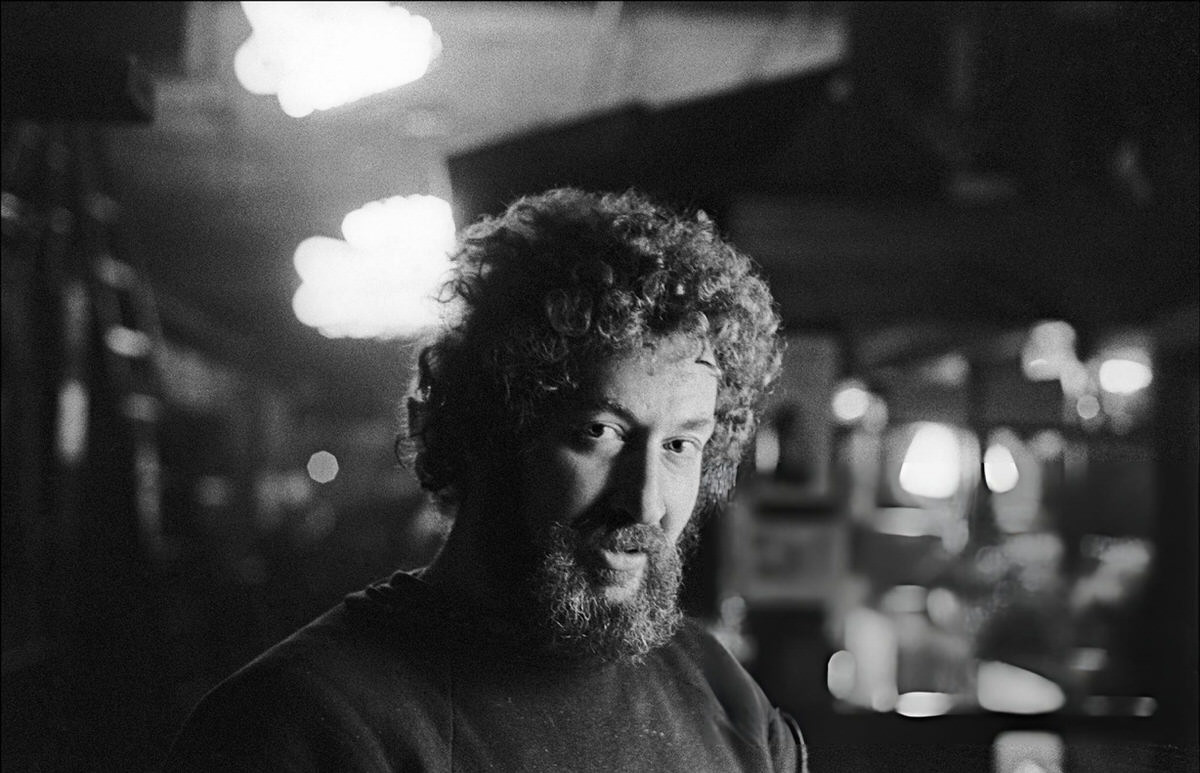
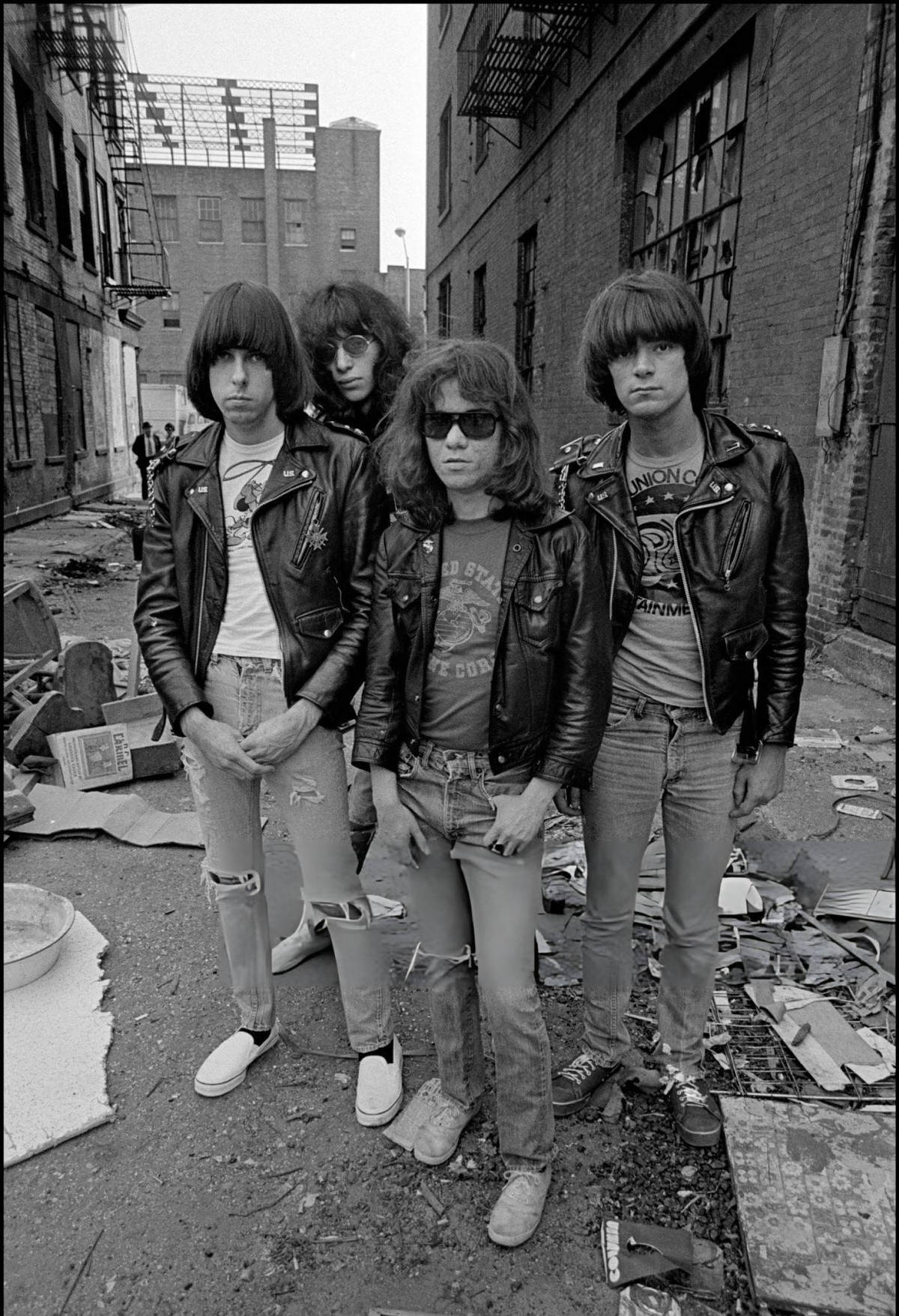
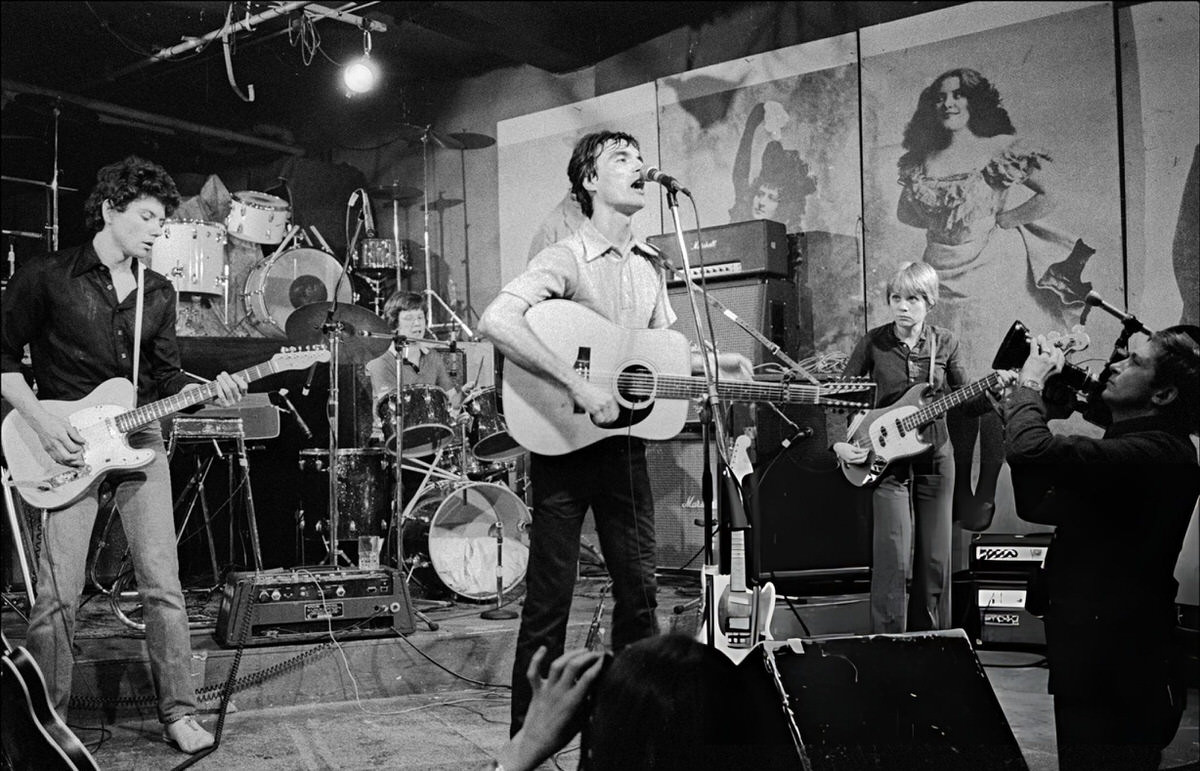
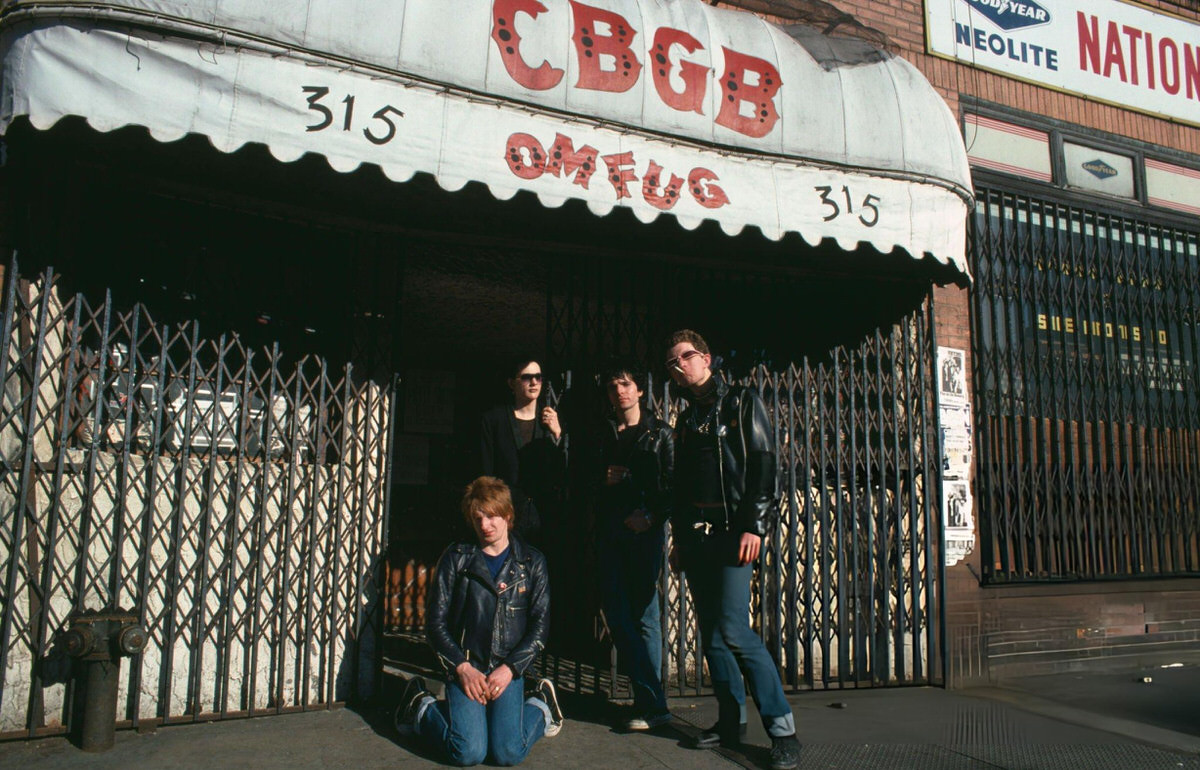
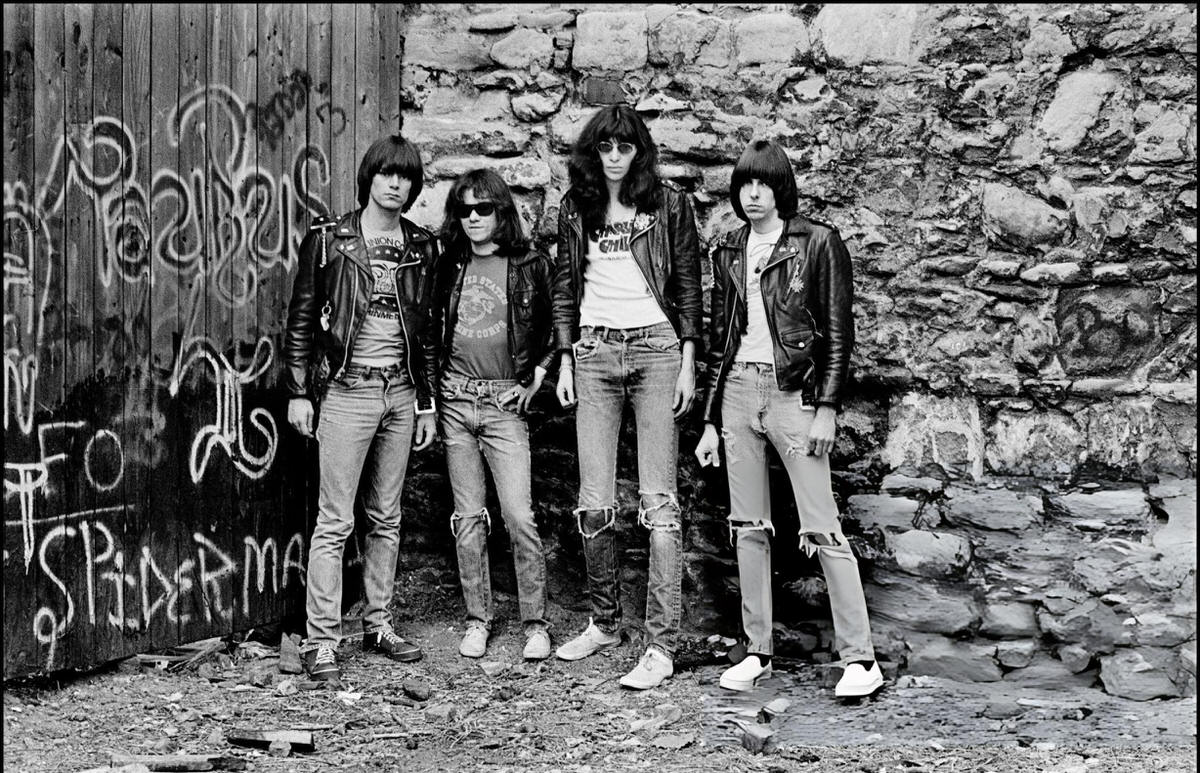
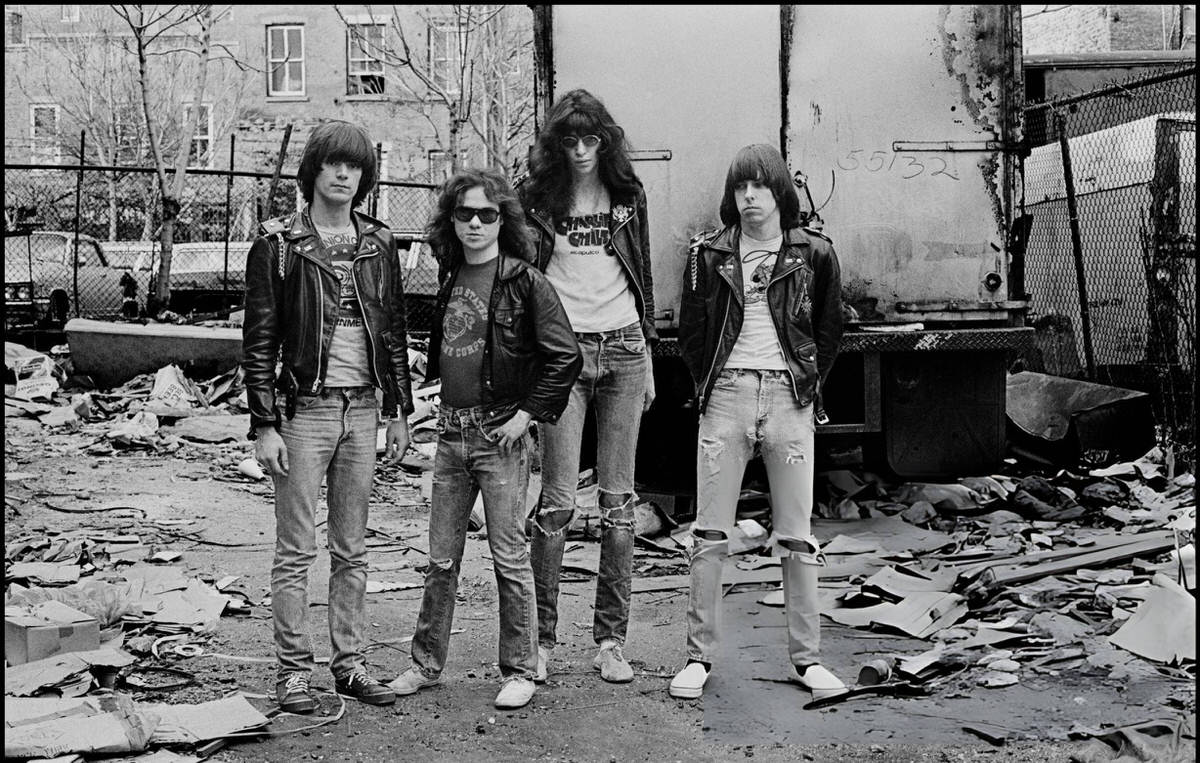
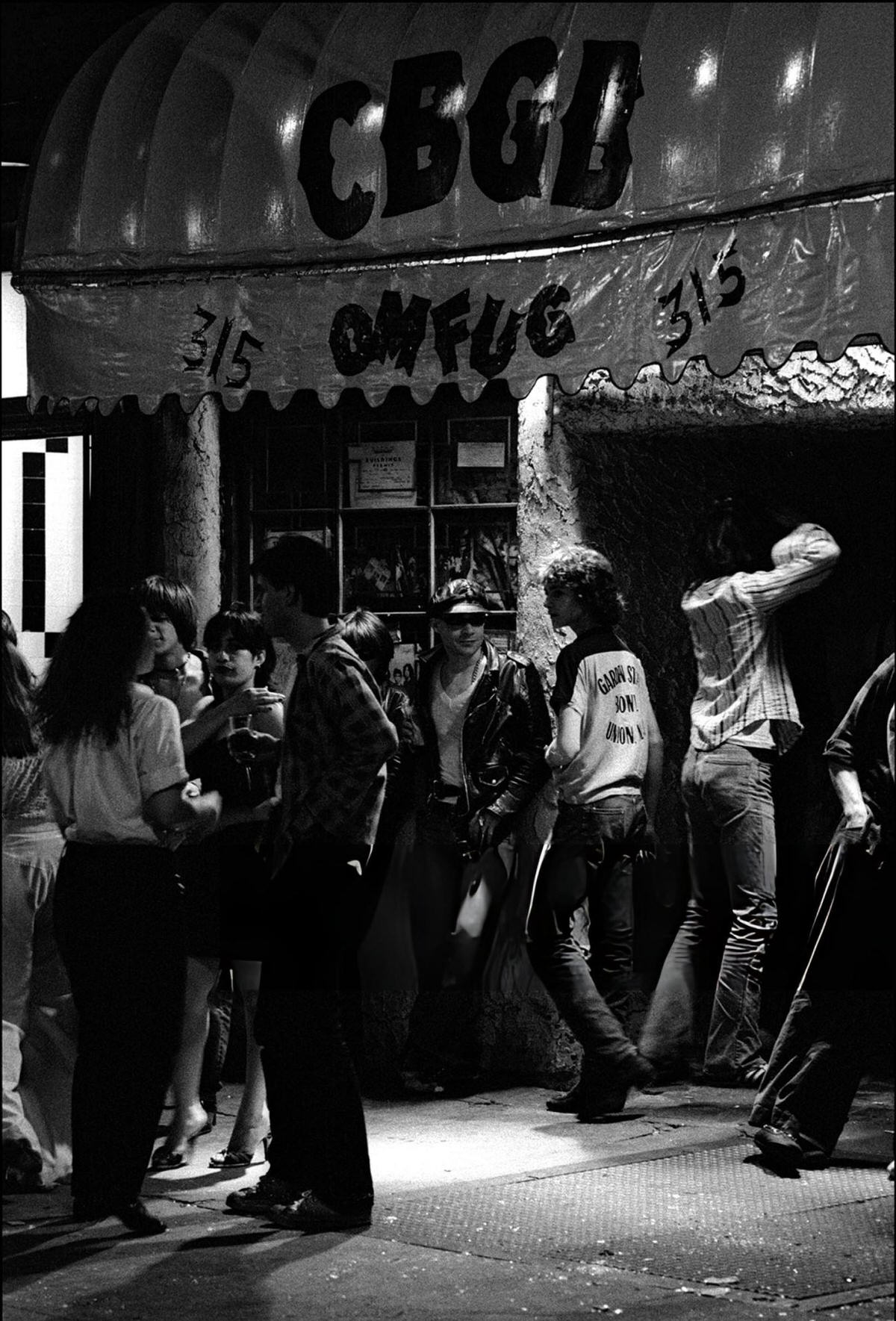
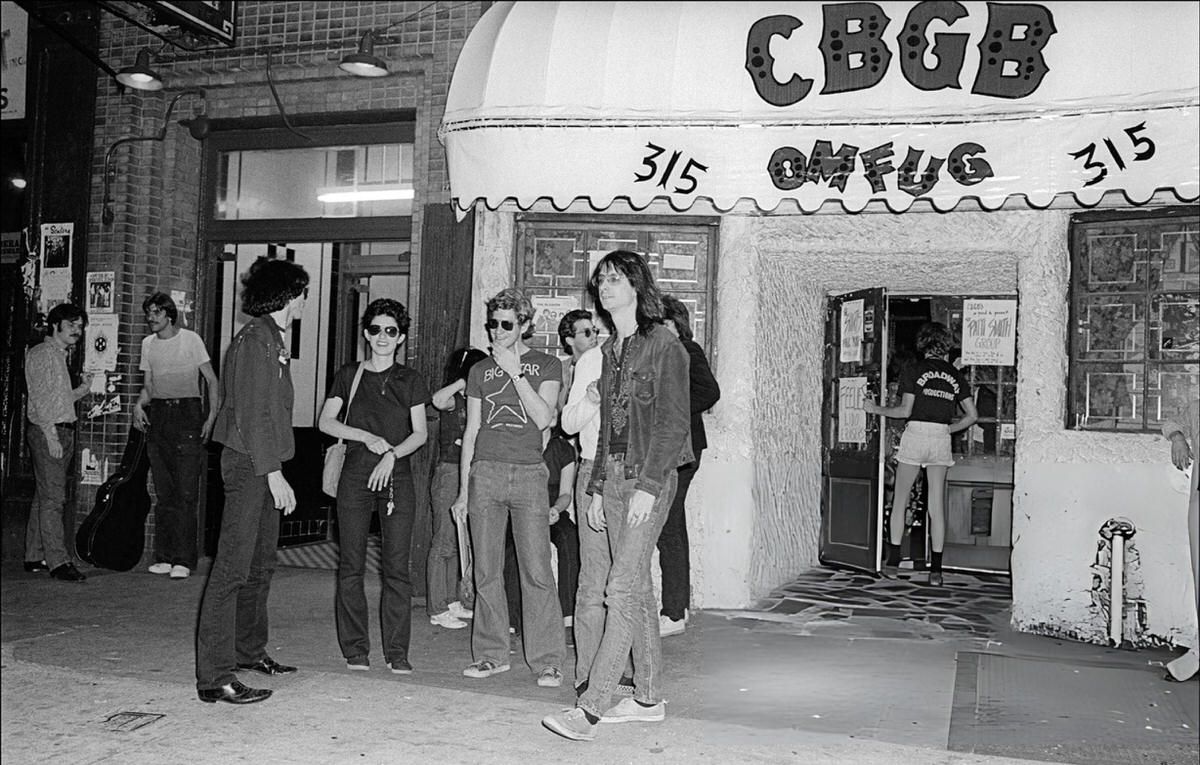
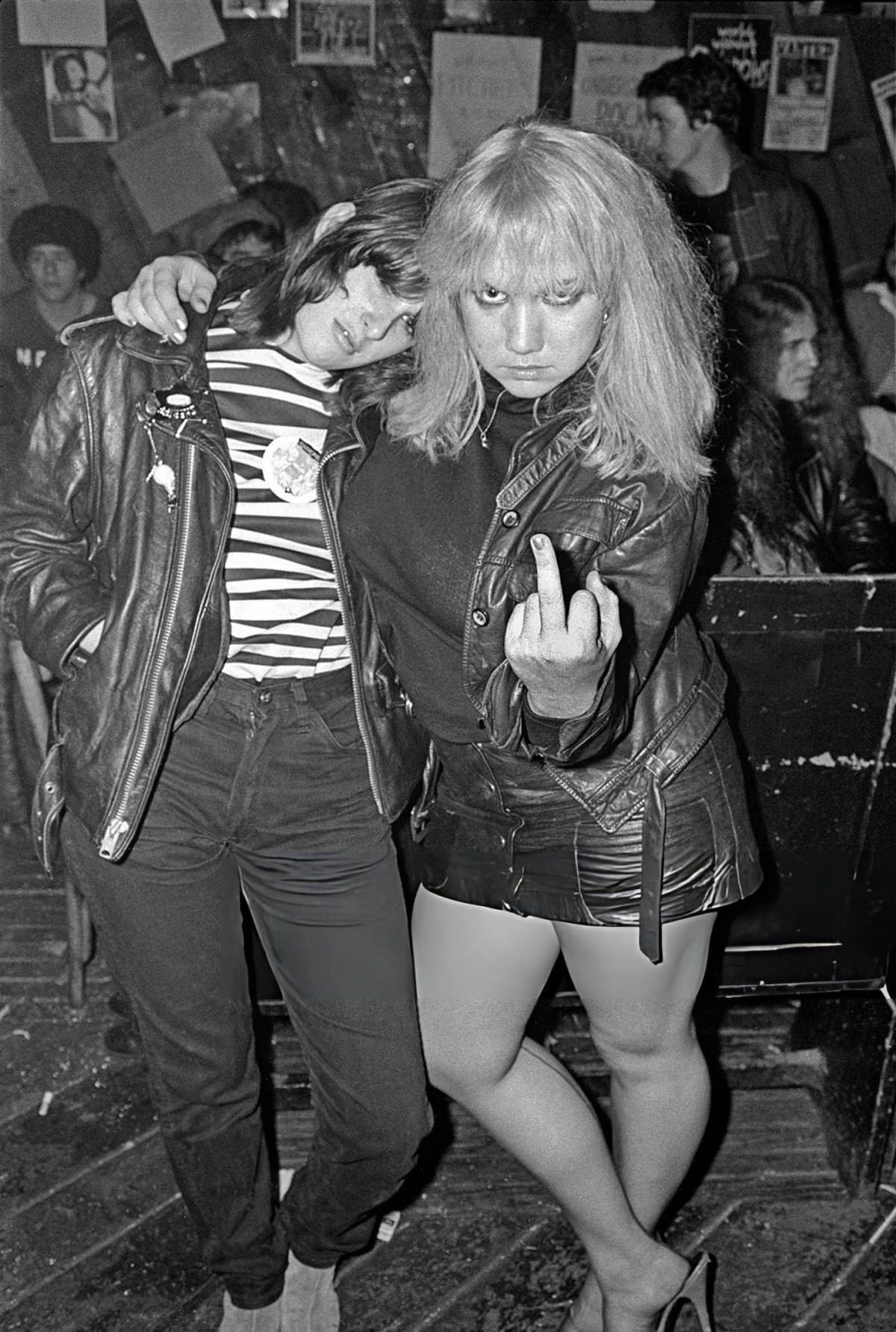
Hilly Kristal opened CBGB — the full name was CBGB & OMFUG, standing for Country, Bluegrass, Blues and Other Music for Uplifting Gormandizers — at 315 Bowery in December 1973. The space had previously been a bar called Hilly’s on the Bowery and before that a flophouse. Kristal intended to book country and folk acts. The musicians who actually showed up and asked to play were something else entirely. Television, featuring Tom Verlaine and Richard Lloyd, became one of the first bands to play the club regularly. Patti Smith performed there. The Ramones played their first CBGB show on August 16, 1974, a set that lasted about seventeen minutes. Talking Heads debuted at the club in 1975. Blondie built their early following on the CBGB stage.
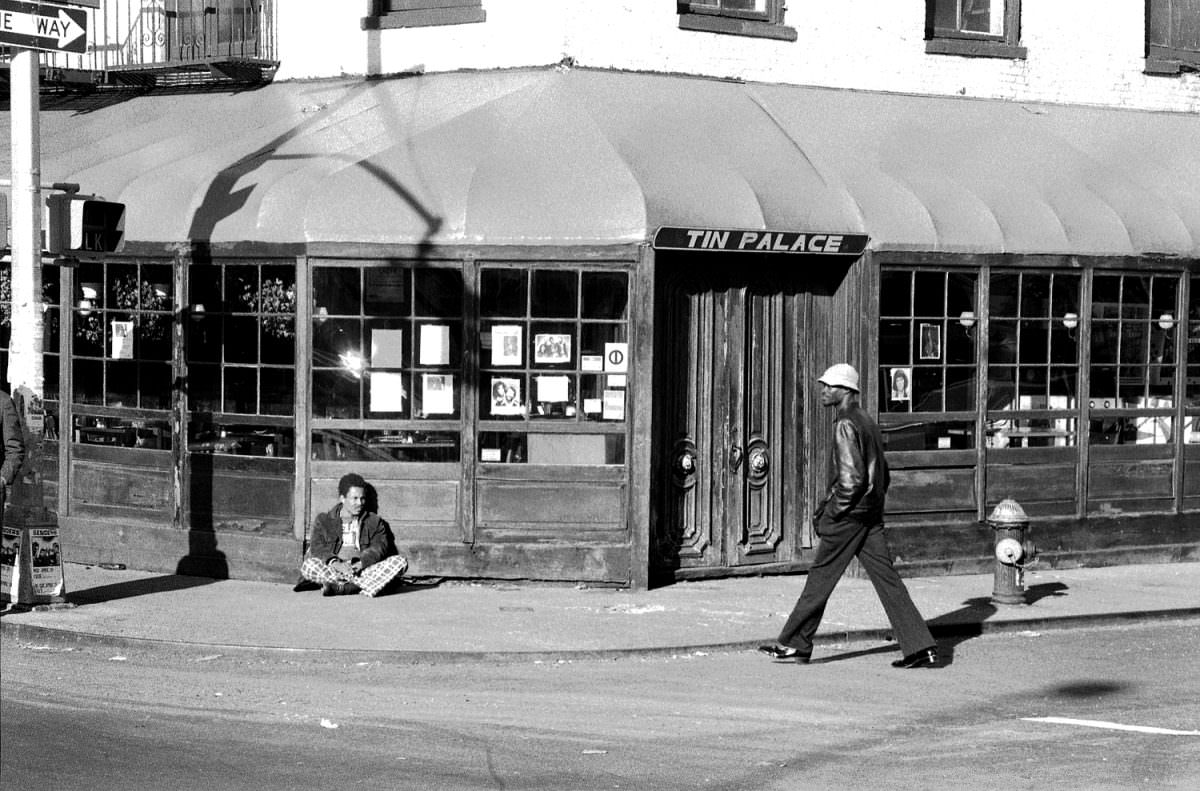
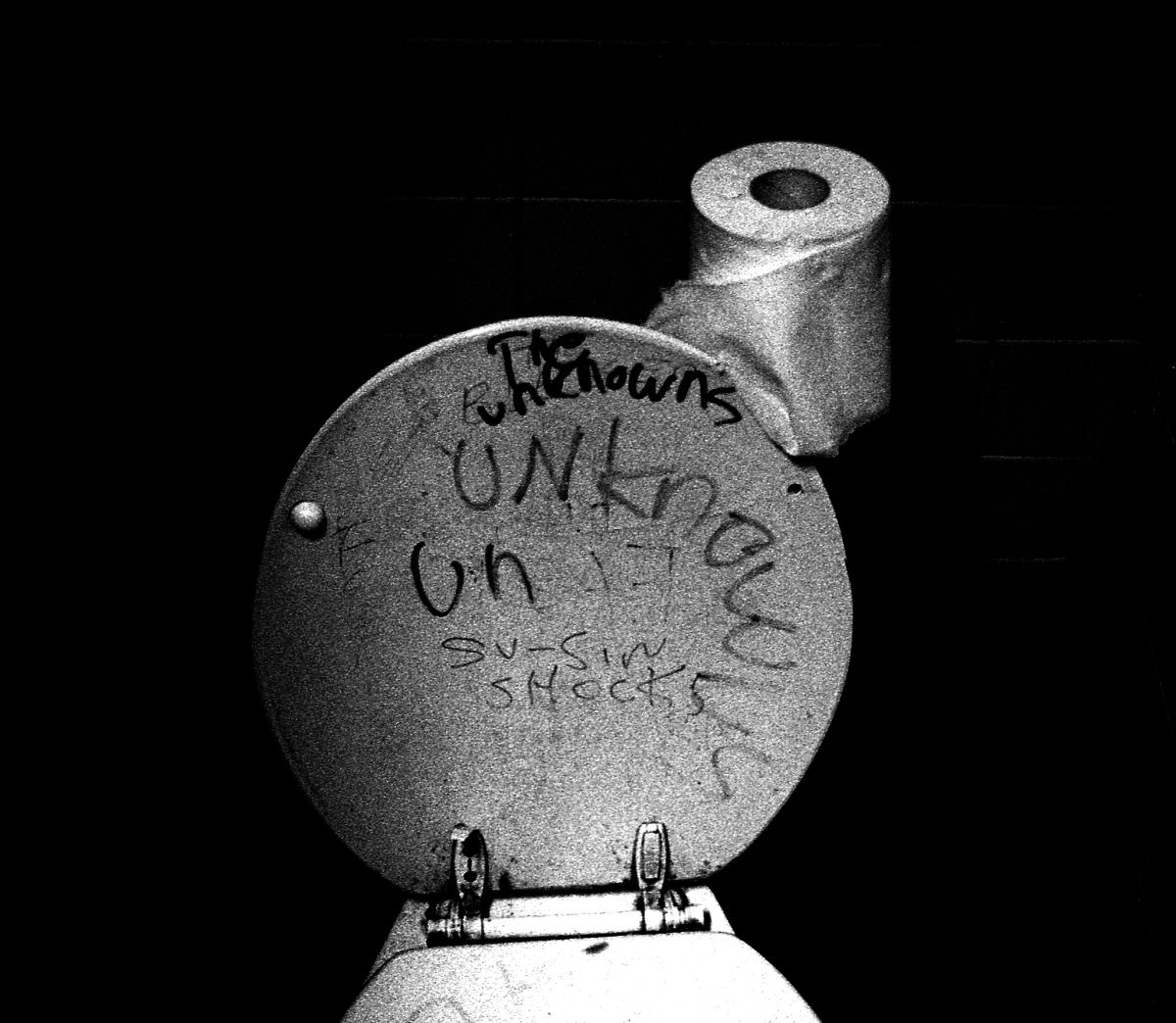
The club was not impressive physically. The room held about 350 people at capacity. The sound system was adequate rather than good. The bathroom was famously unusable. The stage was low and small. The awning outside was stained and torn. Kristal allowed bands to play original music — which most clubs in New York at the time did not — and he did not charge them to perform until they had built enough of an audience to justify a door split. That policy turned CBGB into a working laboratory for new music in a way that no other venue in the city matched during the 1970s.
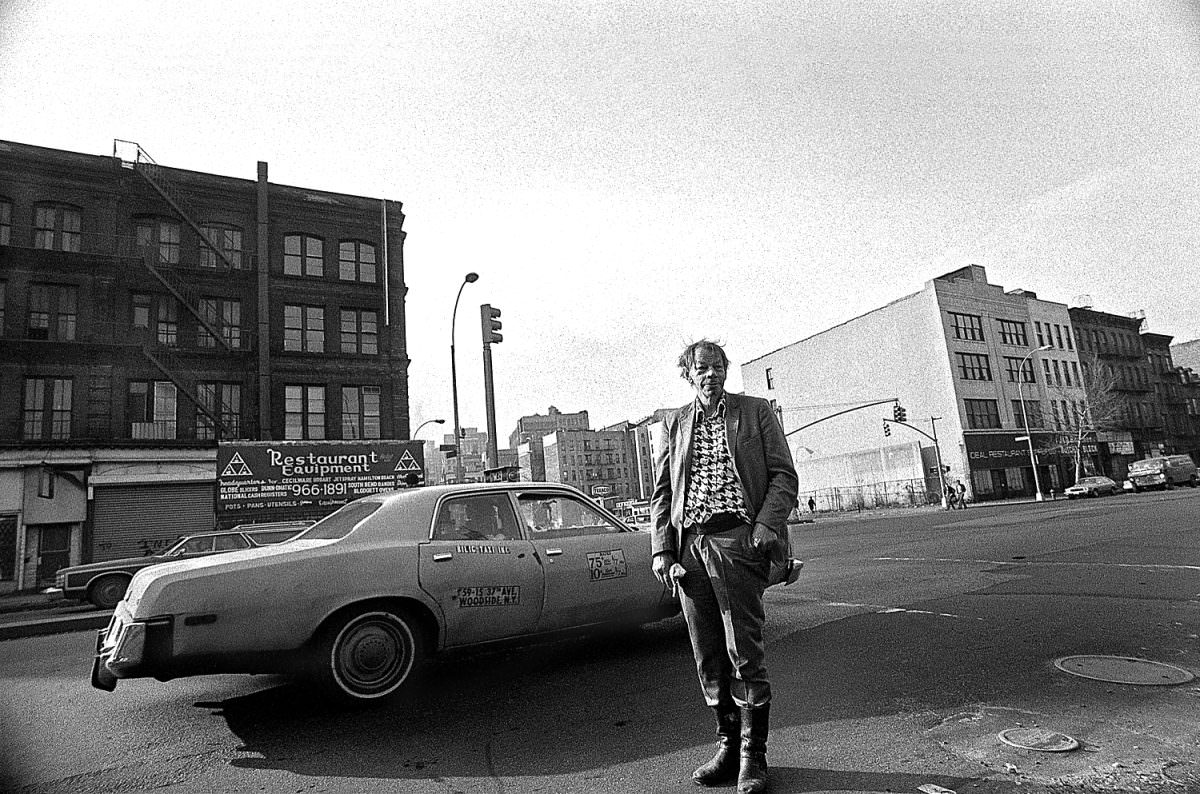
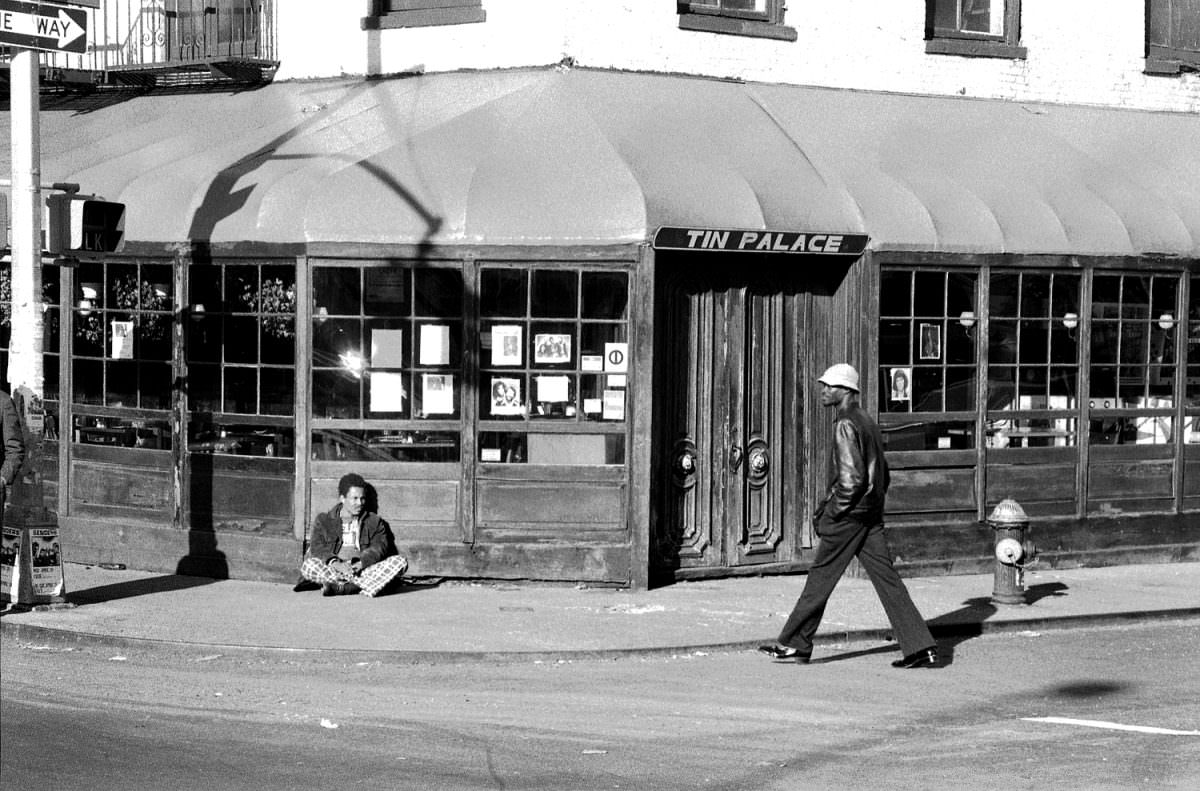
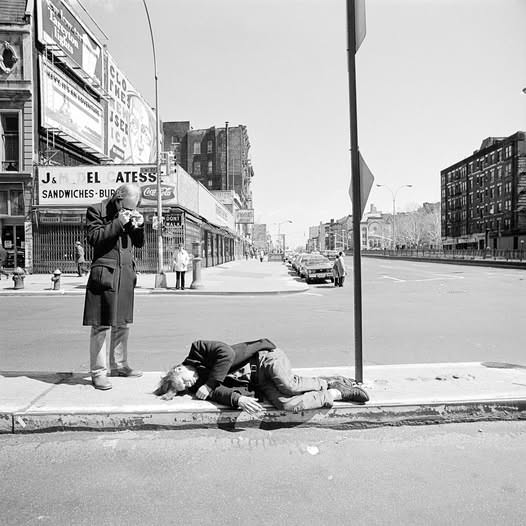
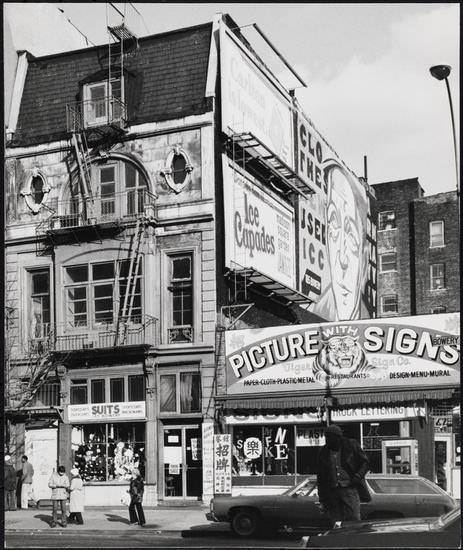
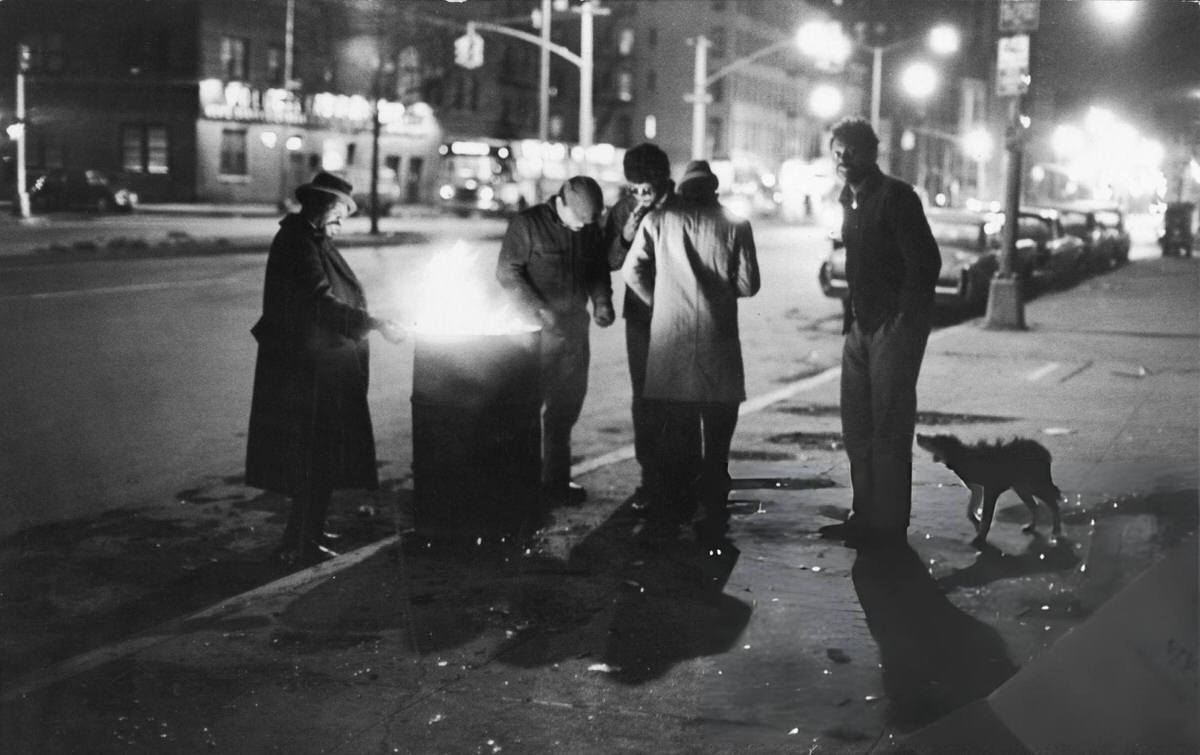
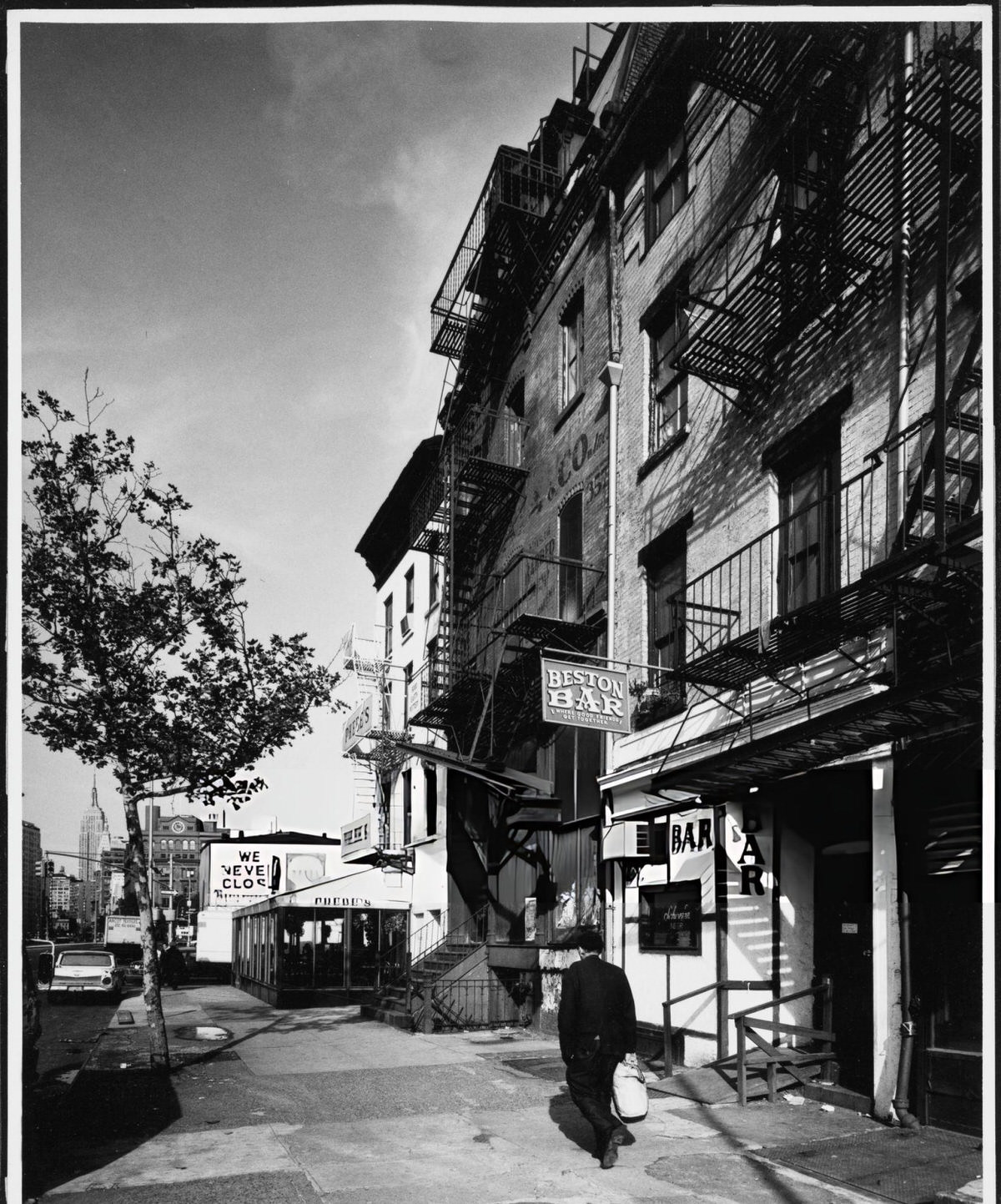
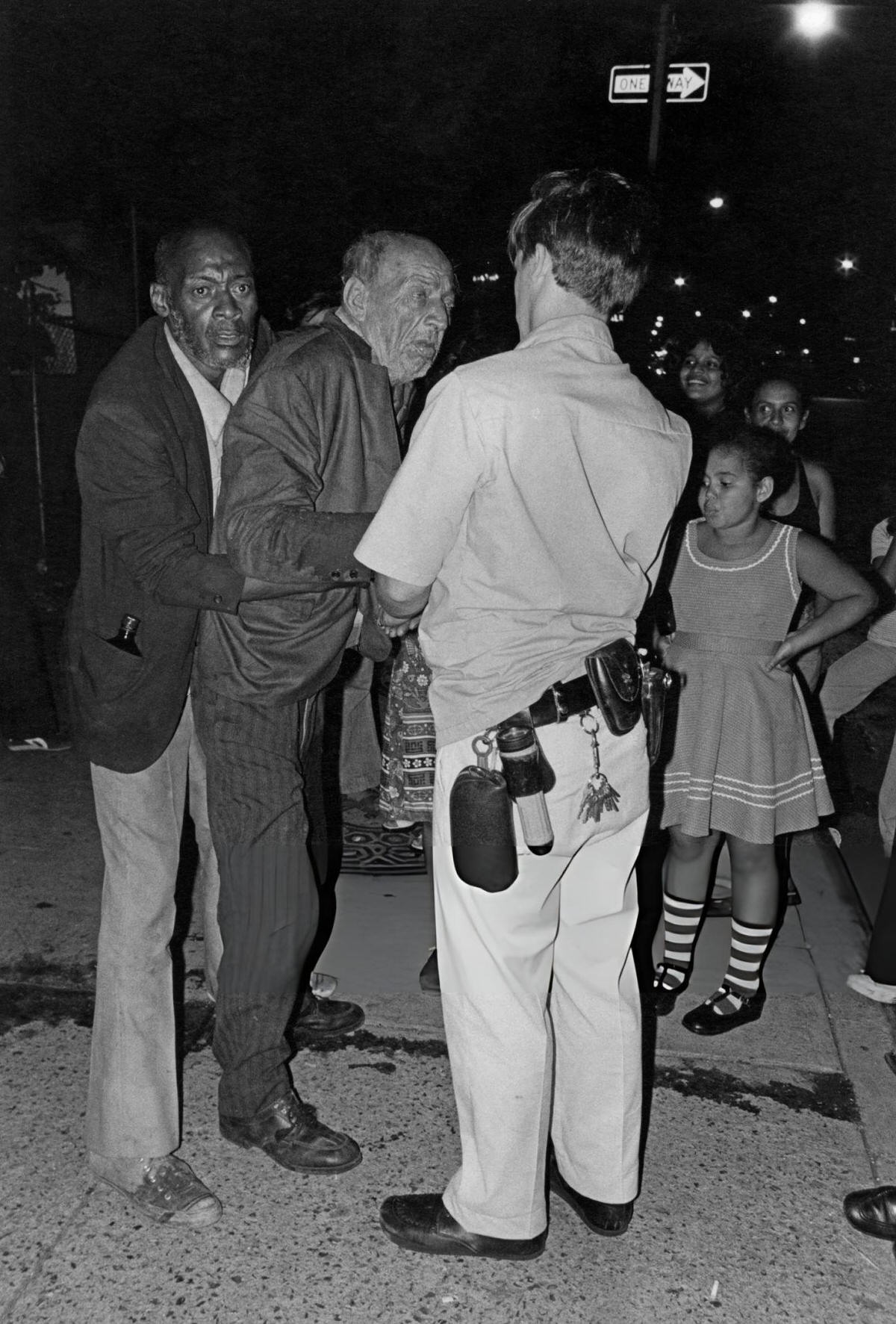
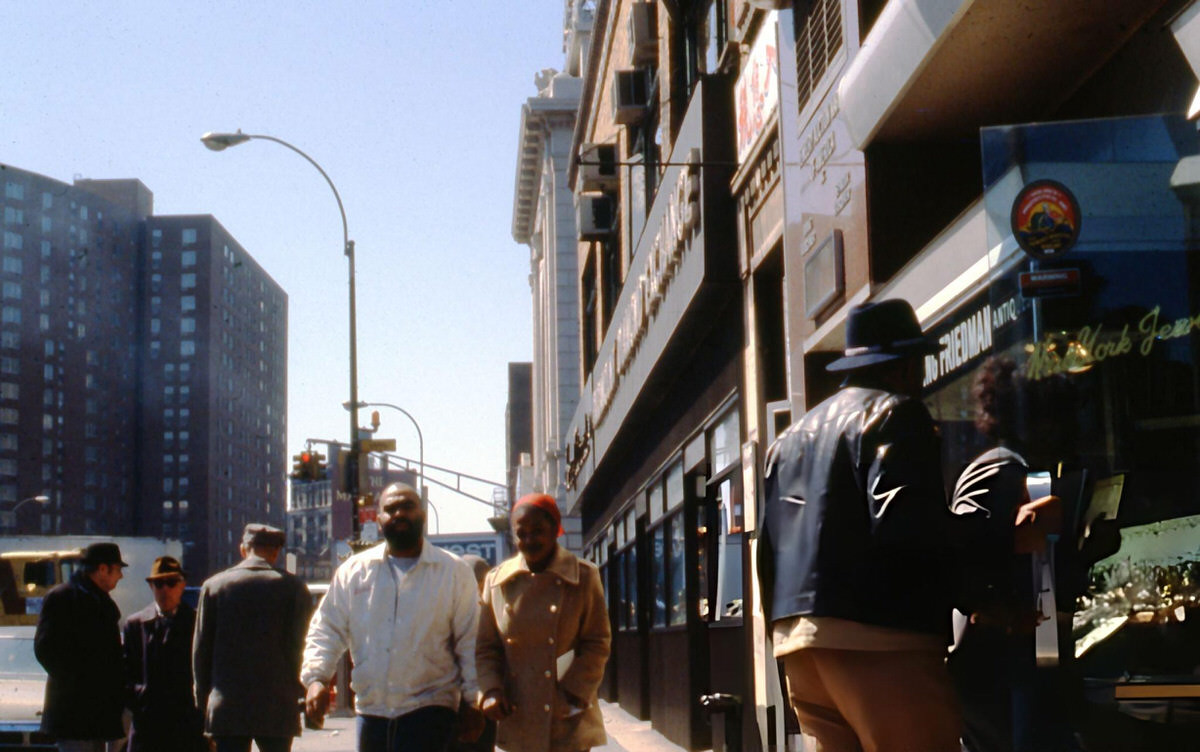
The physical proximity of CBGB to the flophouses was not symbolic. It was literal. The Whitehouse Hotel at 340 Bowery was less than two blocks north of the club’s front door. Men who slept in cage rooms for fifty cents walked past the CBGB awning every day. The bands that played the club walked past the same men going in the other direction on their way to load in equipment. Both groups used the same sidewalk, and neither group had much to say to the other. The Bowery in the 1970s was a street where radically different lives ran in parallel without intersecting.
Both groups used the same sidewalk, and neither had much to say to the other. The Bowery was a street where radically different lives ran in parallel without intersecting.
SoHo had been officially recognized as an arts district by the city in 1971, when New York changed zoning laws to allow artists to legally live in the loft buildings west of Broadway between Houston and Canal Streets. That decision formalized what had been happening informally since the early 1960s and accelerated the conversion of industrial space into artist housing. The eastern edge of SoHo pressed directly against the Bowery. As loft prices in SoHo climbed through the mid-1970s — even artist live-work spaces were going for $200 to $400 a month by the late 1970s — the pressure on the Bowery’s immediate surroundings increased. Real estate interests began looking at the Bowery’s low property values with a different kind of attention than the flophouse owners had ever anticipated.
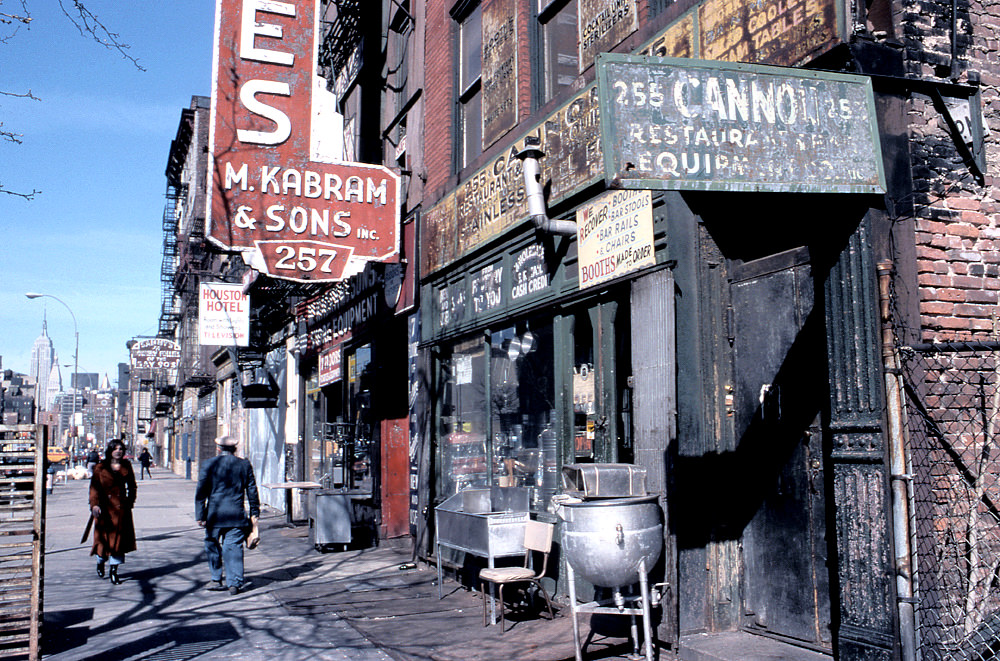
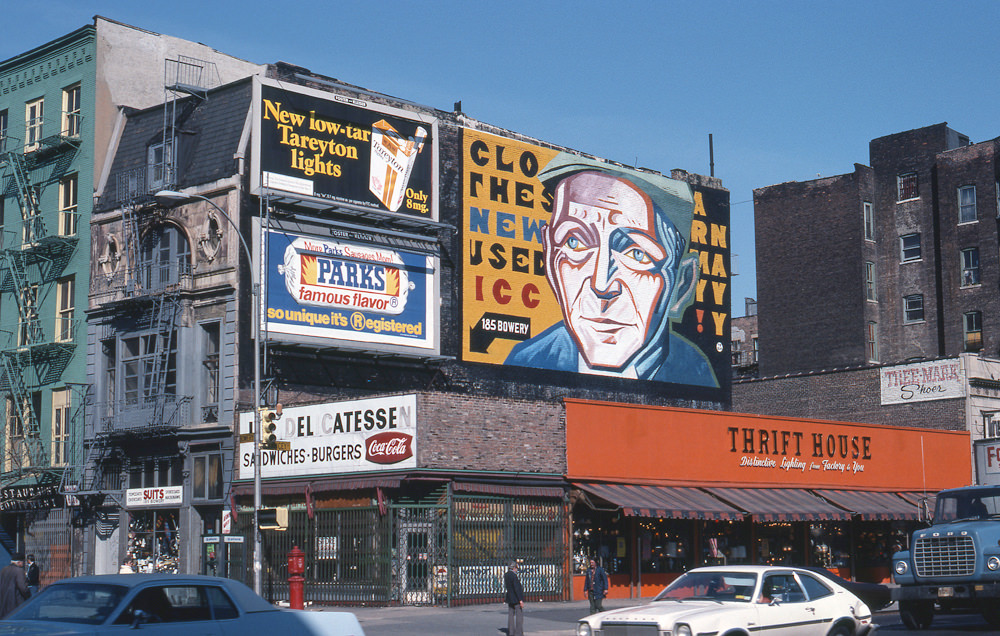
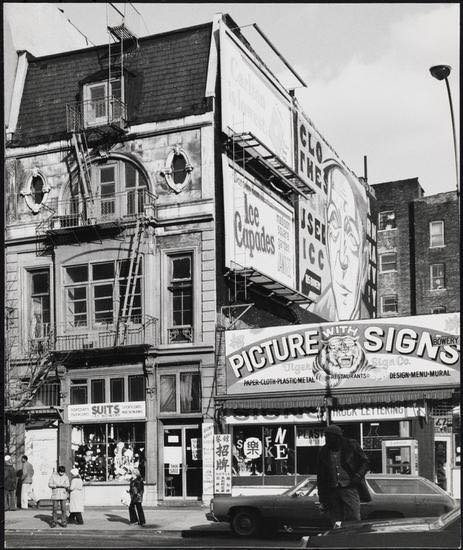
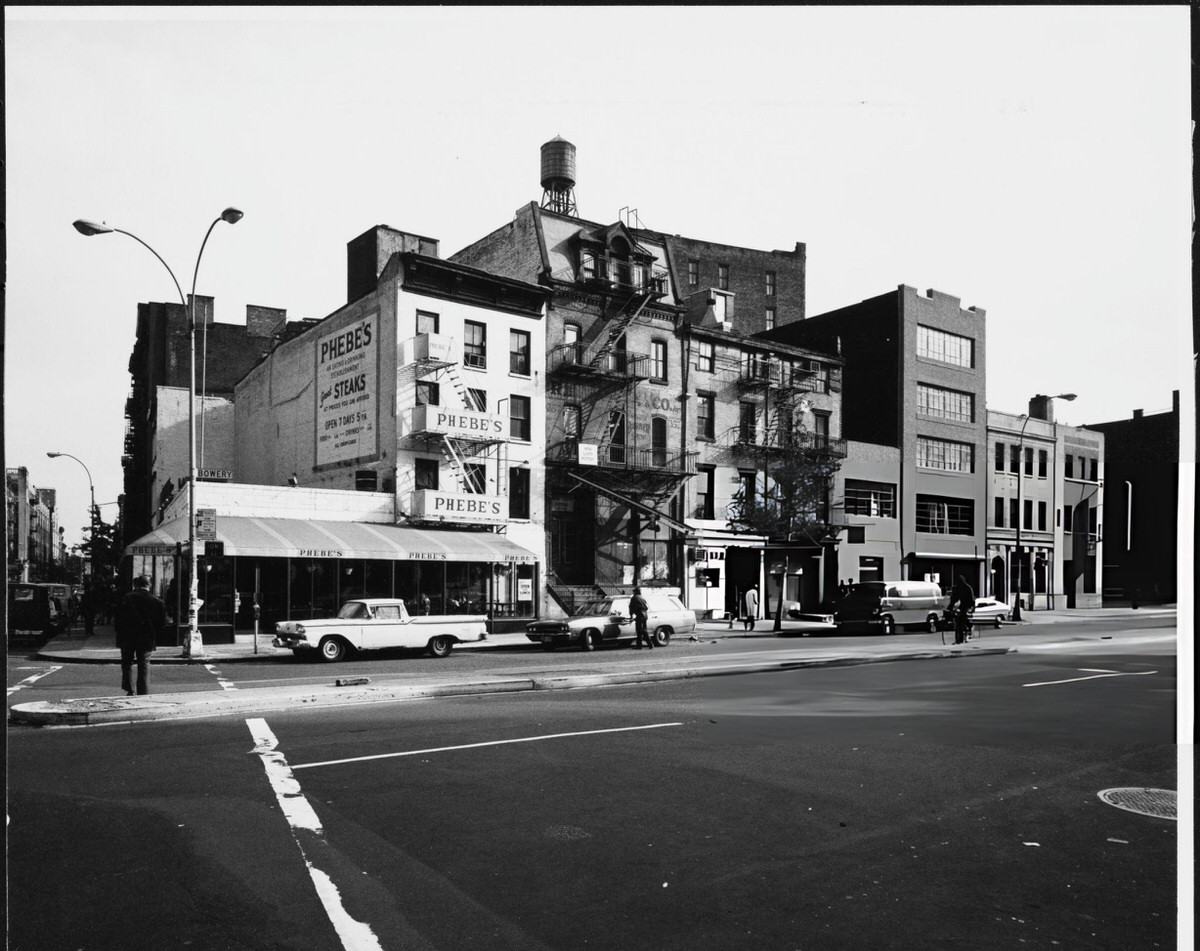
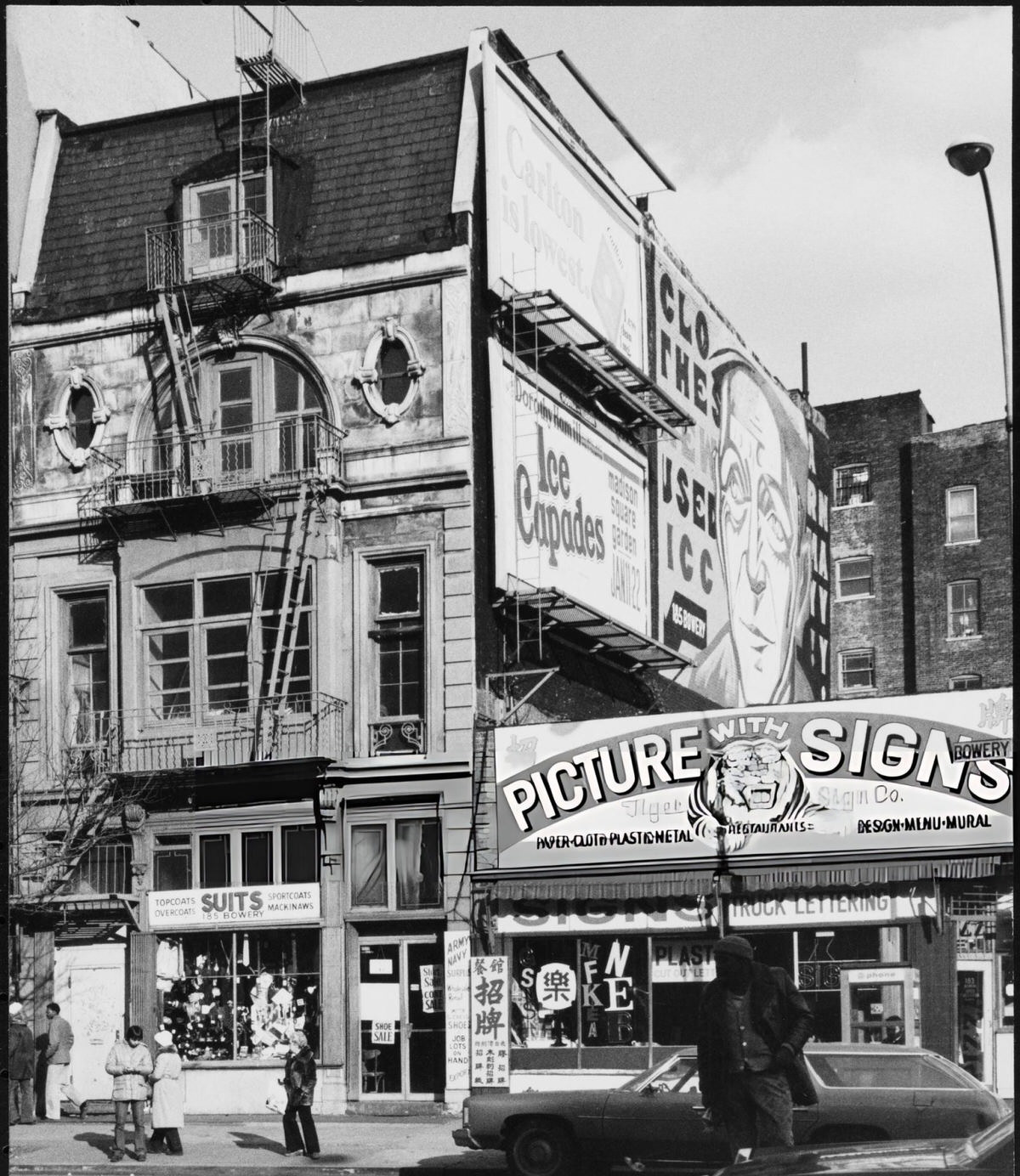
The restaurant equipment trade kept running through all of it. The blocks between Delancey and Spring Streets on the Bowery remained the place where New York’s restaurant industry came to buy commercial kitchen equipment at wholesale prices. Lighting supply houses, food service equipment dealers, and kitchen fixture wholesalers lined both sides of the street and served a steady trade of working restaurateurs from across the city. This commercial identity — completely separate from both the Skid Row reputation and the punk music scene — gave the Bowery a functional economic layer that had nothing to do with either flophouses or rock clubs.
By 1979, the Bowery was carrying three distinct identities simultaneously and managing none of them particularly well. The men in the flophouses had fewer services than they’d had a decade earlier. CBGB had become internationally known — the 1976 compilation album “Live at CBGB’s” had spread the club’s name far beyond New York — but the neighborhood around it remained exactly what it had always been. SoHo’s rising rents were pushing artists further east toward the Bowery and making the flophouse operators quietly aware that their properties were sitting on land that other people were beginning to want. Nothing resolved in the 1970s. The forces that would transform the street were in place, but the transformation itself was still ahead.

GIPHY App Key not set. Please check settings