

 Henry Parker
At the turn of the century, Astoria was still a patchwork of small villages, truck farms, and waterfront industry strung along the western edge of Queens, directly across the East River from Manhattan’s Upper East Side. The neighborhood took its name from John Jacob Astor, who had invested in local real estate in the 1830s, though Astor himself never lived there and the connection was mostly a marketing decision by local developers trying to attach a prestigious name to what was then still semi-rural land.
Getting to Manhattan from Astoria in 1900 meant taking a ferry from the foot of Main Street or Astoria Boulevard across to 92nd Street in Manhattan, or riding a steam-powered elevated train down through Long Island City to the ferry terminals at the East River’s edge. Neither option was fast or cheap for a working man. This kept Astoria somewhat isolated from Manhattan’s economy, and the population stayed modest — around 30,000 in the whole of western Queens — while Manhattan’s immigrant neighborhoods were bursting at every seam.
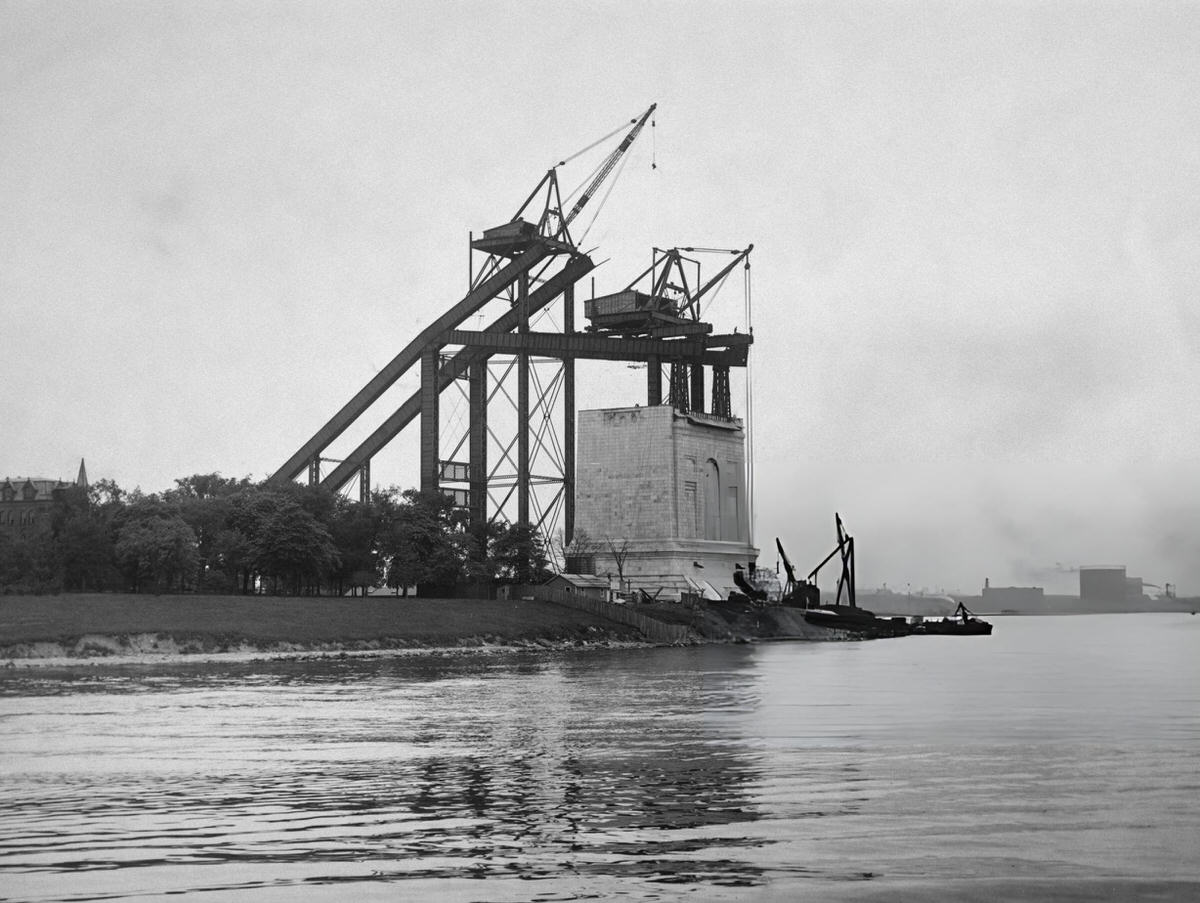
The Queensboro Bridge changed that calculation the moment it opened on March 30, 1909. For the first time, a person in Astoria could get on a streetcar, cross the bridge on the elevated trolley tracks built into the bridge’s upper deck, and arrive in midtown Manhattan in under thirty minutes. Real estate developers saw what was coming. Within two years of the bridge opening, new row houses and two-family brick homes were going up on nearly every block between 31st Street and the waterfront.
Read more
The immigrants who filled the houses
The first large wave of working-class immigrants to settle in Astoria came from Italy and Ireland, beginning seriously around 1905 and accelerating through the 1910s. Italian stonemasons and construction workers who had built the Queensboro Bridge stayed in the neighborhood after the job finished. They rented rooms on 31st Street and Ditmars Boulevard, sent for their families, and started over. Irish families, many of them already established in Manhattan, crossed the bridge looking for more space and lower rents than the Upper East Side offered.
German families had been in Astoria even longer, concentrated around the blocks near the waterfront between Halletts Point and the old village core. They ran piano factories, breweries, and small machine shops along the waterfront. The Steinway piano company had operated a factory complex at the northern tip of Astoria since 1872, and the surrounding streets — still called Steinway today — were essentially a company town, with worker housing, a post office, and a Steinway-owned park all clustered within a few blocks of the factory.
Hollywood on the East River
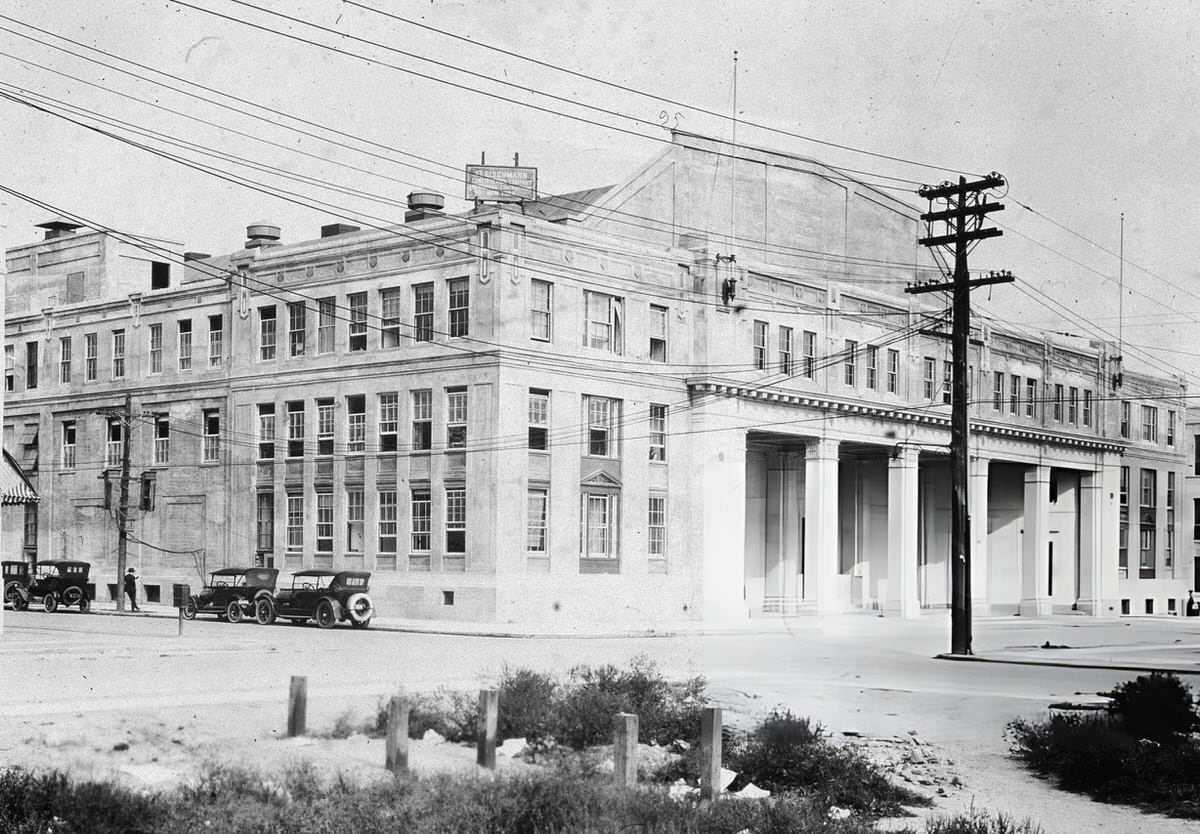
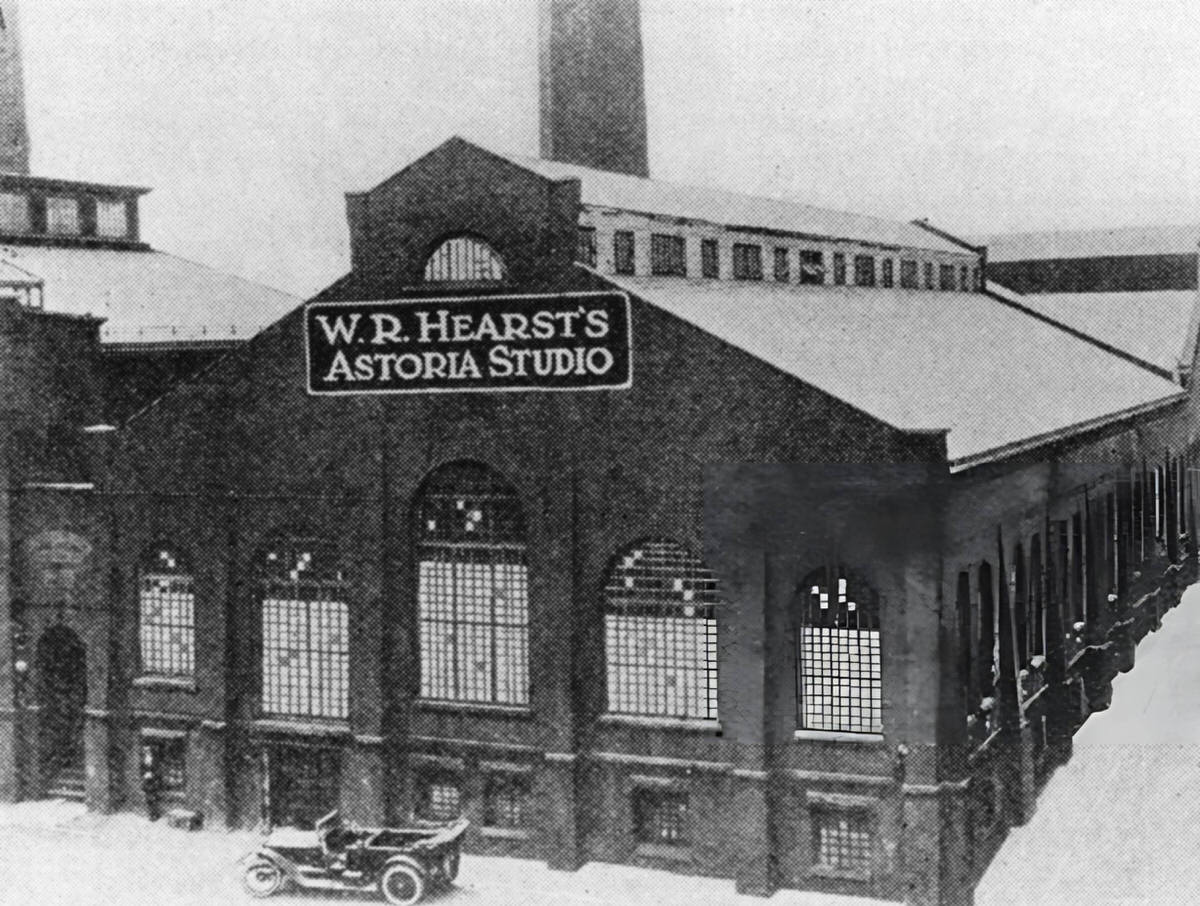
In 1920, Famous Players-Lasky — which shortly after became Paramount Pictures — opened a massive film production studio at 34-31 35th Avenue in Astoria. The studio was built specifically to take advantage of New York City’s talent pool of theater actors, its skilled technical workers, and its proximity to the country’s largest advertising and fashion industries. The building was enormous: a full city block long, with multiple shooting stages, costume shops, carpentry departments, and its own electrical power plant.
Through the 1920s, Astoria Studios was one of the most productive film lots in the country. The Marx Brothers filmed “The Cocoanuts” there in 1929, their first feature film, adapted directly from their Broadway show. W.C. Fields worked there. Gloria Swanson shot several films on those stages. The neighborhood around the studio filled up with actors, directors, set painters, and electricians who rented apartments on the surrounding streets and ate at the diners and coffee shops along Ditmars Boulevard and 31st Street.
Paramount shifted its primary production to Hollywood in the early 1930s, drawn by the reliable California weather that allowed outdoor shooting year-round. The Astoria studio did not close — it was taken over by the U.S. Army Signal Corps during World War II, which used it to produce training films, and afterward was leased to independent producers — but the era of major studio features being shot in Queens was over by 1933.
The Greek arrival
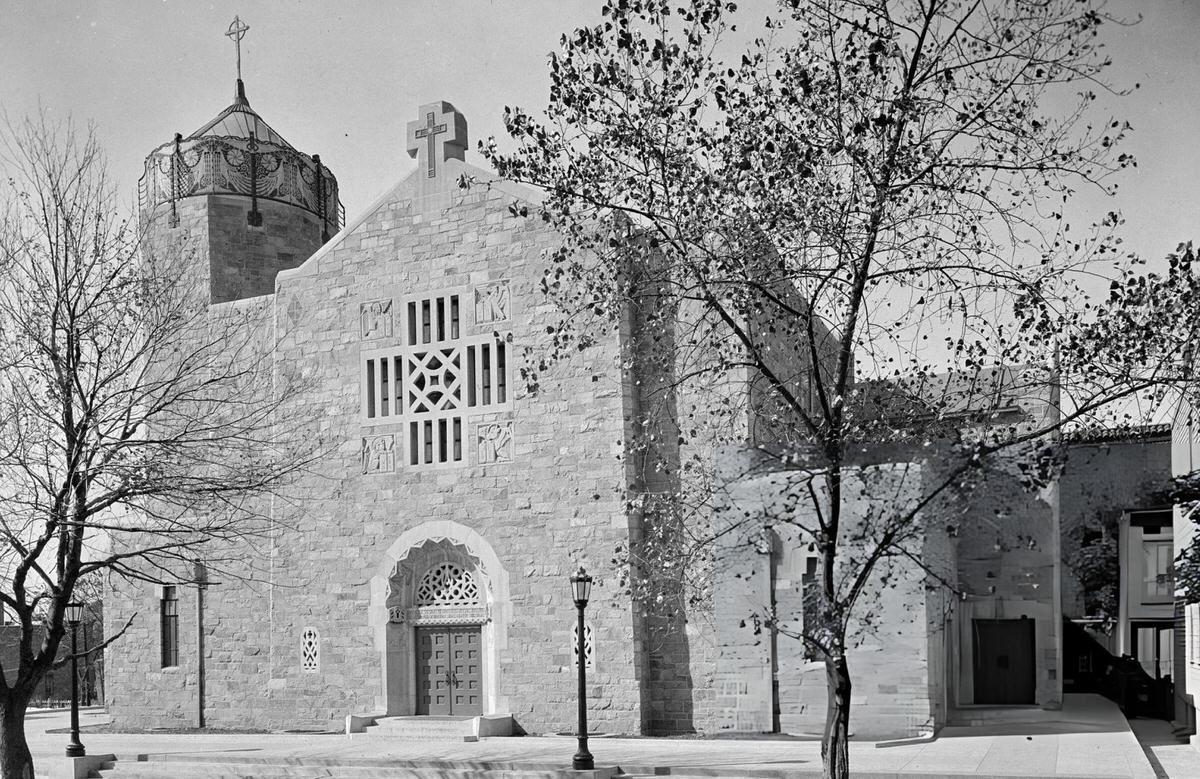
Greek immigrants had been arriving in Astoria in small numbers since the 1920s, but the community’s real growth came in two distinct waves. The first was after World War II, when Greek immigrants displaced by the war and the subsequent Greek Civil War came to New York through existing family networks and settled primarily in Astoria because housing was affordable and the neighborhood already had a small Greek Orthodox church community anchored around St. Demetrios on 30th Drive, established in 1927.
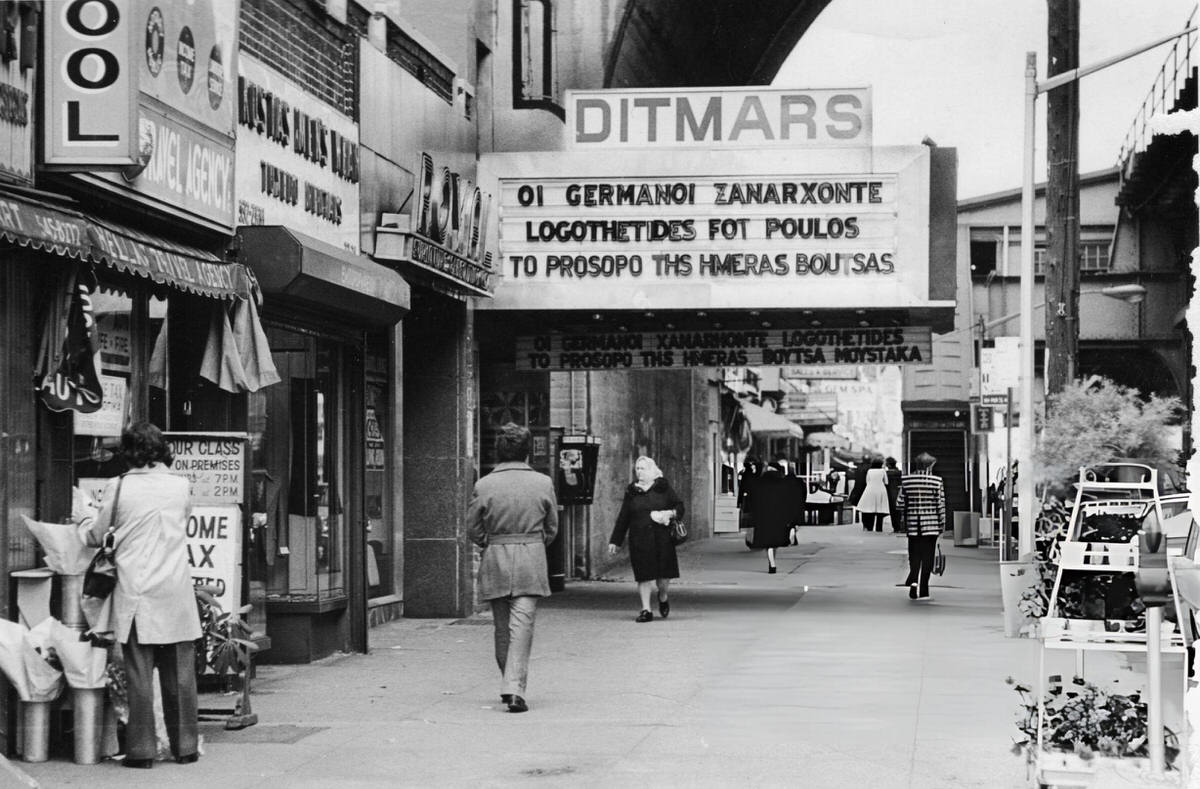
The second and larger wave came after the U.S. Immigration Act of 1965, which abolished the national-origin quotas that had capped immigration from Southern and Eastern Europe since 1924. Greek immigration to New York rose sharply between 1966 and 1975. Astoria was the destination because families already there pulled new arrivals directly into the neighborhood. By 1970, the Greek population in Astoria had reached an estimated 60,000, making it the largest Greek community outside of Greece itself — a fact the neighborhood carried with genuine pride.
1909
Queensboro Bridge opens. Streetcar line across the upper deck connects Astoria to midtown in under 30 minutes.
1916
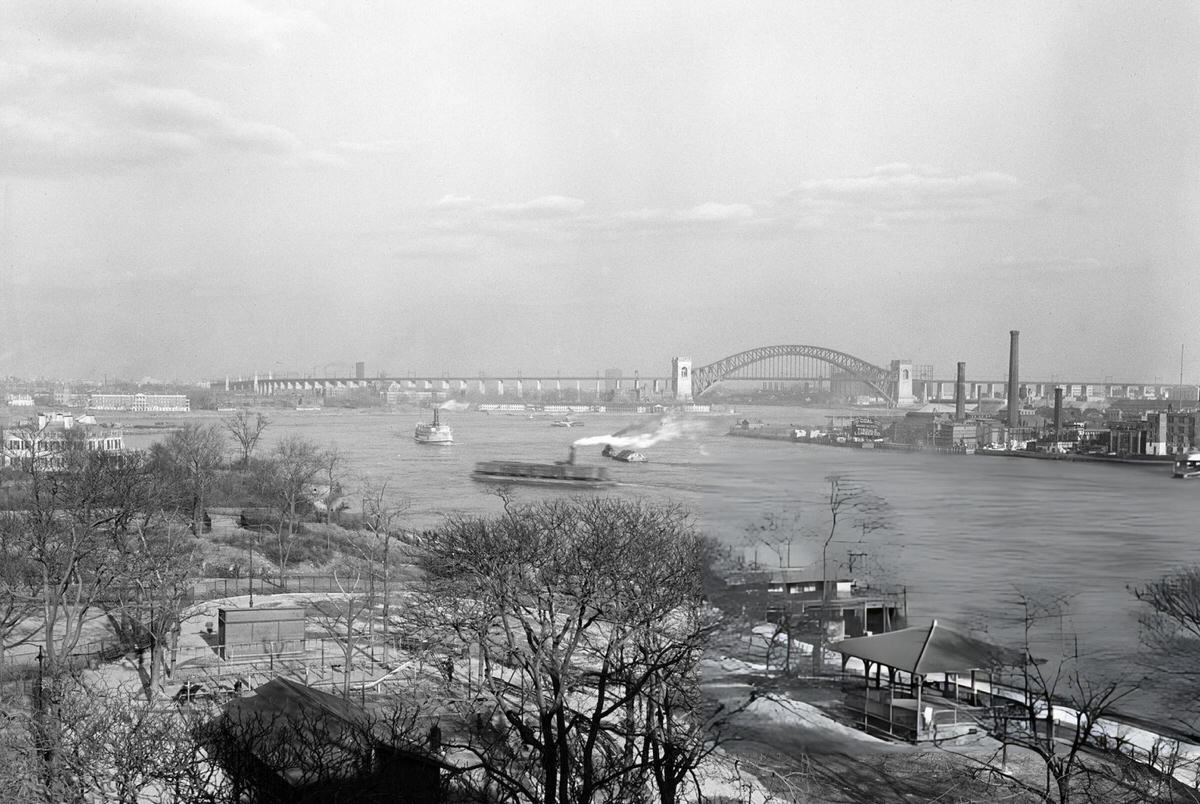
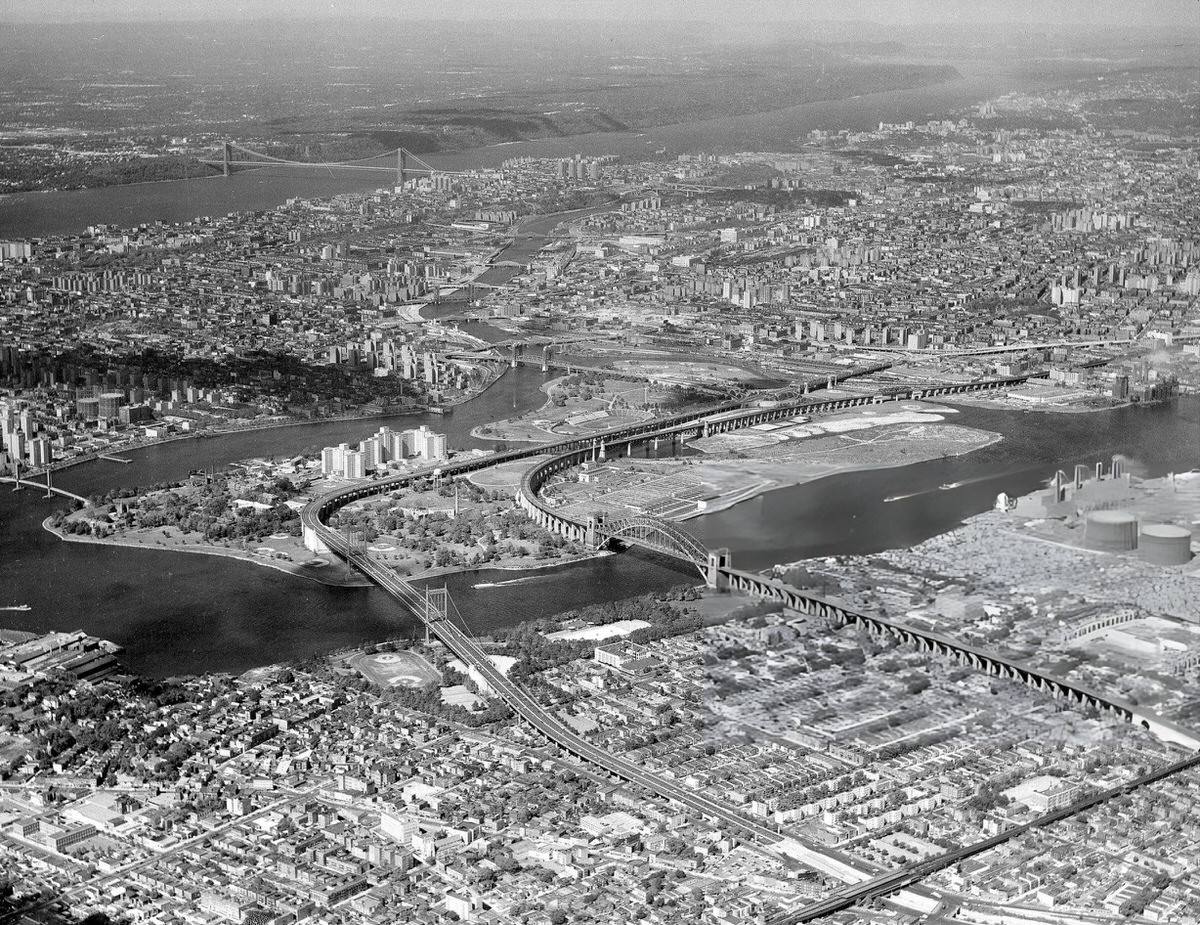
Hell Gate rail bridge opens at northern Astoria, linking Queens to the Bronx and the Northeast rail corridor.
1920
Famous Players-Lasky opens Astoria Studios on 35th Avenue. Major Hollywood films produced here through the early 1930s.
1932
IND subway’s Queens line opens, connecting Astoria directly to Manhattan via the N and R trains for the first time.
1965
U.S. Immigration Act abolishes national-origin quotas. Greek immigration to Astoria surges through the late 1960s and 1970s.
What the neighborhood looked like day to day
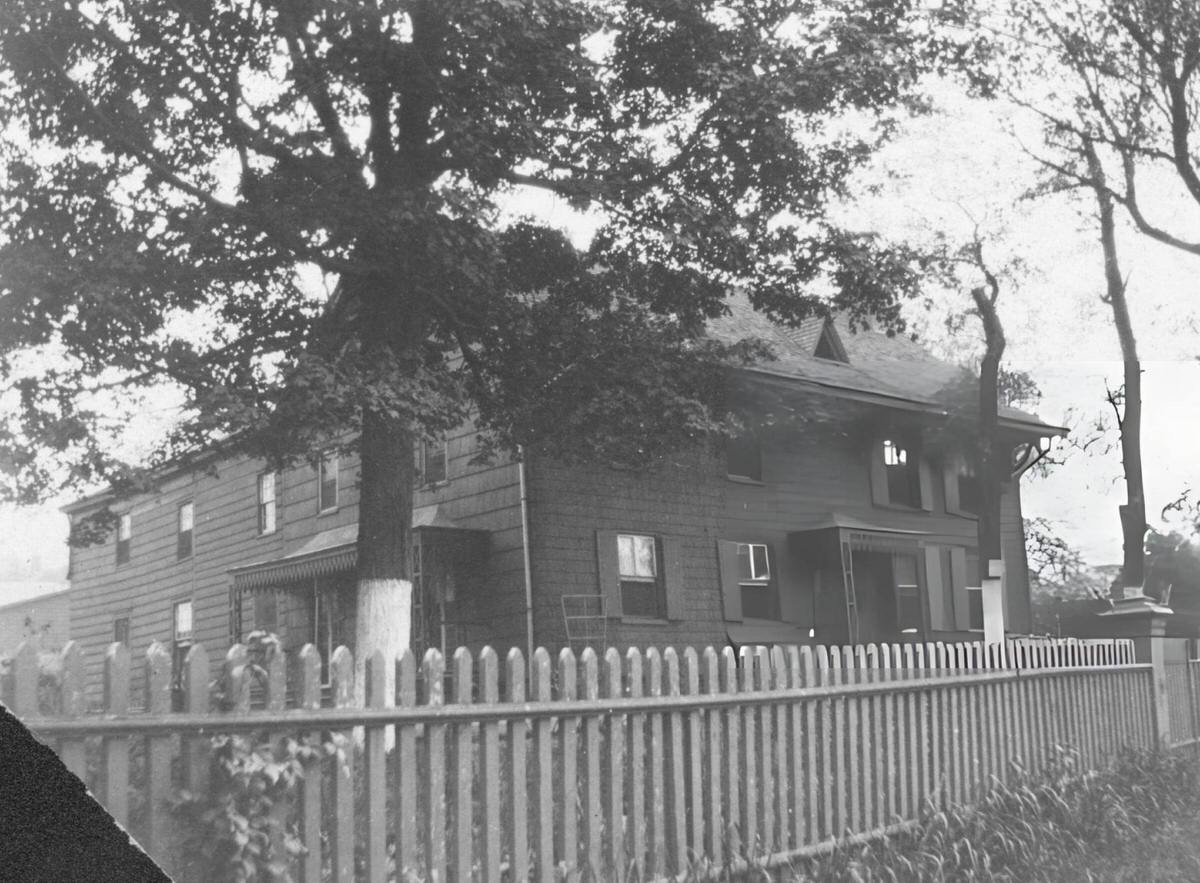
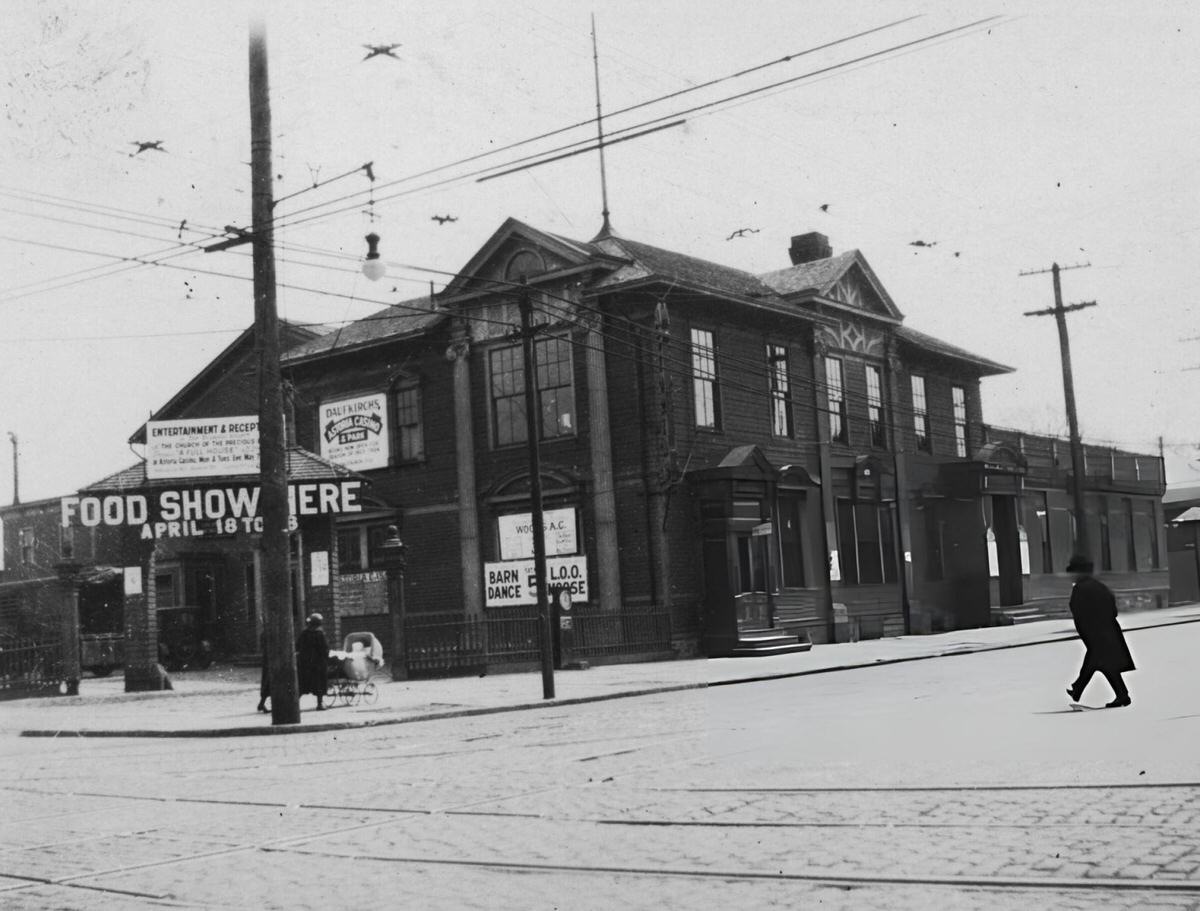
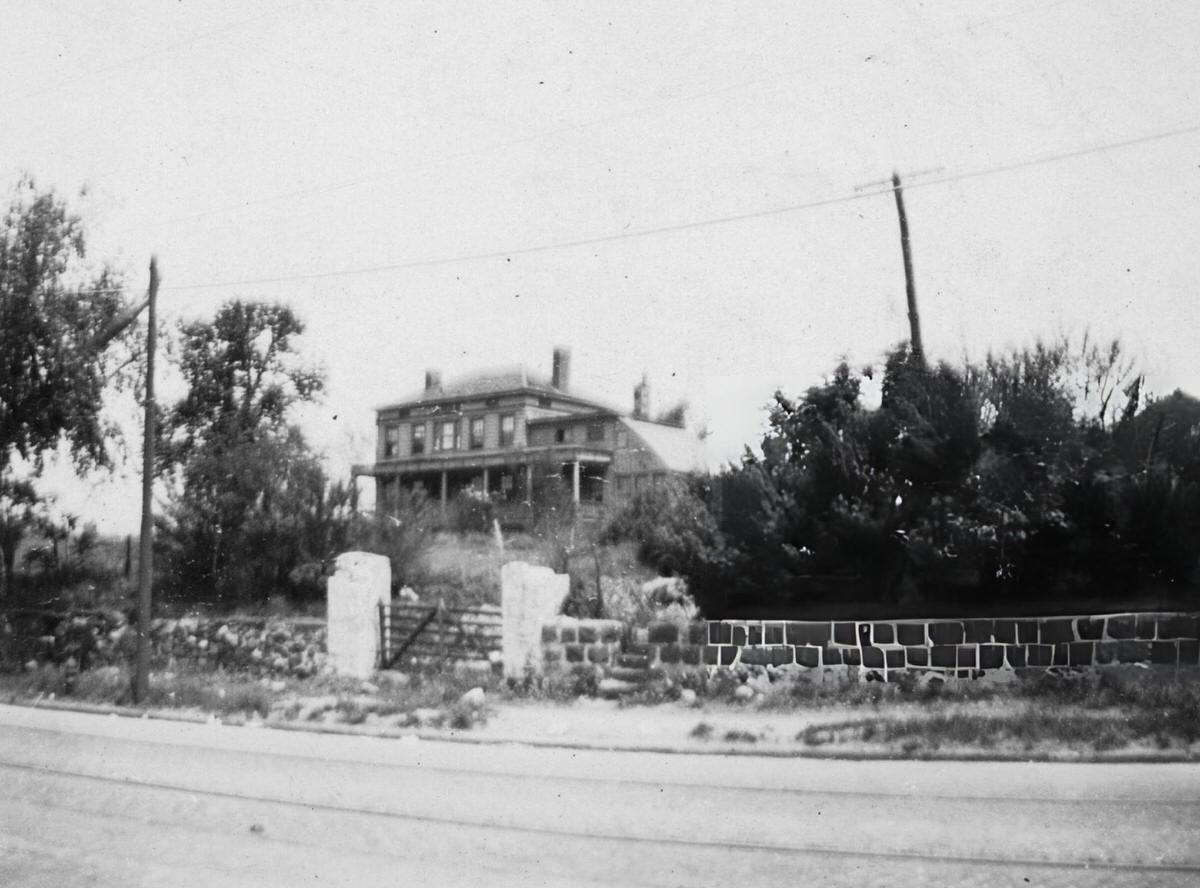
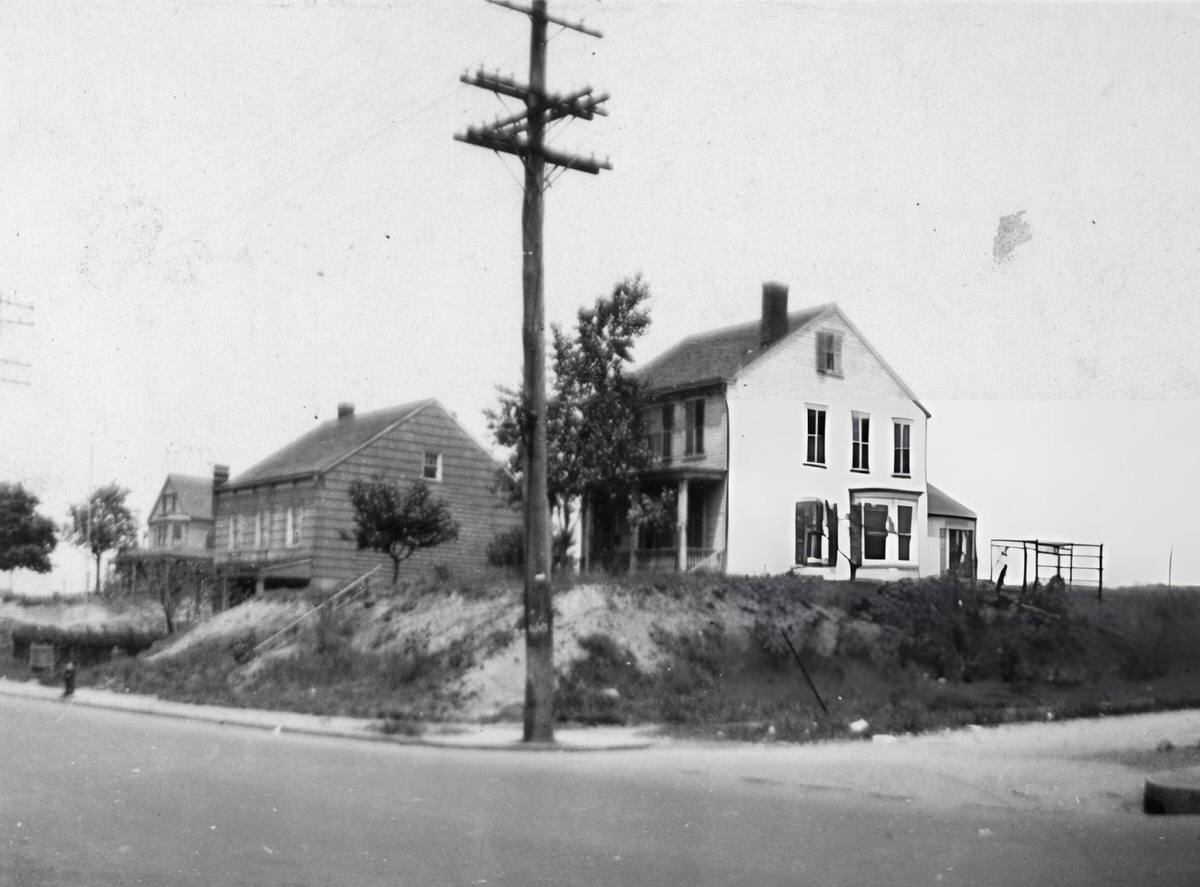
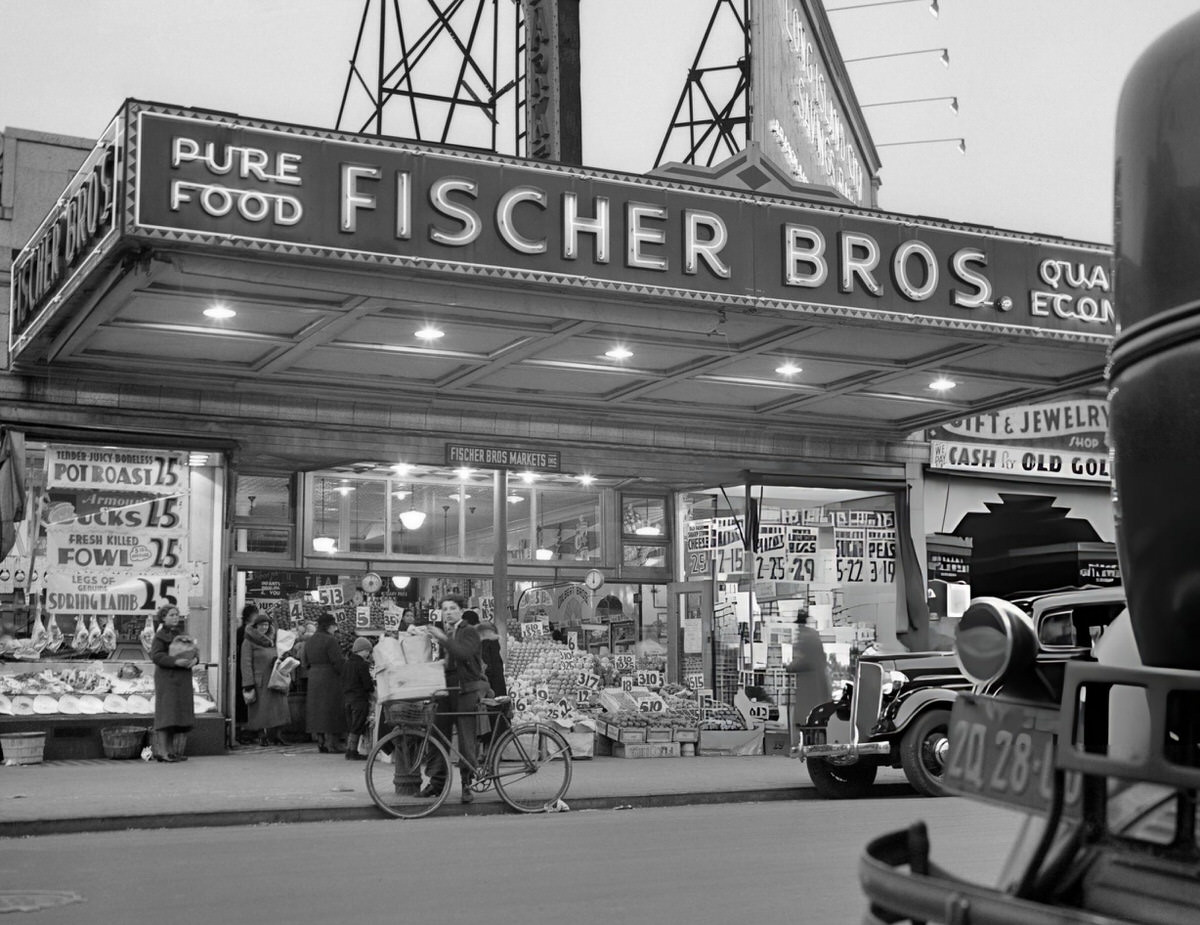
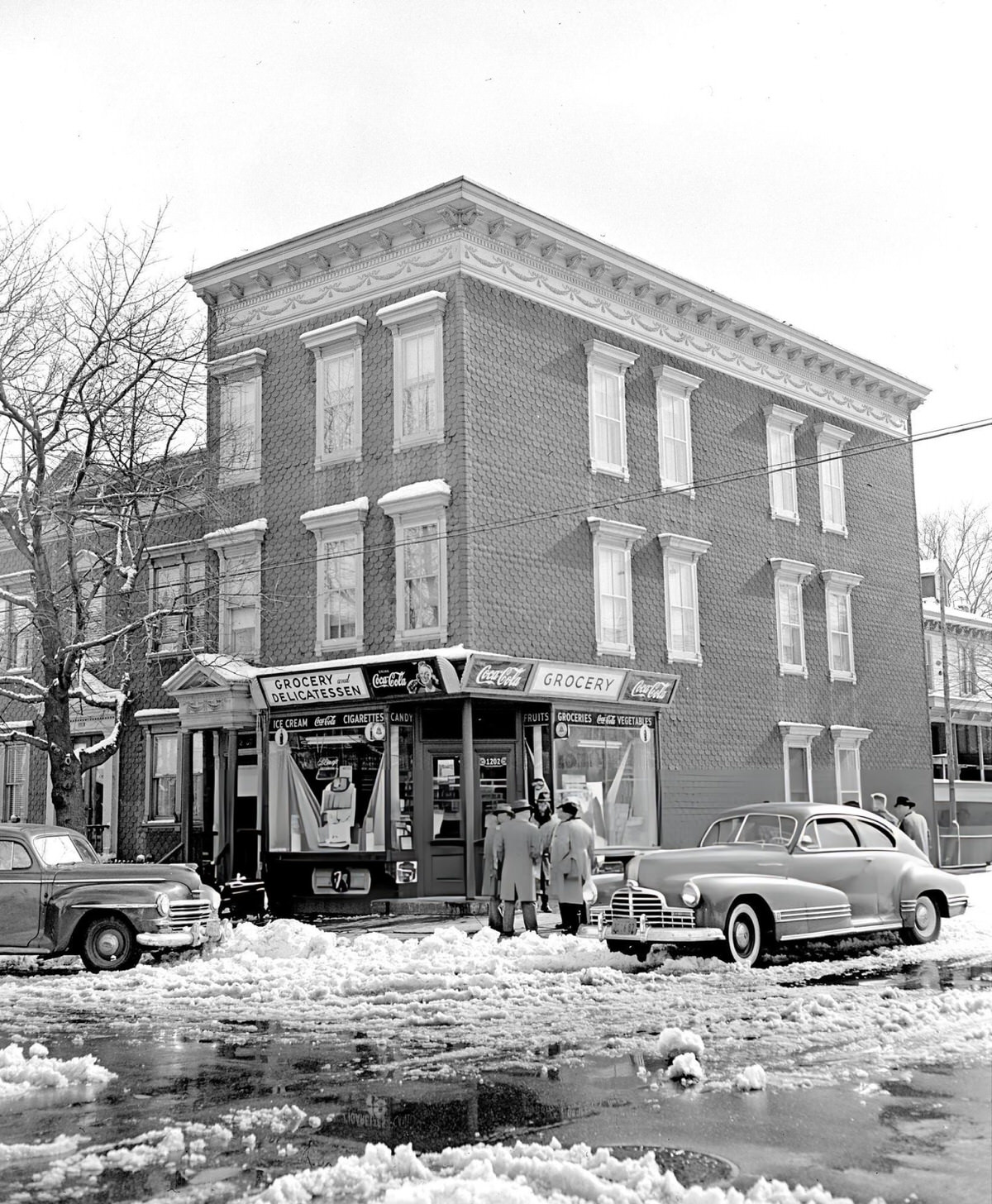
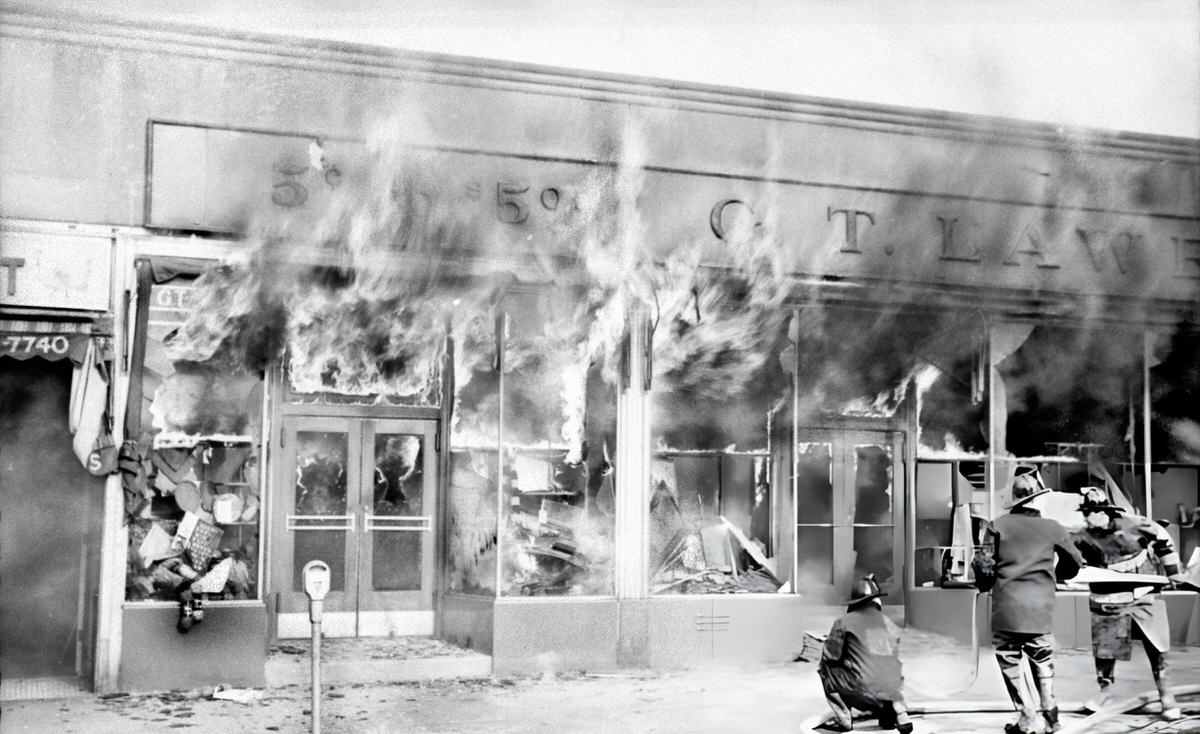
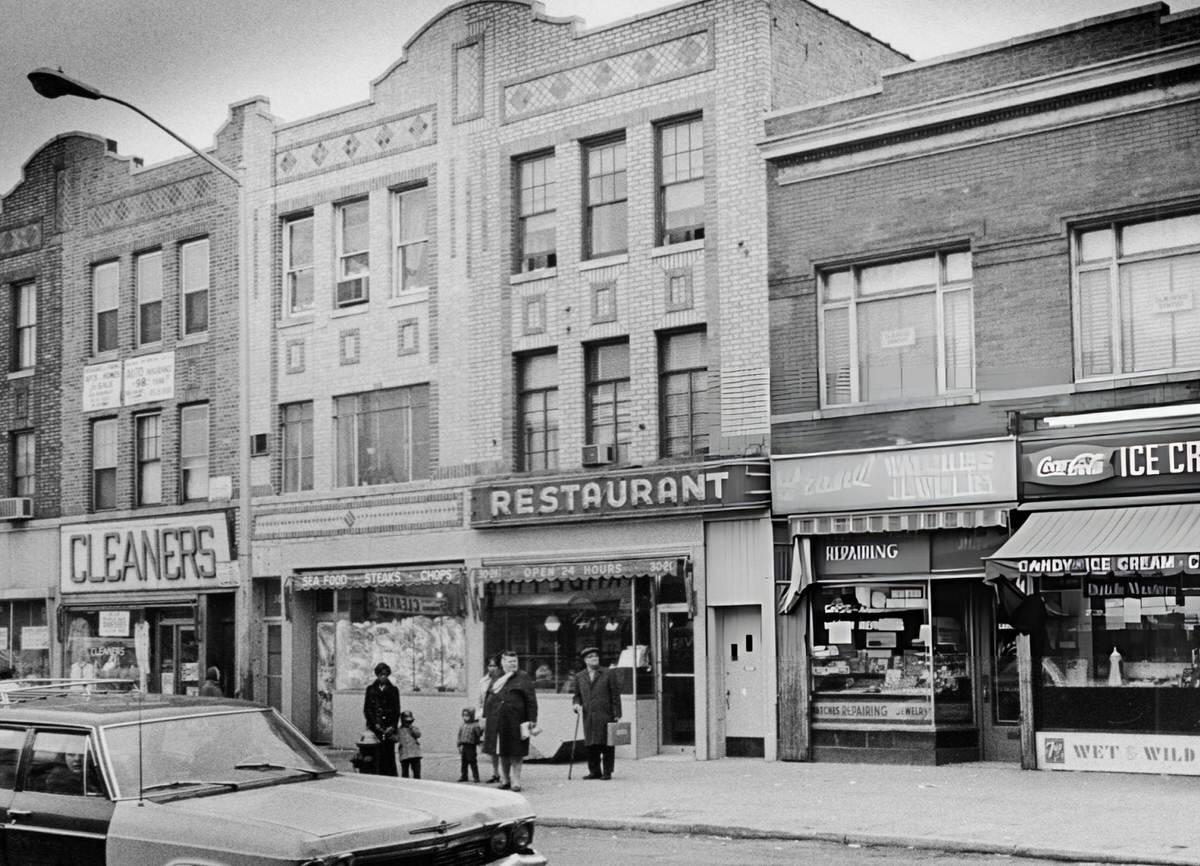
By the 1940s, Astoria’s residential streets had taken on the physical character they would hold for the next three decades. The housing stock was almost entirely two- and three-family brick homes built between 1910 and 1930, set close together on narrow lots with small front stoops and backyard gardens. The commercial strips ran along Ditmars Boulevard, 31st Street, Steinway Street, and Broadway. Each street had its own character. Steinway Street was the main shopping corridor, wide and busy, with department stores, movie theaters, and the kind of hardware and dry goods shops that a family could spend a whole Saturday on.
The elevated N train tracks ran down 31st Street and then along Astoria Boulevard, casting the blocks underneath in permanent shadow and filling apartments near the line with the sound of steel wheels every few minutes. Families who could afford it rented on the blocks set back from the el. Those who could not learned to talk through the noise the way people who live near an airport learn to pause mid-sentence when a plane goes over.
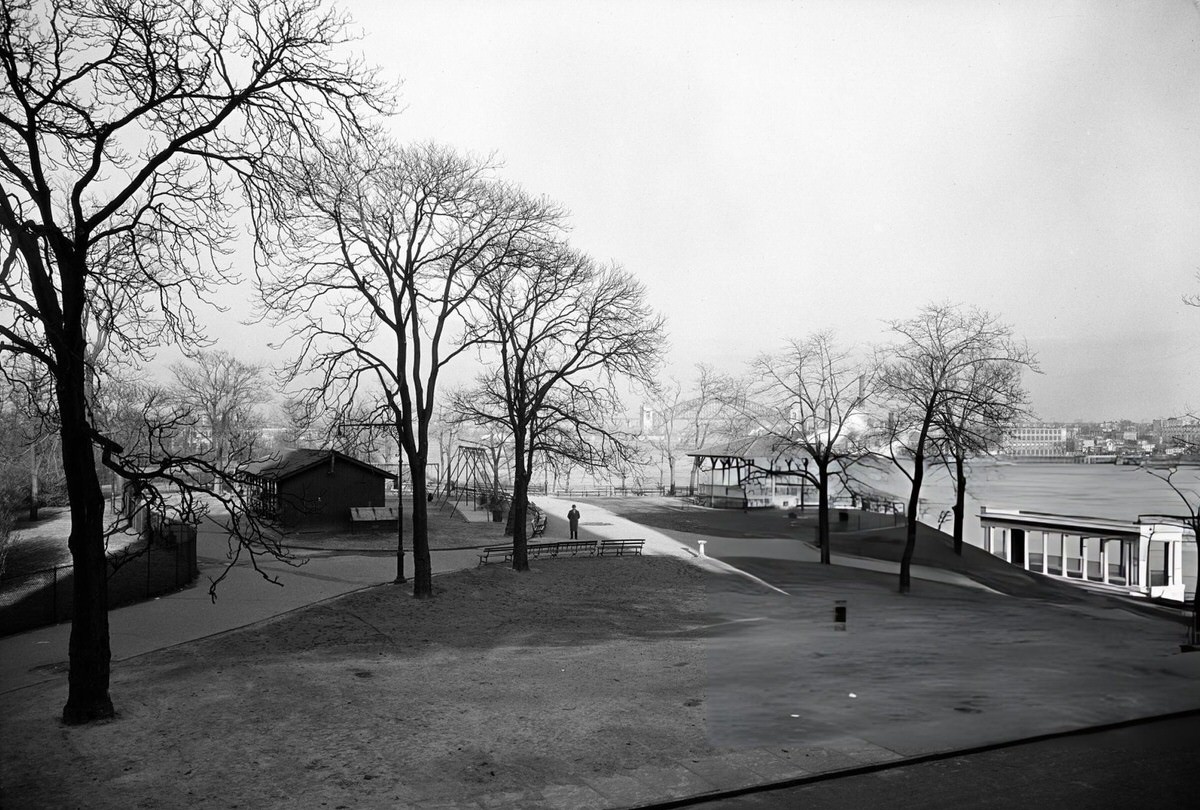
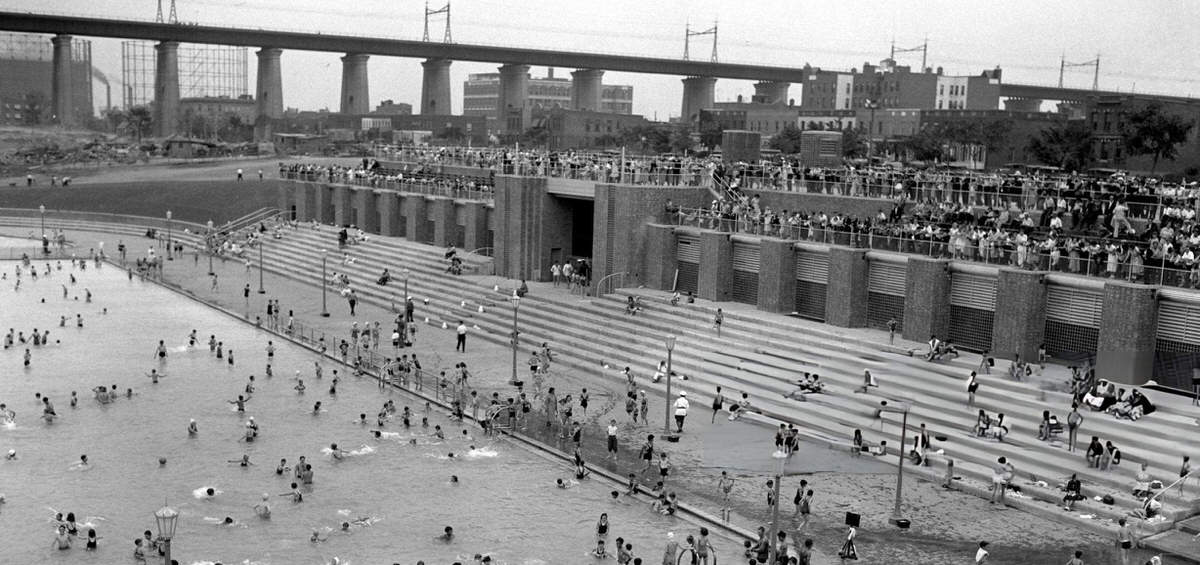
Astoria Park along the East River waterfront was the neighborhood’s outdoor living room. Opened in 1913 on land the city had purchased from private owners, the park ran from the foot of the Hell Gate Bridge south along the riverbank. In summer, the public pool at the park’s southern end — opened in 1936 as a WPA project and one of the largest outdoor pools ever built in the United States — drew thousands of people from across Queens every weekend. On hot nights, families spread blankets on the grass along the river and stayed until well past dark.

GIPHY App Key not set. Please check settings