

 Frederick Victor
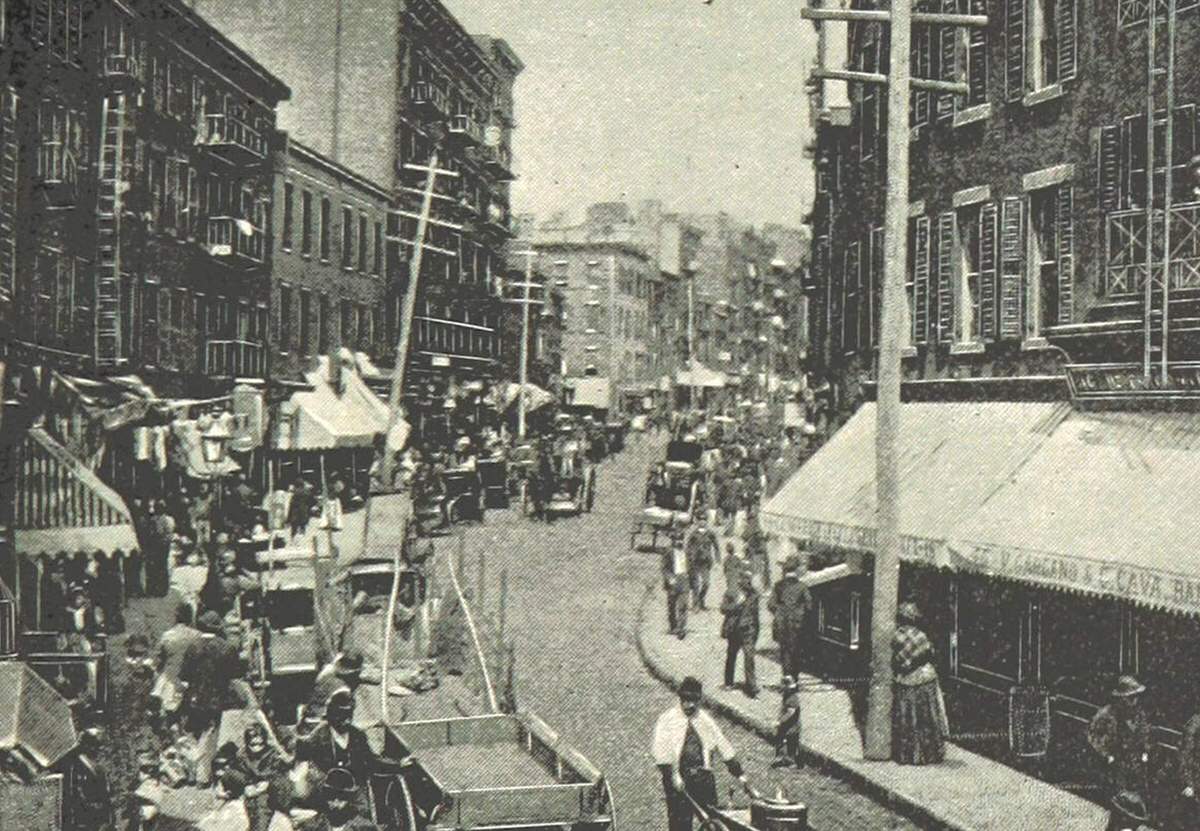
Mulberry Street runs roughly north to south through what is now Chinatown in lower Manhattan. Around Bayard Street, it takes a sharp curve — that curve was the Bend. It was not a large area. The blocks that made up Mulberry Bend covered only a few acres between Bayard, Park, Baxter, and Mulberry Streets. But by the 1880s, those few acres held some of the most densely packed housing in the entire world.
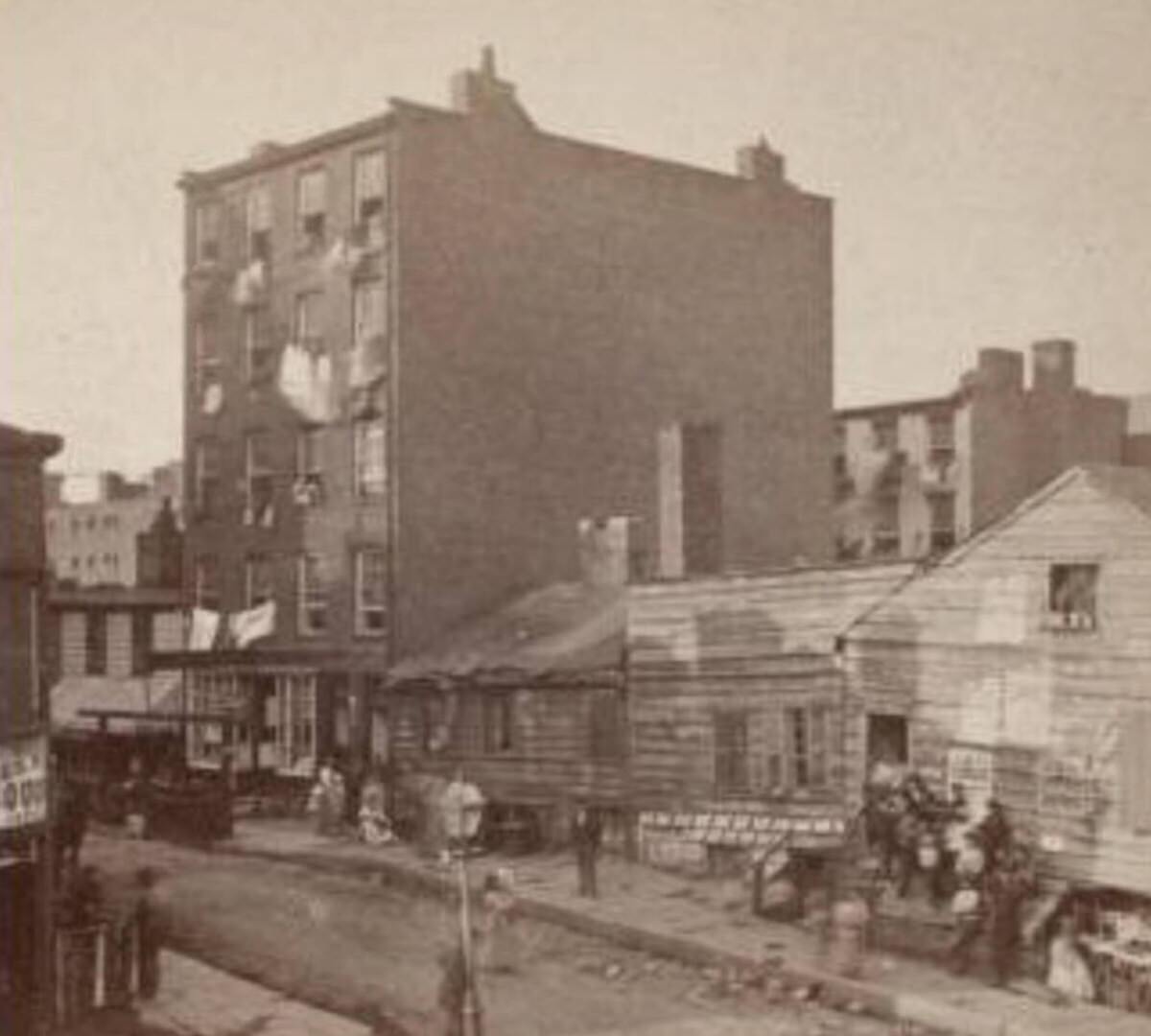
The buildings were old even then. Most had been built in the 1830s and 1840s as modest row houses for working-class New Yorkers. By the time the Italian immigrants arrived in large numbers, those houses had been converted into multi-family tenements — walls knocked out, floors subdivided, every room rented separately. A building designed for one family now held eight or ten. Landlords collected rent from each room individually and spent almost nothing on maintenance.
The tenements at the Bend were not the newer-style dumbbell tenements that reformers had pushed for under the 1879 Tenement House Act. Those at least had narrow air shafts between buildings. The structures at Mulberry Bend were older — solid blocks of brick with interior rooms that received no direct light at any hour of the day. People lived and slept in rooms where the sun had never reached the walls.
Read more
Who lived there and why
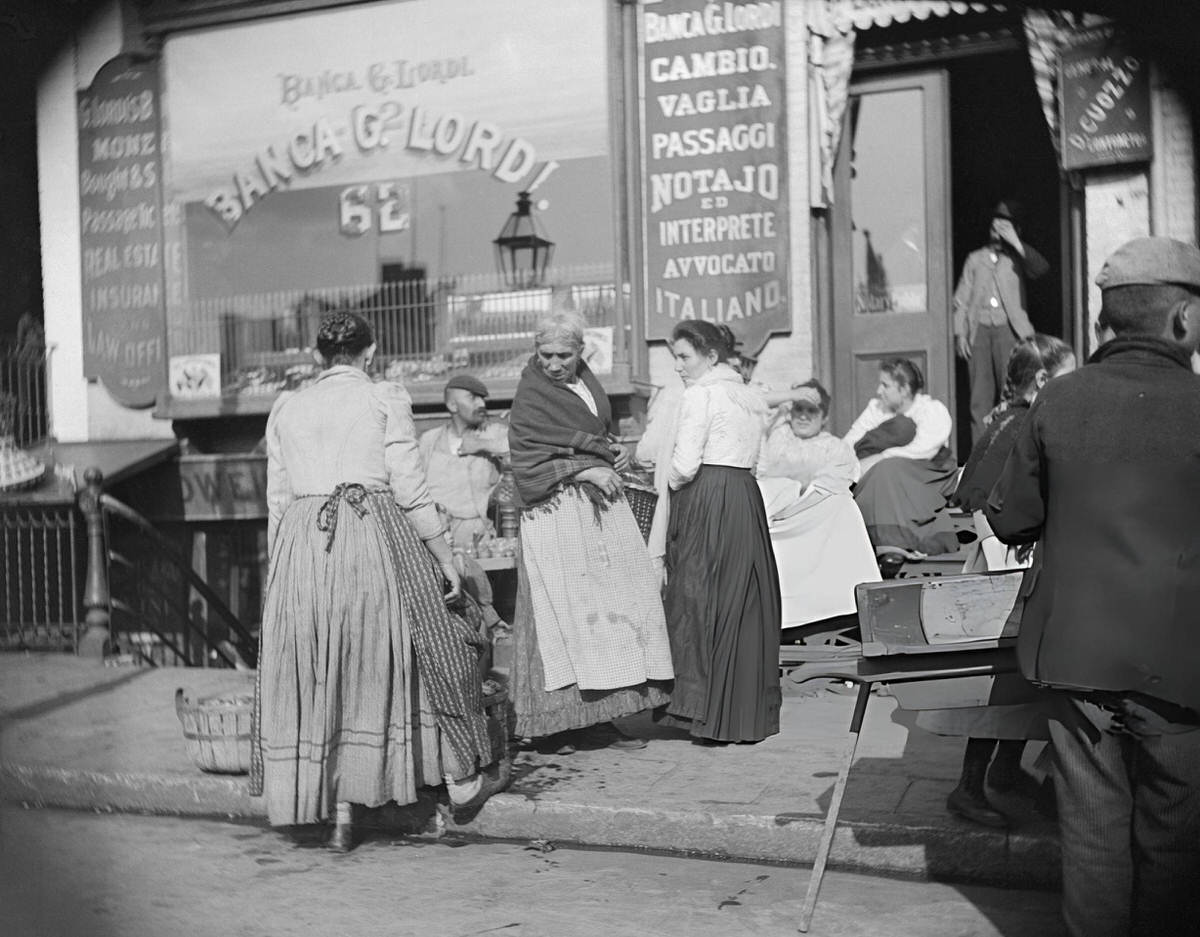
The residents of Mulberry Bend were almost entirely from southern Italy — Sicily, Calabria, Campania, and Basilicata. These were the poorest regions of a poor country. Drought, a collapsed sulfur mining industry, and heavy taxation under the newly unified Italian government had pushed millions off the land in the 1870s and 1880s. The steamship companies offered cheap passage, sometimes as low as fifteen dollars, and labor recruiters called padroni met new arrivals at the docks and steered them directly toward the tenements on Mulberry Street.
The padrone system was built on control. A padrone collected a fee for finding a man work — usually on railroad gangs in New Jersey and Pennsylvania, or in city construction — and took a cut of his wages in return. He also arranged housing, which usually meant a bunk in a basement or a spot on a floor in the Bend. New arrivals had almost no way to navigate the city without him, and most spoke no English at all when they stepped off the boat at Castle Garden or, after 1892, Ellis Island.
Inside the apartments
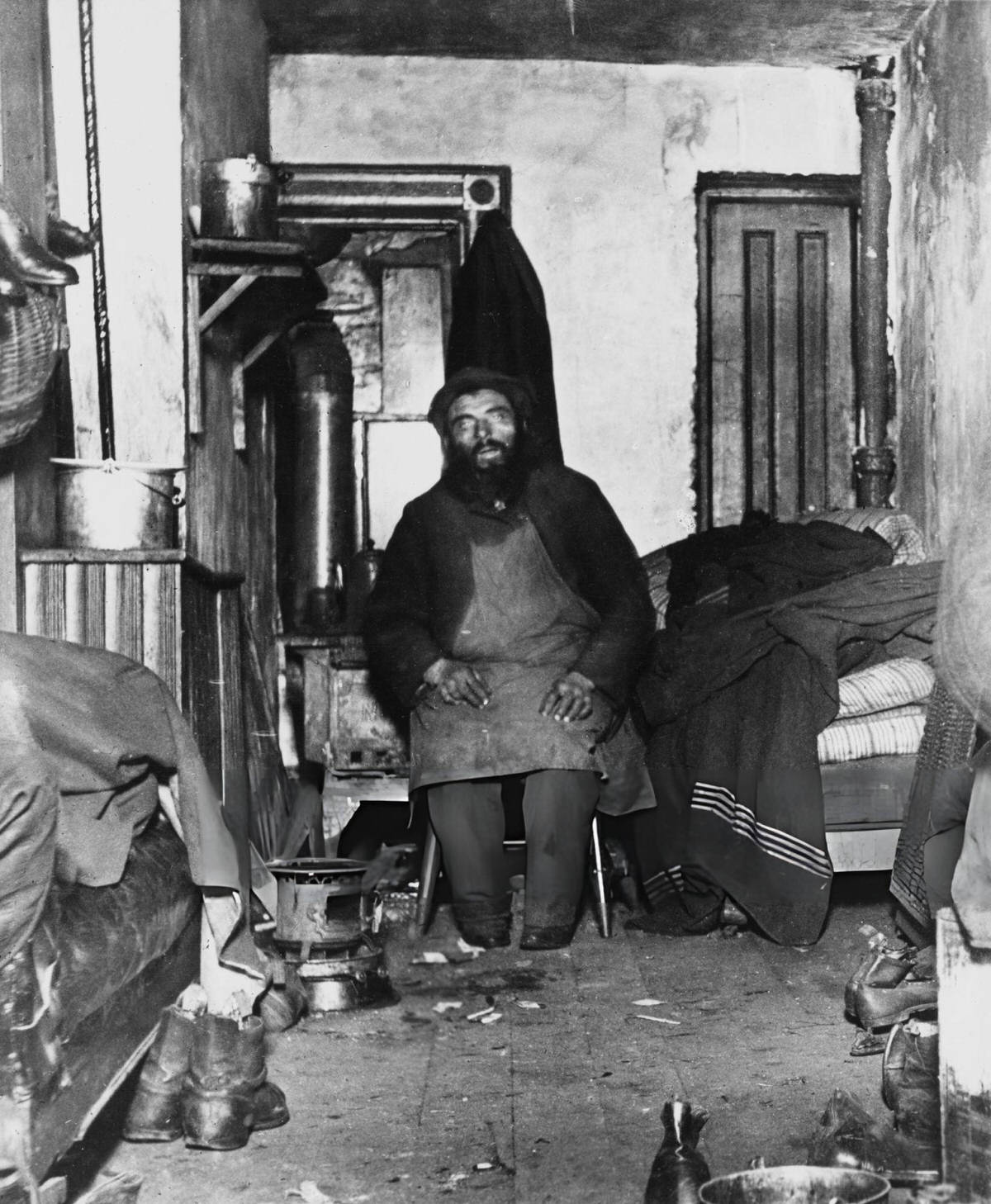
A typical apartment at Mulberry Bend had two or three rooms. The front room faced the street and got some air. The back room or rooms faced a narrow courtyard or nothing at all. Rent ran about a dollar and a half per week per room in the 1890s. A family of five or six often took one room and sublet space in the same room to boarders — single men who paid fifty cents a week for a place to sleep on the floor or on a shared bed in rotating shifts.
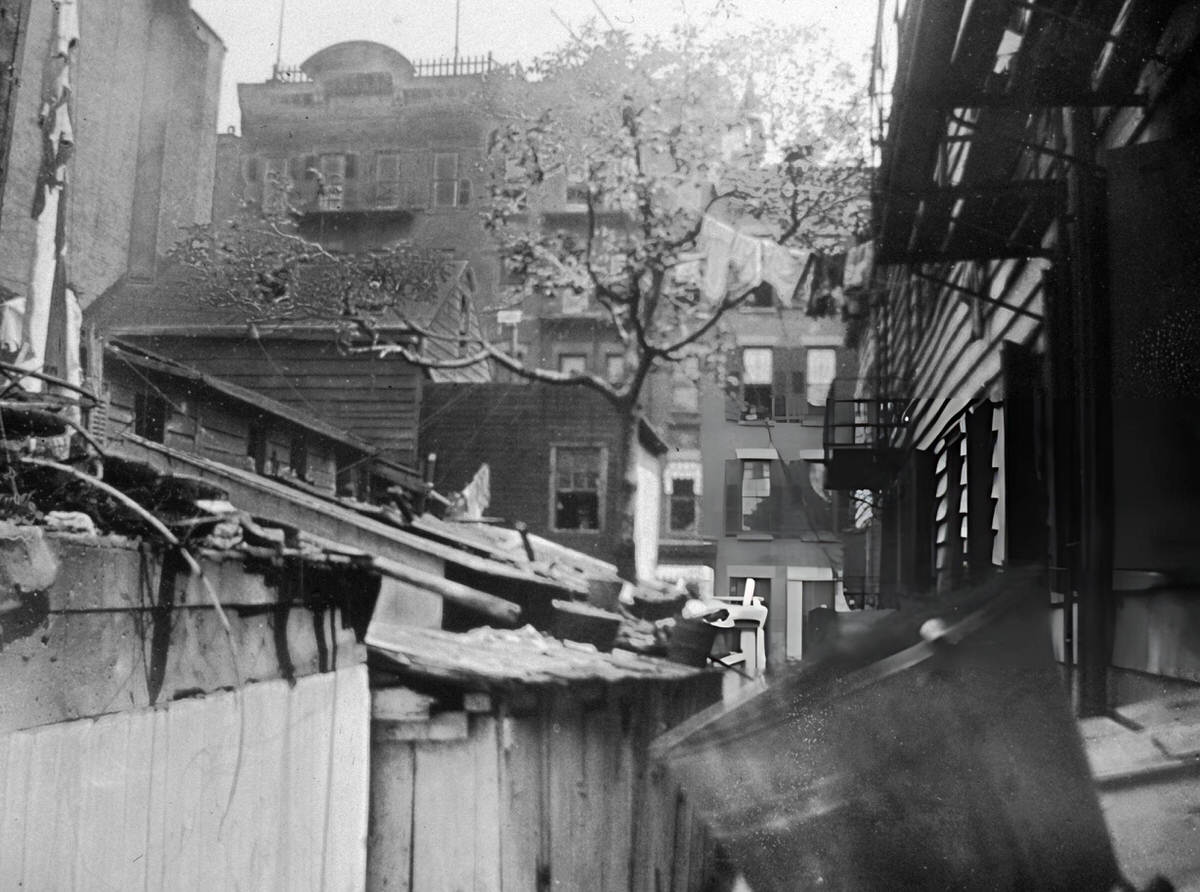
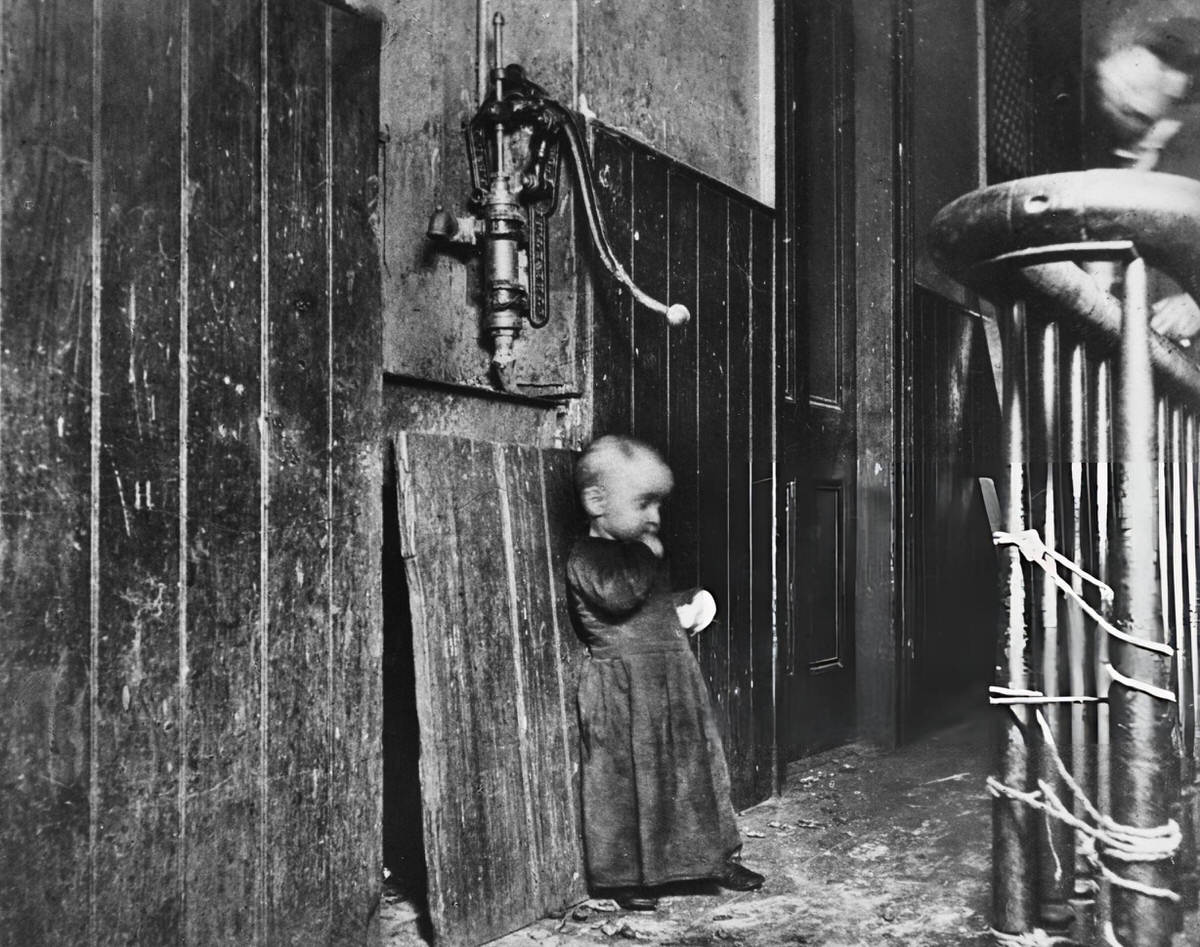
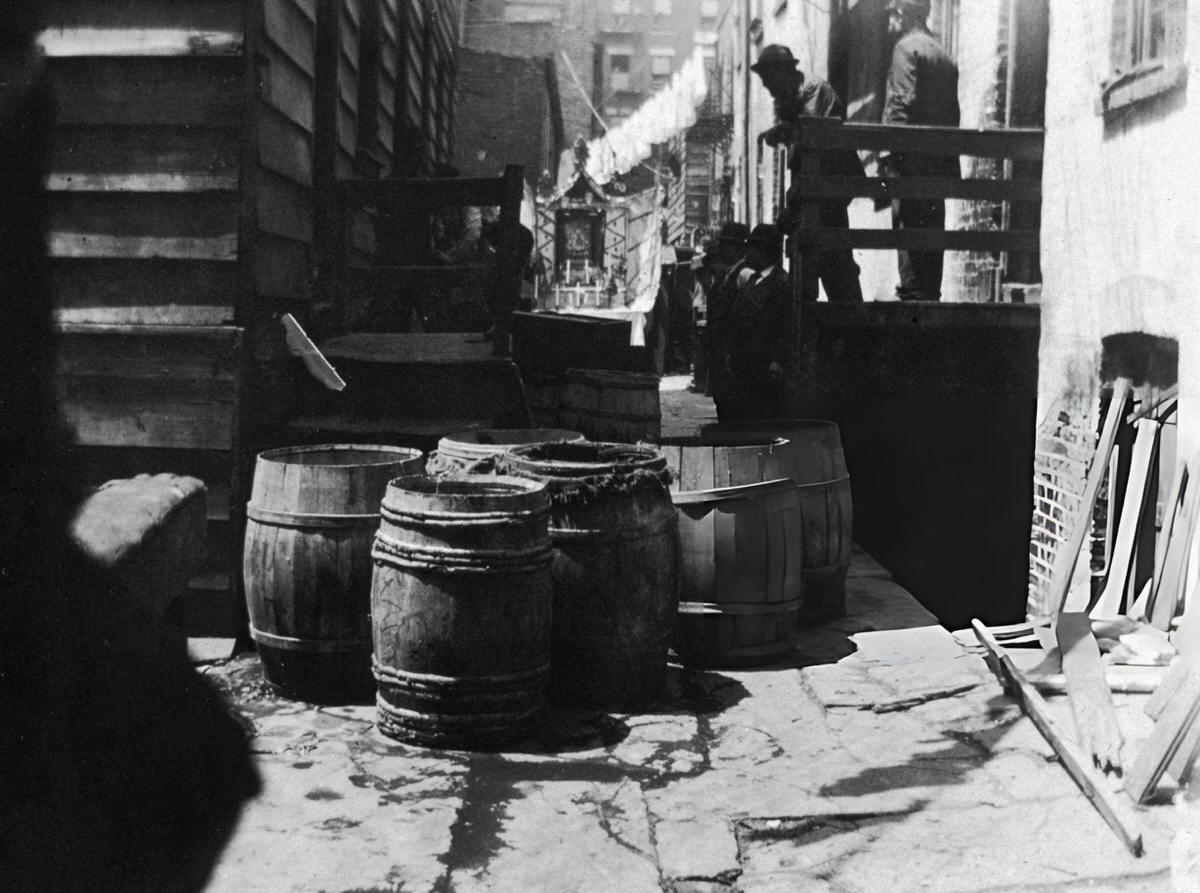
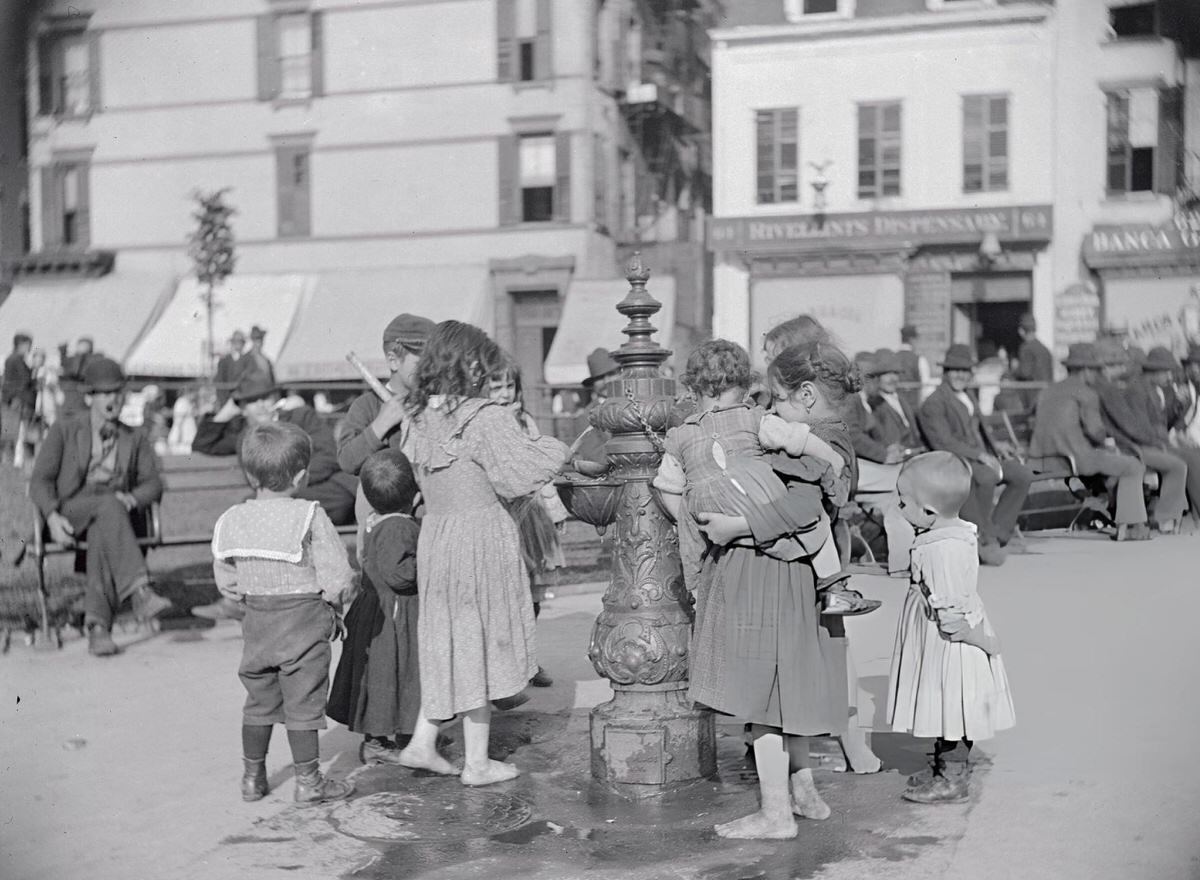
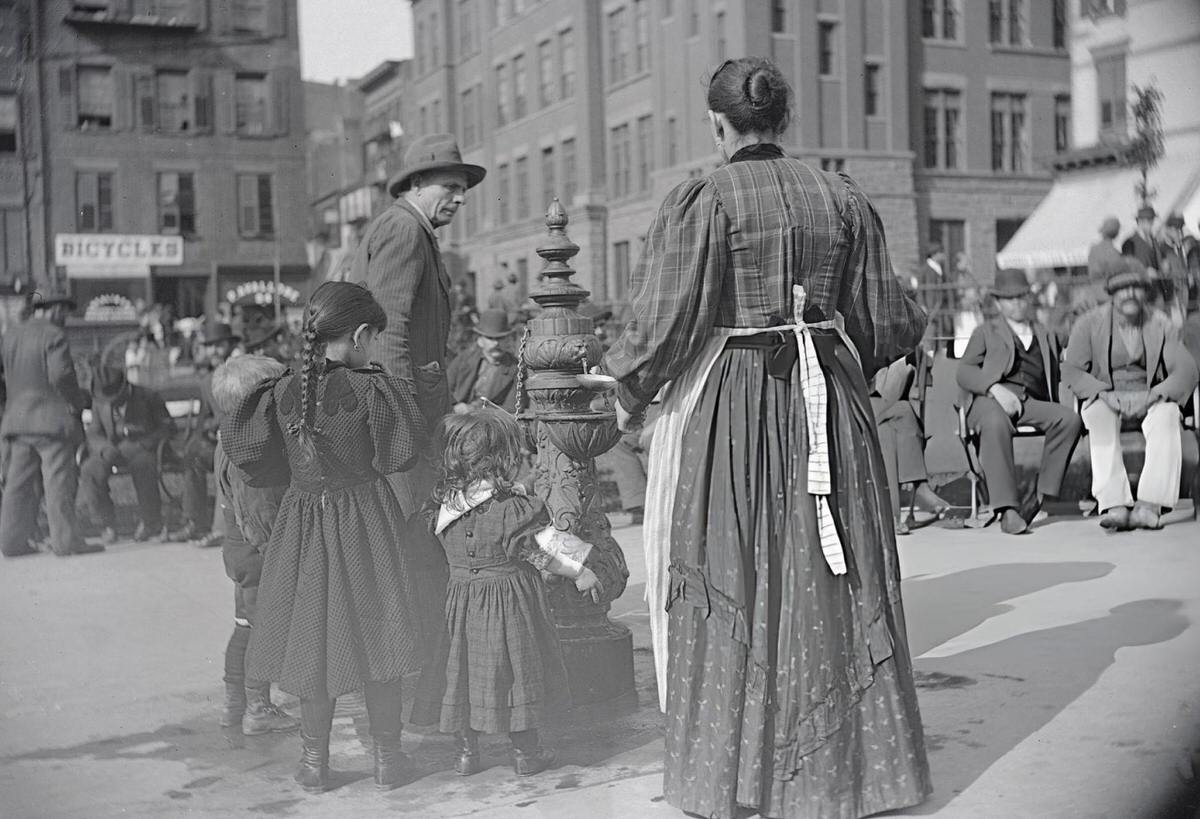
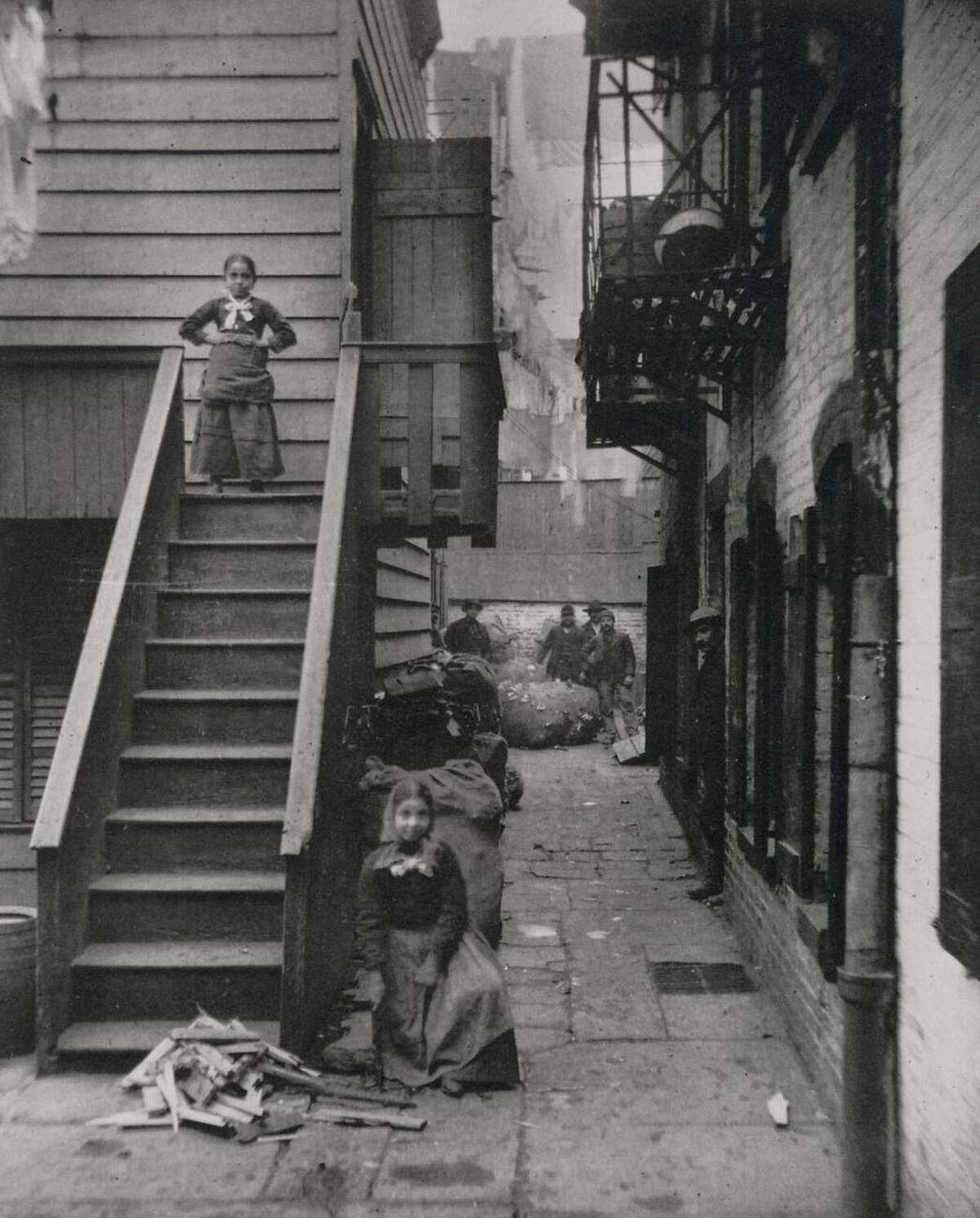
Cooking happened on a coal stove in the front room. Water came from a single tap in the hallway shared by all the families on a floor, or from a pump in the courtyard. Toilets — when they existed at all — were outhouses in the backyard. In the older buildings, there were no indoor toilets whatsoever. The city’s sanitation department rarely collected garbage from these blocks on a regular schedule. Waste accumulated in the alleys and the courtyards between buildings.
Summer was brutal. The buildings held heat the way an oven does. Families slept on fire escapes and on the rooftops. Children slept on the sidewalk. Tuberculosis spread through the dark interior rooms year-round, and in summer, infant mortality from gastrointestinal infections spiked sharply. In some blocks of the Bend during the 1880s, more than half of all children born did not survive their first two years.
Work and the street economy
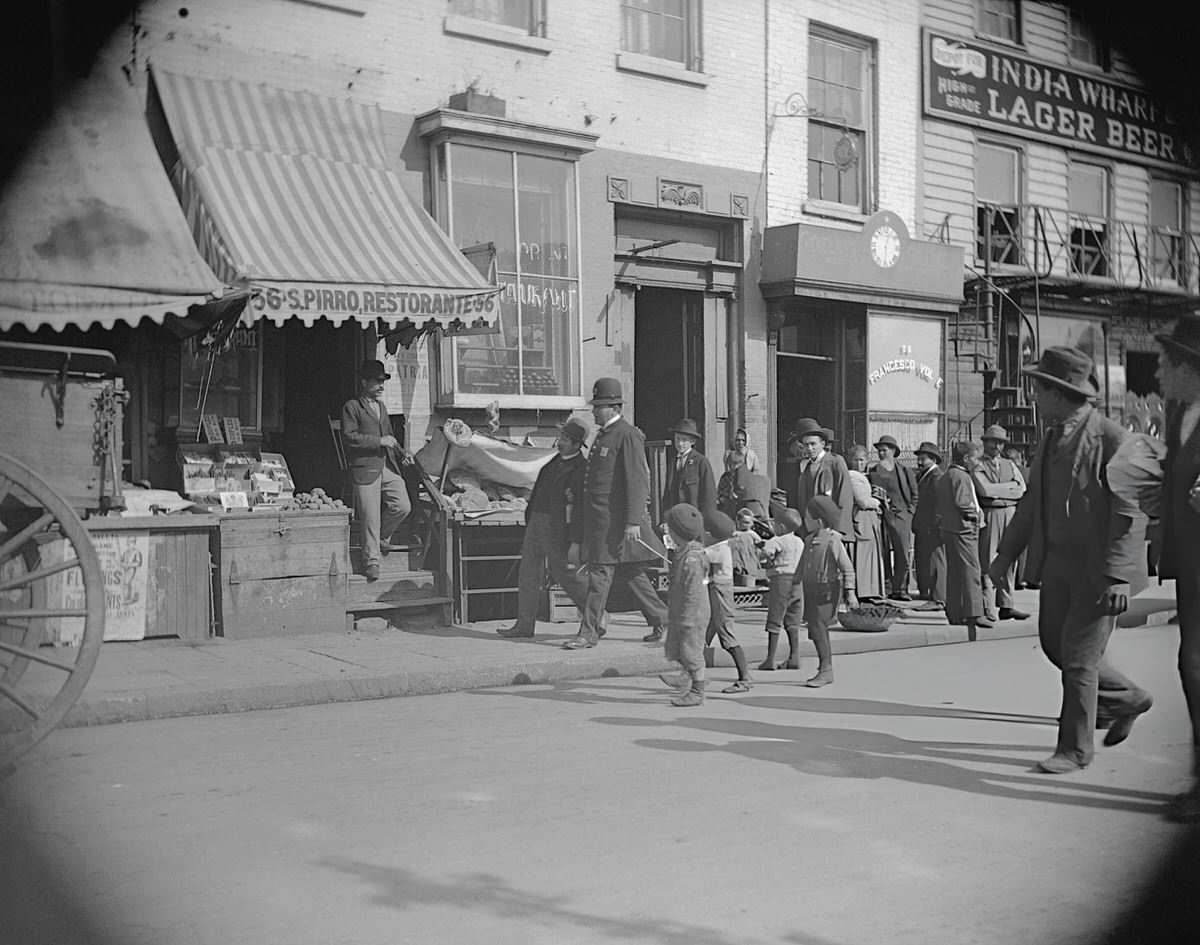
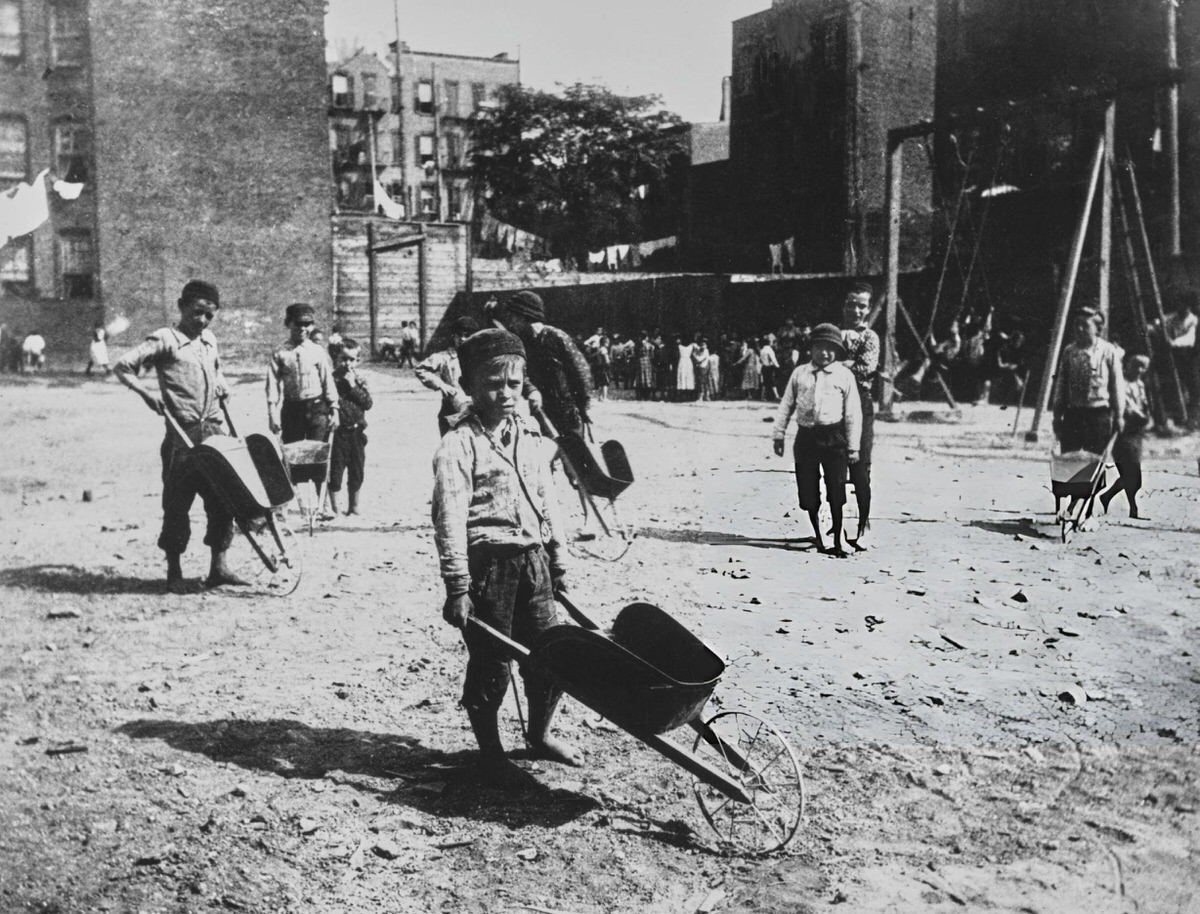
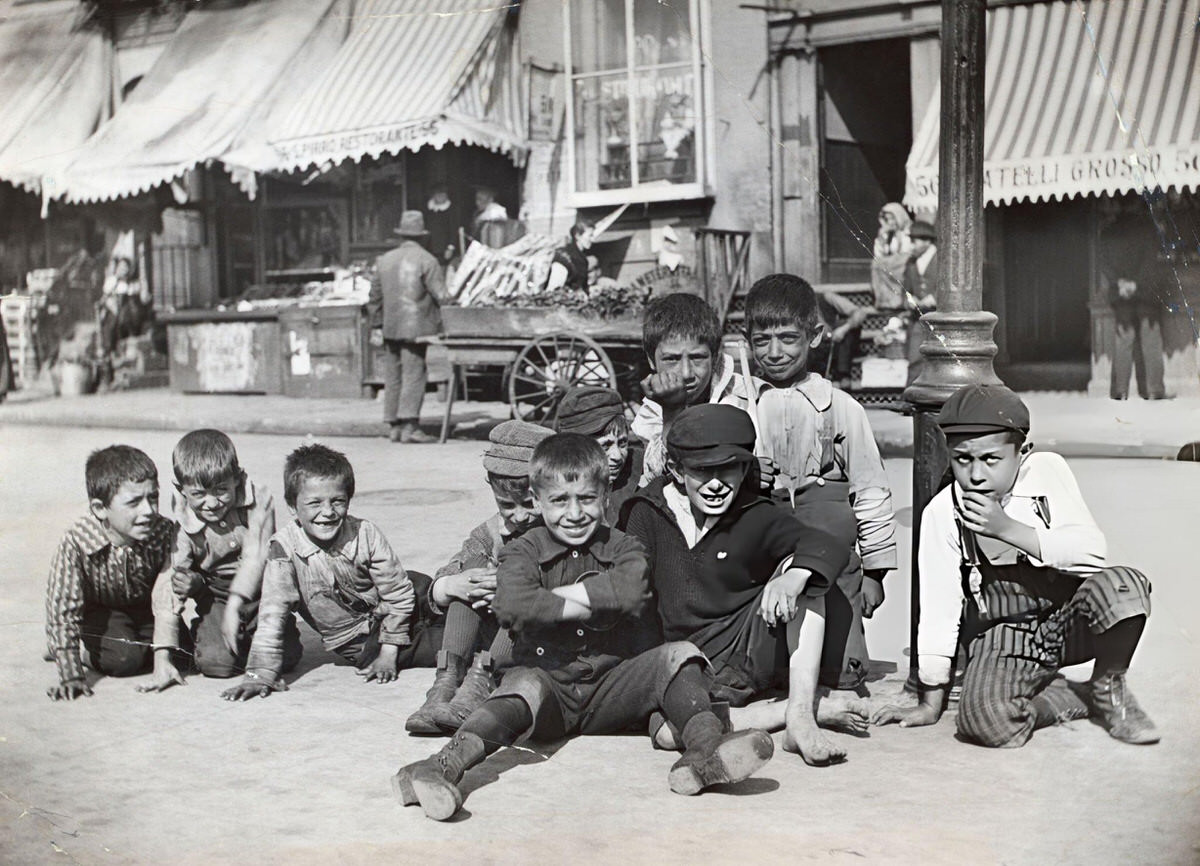
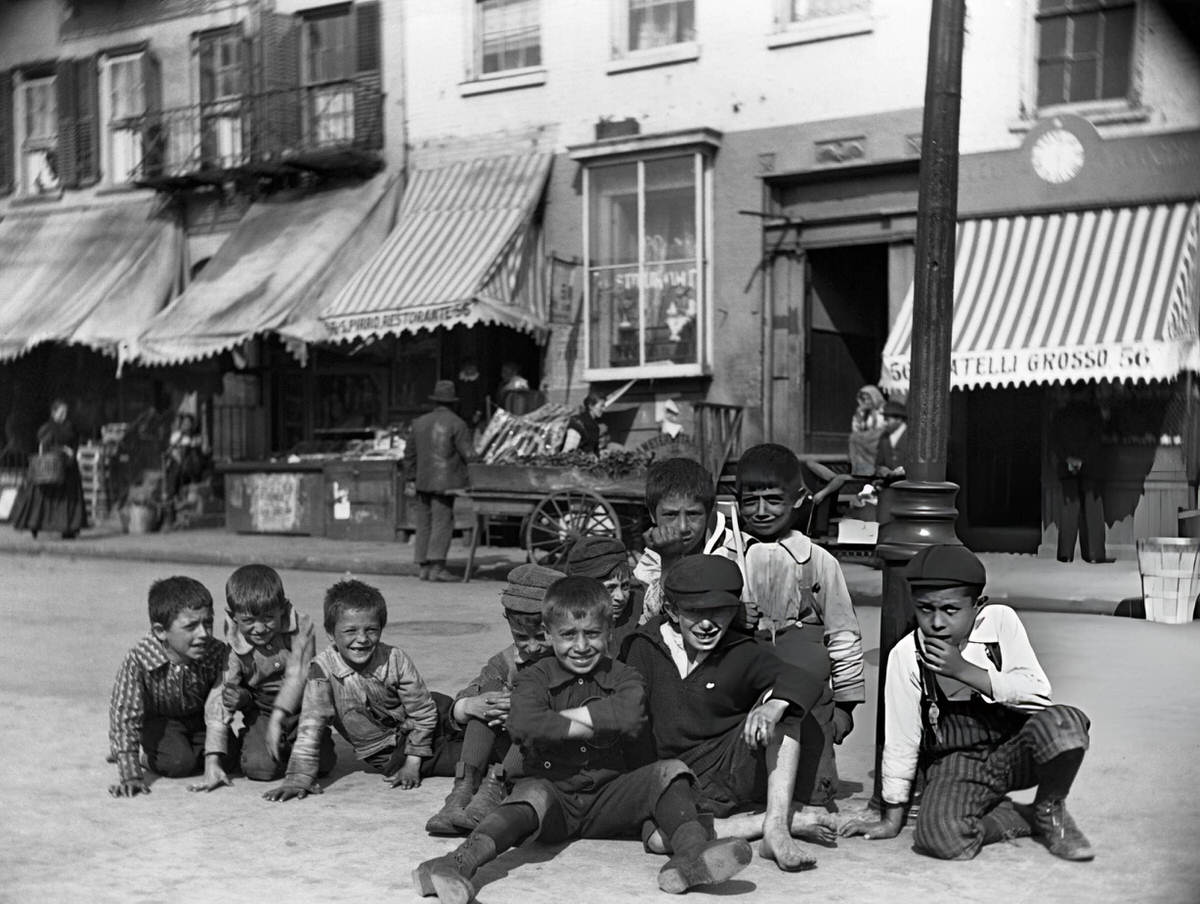
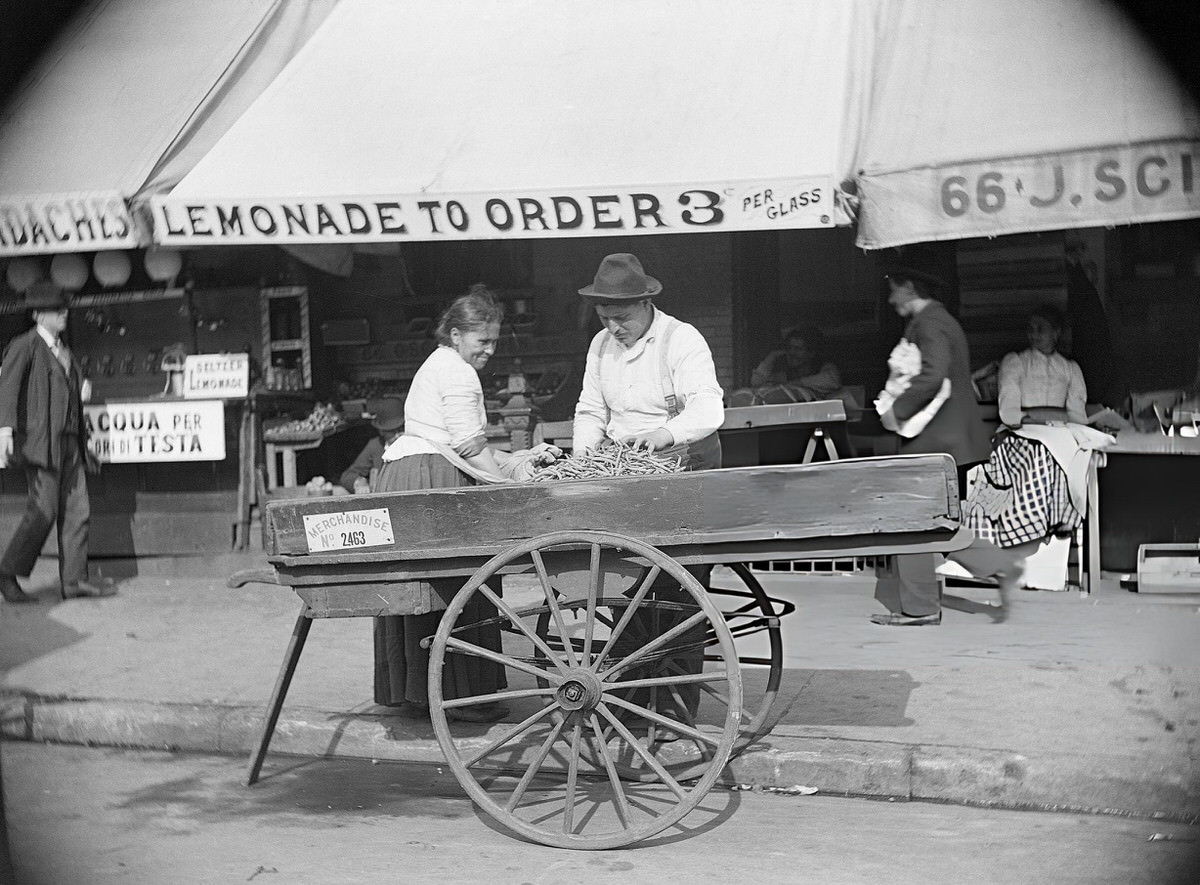
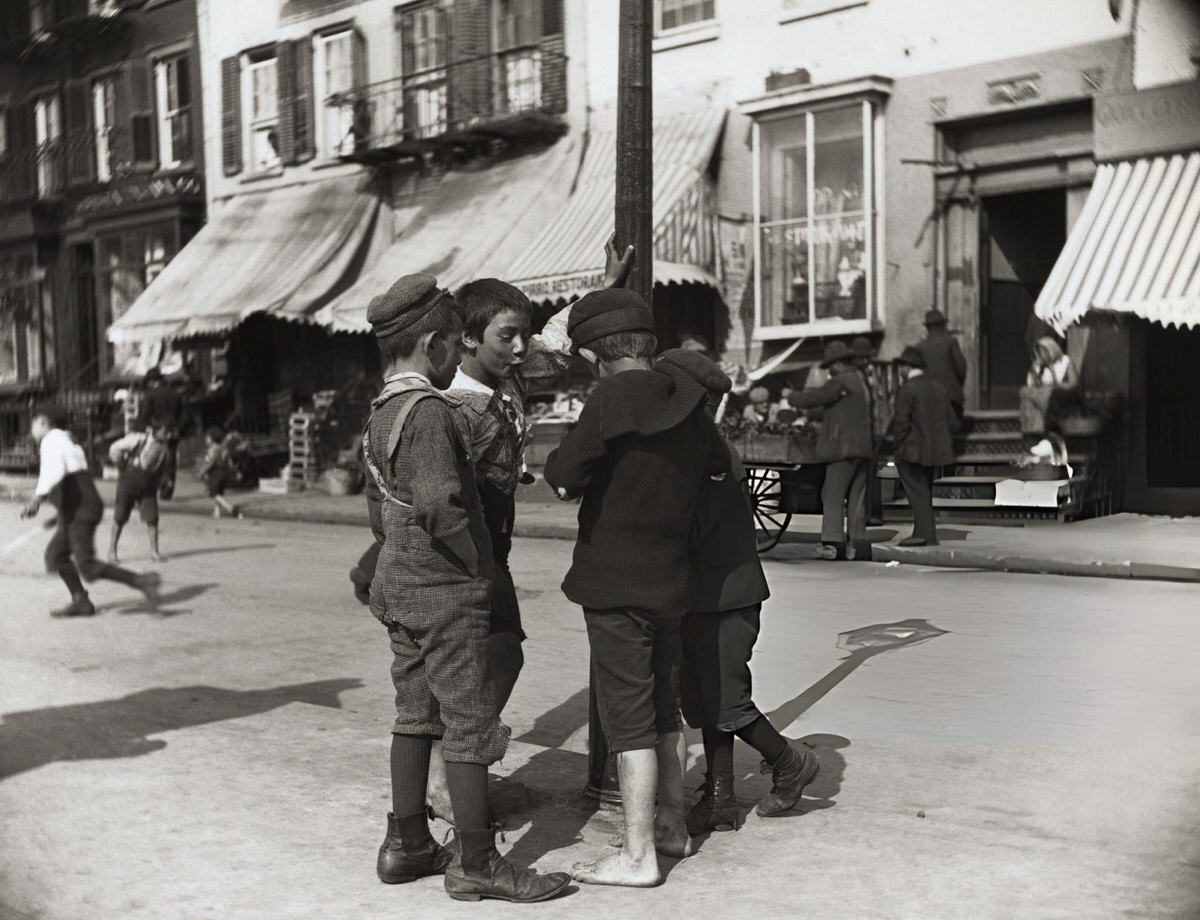
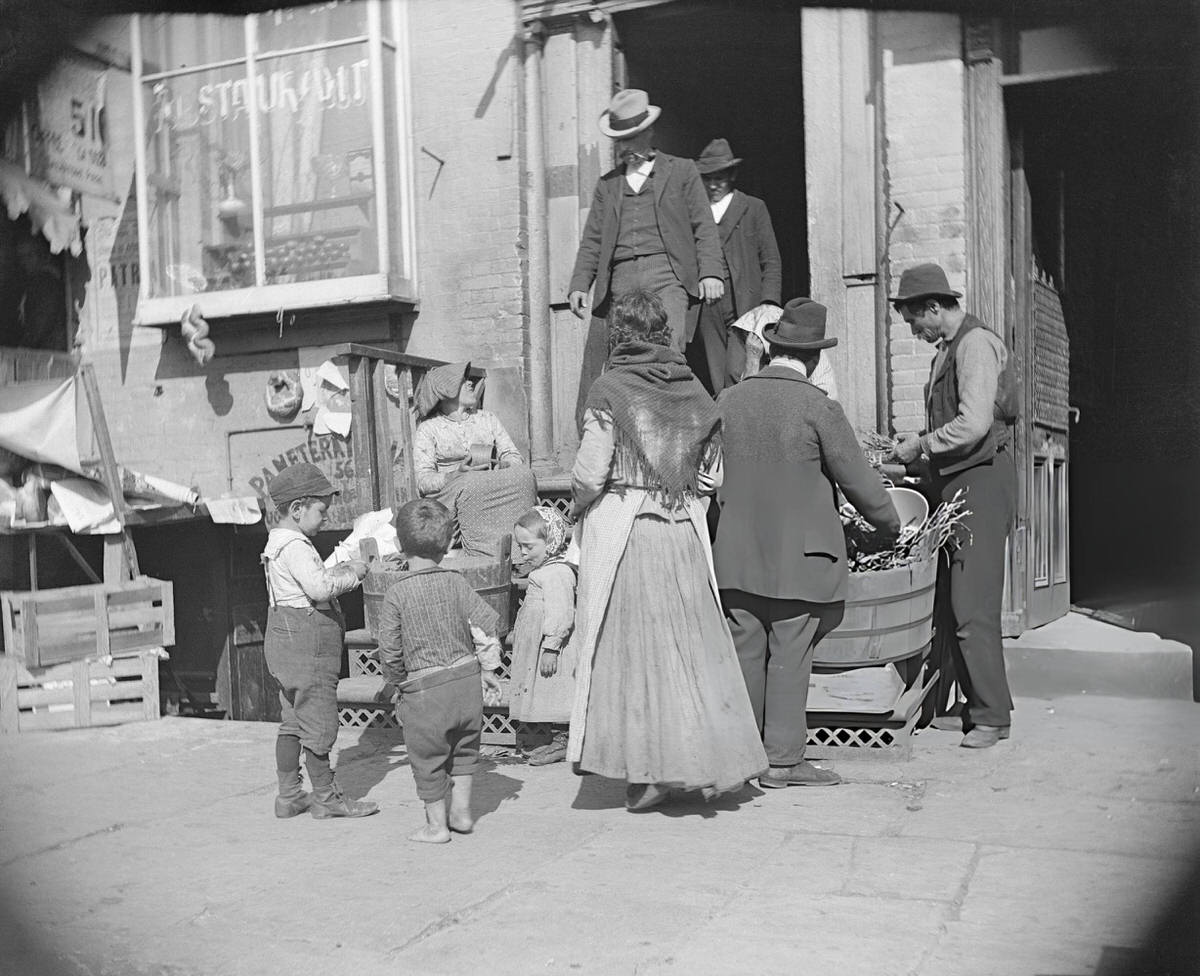
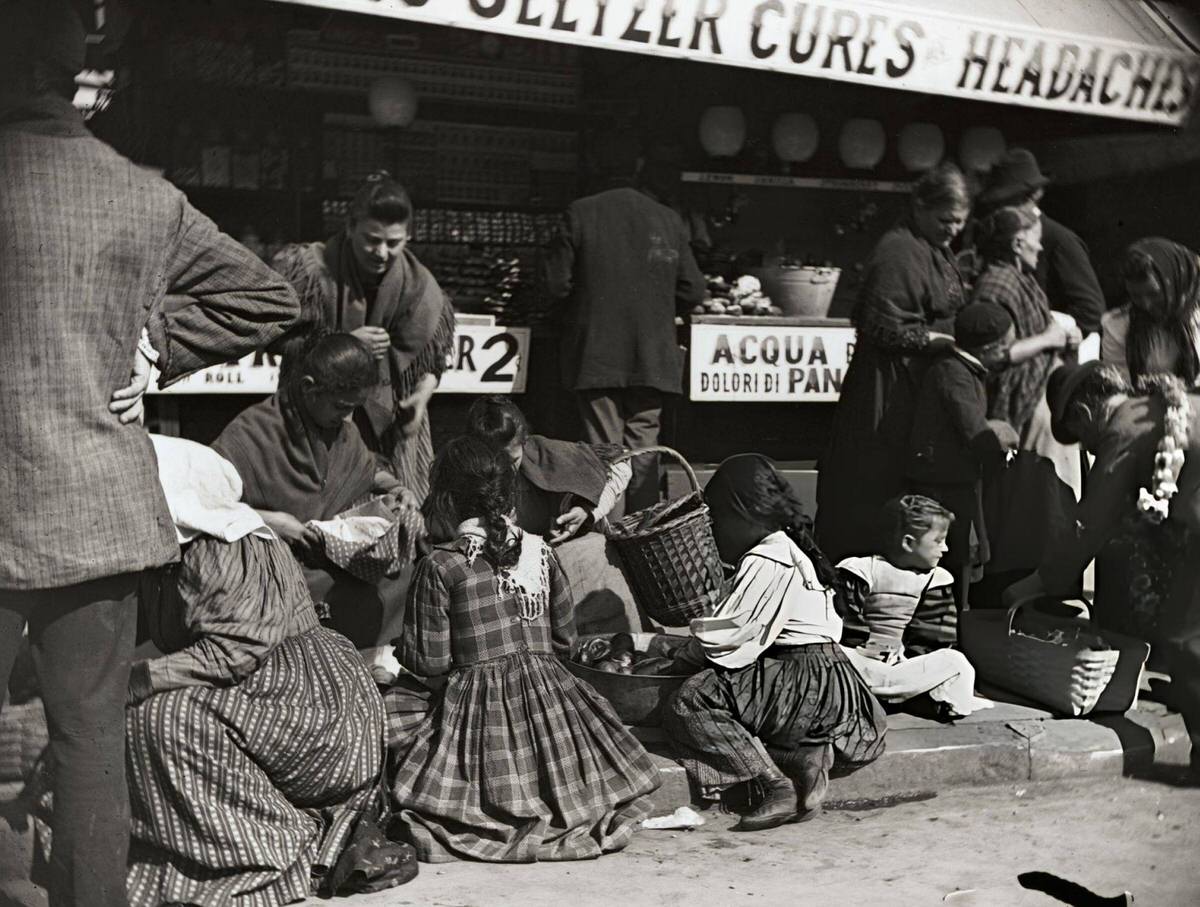
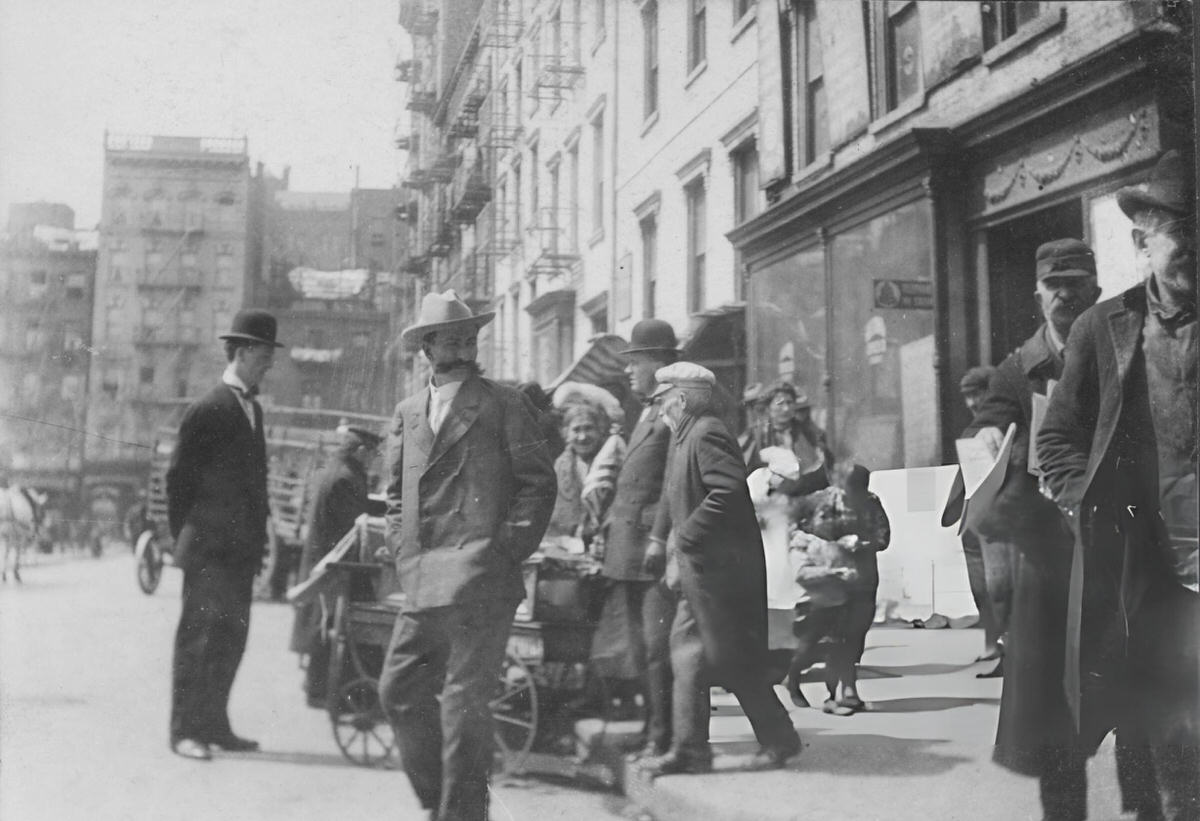
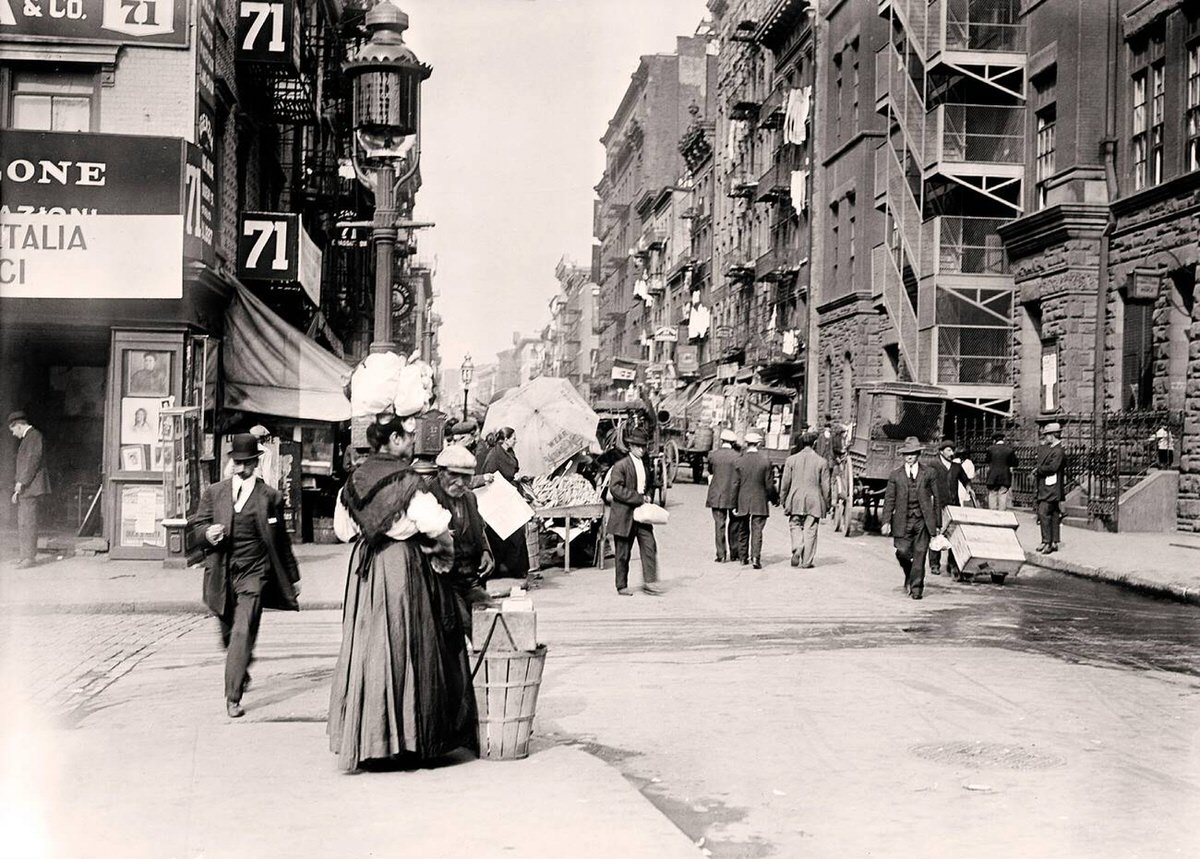
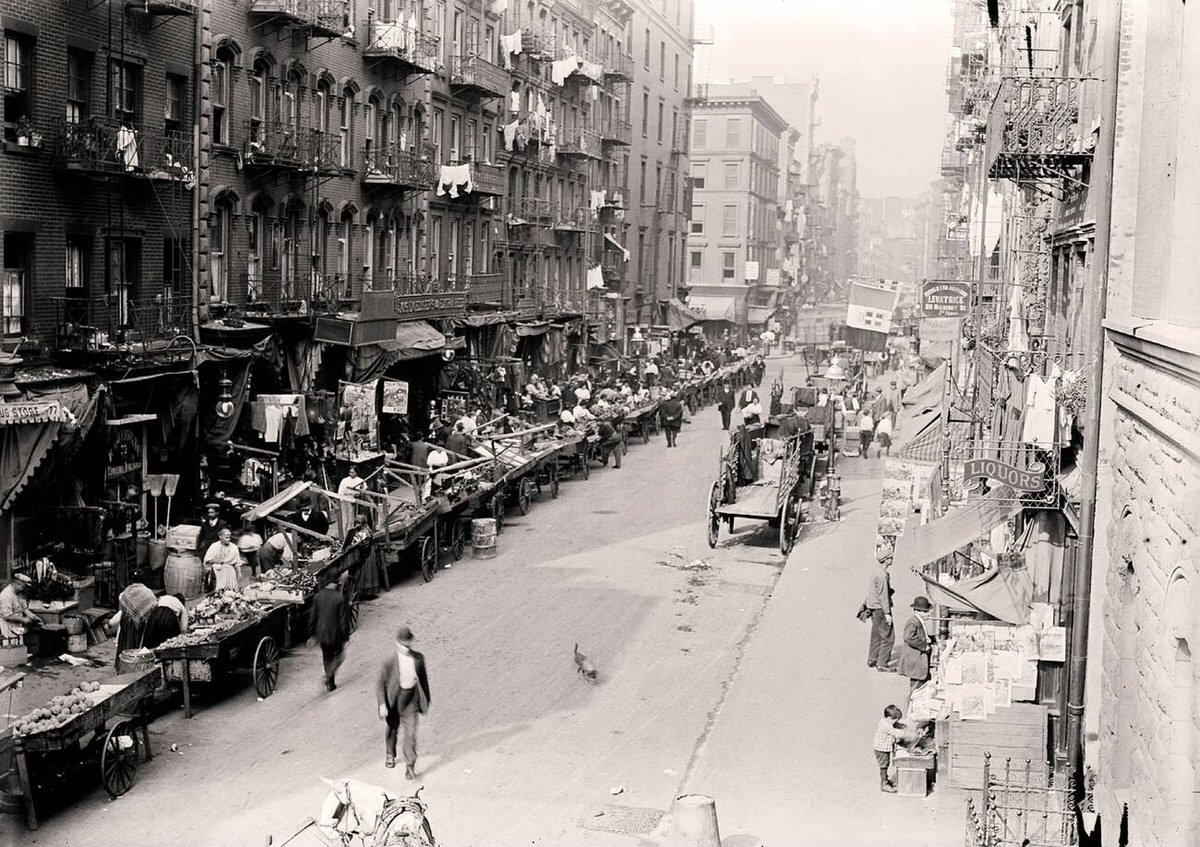
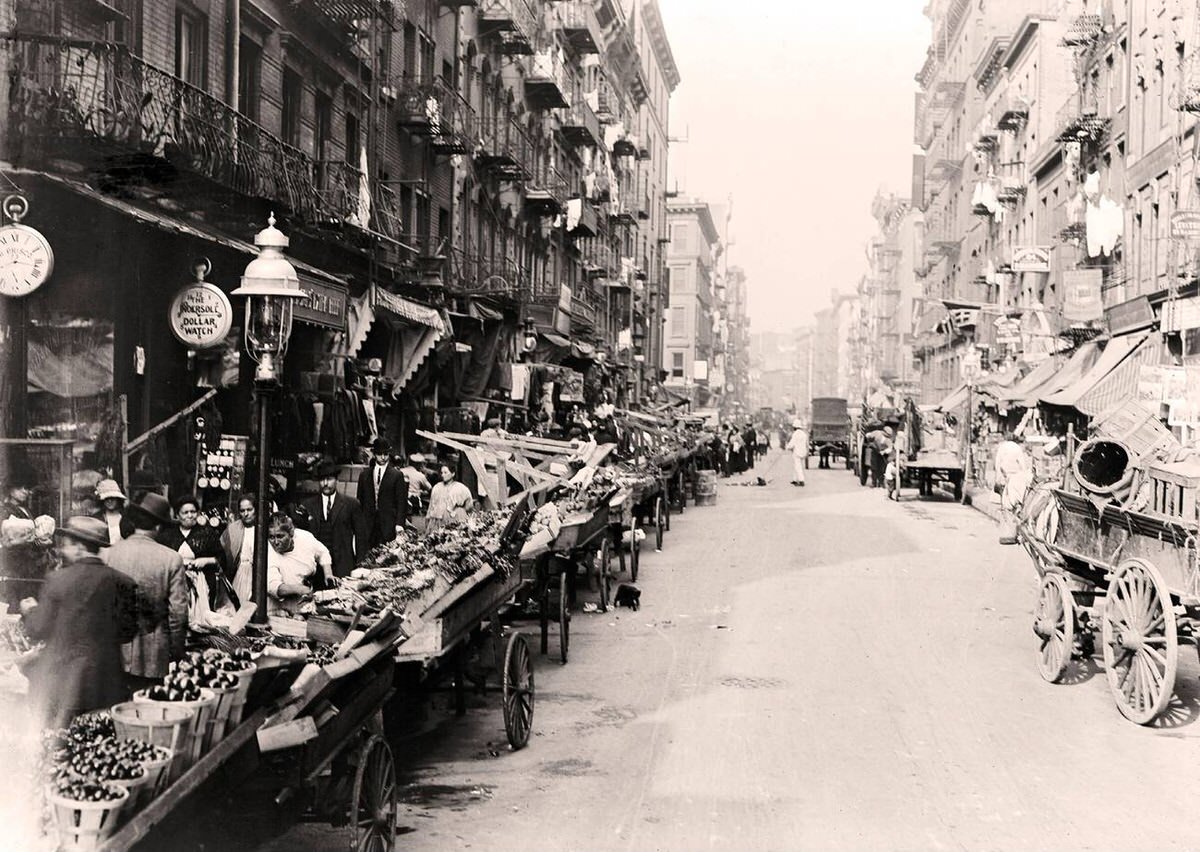
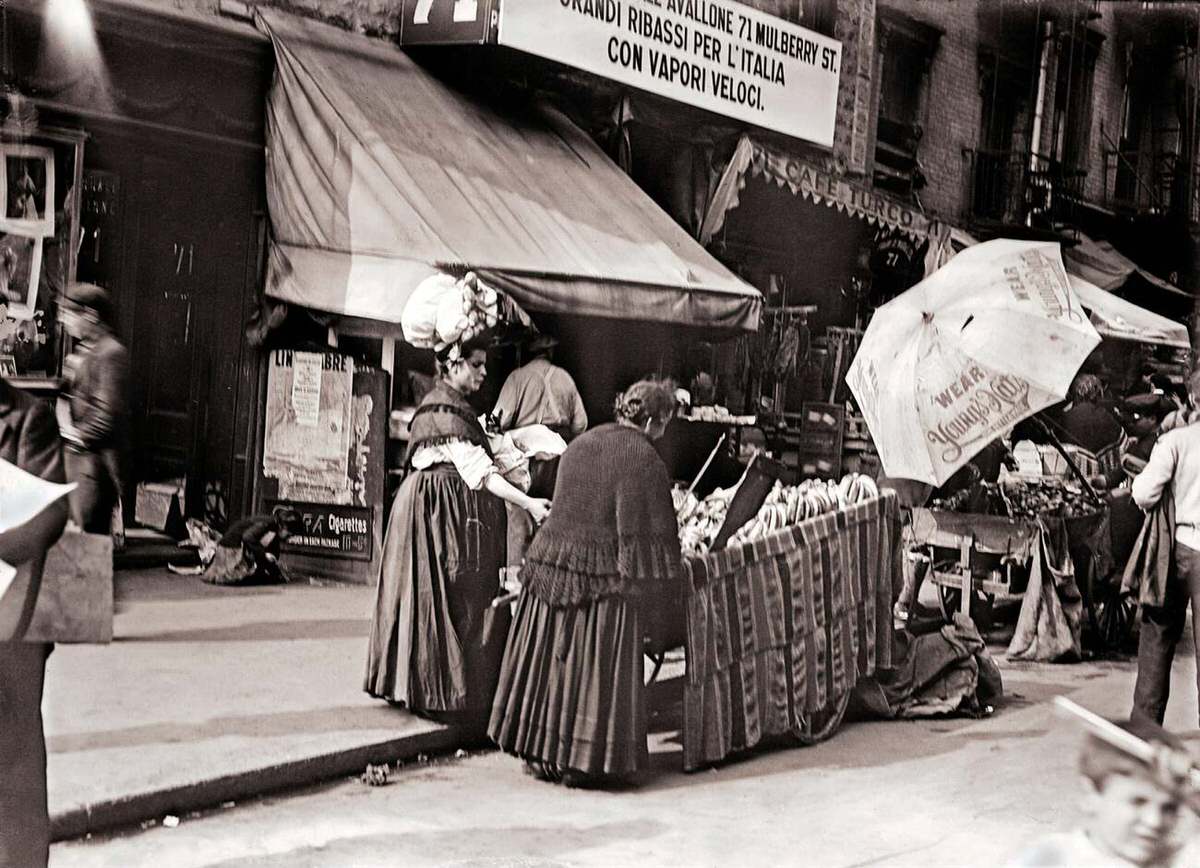
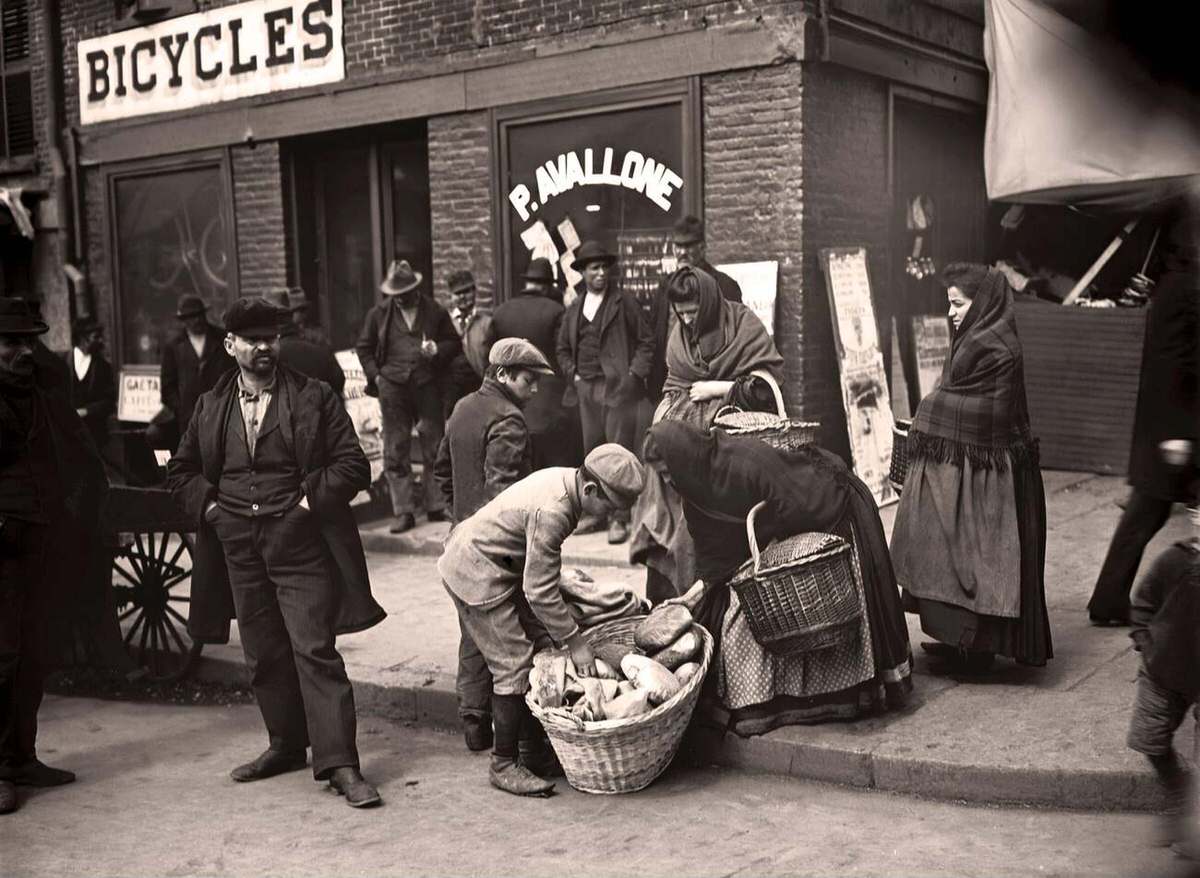
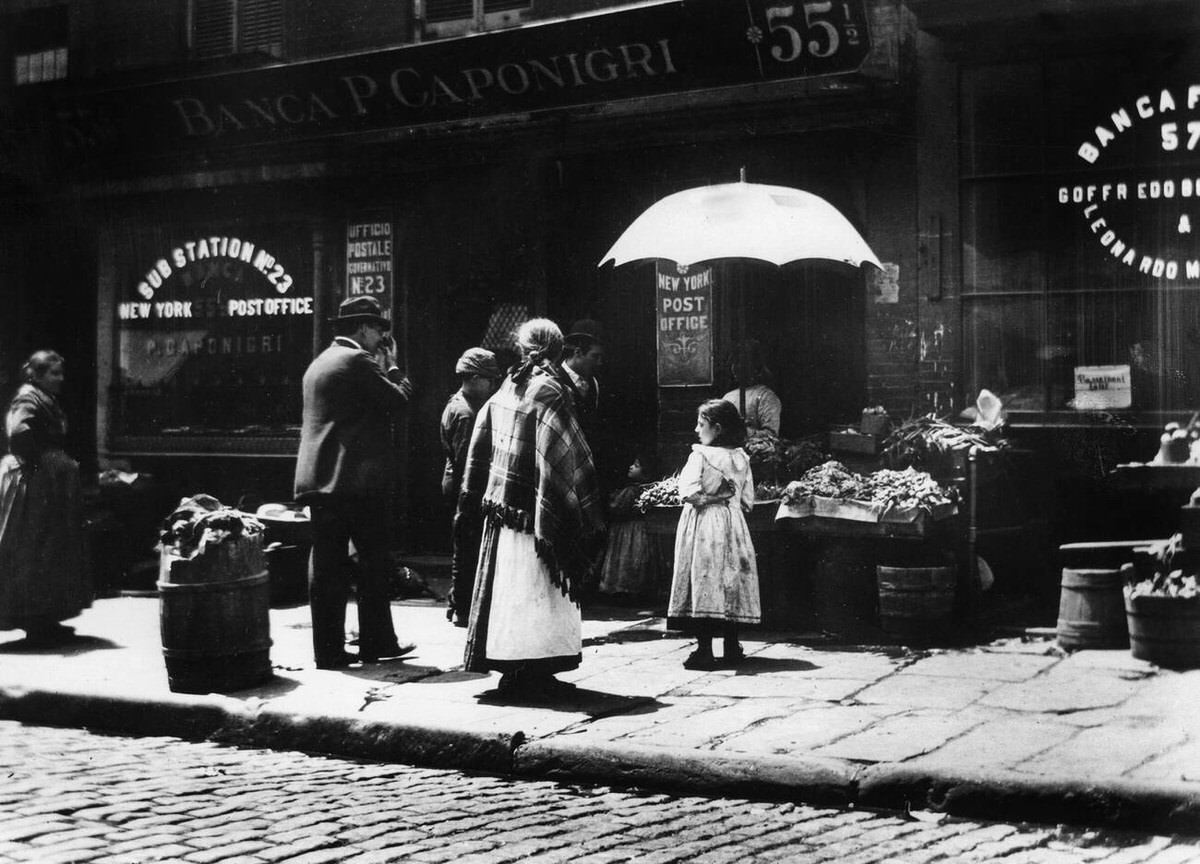
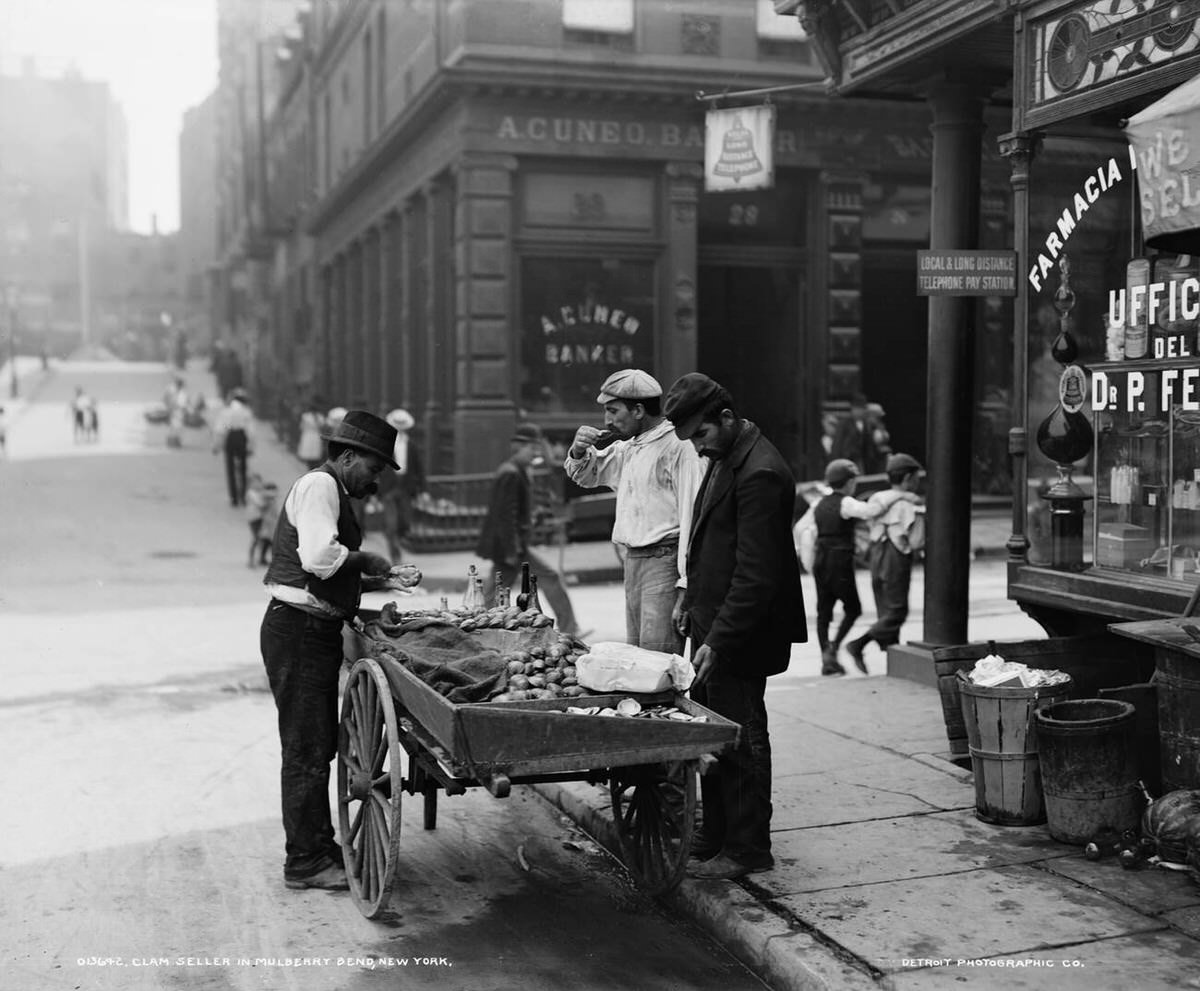
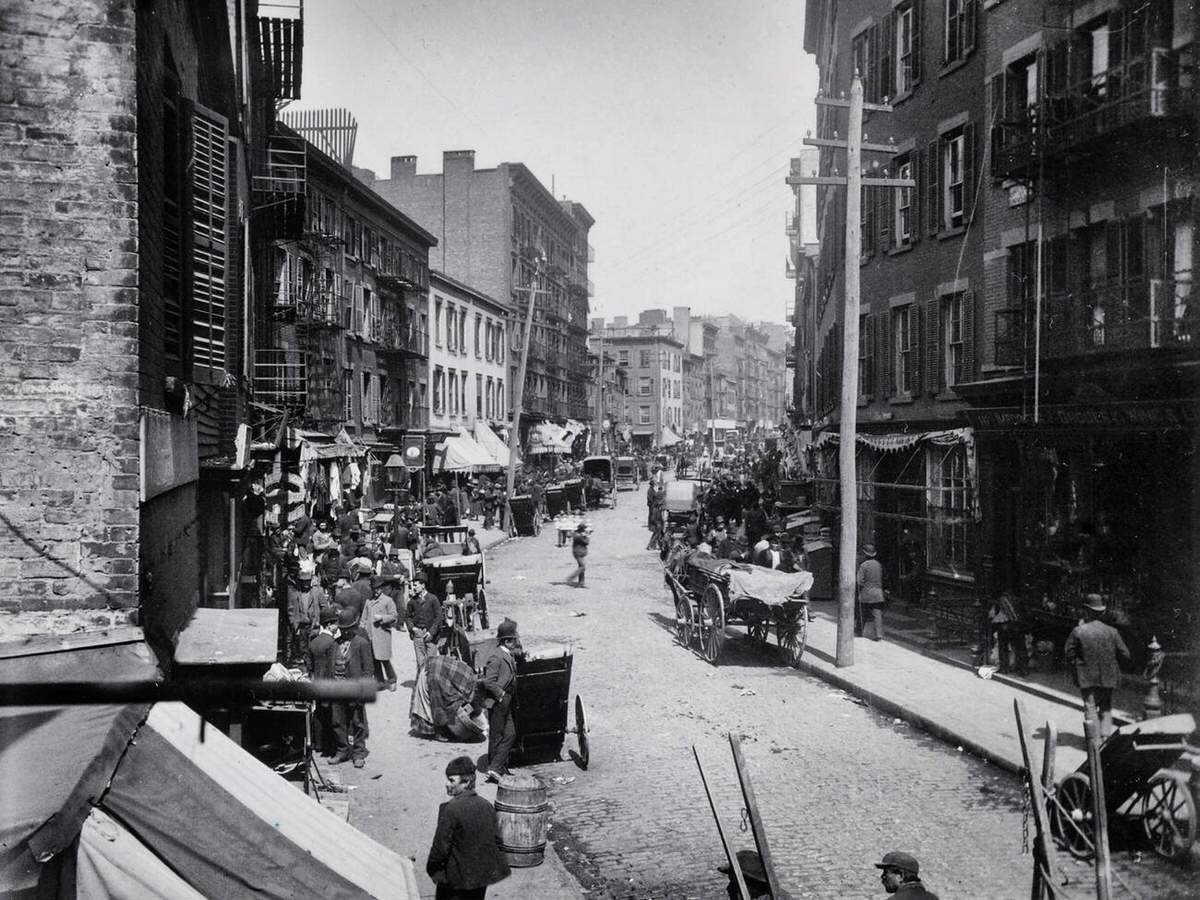
The street in front of the tenements was an extension of the living space. Pushcart vendors lined Mulberry and Baxter Streets selling vegetables, dried pasta, salt cod, and bread. A woman could buy a pound of macaroni for three cents. Organ grinders worked corners for spare change. Ragpickers sorted through trash in the alleys for anything with resale value. Children shined shoes for a penny a pair along the edge of City Hall Park, a short walk north.
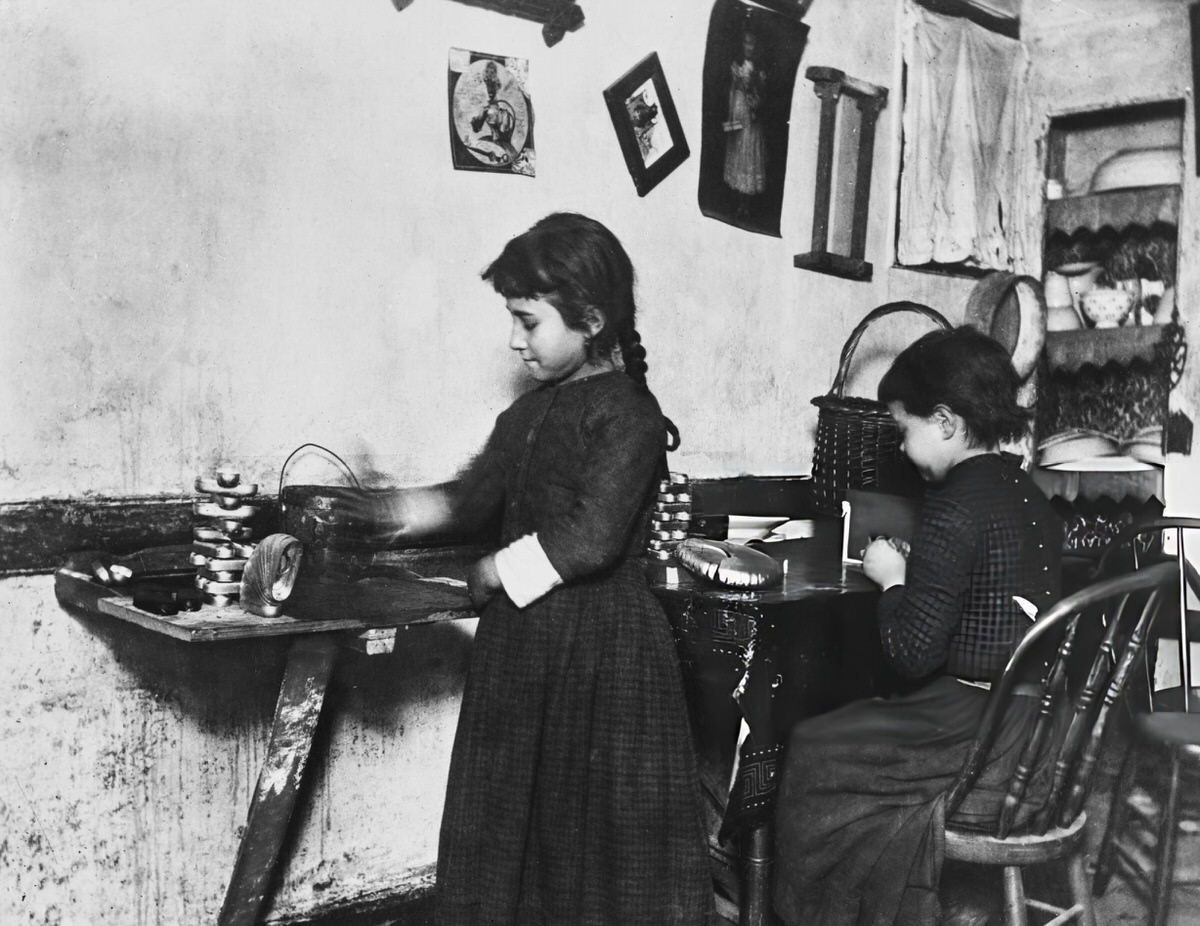
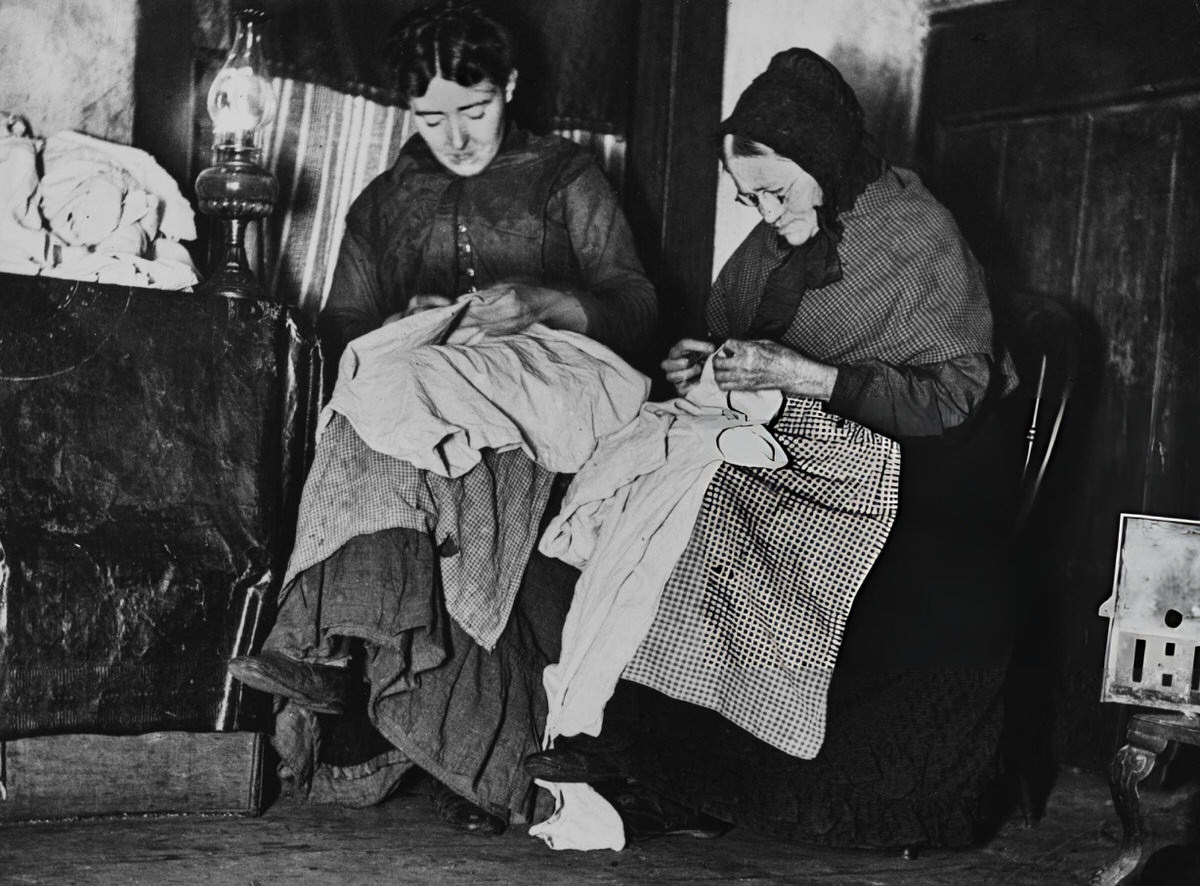
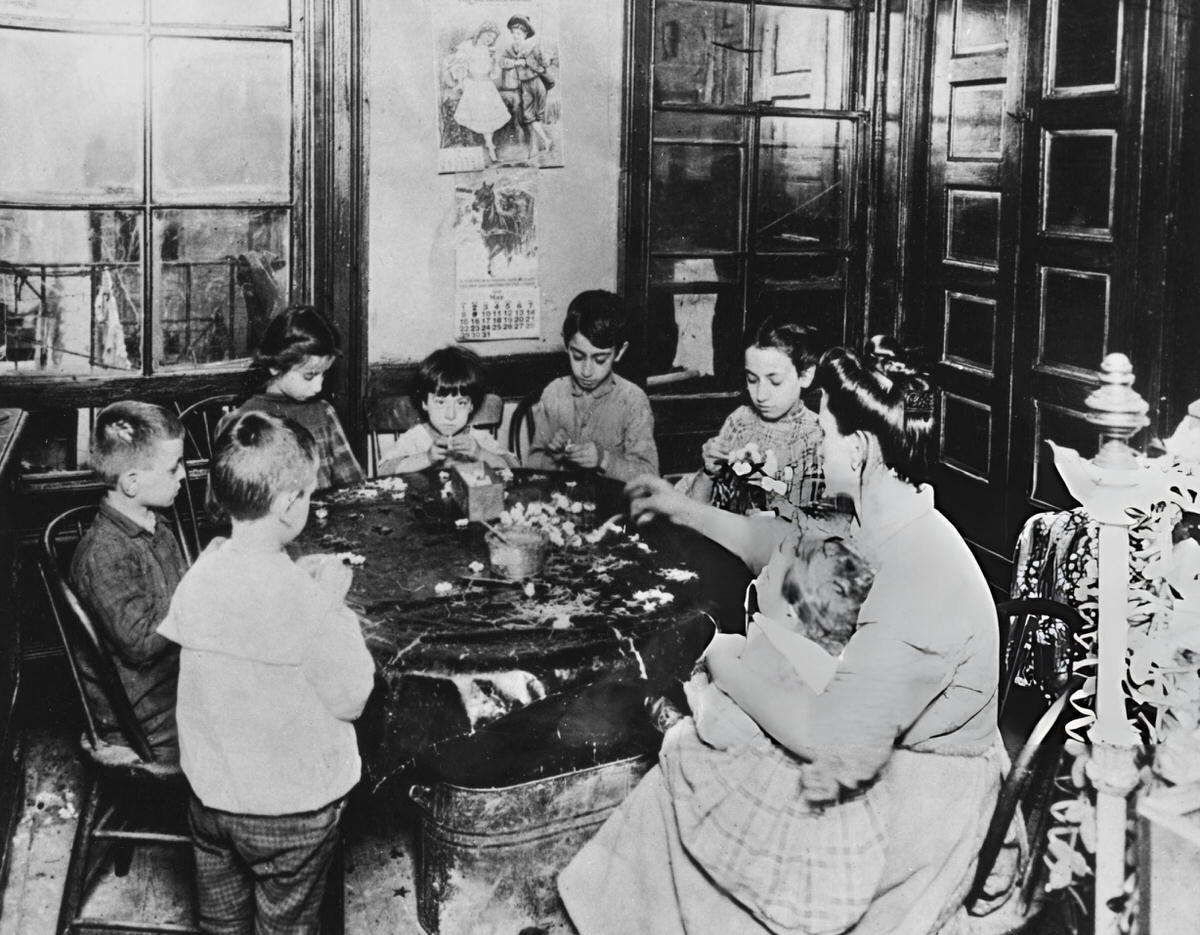
Home work was everywhere. Garment manufacturers paid by the piece, and women sewed artificial flowers, stitched knee pants, and finished cigars in their apartments. Children as young as six helped. A family working together on flower-making could earn about sixty cents a day. It was tedious, eye-straining work done in poor light, and manufacturers dropped the per-piece rate whenever they wanted to because there was no shortage of families willing to take the work at any price.
Jacob Riis and the Bend’s exposure
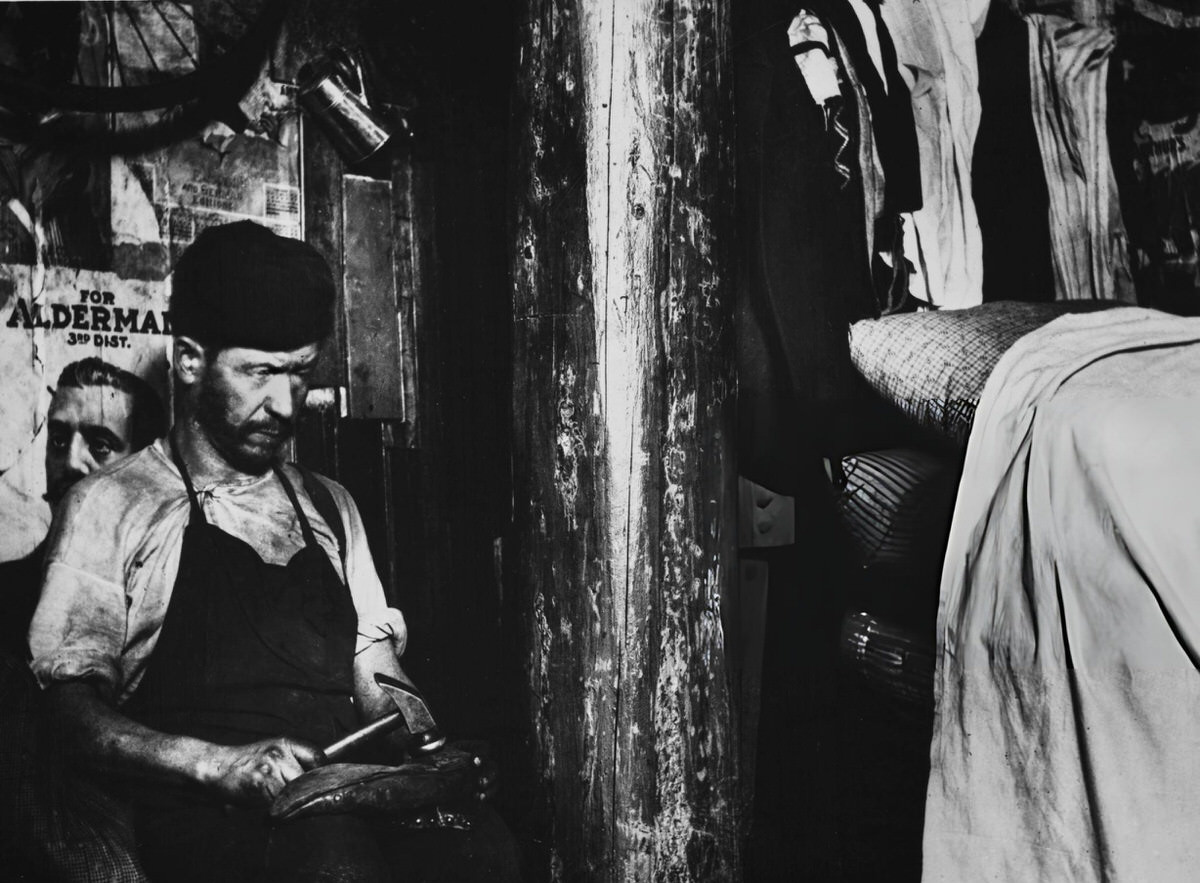
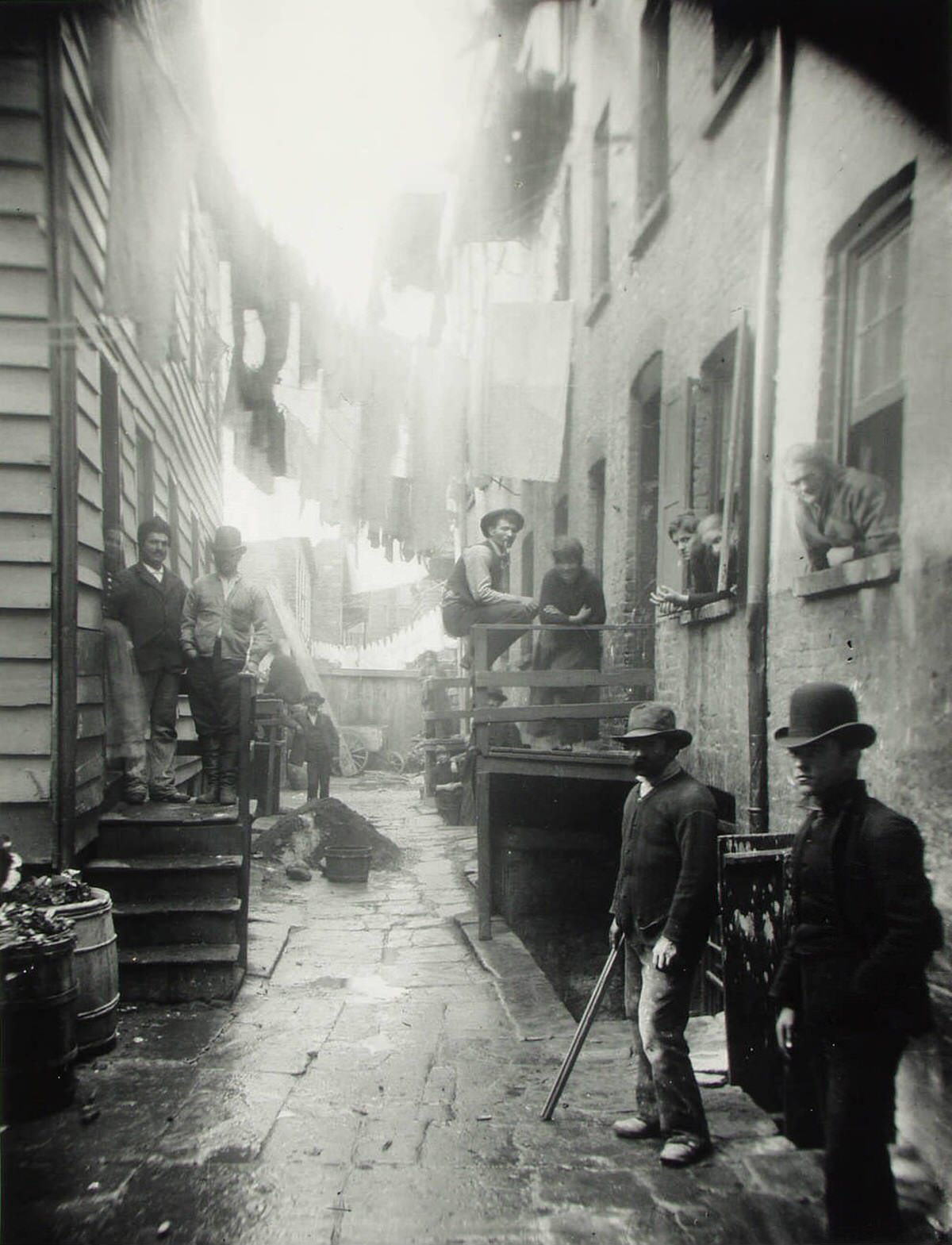
In 1888, a Danish-born police reporter named Jacob Riis brought a large-format camera and flash powder into the alleys and tenement hallways of Mulberry Bend. He had been covering police news in lower Manhattan for years and knew these streets well. The photographs he took — of sleeping ragpickers in basement rooms, of families crowded into airless apartments, of the alley at 59½ Mulberry Street that the police called Bandits’ Roost — became the core of his 1890 book “How the Other Half Lives.”
Riis was explicit about what he wanted readers to see. The alley at 59½ Mulberry ran between two rows of rear tenements, barely wide enough for two men to pass each other. Both sides were lined with men standing against the walls, arms folded, watching the camera. Riis identified it by name and address in his caption. He was not interested in keeping the location vague. His argument was that the city knew where the Bend was and had chosen to do nothing about it.
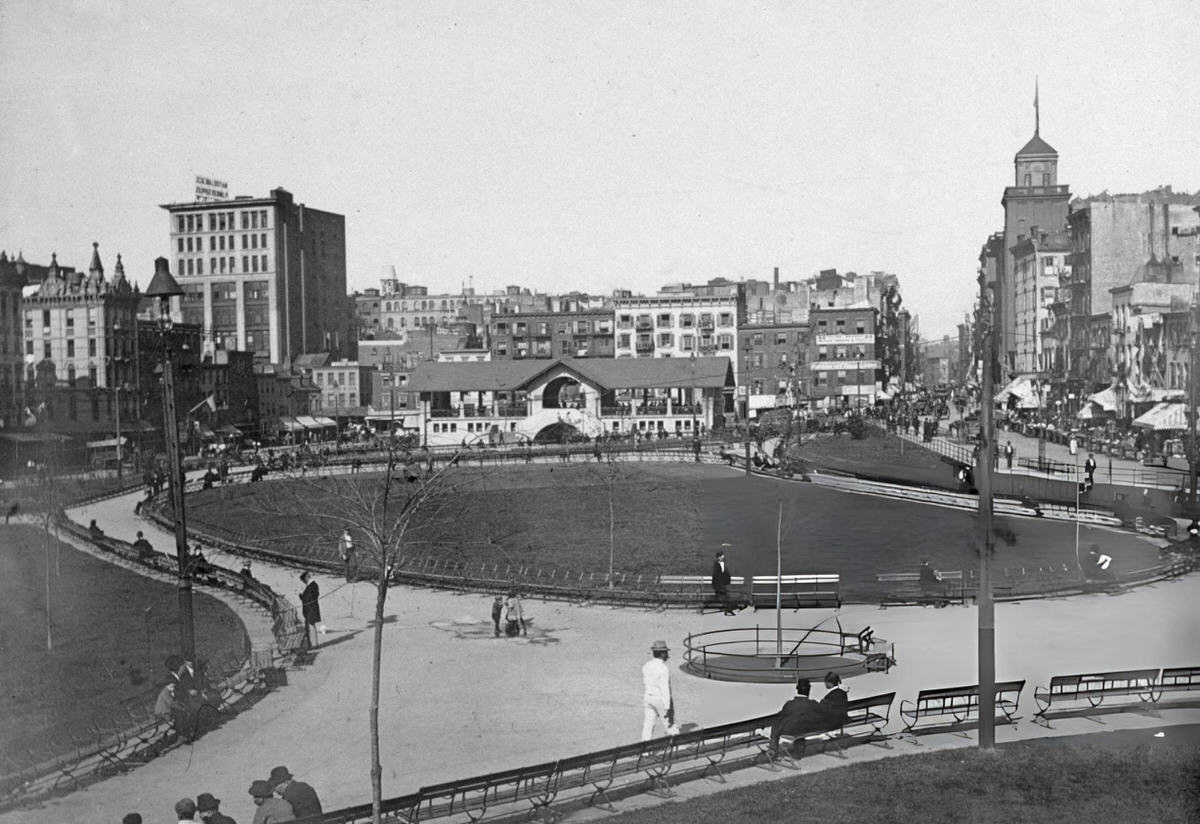
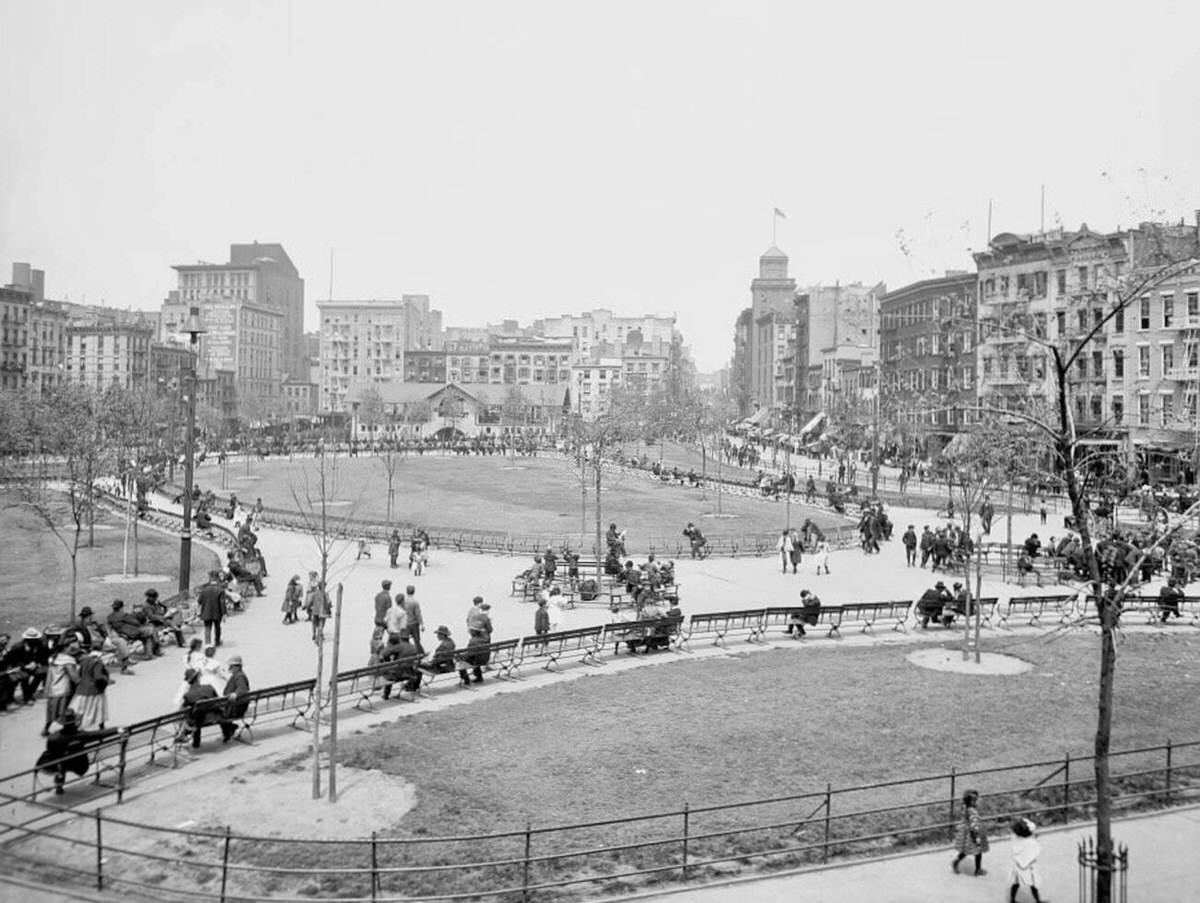
The book reached Theodore Roosevelt, then head of the New York City Police Board. Roosevelt walked the Bend with Riis in person and was shaken enough by what he saw to push the city toward demolition. In 1895, the city purchased the Bend properties under eminent domain, tore down the tenements block by block, and replaced the entire area with a small park called Mulberry Bend Park — later renamed Columbus Park, which still exists today at the corner of Mulberry and Bayard Streets.

GIPHY App Key not set. Please check settings