

 Frederick Victor
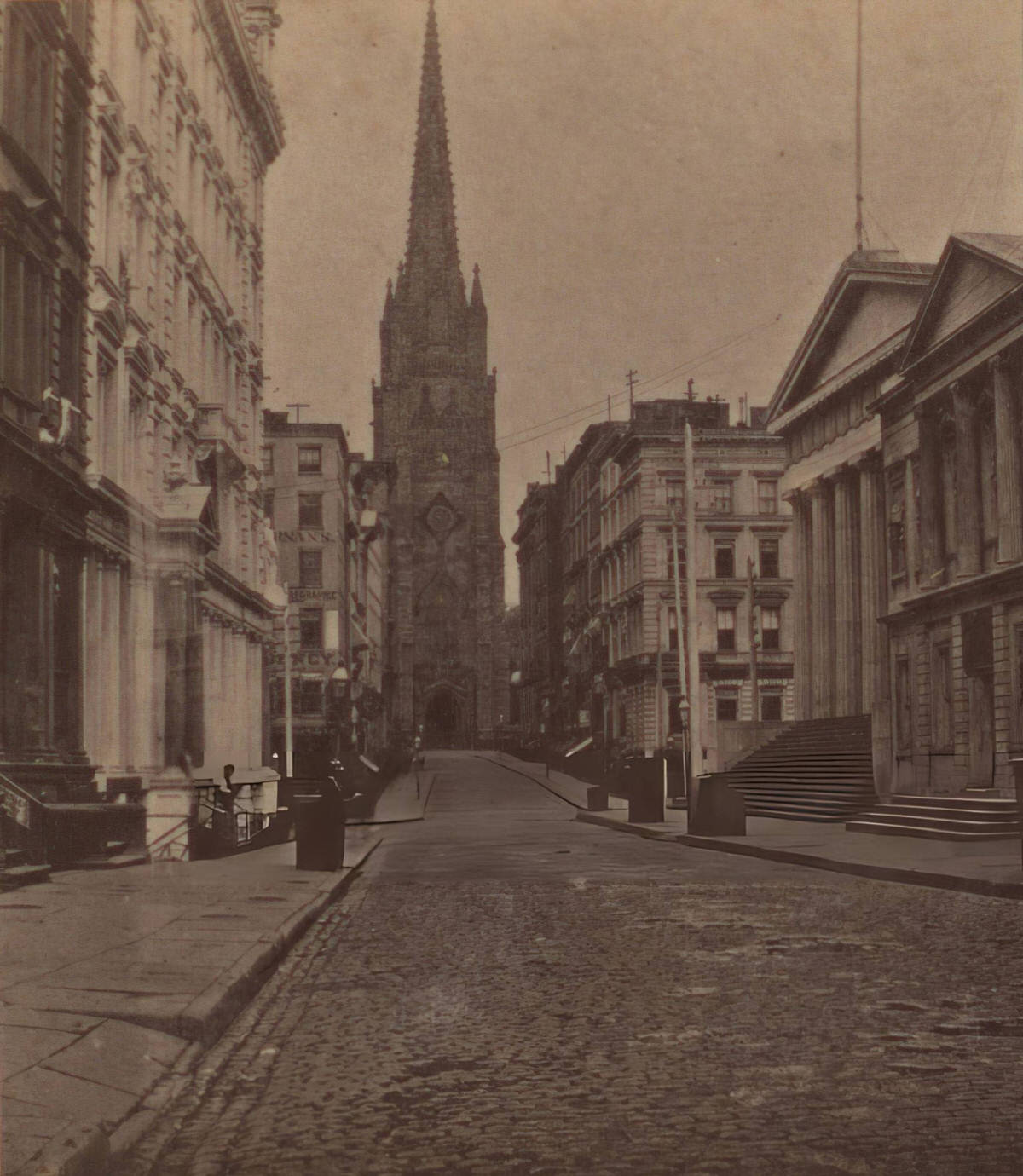
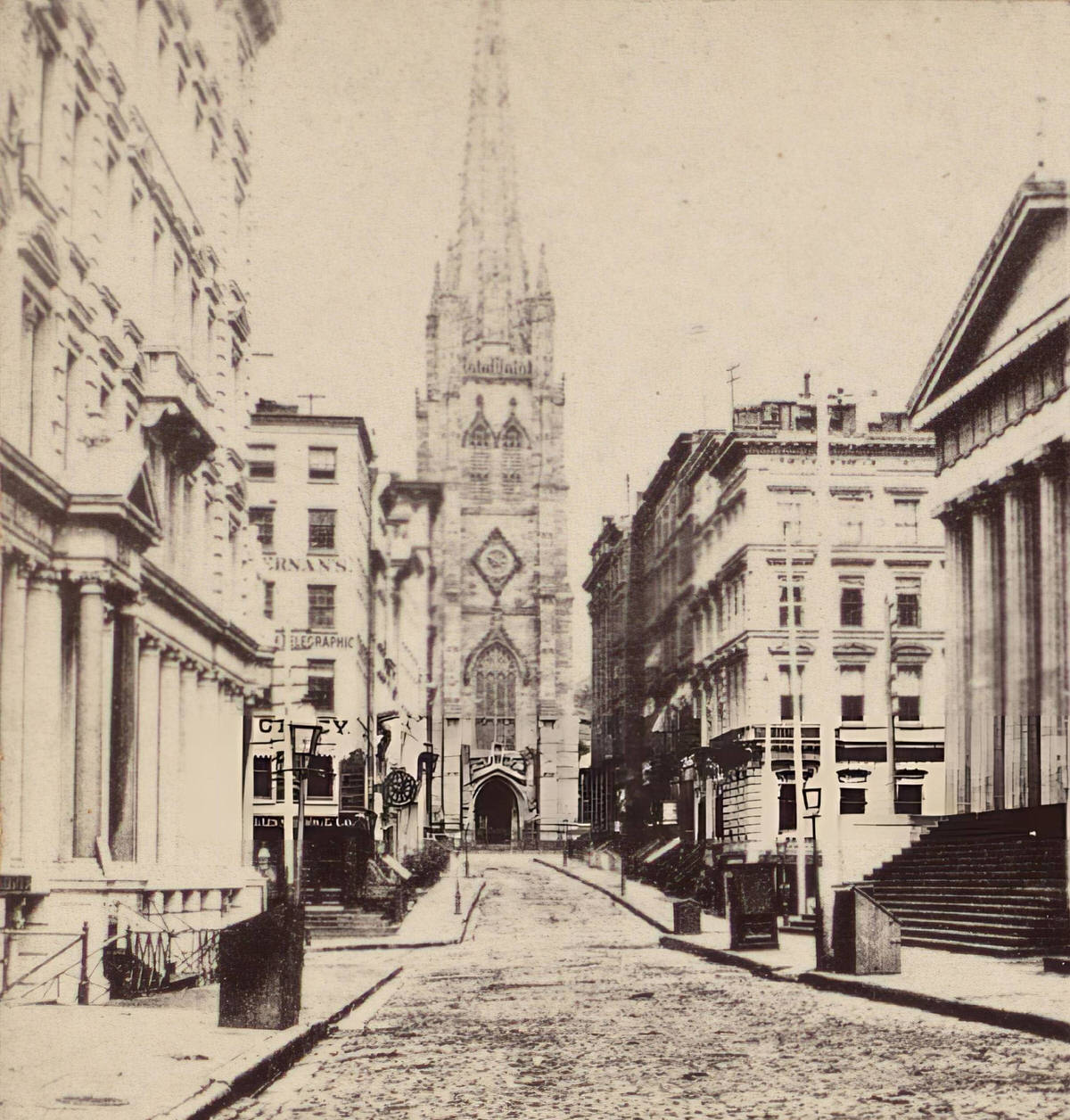
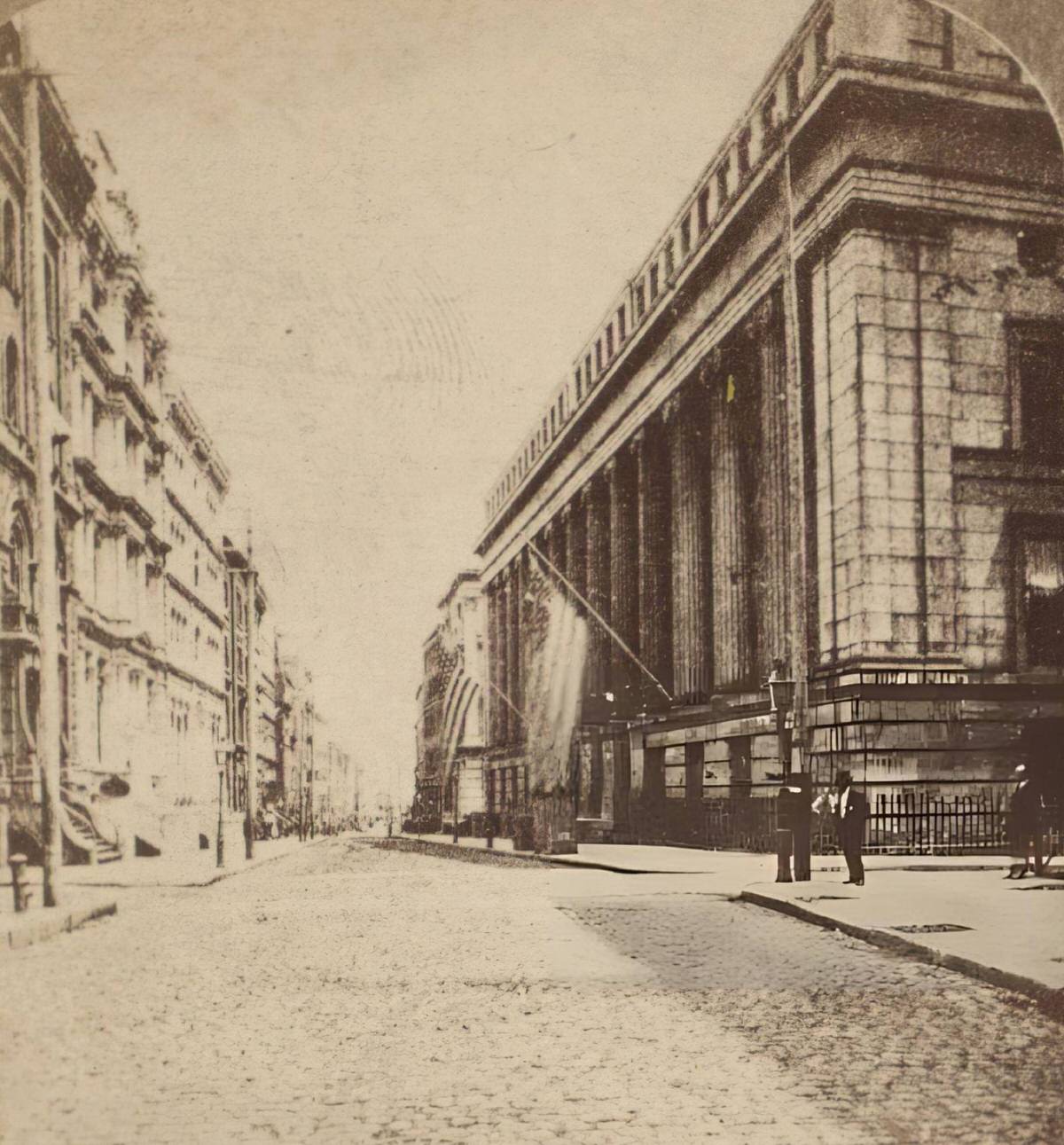
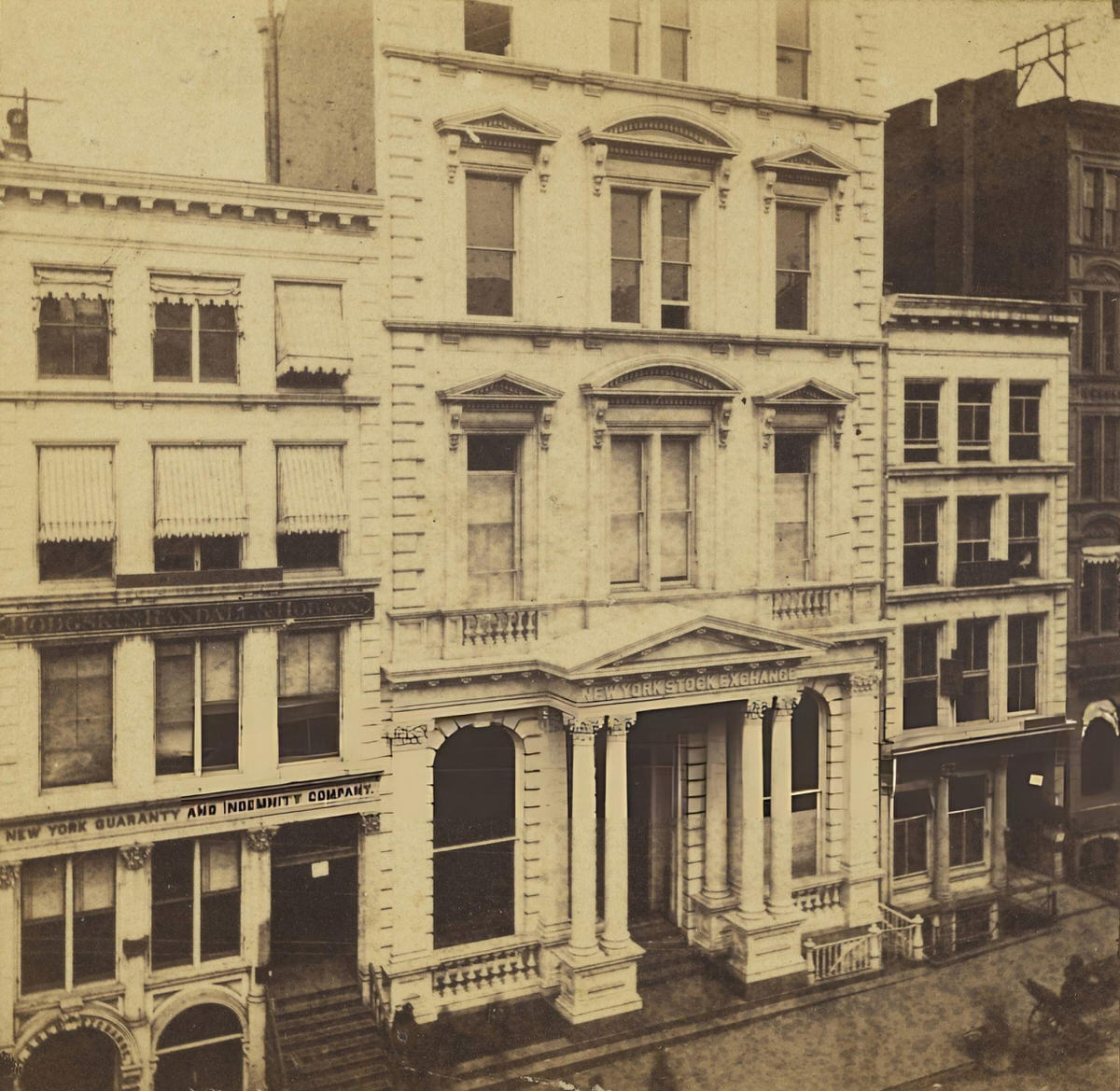
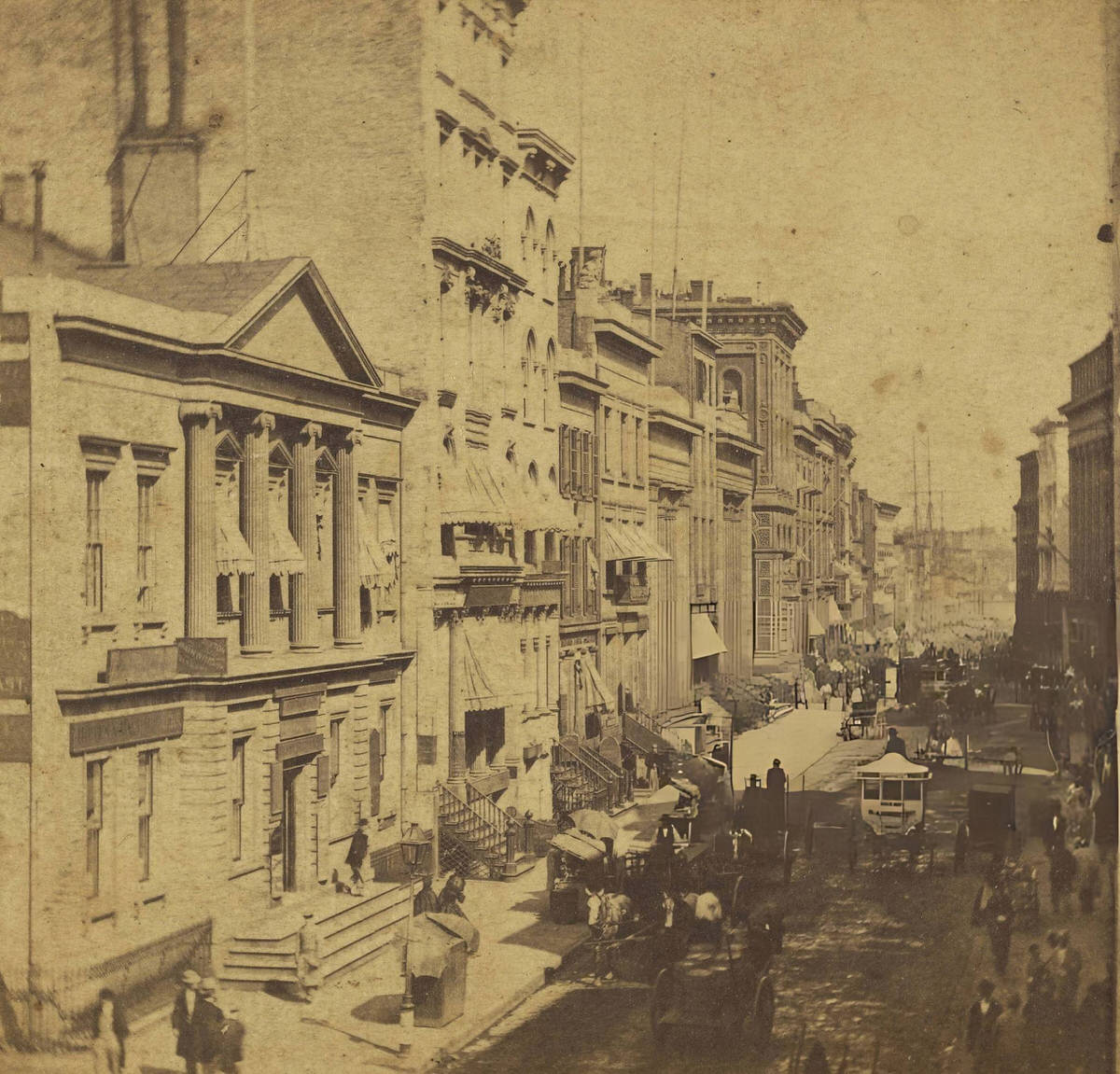
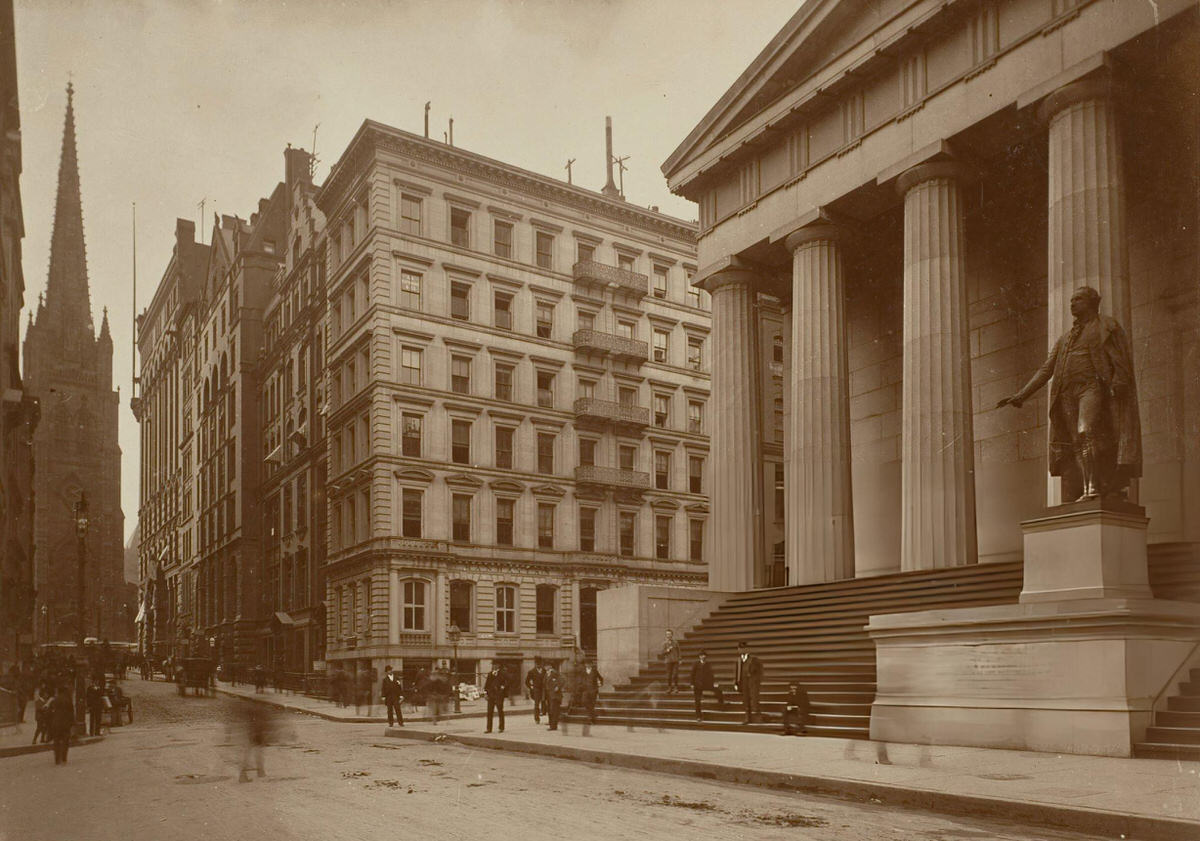
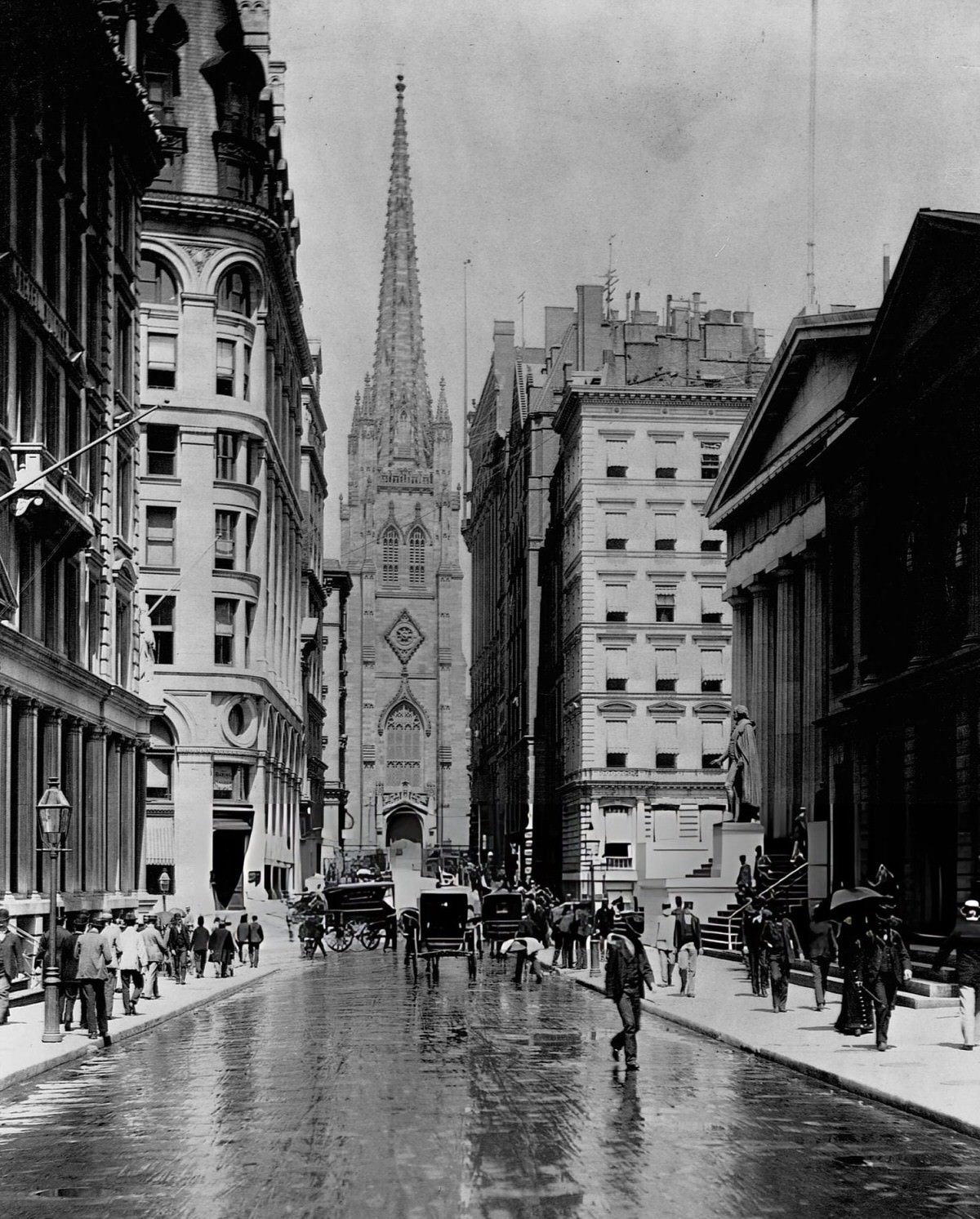
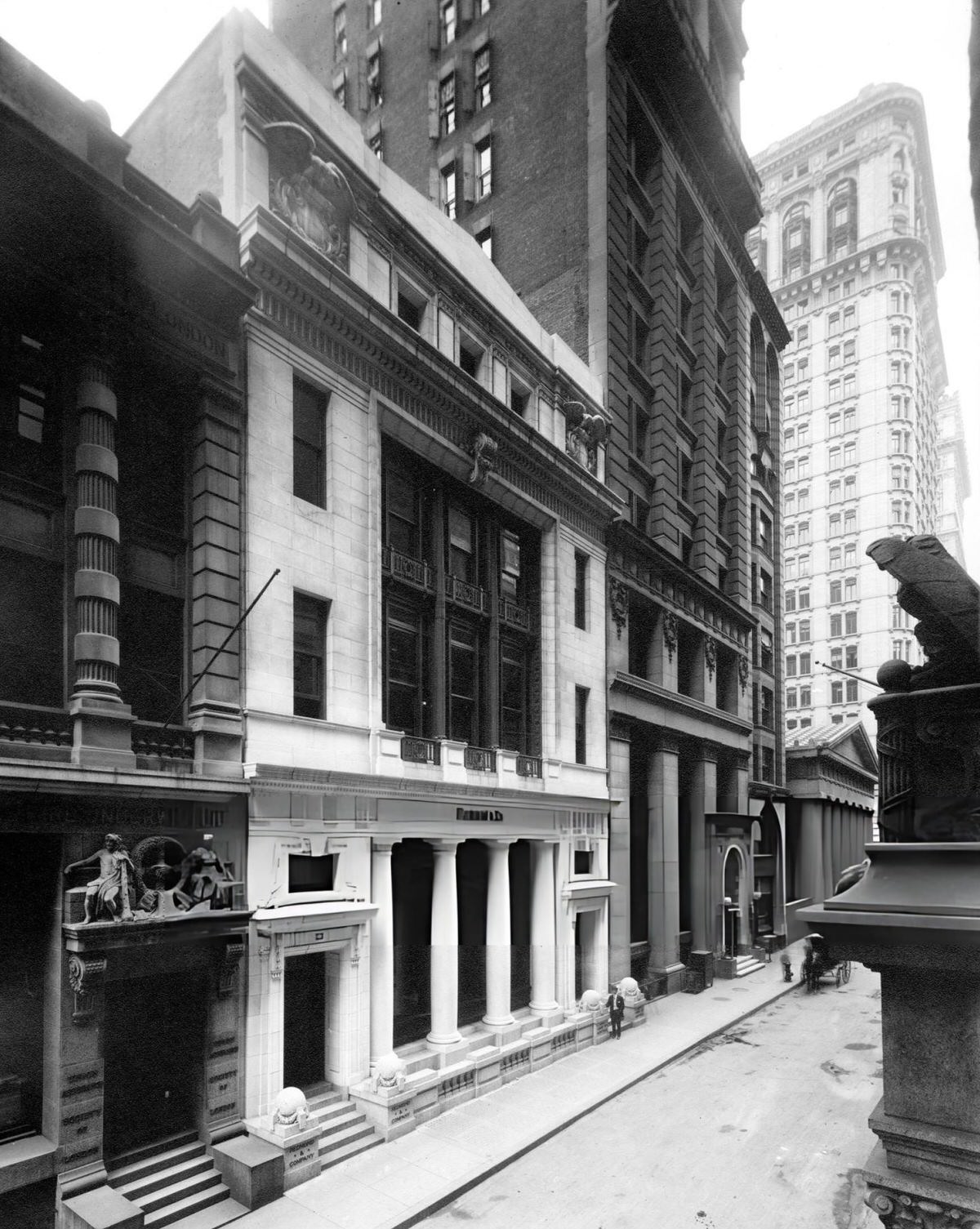
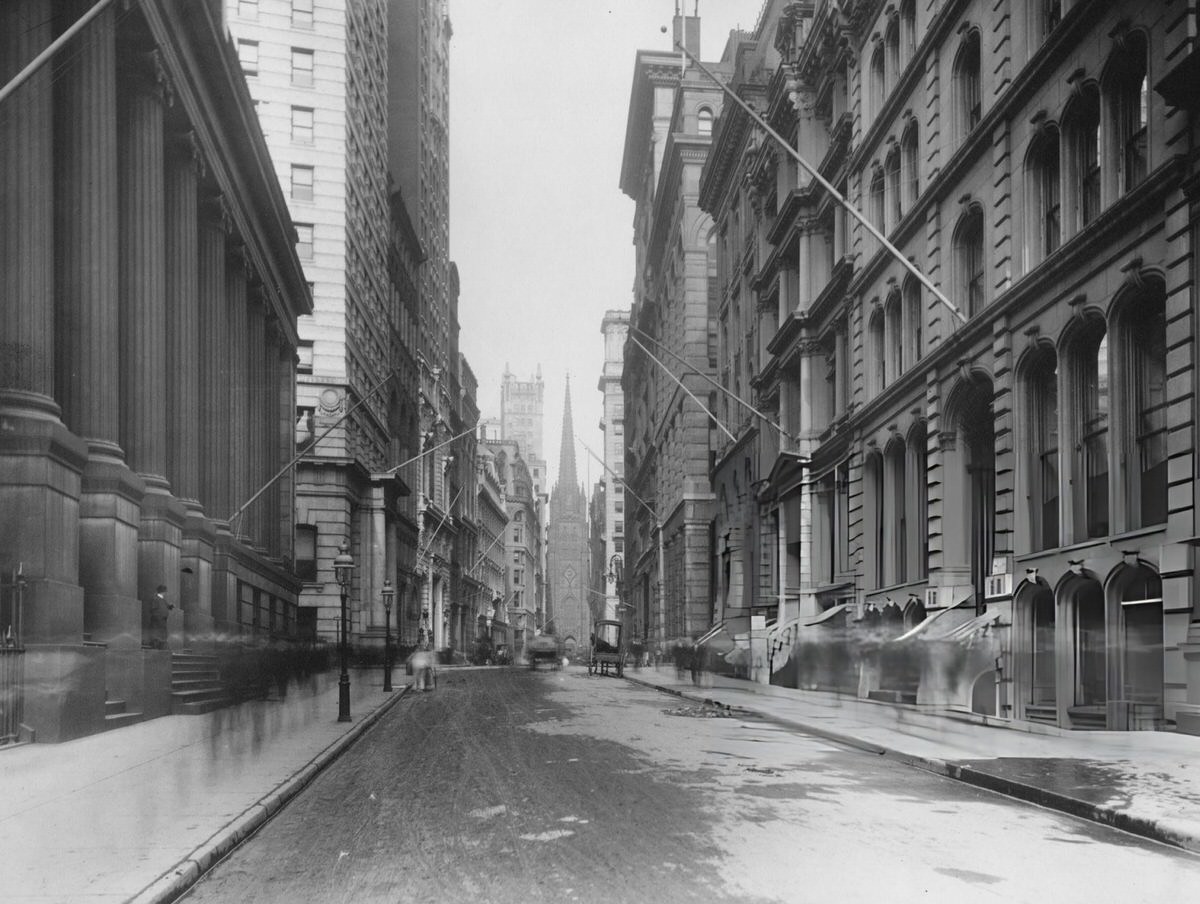
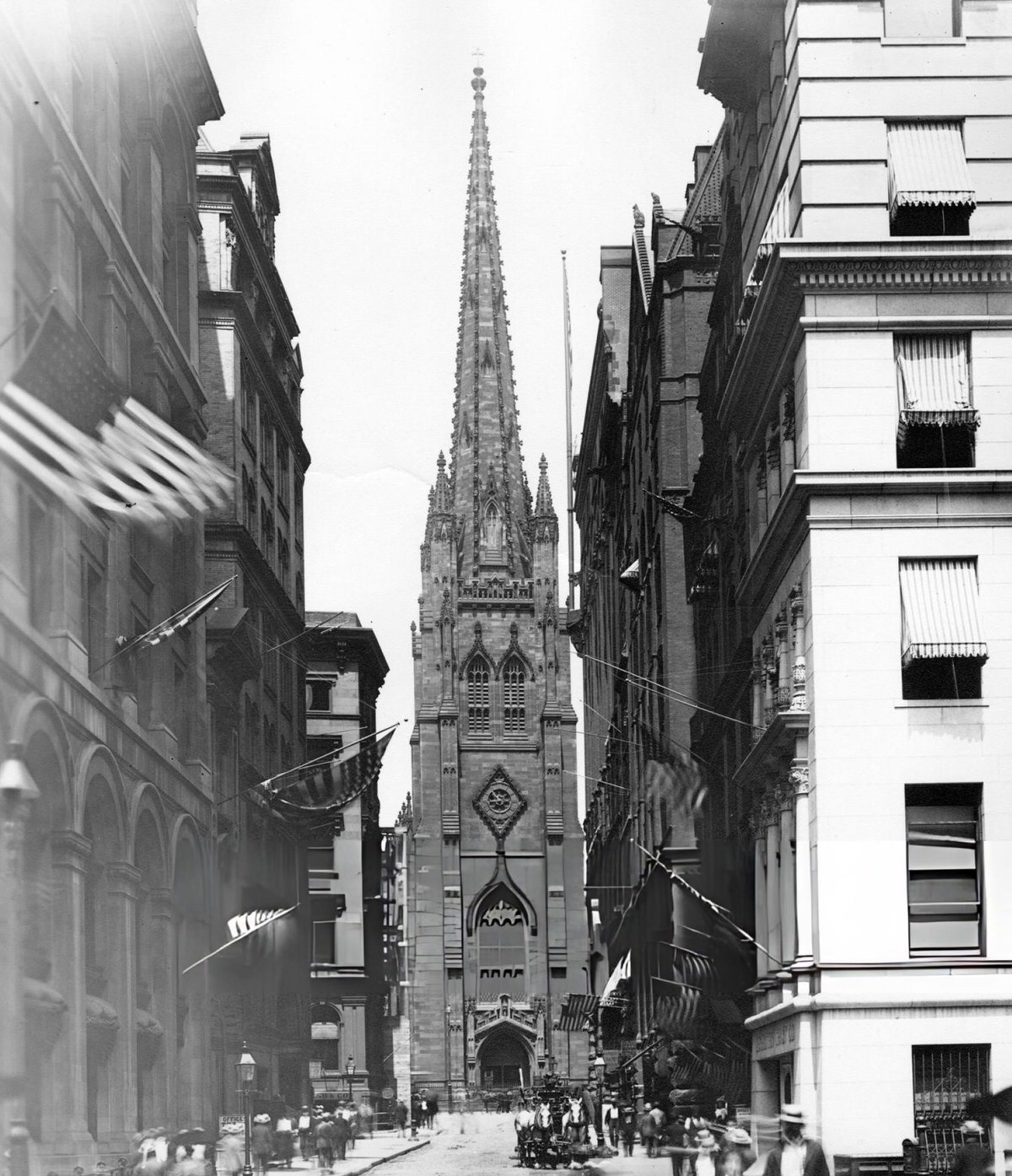
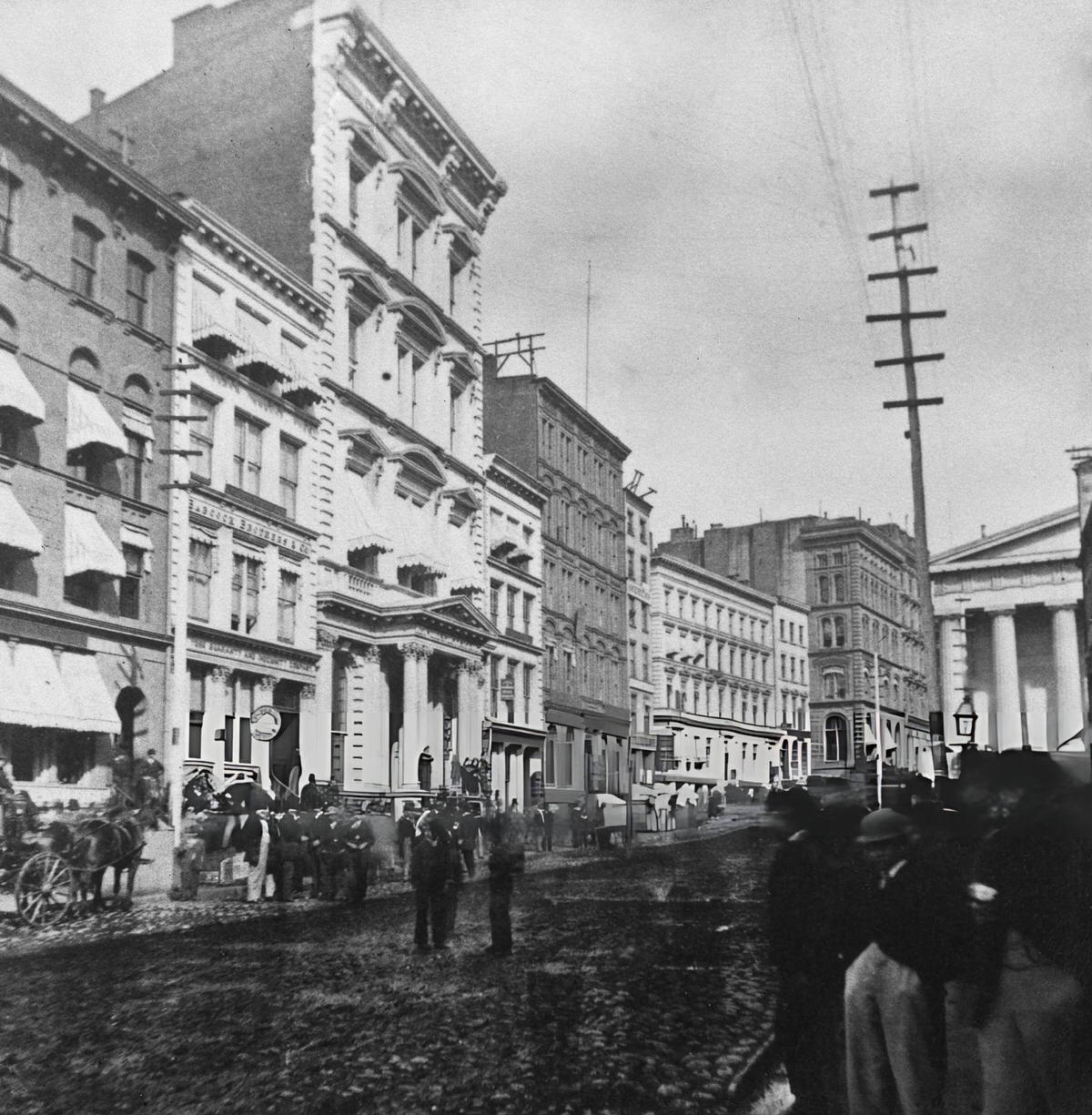
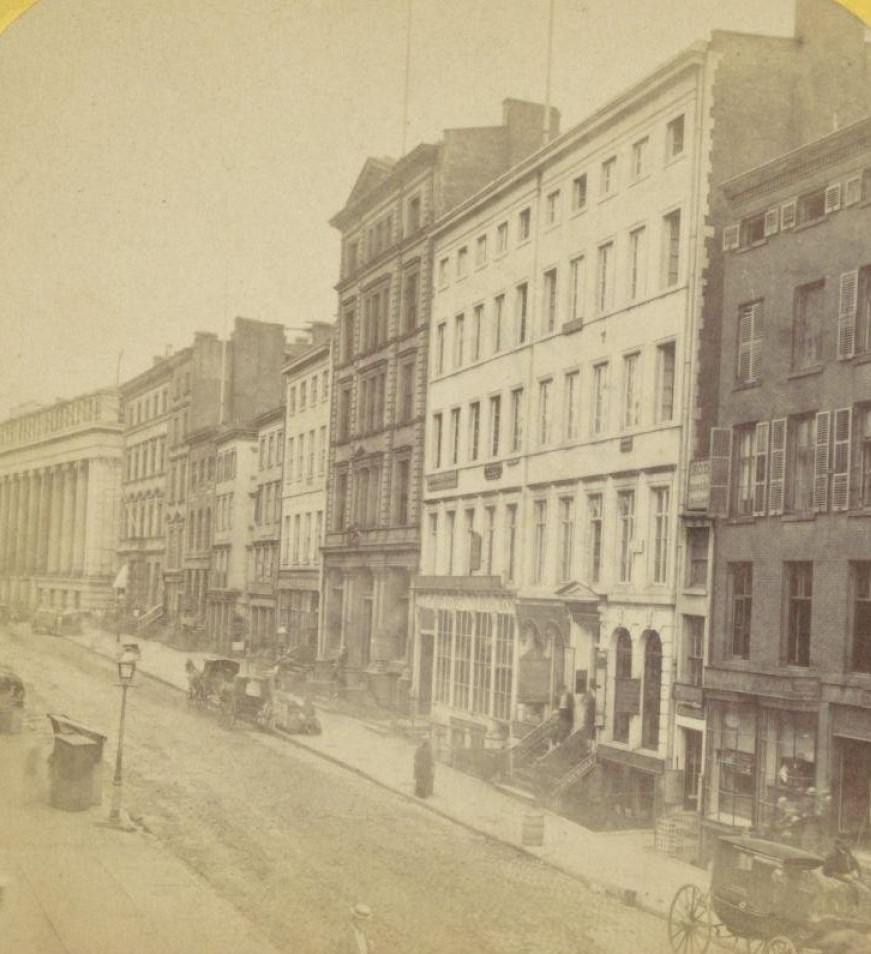
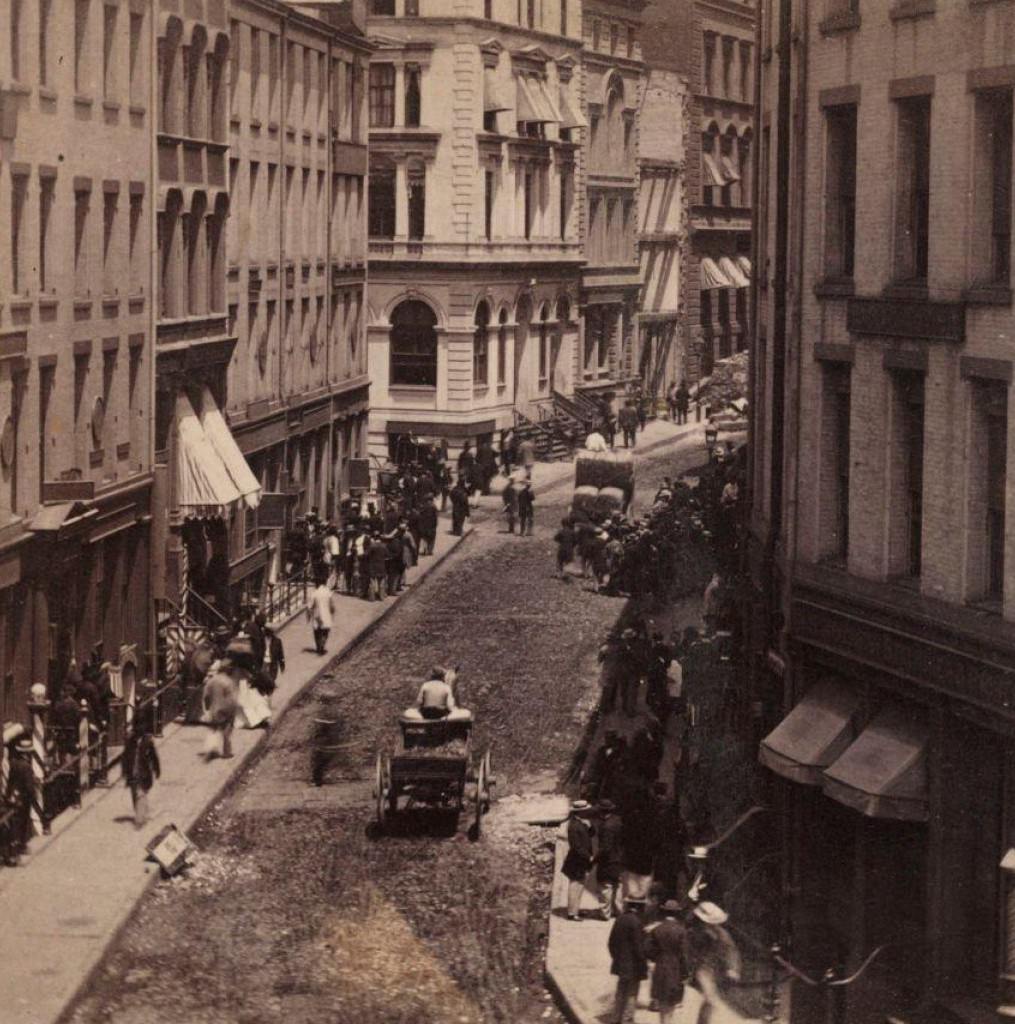
In the mid-1860s, Wall Street was a narrow, cobblestone road in Lower Manhattan. It served as the financial heart of a country recovering from the Civil War. The New York Stock Exchange (NYSE) did not yet have the massive building with Greek columns that stands today. Instead, it operated out of a smaller, four-story building at 10-12 Broad Street. This structure was completed in 1865 and was the first permanent home owned by the Exchange.
The Trading Floor and the Call System
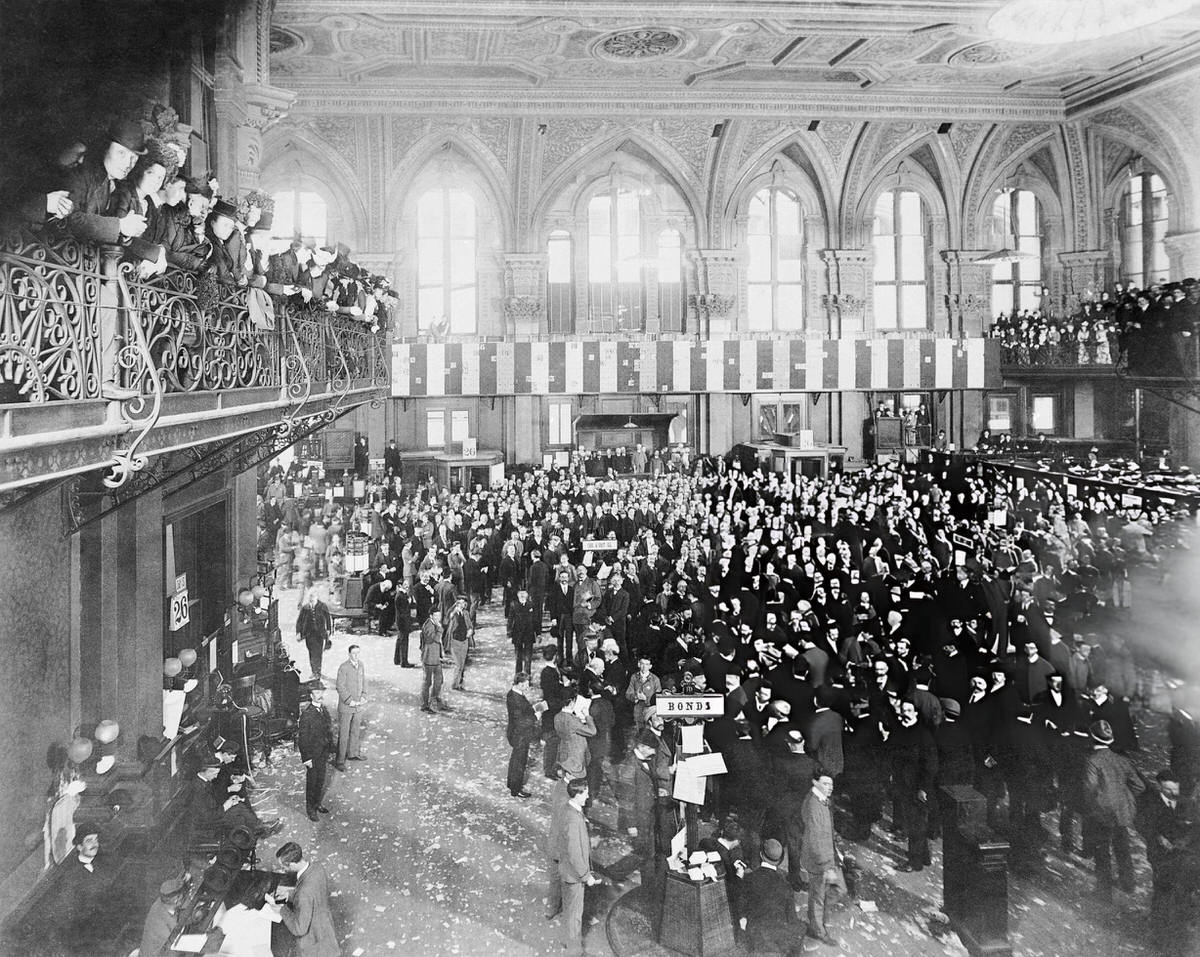
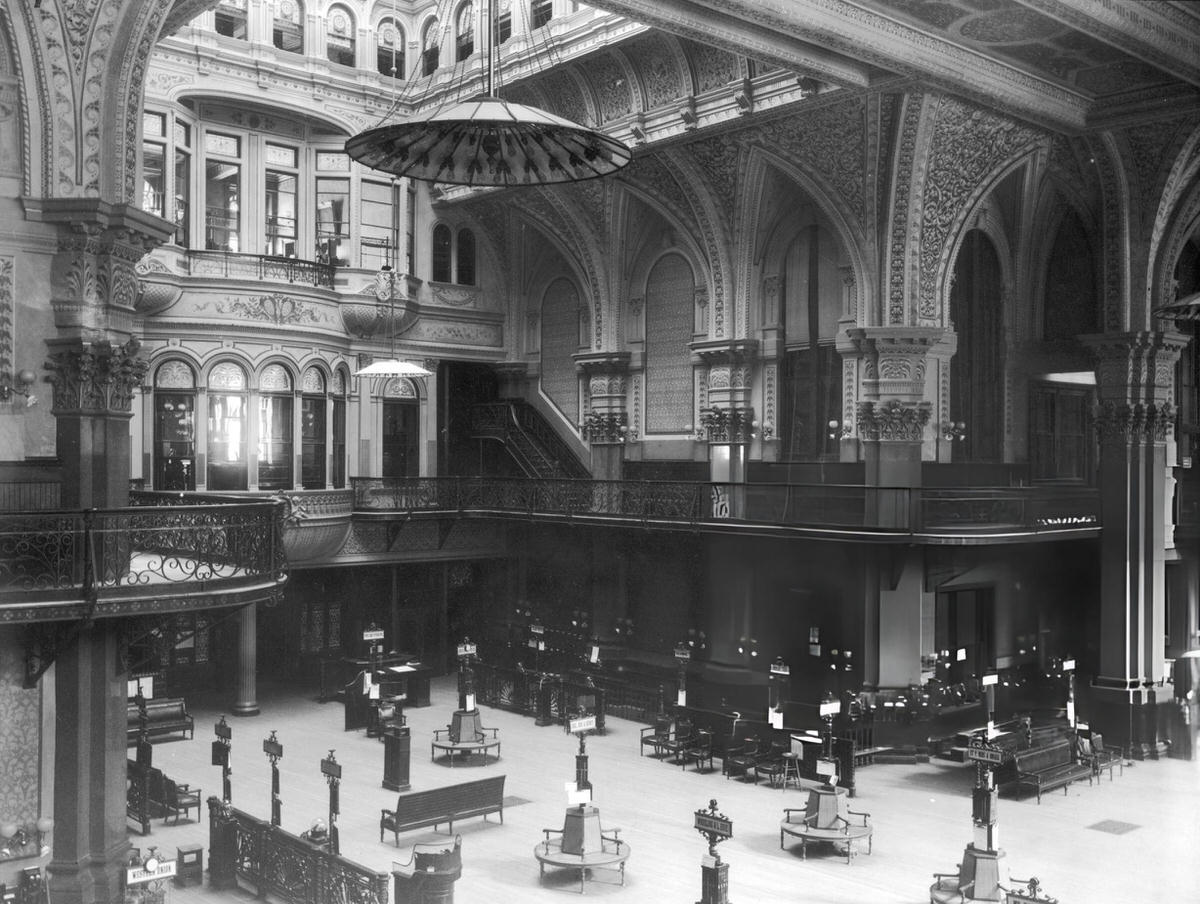
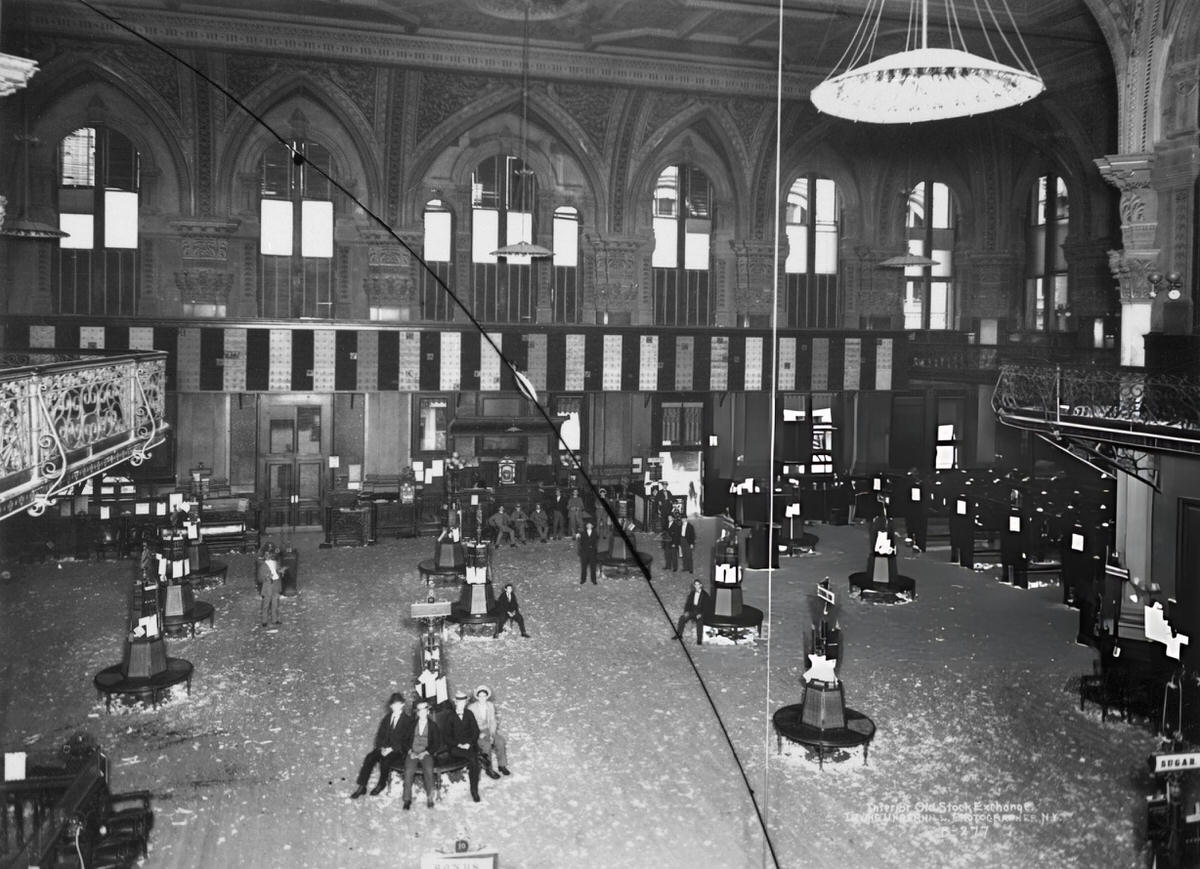
The main trading room was known as the “Board Room.” Inside, the atmosphere was more formal than the chaotic scenes of later decades. During the 1860s and 1870s, the Exchange used a “call system.” The president of the Exchange sat on a high platform and called out the name of each stock one by one. Members sat in assigned chairs and made bids only when that specific stock was mentioned. If a member stood up or shouted out of turn, he was fined several dollars.
As the volume of trading increased in the 1880s, the call system became too slow. The Exchange shifted to “continuous trading.” This allowed brokers to trade any stock at any time during the day. This change transformed the room from a quiet hall into a crowded, noisy floor where men scrambled to find buyers and sellers. To organize the chaos, the Exchange installed “trading posts.” These were specific spots on the floor where certain stocks were bought and sold.
Read more
The Technology of the Ticker
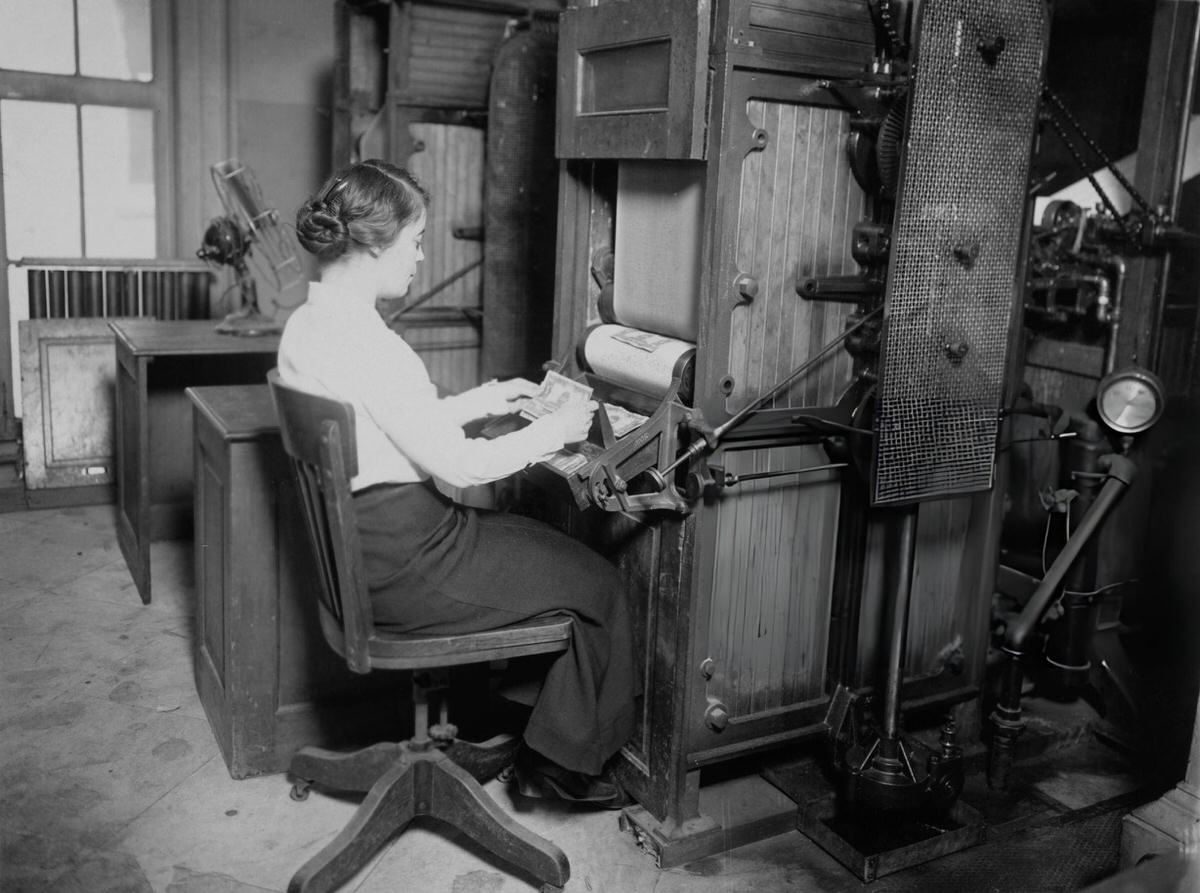
Before 1867, information about stock prices traveled by hand. Young boys, called “runners,” sprinted from the Exchange to various bank offices with handwritten notes. This changed with the invention of the stock ticker. Edward Calahan created the first ticker, and Thomas Edison later improved it. The machine used telegraph wires to transmit price data instantly to a small printing device.
The ticker printed numbers and letters onto a thin strip of paper called “ticker tape.” This allowed investors across the city to see price changes without being physically present at Wall Street. By the 1890s, these machines were in every major brokerage office in New York. The constant clicking sound of the tickers became the background noise of the financial district.
The Curb Market and Street Trading
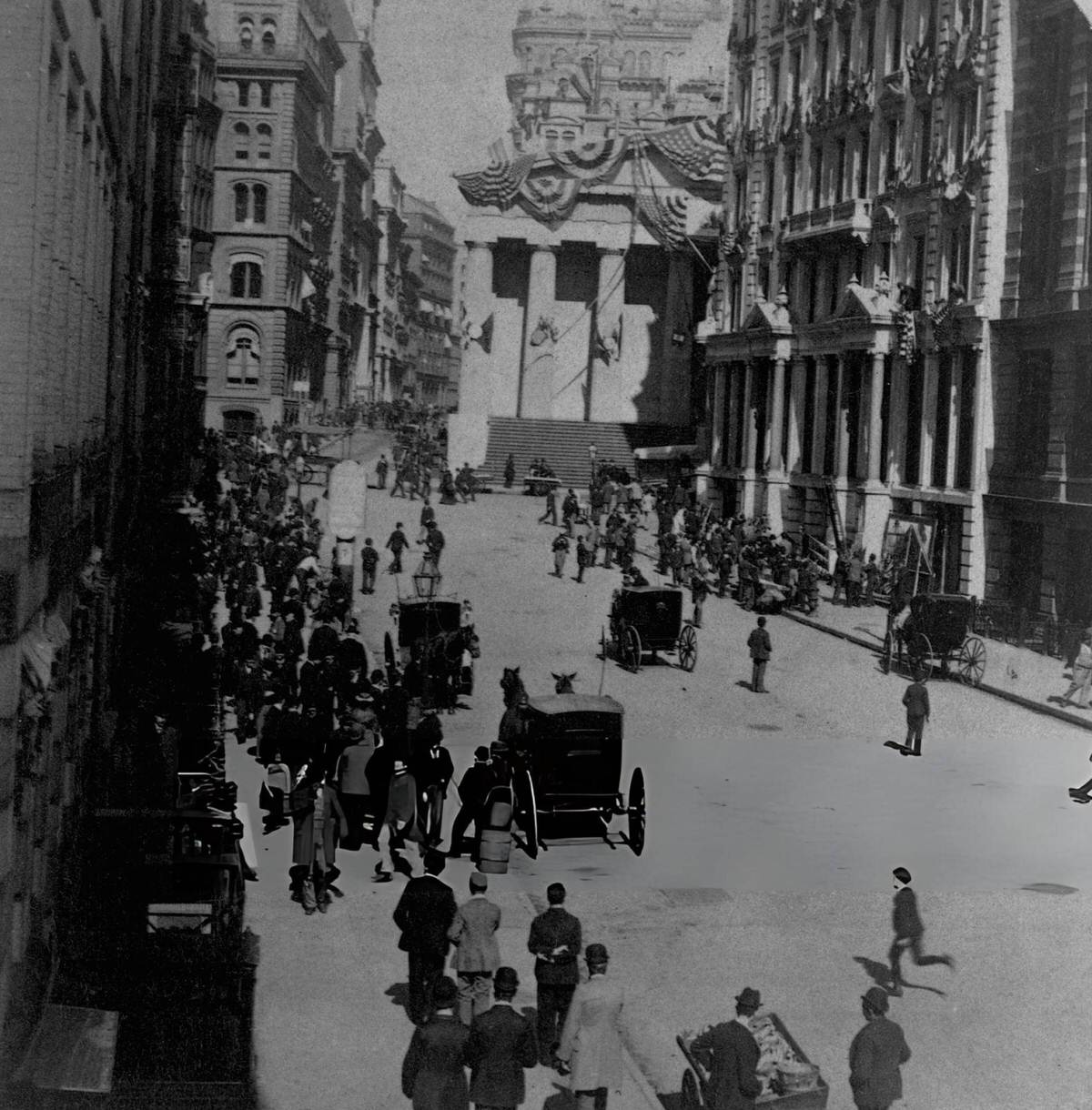
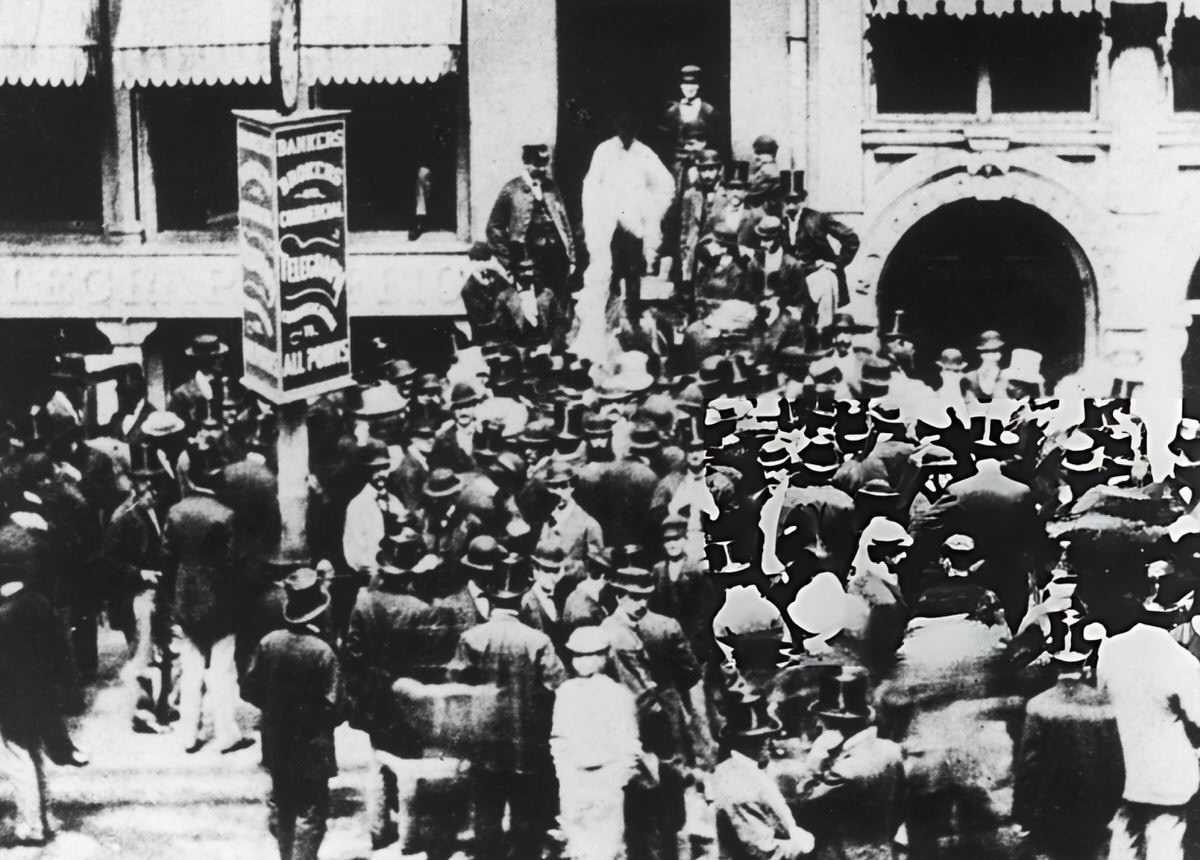
Not all trading happened inside the official NYSE building. Stocks that were too new or too risky to be listed on the big Exchange were traded outside on the literal curb of the street. This was known as the “Curb Market.” Hundreds of brokers stood in the middle of Broad Street, regardless of the weather. They wore bright hats or colorful jackets so their assistants, who watched from office windows above, could identify them.
Communication between the street and the offices was done through hand signals. Brokers used a finger-coding system to shout prices over the roar of horses and wagons. Despite the lack of a roof, the Curb Market handled millions of dollars in trades every day. It was a rugged, informal version of the high-finance world happening inside the marble walls of the NYSE.
The Physical Environment of Wall Street
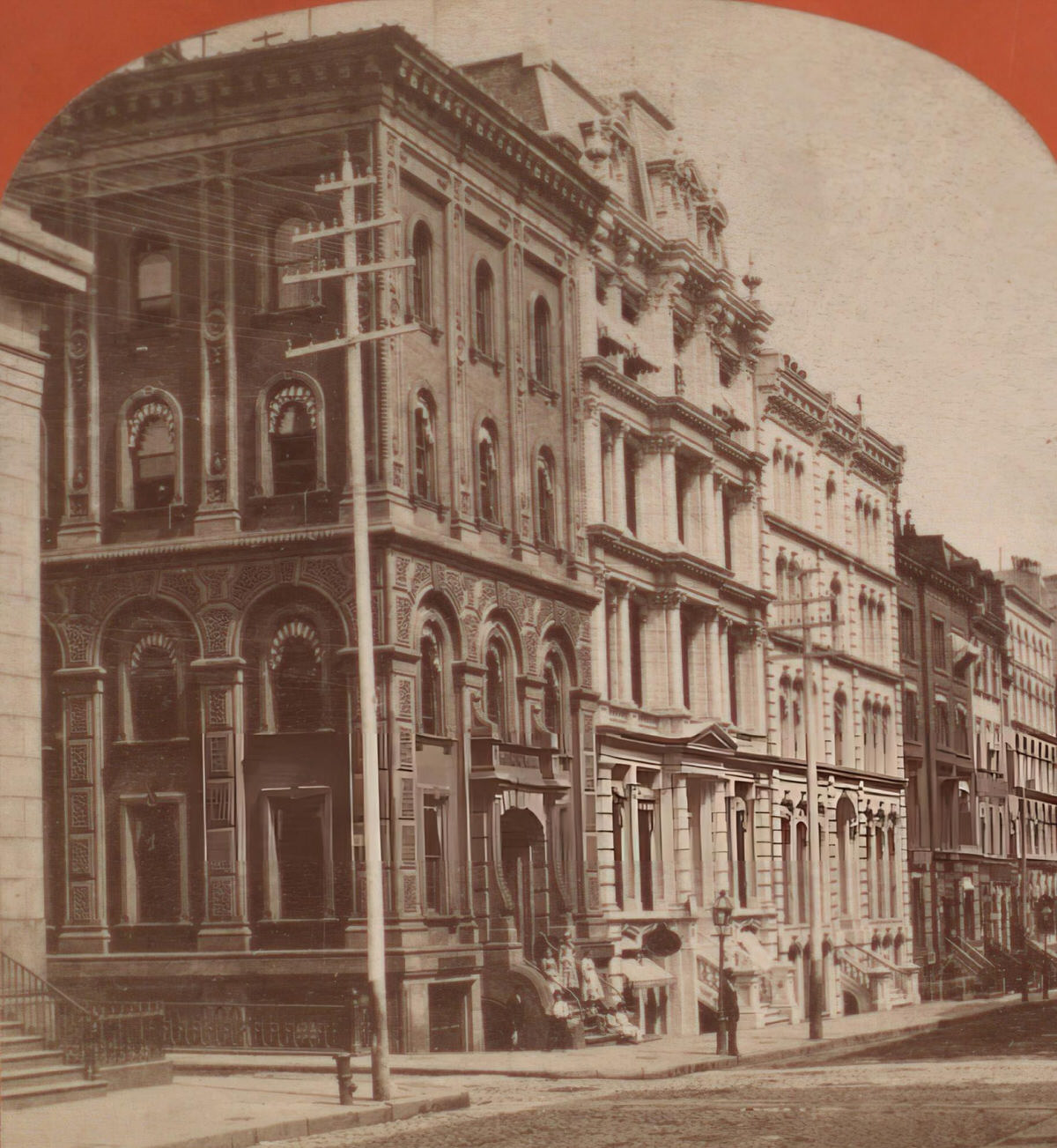
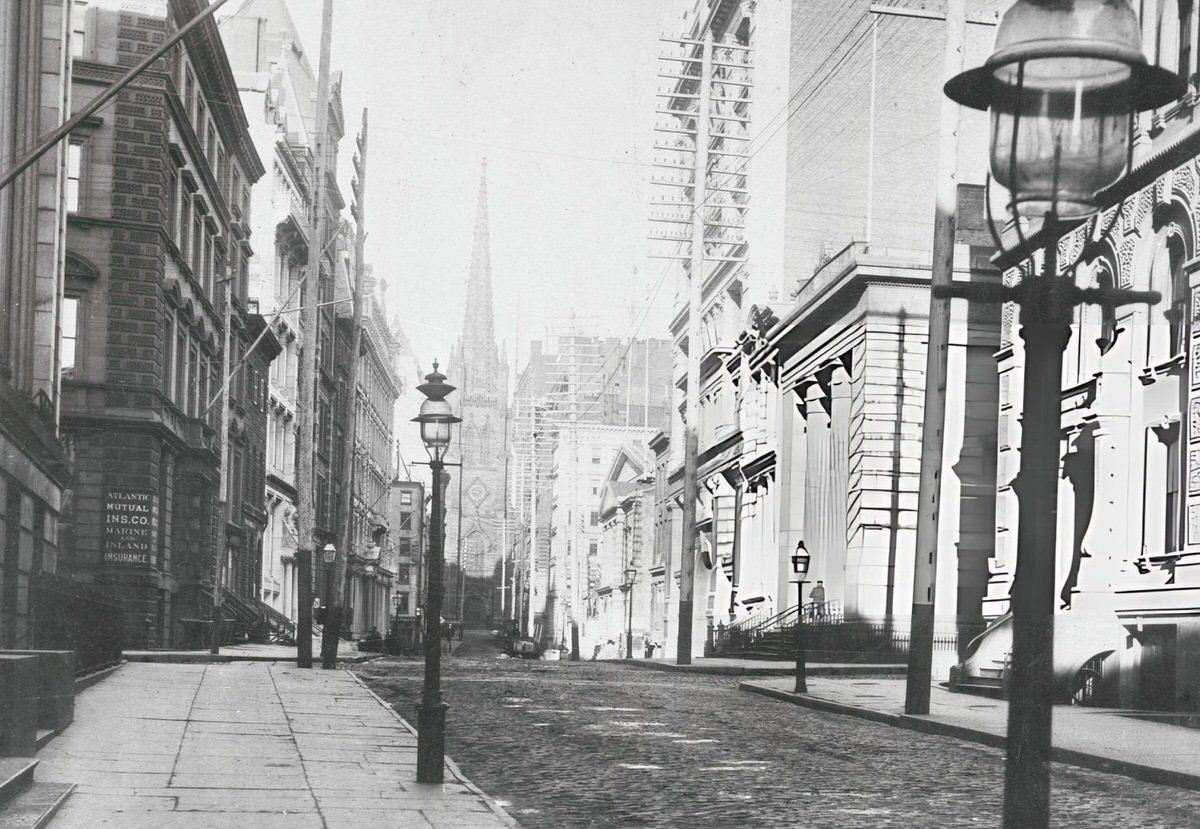
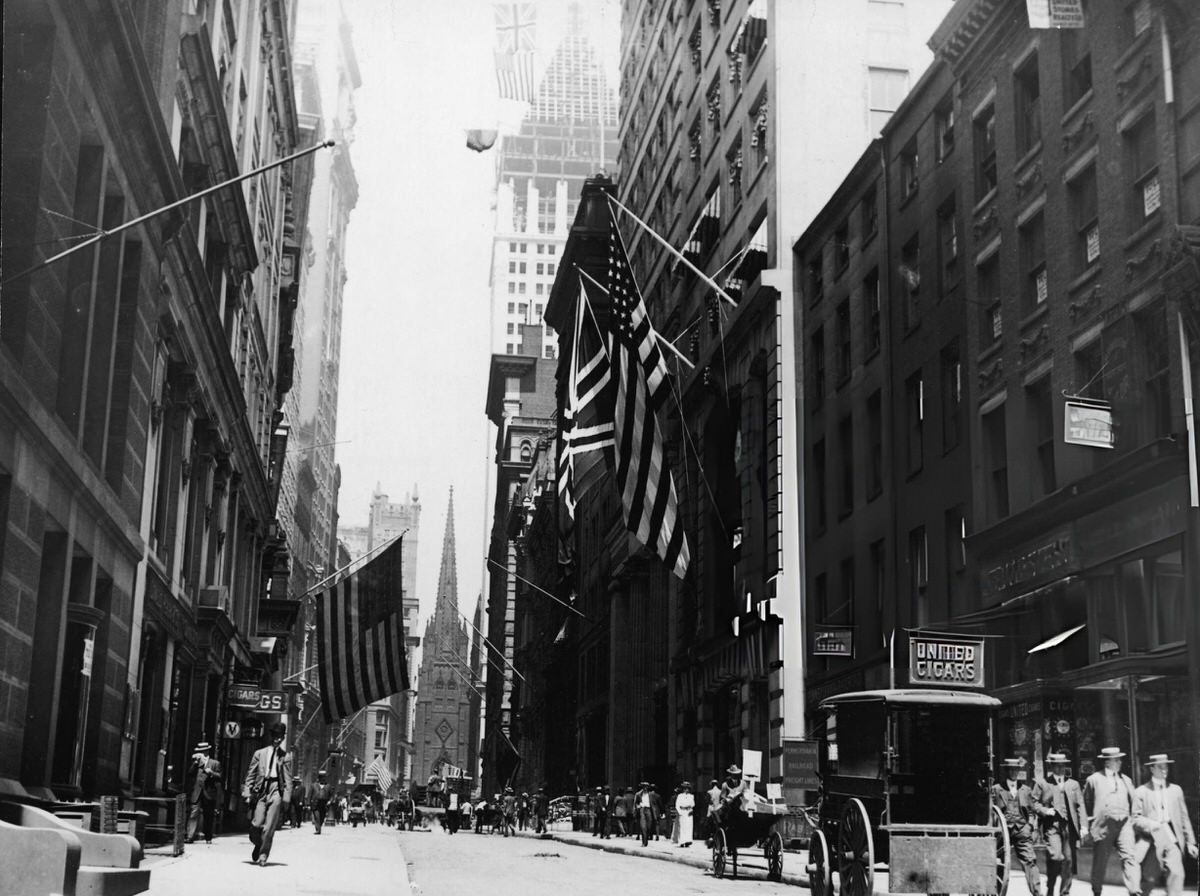
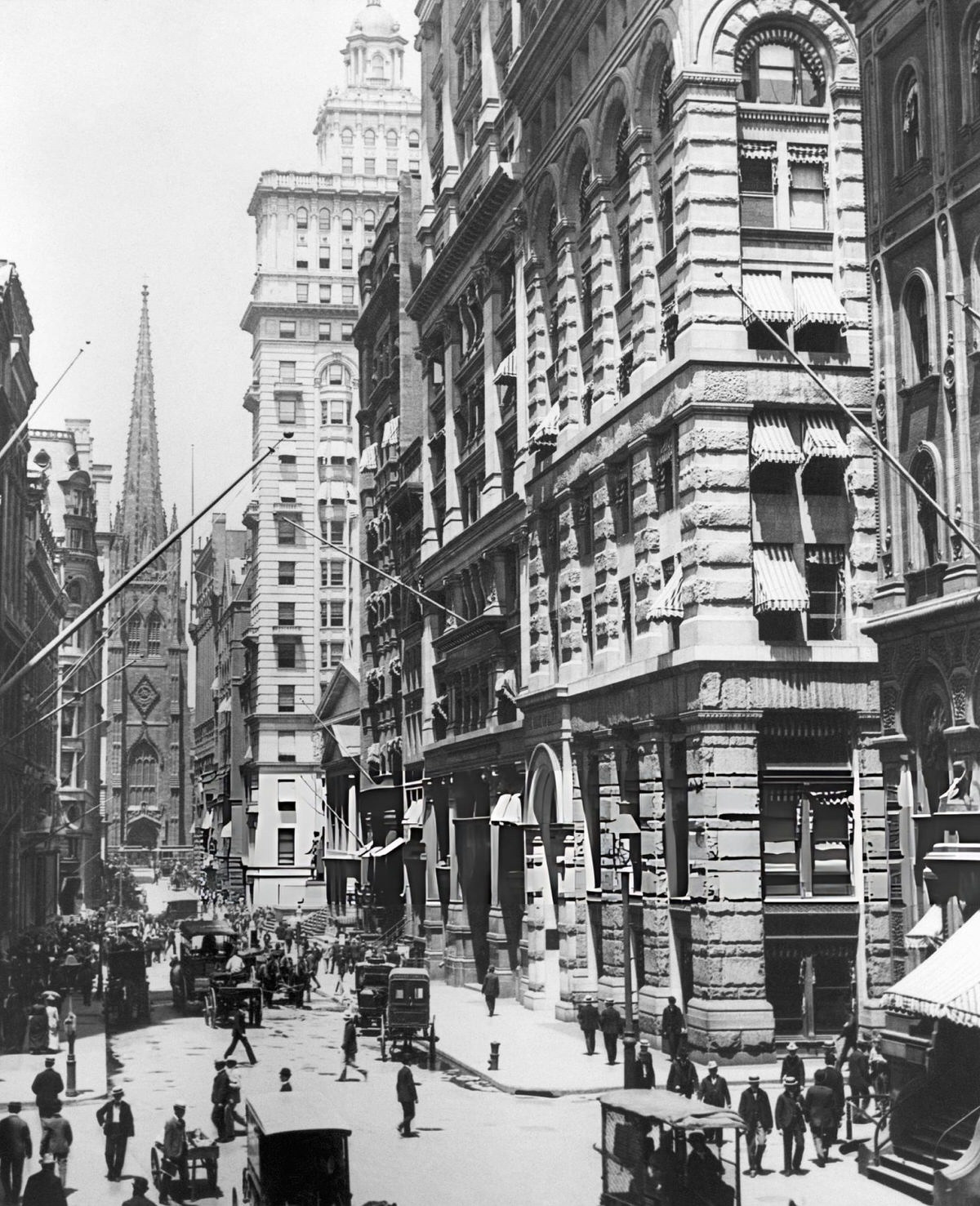
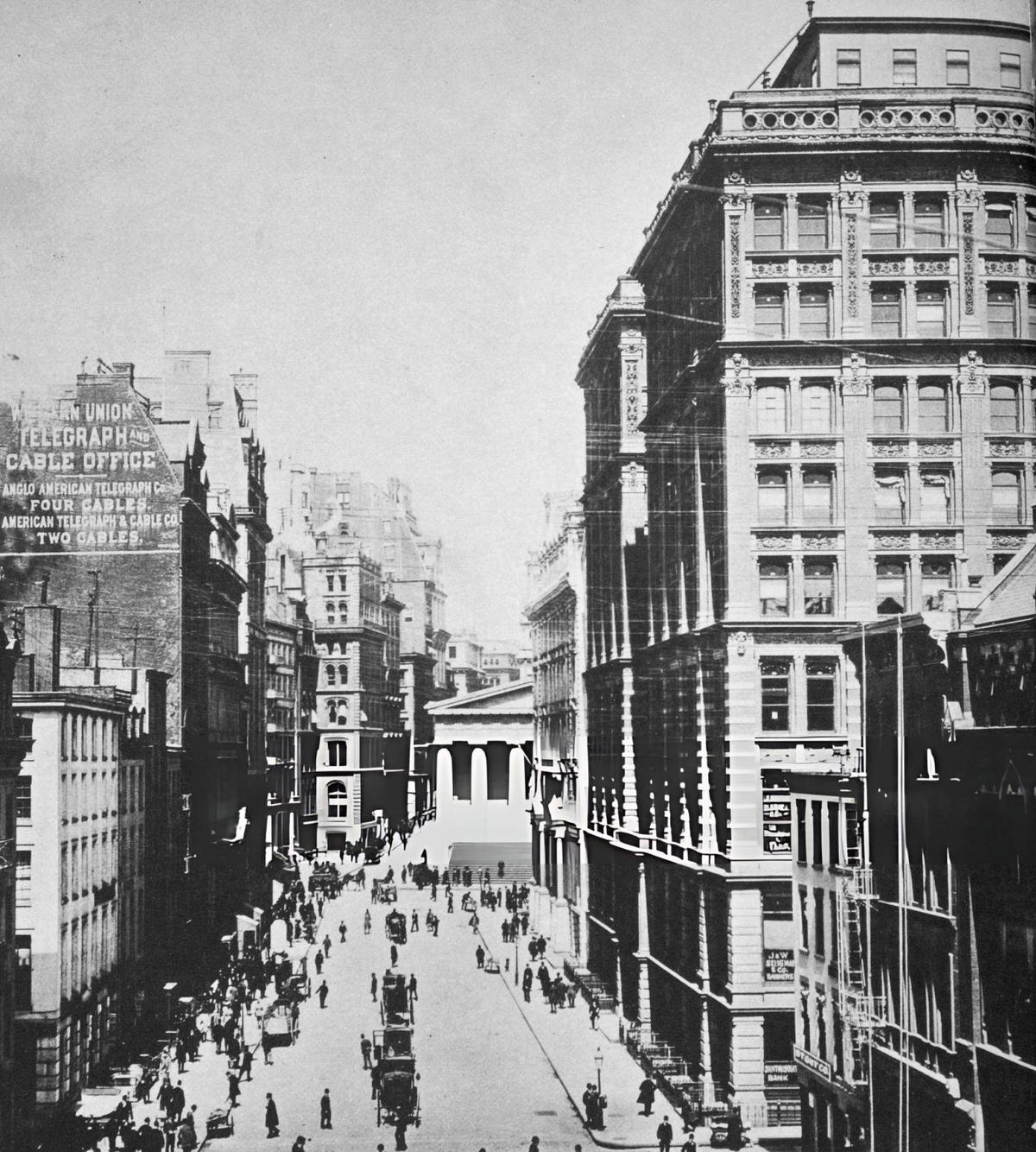
Wall Street in the 1870s was a forest of overhead wires. Thousands of telegraph and telephone lines stretched between buildings, blocking the view of the sky. The air smelled of coal smoke from nearby office chimneys and manure from the horses that pulled delivery carts. Most buildings were only five or six stories tall, made of brownstone or red brick.
In 1882, Thomas Edison opened the Pearl Street Station, which brought the first electric lights to the area. Before this, offices used gas lamps that flickered and produced heat. The introduction of electricity allowed brokers to work later into the evening. It also powered the first electric elevators, which enabled developers to begin planning the “skyscrapers” that would soon redefine the district.
The Gold Room and Financial Panics
During the 1860s, gold was traded in a separate building known as the “Gold Room” on New Street. Because the value of paper money shifted constantly during the Civil War, gold trading was extremely volatile. The most famous event here was “Black Friday” on September 24, 1869. Two speculators, Jay Gould and James Fisk, tried to corner the gold market.
The scene in the Gold Room that day was violent. Men screamed and fainted as the price of gold plummeted in minutes. The government eventually stepped in to sell gold and stabilize the economy. These types of “panics” occurred several times between 1873 and 1893. Each time, the banks on Wall Street had to close their doors to prevent angry crowds from withdrawing all their cash.
The Social Life of the District
The workforce on Wall Street was almost entirely male during this era. Most men wore black frock coats, silk top hats, and high collars. After the markets closed at 3:00 p.m., the brokers gathered at nearby restaurants like Delmonico’s. Here, they discussed the day’s trades over expensive meals.
For lower-level clerks and messengers, lunch was purchased from street vendors selling oysters or hot pies. The district was strictly a place of business; once the sun went down, the streets became deserted. There were no residents in the area, as the former houses had all been converted into banks, insurance offices, and legal firms by the 1890s.

GIPHY App Key not set. Please check settings