

 Dennis Saul
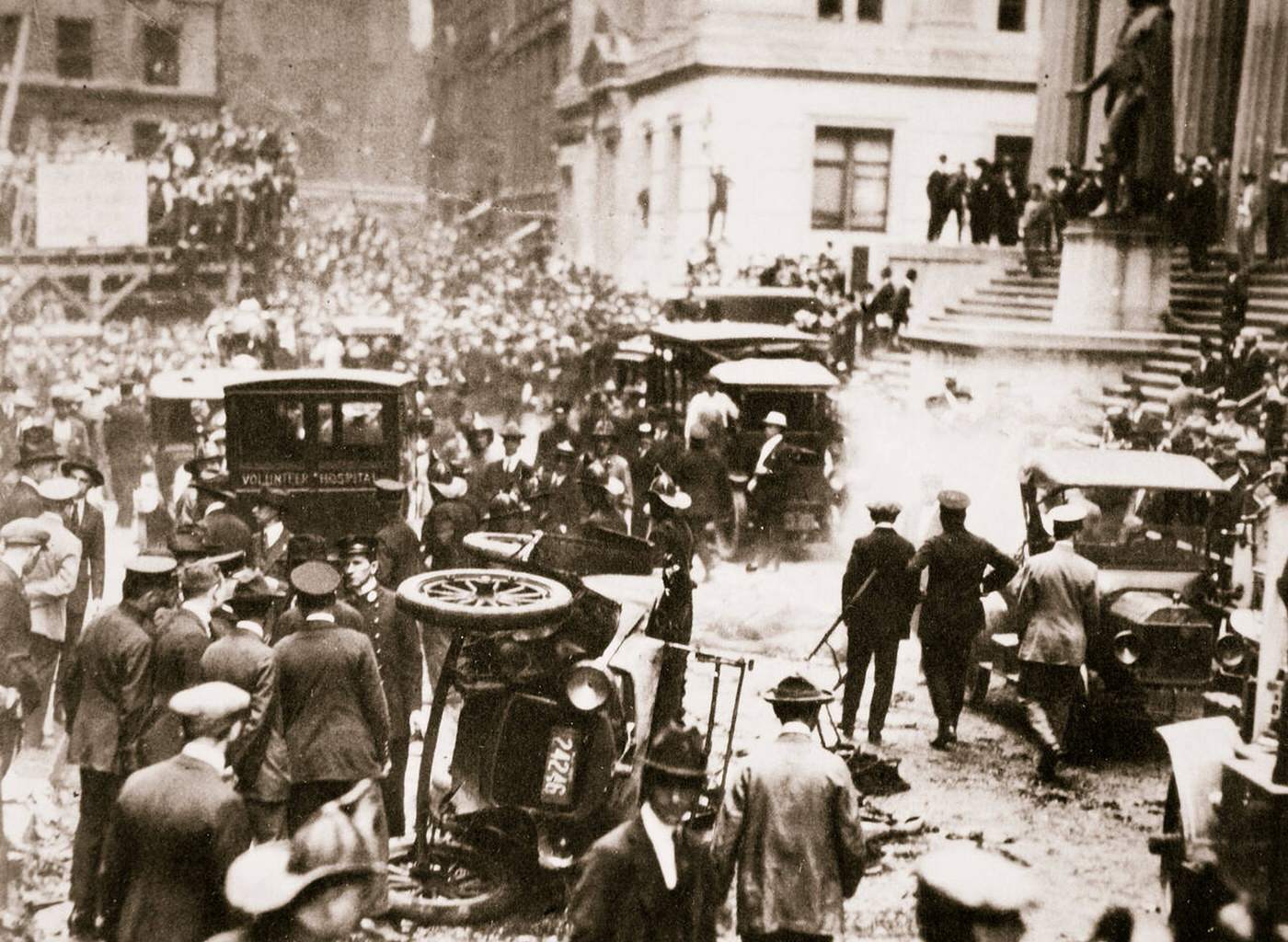
On September 16, 1920, a deadly explosion shook the Financial District of New York City. At 12:01 p.m., a horse-drawn wagon stopped across from the headquarters of J. P. Morgan & Co. at 23 Wall Street. One minute later, the wagon exploded.
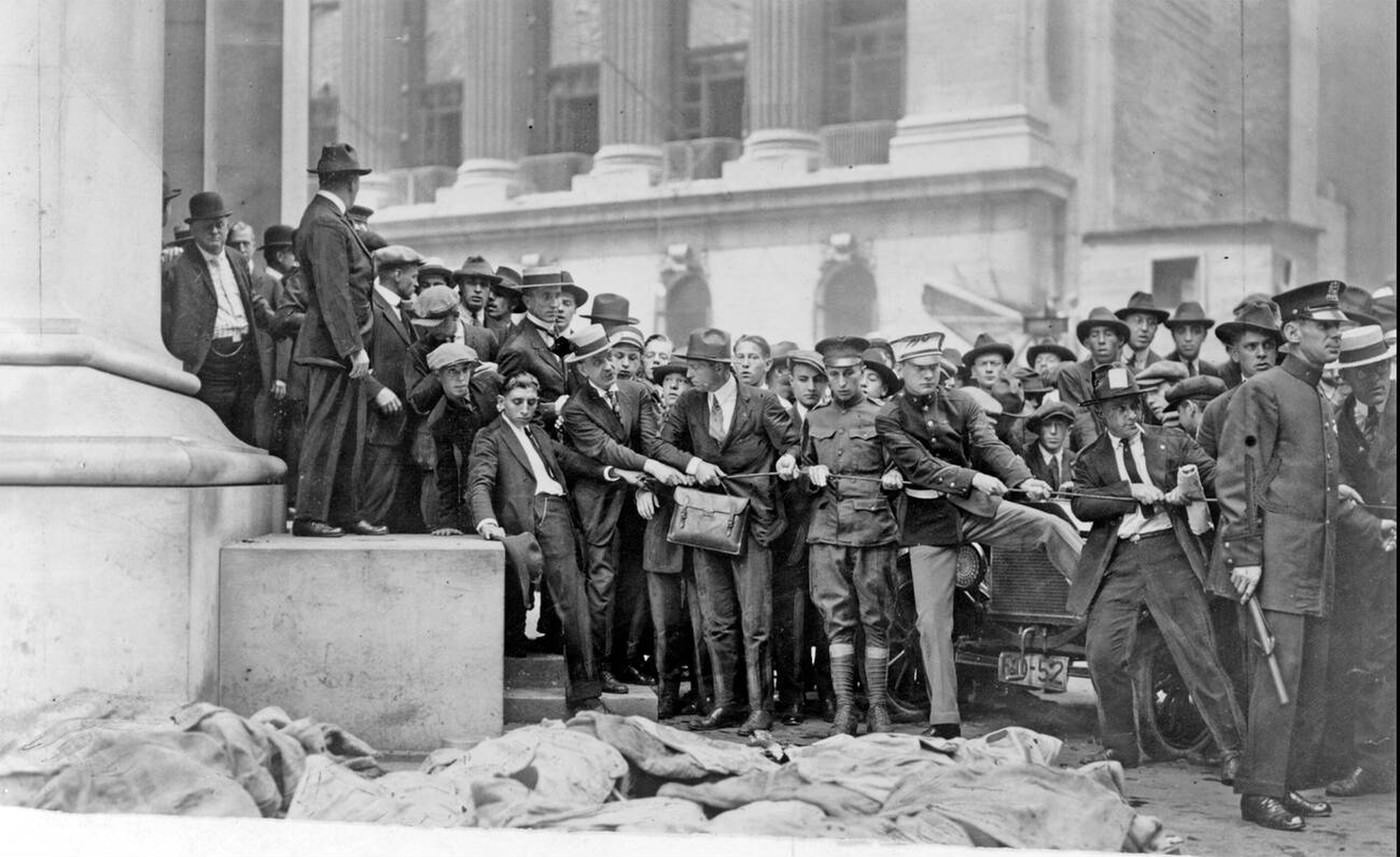
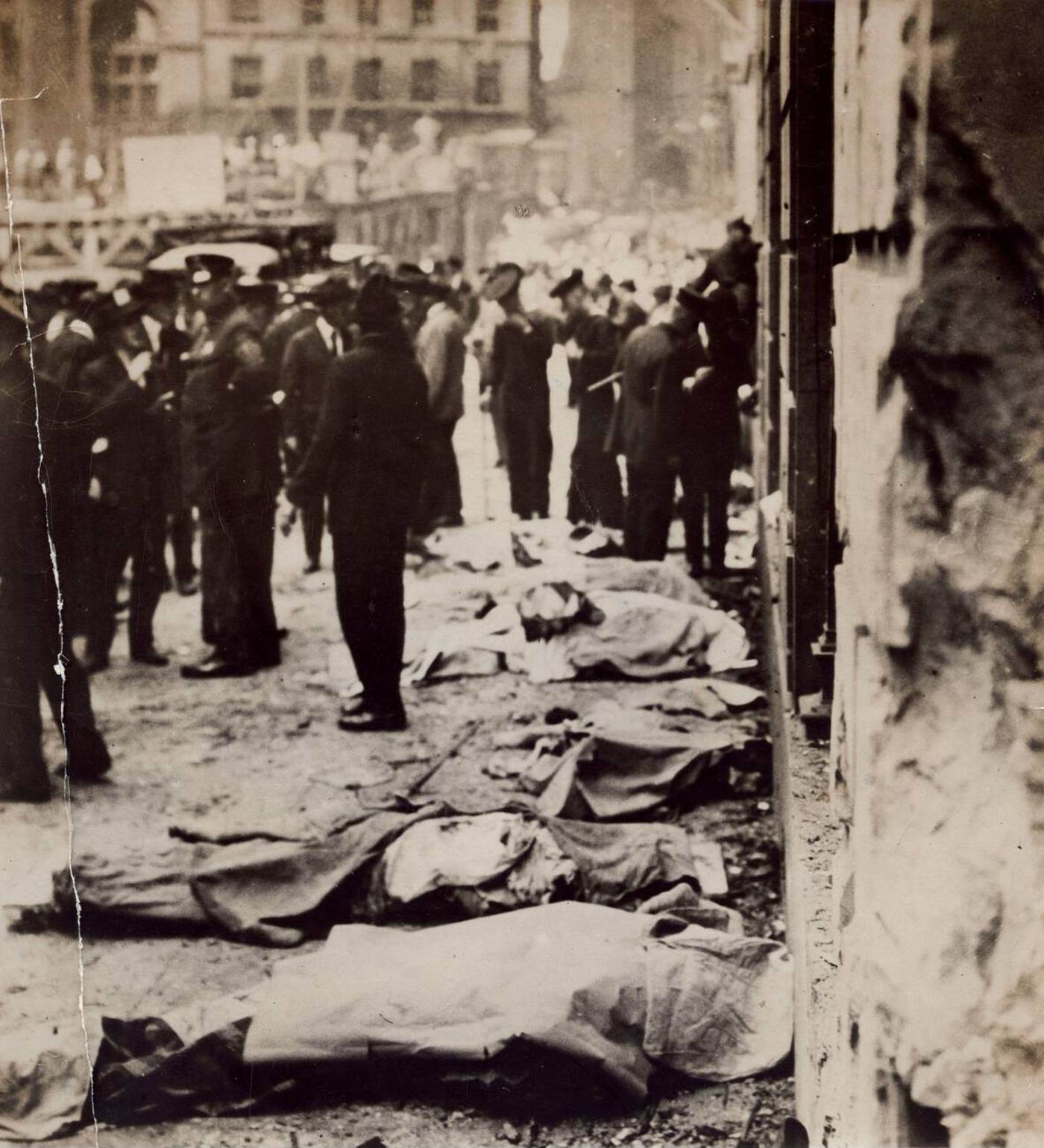
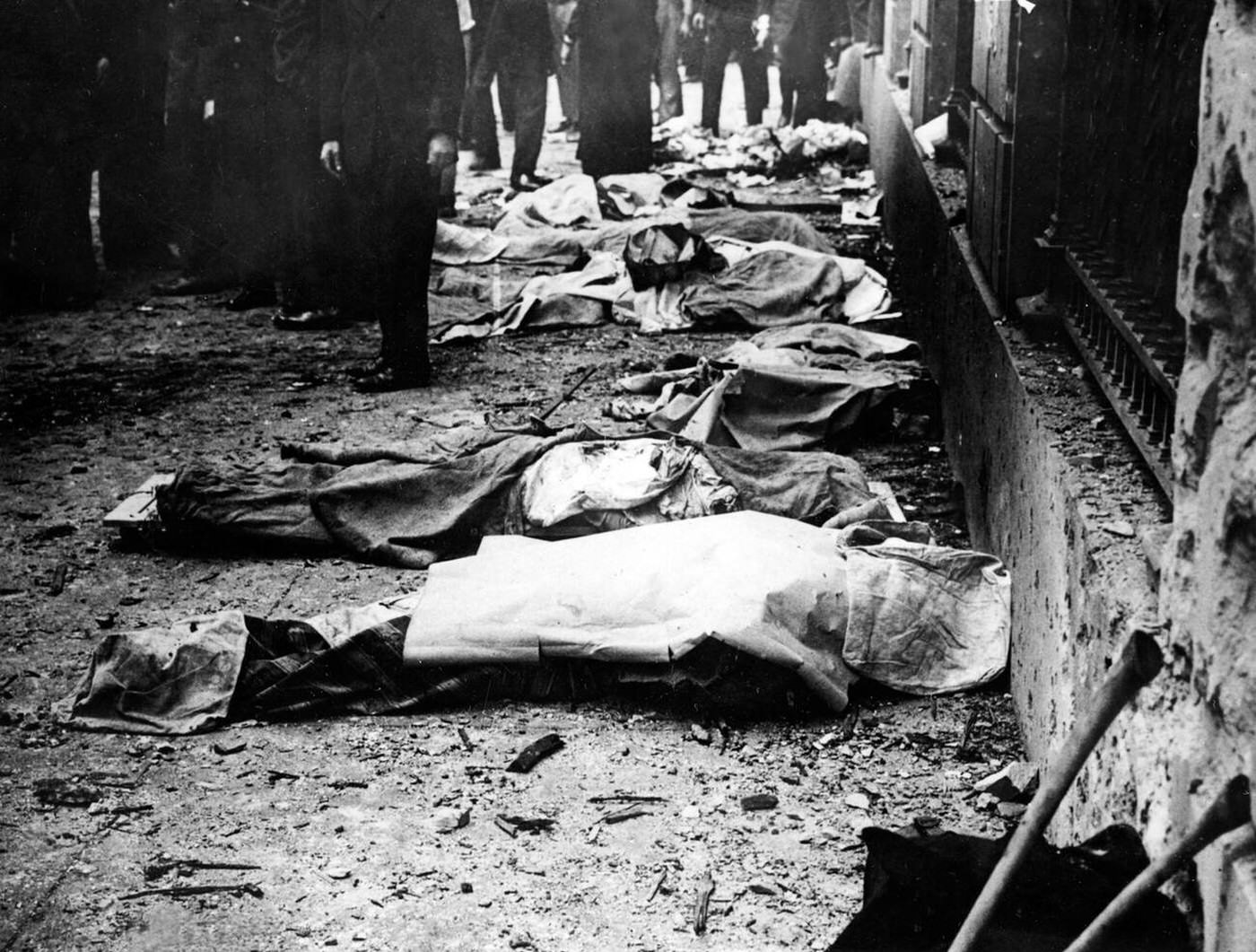
The blast killed 38 people. More than 300 others suffered injuries. Most victims worked as clerks, messengers, stenographers, or runners. Many were young workers just starting their careers.
The wagon and the bomb
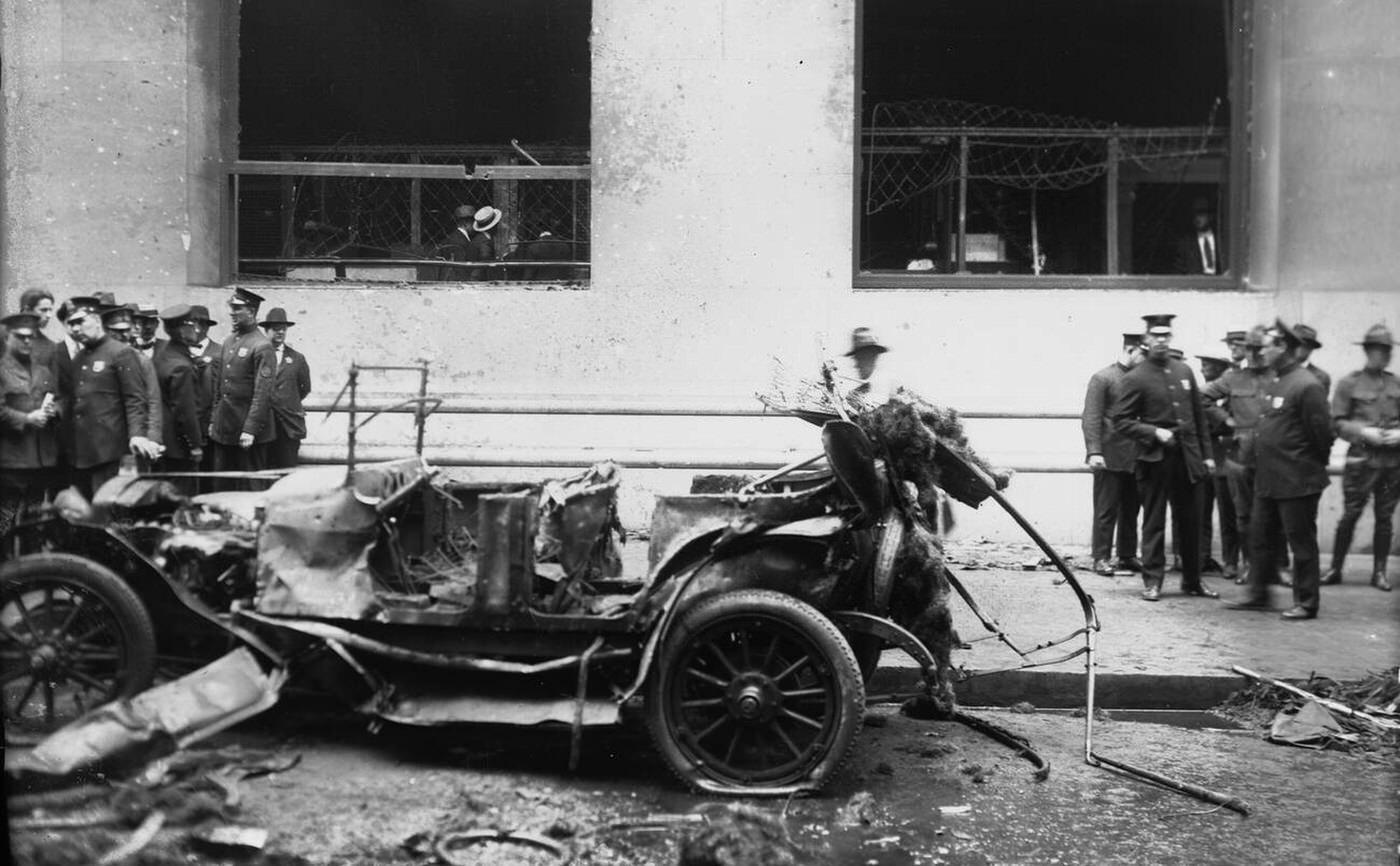
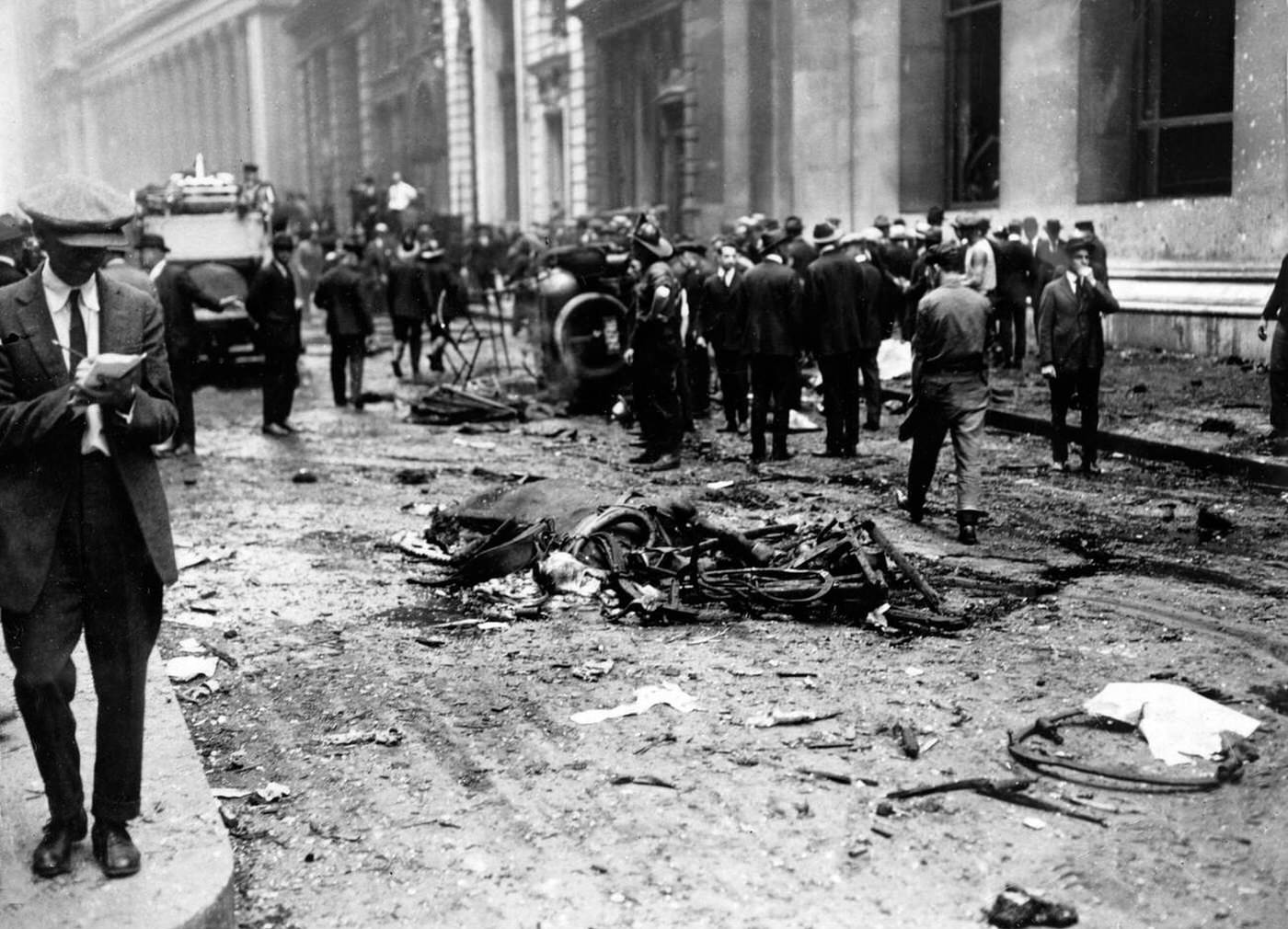
The wagon carried about 100 pounds of dynamite. The attacker packed it with 500 pounds of heavy iron sash weights. These metal pieces turned into fast-moving shrapnel when the bomb exploded.
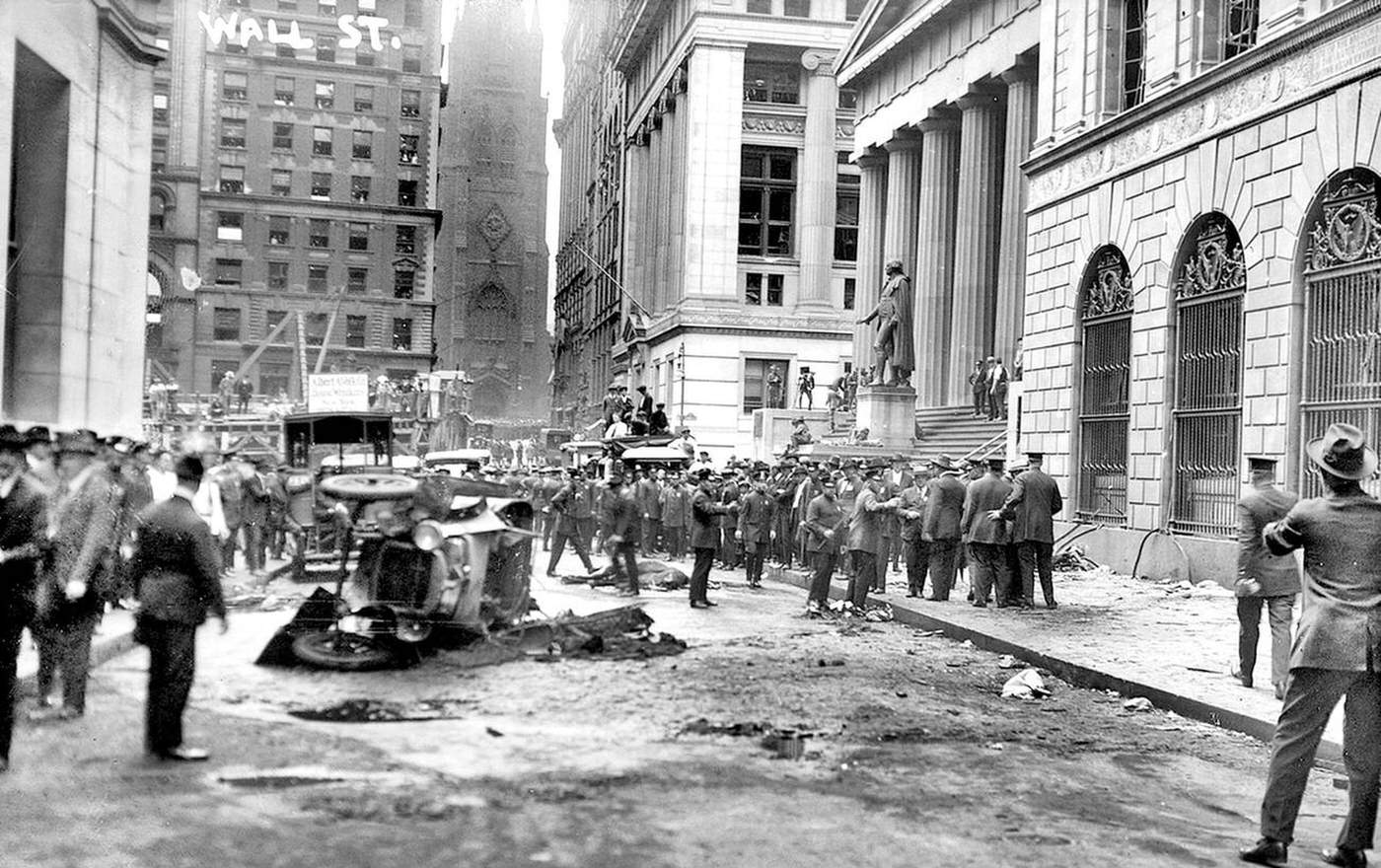
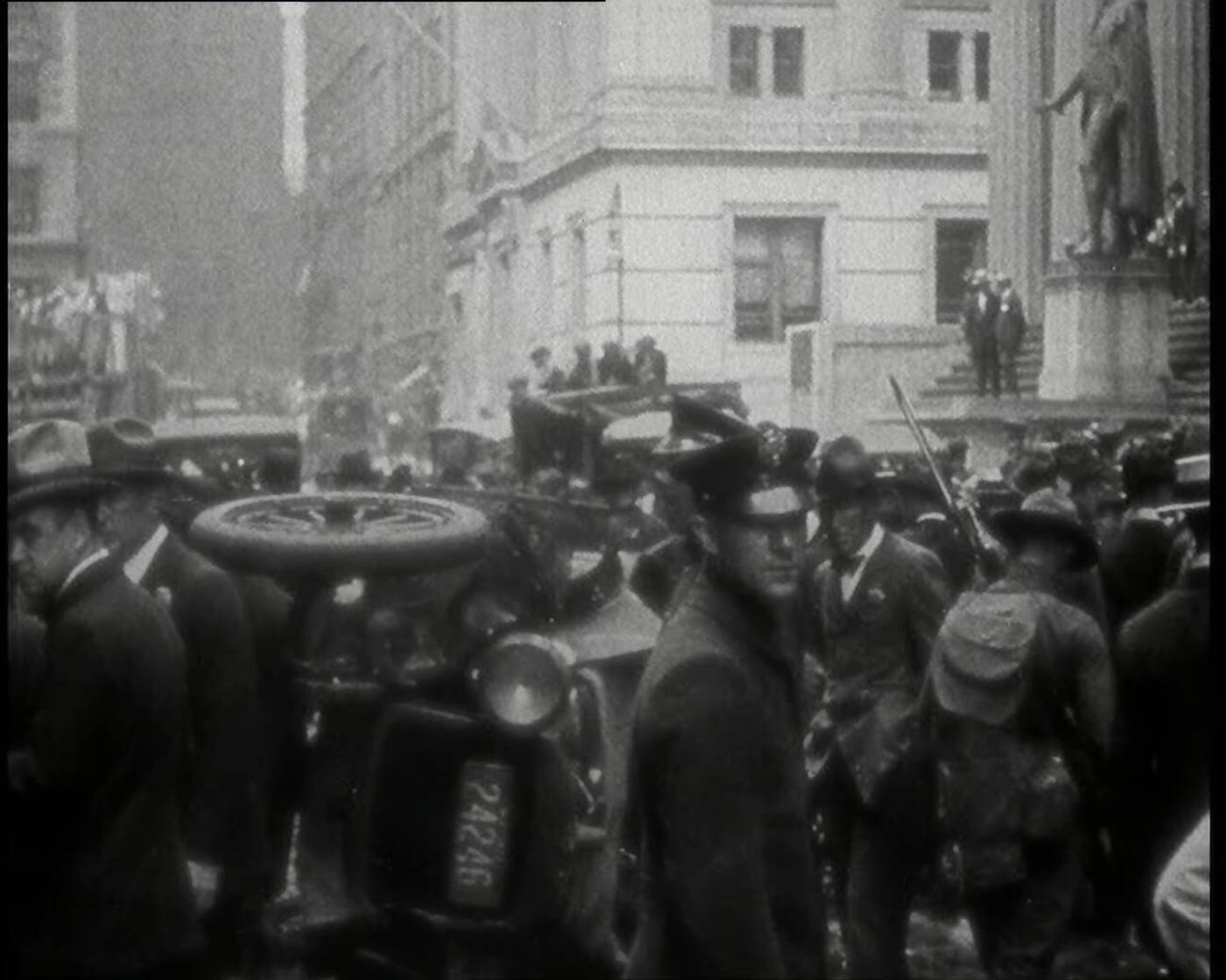
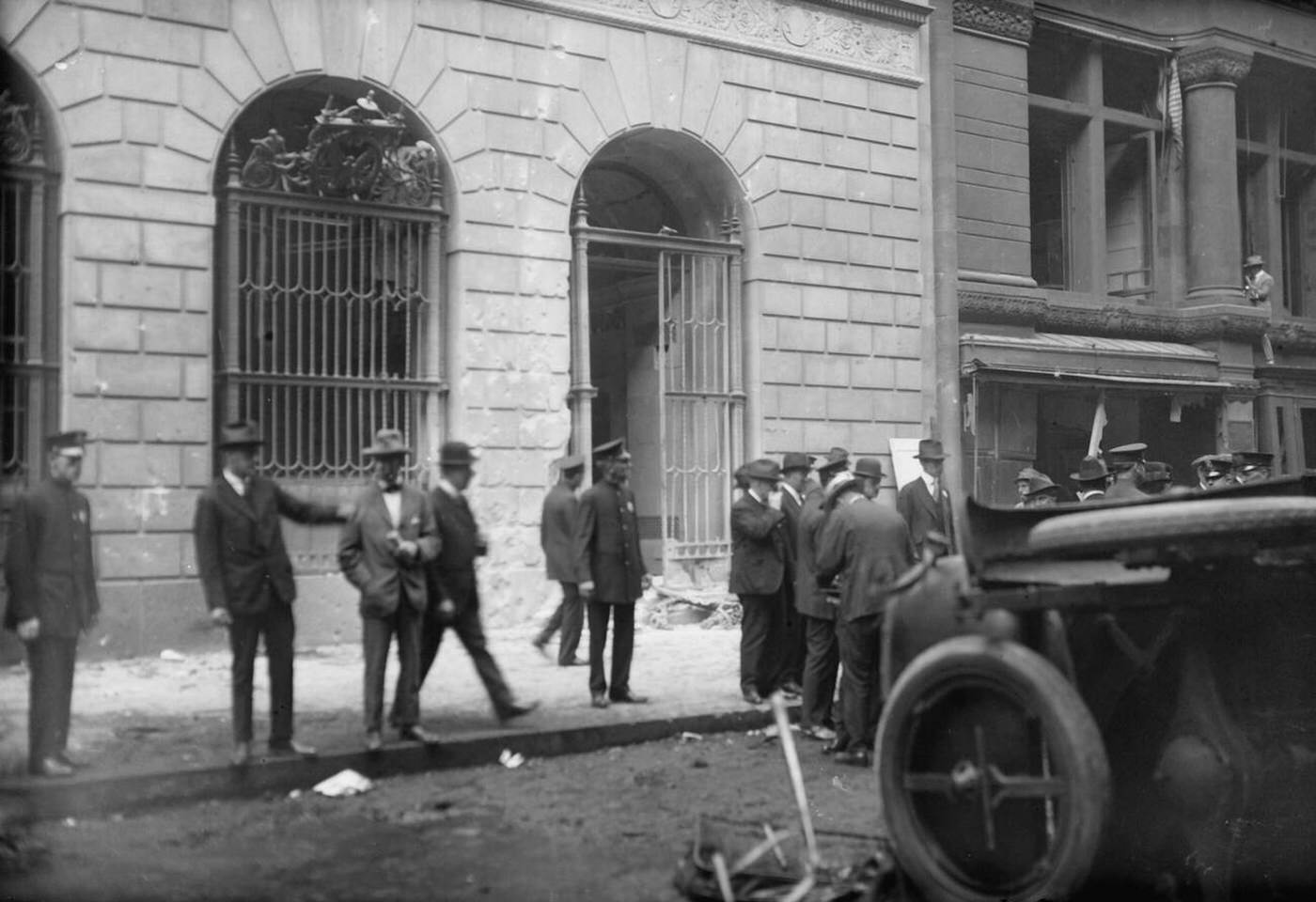
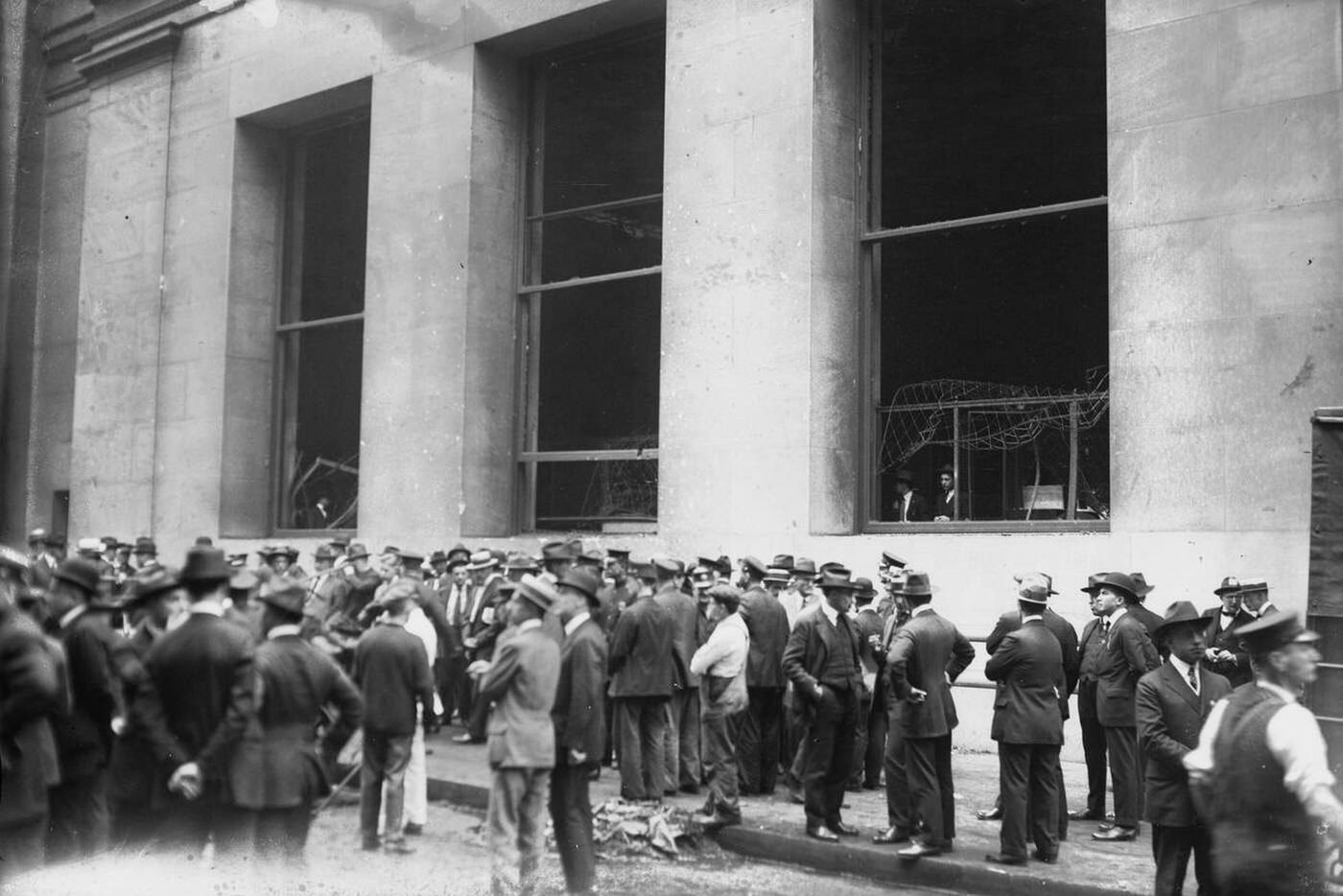
Windows shattered across several blocks. The blast wave traveled through narrow streets lined with tall buildings. Broken glass filled the sidewalks. Pieces of iron struck people hundreds of feet away.
The explosion left a crater in the street. It also scarred the limestone walls of the Morgan building. Some of those marks remain visible today.
The exact location
The bomb exploded at the corner of Wall Street and Broad Street. This area stood at the center of American finance. Banks, brokerage offices, and trust companies filled the blocks.
Read more
The timing was precise. Noon brought heavy foot traffic. Office workers filled the streets during lunch breaks. The attacker chose the busiest moment of the day.
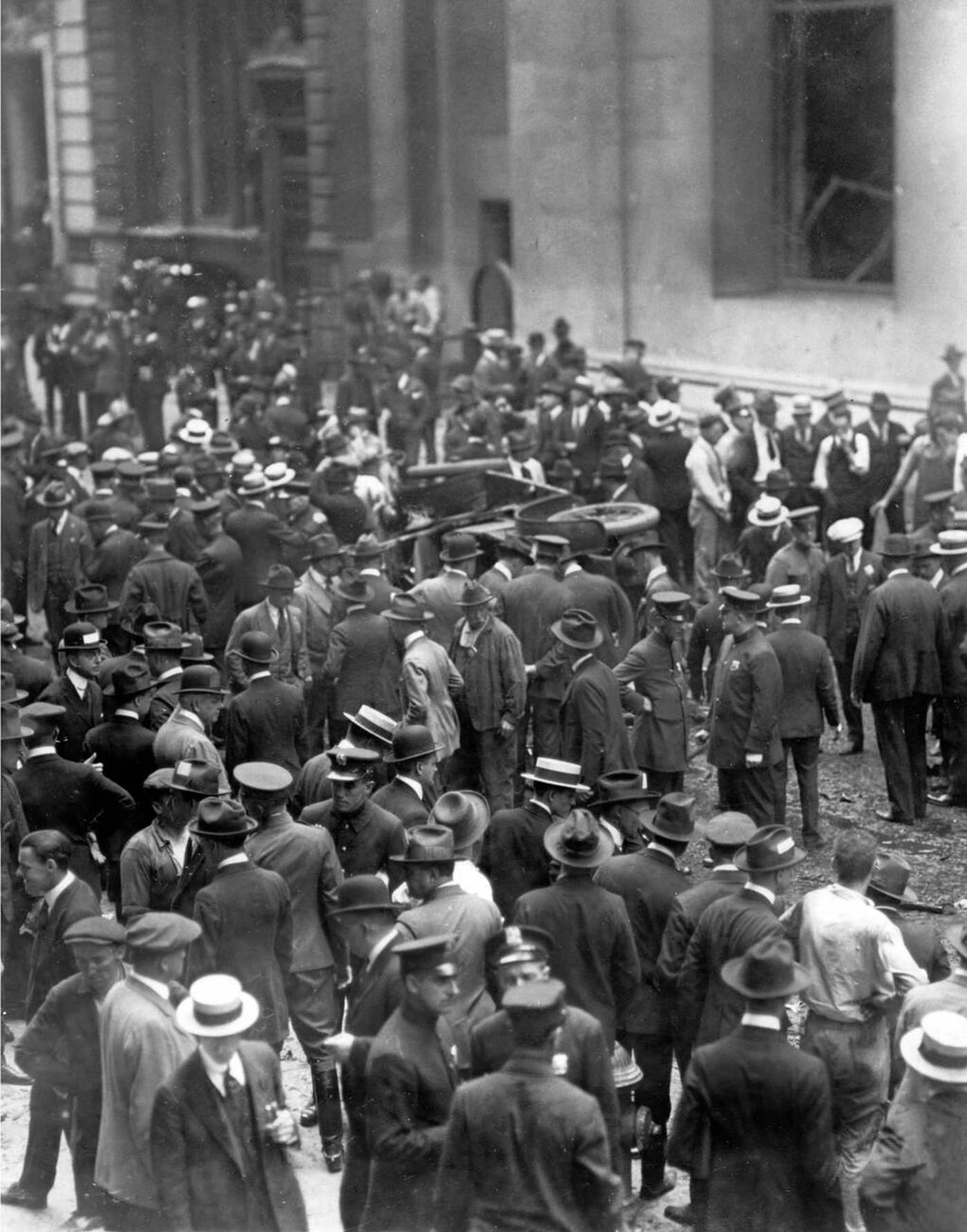
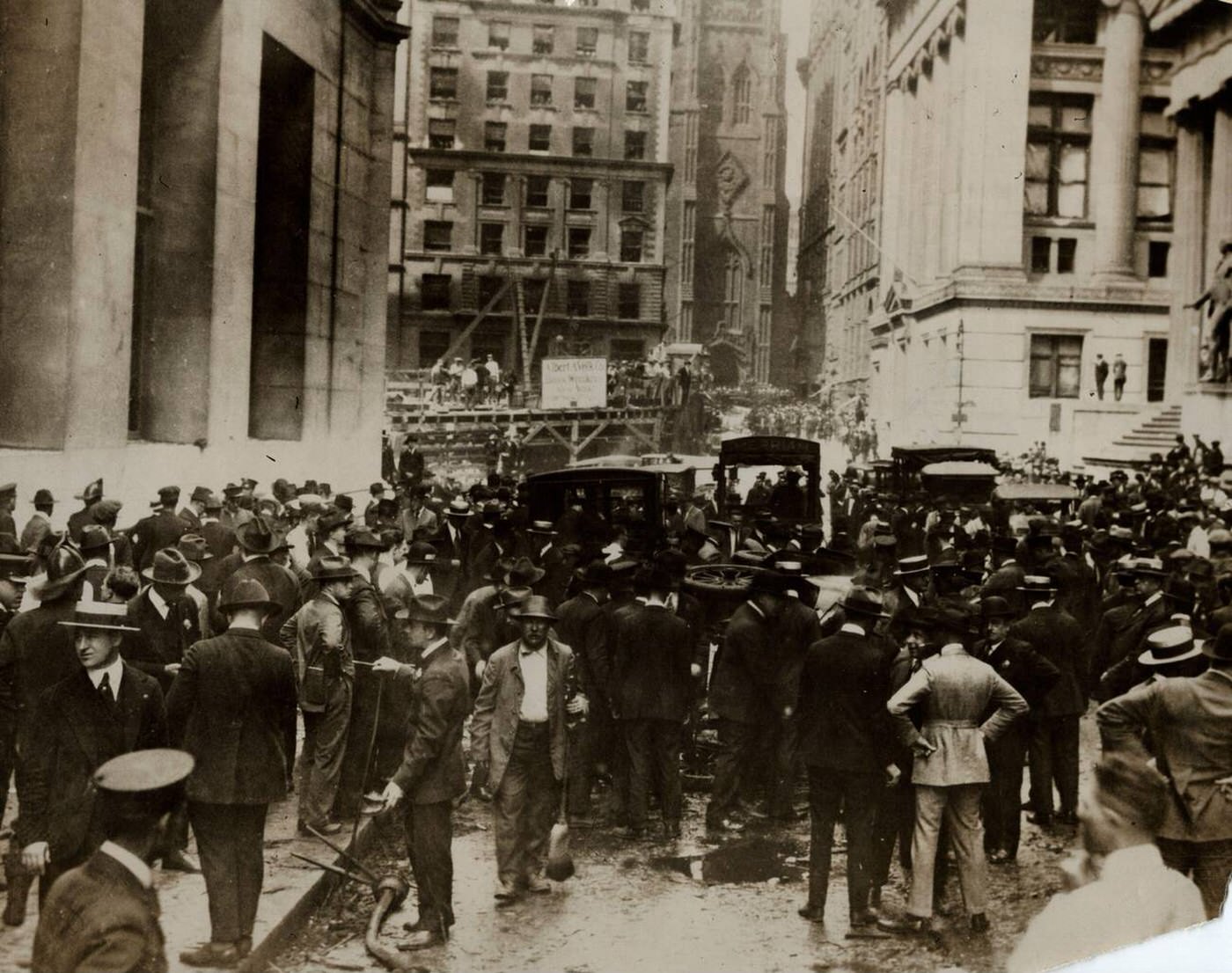
Smoke filled the air. Papers from destroyed offices floated through the streets. Survivors carried the wounded toward safer areas.
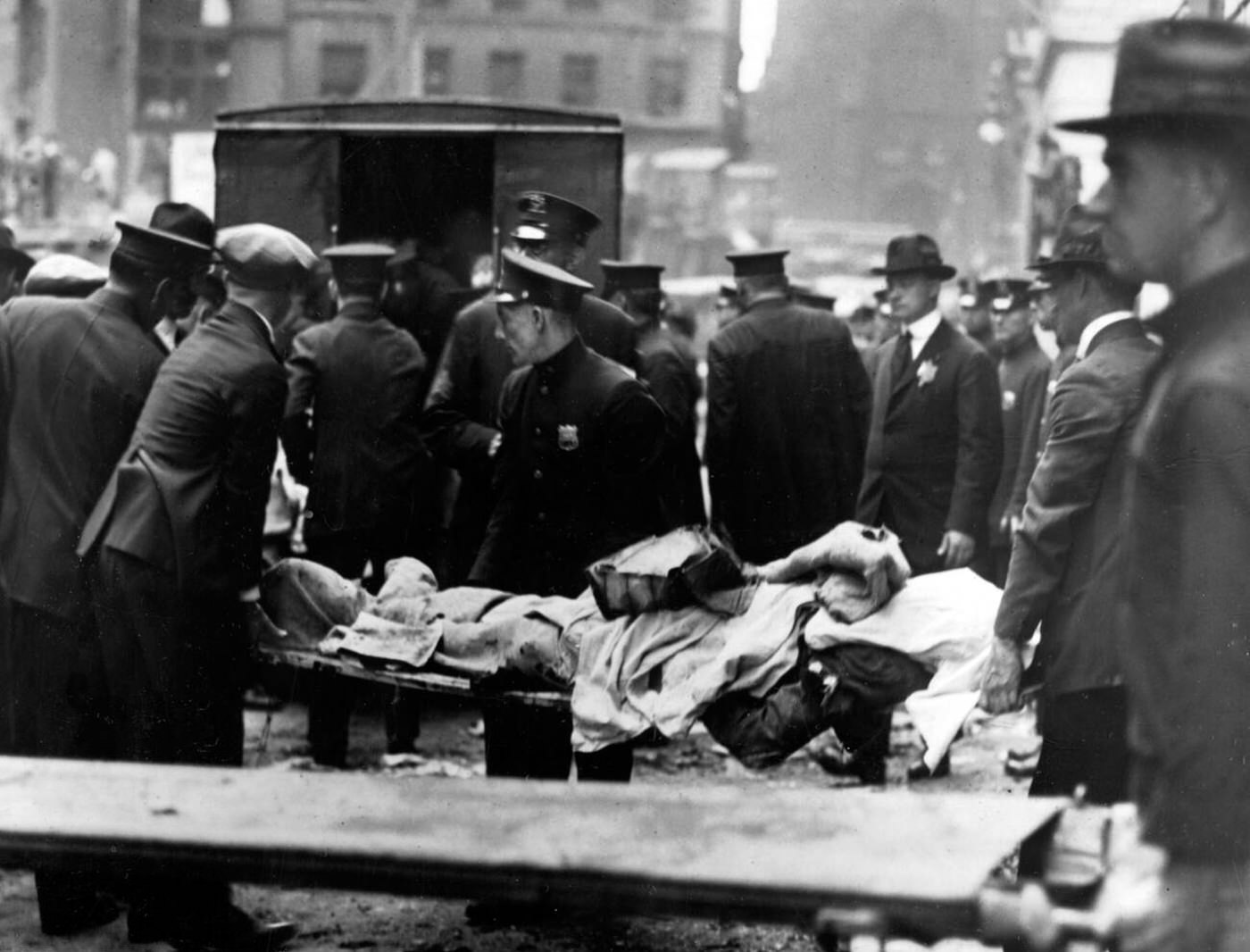
Police officers, firefighters, and volunteers rushed in. Trucks moved the injured to nearby hospitals such as NewYork-Presbyterian Lower Manhattan Hospital, then known by another name.
Clerks used doors as stretchers. Taxi drivers transported victims without charge. Stock traders left their offices to help move debris and search for survivors.
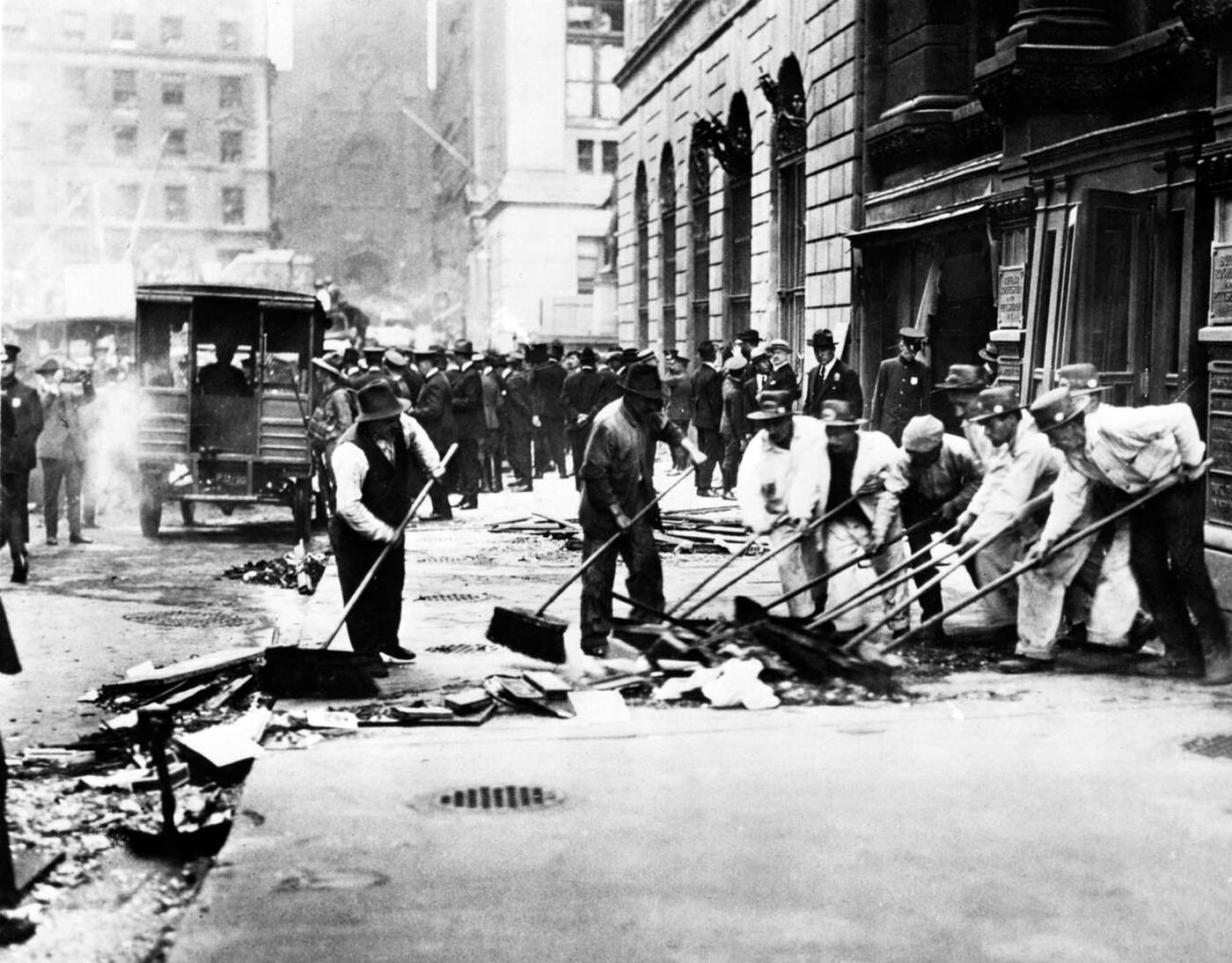
By afternoon, workers began cleaning the streets. Financial leaders ordered the New York Stock Exchange to reopen the next day. Crews worked through the night to clear rubble.
The investigation
The Bureau of Investigation, the early form of the FBI, joined the case. Detectives found pieces of the wagon and fragments of the bomb parts. They traced the horse’s shoes to a blacksmith shop but found no useful lead.
Investigators discovered warning leaflets in a nearby mailbox. The notes threatened more violence unless political prisoners were freed. The language matched that used by Italian anarchist groups active at the time.
Police focused on followers of Luigi Galleani. His supporters believed in violent attacks against government and business leaders. Authorities linked the method of the bombing to earlier anarchist attacks that used mailed explosives.
One main suspect was Mario Buda. He was a known associate of radical activists Nicola Sacco and Bartolomeo Vanzetti. Buda left New York soon after the bombing and returned to Italy. He never faced trial. No court ever convicted anyone for the attack.
Damage to the Morgan building
The headquarters of J.P. Morgan stood directly across from the blast. The thick stone walls protected the structure from collapse. Even so, the force gouged deep pits into the exterior.
Bank leaders refused to repair the scars. They treated the marks as a reminder of the attack.
Inside, workers returned to their desks within days. The bank wanted to show stability and control after the violence.
Life in the Financial District that day
The Financial District in 1920 moved at a fast pace. Telegraph boys carried messages between offices. Street vendors sold sandwiches and newspapers. Messengers pushed through crowds carrying documents between banks.
At noon, the streets filled with workers heading to lunch counters. Many victims stood outside when the bomb exploded.
The attack struck ordinary workers more than wealthy bankers. Most of the dead earned modest wages. Their names filled newspaper death lists for days after the attack.
Police response and security changes
Mounted police blocked streets within minutes. Detectives questioned drivers, vendors, and office workers. They searched boarding houses for suspects tied to radical groups.
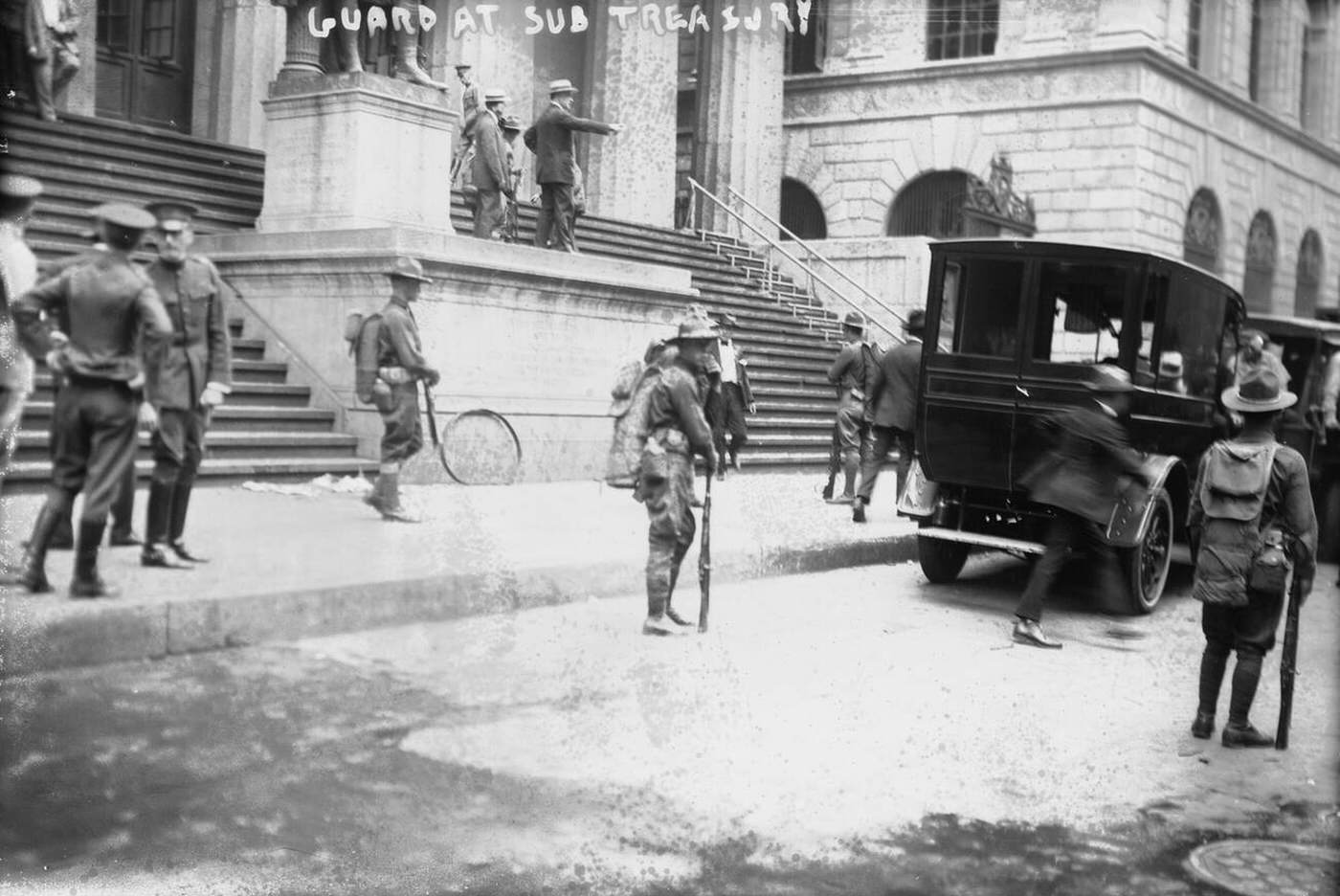
After the bombing, banks added armed guards. Mailrooms began screening packages. Police increased patrols in lower Manhattan.
Government agents also increased surveillance of anarchist groups. Raids targeted meeting places and print shops connected to radical politics.
New York newspapers printed extra editions that afternoon. Front pages showed photos of the destroyed wagon and injured workers. Headlines described it as one of the worst attacks in the city’s history.
Reporters gathered names of the dead through the night. Lists included office boys, bookkeepers, and stenographers. Many families learned about injuries through these reports.

GIPHY App Key not set. Please check settings